


AliG
-
Posts
3211 -
Joined
-
Last visited
-
Days Won
11
Everything posted by AliG
-
Octopus can be sneaky, you have to watch them. I just did a quote on their website for Go and it still says 16.03p/kWh as the higher rate. Looking today, the cheapest variable prices for me in Southern Scotland are 19.8p and the cheapest fixed prices are around 21p (Cheaper fixes were available yesterday but have already disappeared). The energy price cap is currently set at 21p/kWh from October for 6 months. They may change it due to suppliers being in trouble but you could go on a variable rate and as things stand they cannot increase the price above 21p for some time, by which point things may be back to normal. I am not sure exactly which tariffs are covered by the cap so this would need checking. Thus if you used Octopus Go and 25% of your consumption was at the 5p rate then you would be getting an average rate of 19.5p. So a small saving, but very dependent on your usage in the discounted period. I have been waiting for my smart meter to consider moving to Octopus. I would also be crazy to move off my current fix which runs until December. However, when I have looked historically, Octopus Go would save me on electricity but the entire saving would be eaten up by their higher gas prices. Thus I would have to move to a separate gas supplier to make a saving. Not an issue for those only using electricity. Octopus fixed gas price today is 5.565p/kWh. The cheapest I could find is 4.323p/kWh. So for me today I could save 7% on electricity whilst paying 29% more for gas unless I got my gas elsewhere. The October gas price cap is only 4p/kWh. The point is be very careful when switching that you are getting as good a deal as it looks. Also who came up with the way the cap is stated. Why not just sate 21p and 4p. These figures were quite difficult to find. I would guess they think people don't understand it. Finally as things stand a lot of people could see their gas bill double and their electricity up 50%. This is going to be painful.
-
The government interferes in people's lives constantly and I would rather there was less government and intervention. For example I would downsize the DVLA and add the cost of VED to petrol and diesel. A massive reduction on bureaucracy and much harder to avoid. Of course we will need another system for electric cars, many of the suggestions that I am seeing are a bureaucratic nightmare. But there are times where market actors act in only their own interests to the detriment of the population at large.This is where intervention is needed, we saw this at the time of the financial crisis. Property developers are in the housing business, they build houses. However, there is an argument that people who simply accumulate land and sit on it are not exactly helping the property market. that is another thread, however. For commodities, I am not clear what use having people trade multiple times the value of the underlying commodity per day is. Long before the financial crisis I was very suspicious of much of the trading business of large banks. We tended not to invest in these businesses as the competitive advantage and sustainability of them was questionable. Regulatory action since the financial crisis has made these businesses considerably smaller and had banks focus on more value added, less risky activities. Many of these businesses have been "banned" by regulatory changes increasing the required capital and thus reducing returns. These operations in most cases are a fraction of the size they were 15 years ago. From a shareholder perspective, these business pay massive bonuses to staff when times are good and request funds from shareholders or in extremis taxpayers when times are bad. If you tot up the lifetime profits of the trading arms of companies such as UBS, RBS and Credit Suisse, then they have been disastrous for shareholders and great for staff. I have seen quite a lot of data that suggest exchange traded commodities have seen more inflation and more price volatility than non exchange traded commodities where most market players are actually involved in the business. I would also note the impact of energy traders on the situation in California 20 years ago which lead to the regulated utilities almost going bankrupt. TBH though this is a small aside and much as I suspect trading might be causing some of the crazy short term moves, the main issue is the lack of contracted gas supplies.
-
Self builders with massive amounts of glazing should probably be a specific category
-
I am no engineer, but it seems to me that they would be prone to breaking and difficult to fix. The world is very good at finding the most efficient solution to a problem and seeing it win in the market. If these were better than wind turbines a large turbine manufacturer would make them and win market share. Reading a couple of things in the good old DM today. Maybe I shouldn't read it! 1. This is all down to renewables - No it isn't it is down to reliance on gas and the high gas price. Less renewables would make us even more reliant on gas. 2. We are offering to subsidise the fertiliser plants that produce CO2 whilst gas prices are high. This seems like a sensible temporary solution. A lot of people are calling for them to be nationalised, the problem is not our non ownership of the plants, it is the price of gas which would be the same no matter who owned the plants. One thing I have advocated, having worked in financial markets for my whole career and seen various commodities doing this kind of thing is that commodities trading should be limited to those properly involved in the markets. People don't need to buy shares or Bitcoin so if people want to speculate with them and send prices all over the place go right ahead. But commodities are necessary for people's day to day lives and extra volatility caused by speculators in the markets is unhelpful.
-
Expanding foam quick set and then some …
AliG replied to Pocster's topic in General Construction Issues
She used to be married to Trump. -
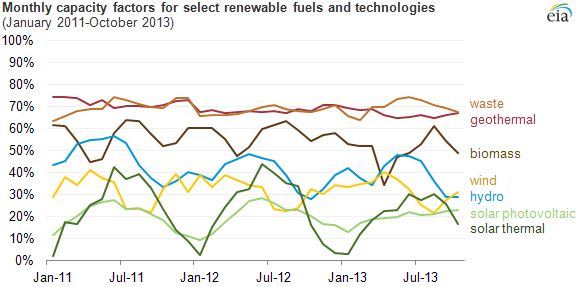
It is worth noting that installed capacity is very misleading figure to use when talking about wind power. Expected capacity factor for onshore and is around 30% and for offshore wind is around 50%. This is averaged over a year. The 30% average would tend to be around 20% in summer when there is less wind and 40% in winter. Thus wind turbines recently have been maybe producing around 50% of their expected output, not the 10% number that the media will use to make things sound worse (which they love to do) The expected cost of wind energy is based on these capacity factors and the headline capacity is somewhat irrelevant. It is just the maximum output. In the same way, my 5kw solar array generates around 3500-4000kWh a year. It has a capacity of 43800kwh 24hrs x 365days x 5kw, so it runs at less than 10% of capacity. Of course as it cannot generate electricity during the night, for example, then the capacity number is again not really relevant.
-
Cold bridges in this design
AliG replied to puntloos's topic in Energy Efficient & Sustainable Design Concepts
Usually. If you use a raft foundation they can just sit on the raft with EPS underneath it. I think though using the Marmox blocks as suggested as the way to reduce the cold bridge. Couldn't find a drawing, but if needed to support a heavy structure upstairs you can simply lay blocks on their flat side, so you get a 215mm wide wall instead of 100mm(They can also lay them back to back which looks like how the wall between the hall and office is built). They did it in the extension of my last house so they could support concrete floor planks above. In your case though, it seems that you have a block cavity wall between the living room and office and around the utility area. Such a thick wall won't be needed structurally, it will be for sound deadening and the sliding doors and then to separate the utility area as it is being built like a garage. If the builders are left to themselves they will leave the cavity of the wall between the office and living room open to the cavity in the external wall and there will be no insulation in the cavity. Thus cold air could come all the way from the external cavity right into the house via the sliding doors. If you build the wall this way I would want the cavity closed to the outside cavity. I would probably put insulation in the cavity for all it costs and then I would close the cavity before at the point the sliding doors slide back to. It does't really mater how it is sealed. Plaster/foam/tape etc. Just make sure that you don't have a draught blowing around the doors and cold air behind the uninsulated interior walls. Personally I think I would have a single skin wall and then frame out an area to put the doors into. This would probably cut 100-150mm off the wall thickness. Noise reduction will come from better detailing. TBH with a door through the wall it will be very difficult to stop noise travelling. The wall around the possible garage area is less of an issue as I guess they plan to insulate it and treat it like an outside wall. You could save 100mm by making it single skin and framed insulation or 200mm by making it single skin and PIR. But you would have to take into account fire regs. -
My point is that if you can't even be bothered firing up Uswitch (other energy comparison sites are available) then you probably don't really care about energy efficiency either. If I left my family to their own devices they would, for example, leave the heating on whilst we are on holiday for two weeks so that it is warm when they get home. At the recent price of around 4p/kWh that could be around £80 a week at the height of winter.
-
I think people on here are at the extreme end of being energy efficient. Most people have no idea, almost a quarter of people have never changed supplier which could save you an enormous amount for almost no effort. I took my dad to get his ingrowing toenails taken off the other day. There was a car sitting idling the engine outside when I went in and still sitting idling when I came out over half an hour later. It was about 19C outside, so neither cold enough to need heating nor warm enough to need AC. It is also illegal.
-
I should have checked, just assumed MWh was the same format as kWh.
-
Fair, if you used half of it and exported half though then the return is still very respectable, a lot better than money in the bank. I have looked at the Powerwall and historically did not believe it was economical. If you thought current prices would continue then it probably would be. The question is life expectancy. For solar panels they last almost indefinitely. A Powerwall has a 10 year warranty and I think that is for 70% of original capacity. The problem is that you could cycle it almost once a day. A 10-15 year lifespan means you need well over a 10% ROI to make a reasonable return. I will revisit the maths once I have a smart meter and can look at the savings from Octopus Go (If it remains available). I would save around £1700 a year according to the Octopus website, but Go might save me around half of that. A net saving of £800 a year would not be enough and I am a massive user of electricity (17000kWh a year). For a more normal user the sums would be worse.
-
Yes, we have got ourselves into a right mess here. It reminds me of the situation they got themselves into in California in 00/01 where when the spot price of electricity soared the regulated utilities were not allowed to pass it through to consumers and quickly went into bankruptcy protection. This of course was totally unreasonable and eventually they got paid. I am not sure what the best course of action today is. We could just switch on the pipeline, knowing that in the long run we won't need it. We could temporarily switch coal power stations back on. We could let people feel the pain so they reduce energy consumption. My 2020 fix was considerably cheaper than in 18 and 19, hardly likely to encourage efficiency. The fix for short term volatility is to have as more supply under long term contract, although I would also suggest capping the payments to spot suppliers. Much as they need high payments to guarantee supply, paying £2500 per mWh of electricity as we were last week is nonsense. 60x the normal price, equivalent to £2.50 a kWh. Luckily the percentage of electricity supply that is carbon driven and more exposed to commodity price volatility is falling all the time. It looks like it is down to about 1/3 of supply now. Commodities are a funny thing though with spot prices being driven by marginal producers and hence able to get crazy. Again the way out of it is renewables which will mean that we don't have to worry so much about importing energy and can put more supply under contract. As you say this is a long term (20 year) project, but the more that gets installed the better it gets. I used to think that nuclear was the answer, but massive price increases due to safety concerns mean that renewables make a lot more sense now. They are also a lot easier to build! Very little can be done in the short term as demand is quite inelastic.
-
This is a temporary situation which is painful for energy suppliers and customers but will resolve itself. Wind speeds are picking up considerably which should reduce gas demand. I will be feeling the pain soon, my current fix has gas at 2.1p/kWh. It looks like I will have to pay 4p ish when it runs out. Funnily enough increased use of renewables will be the way out of this in the long run as they will likely have more stable prices. The cost of renewables is majorly driven by the depreciation of the installed equipment and less impacted by fluctuating commodity prices. Spot electricity prices will always be volatile and indeed could get more volatile with less reliable renewable capacity, but contracted baseload capacity should fall in price as the price of renewable equipment fails. Recently there has been a lack of wind, leading to higher gas use. Currently 60% of wind capacity is onshore, but most new capacity is offshore which is more reliable. I did a lot of research into hydrogen power pros and cons recently and found that one of the main assumptions for increased use of hydrogen in the future is massive drops in electricity prices as more renewables are installed and they get cheaper. I was very surprised at this and it seemed an overly optimistic assumption to me, but it bodes well for prices being reasonable in the long run. It certainly makes he maths much better for installing PV. You shouldn't need a subsidy. A 4kw system installed at around £4000 would generate around 3000kWh a year of electricity. That is almost £600 of electricity or a 15% ROI at current prices.This calculation shows why high prices will not continue, the return on adding new capacity will be very tempting. It also starts to make the calculations on installing Powerwalls and such look a lot better.
-
Cold bridges in this design
AliG replied to puntloos's topic in Energy Efficient & Sustainable Design Concepts
This is similar to the blockwork in my house and you can feel the floor is colder next to the block walls that go down to the foundations. What I don't know is whether the cost of eliminating these bridges pays for itself. The thing that more surprised me is the cavity internal walls. I have some thick supporting internal walls, but they are made from wider blocks (Porotherm). I would have thought the normal construction for these is blocks laid on their side, not a cavity. I have one small area where there are two internal block walls with a cavity in between. No one thought to insulate this wall, but it connect through to the outside wall and is obviously colder than all the other walls in the house. It is also a problem for airtightness and the cavity is connected to the outside cavity. It is also an enormous waste of space, you have some 400mm internal walls, why are these not solid 200mm walls? Those doors sliding into the wall cavity are also an airtightness problem. You need to make sure the builders seal up the cavity behind the doors, which they won't do unless they are made to do it. -
I have a similar situation to you. At the side and back of the house I use PIR lights. At the front I use lights with dusk to dawn sensors in the individual bulbs. 8 lights at 8W for maybe 10 hours a day on average. Plus a little bit for running the sensors is around 0.8kWh a day, or 15p at current higher prices.So that is £55 of electricity a year. If you are on Octopus GO with cheap overnight electricity then you could get this down a lot. I did think of other solutions such as timed switches and wifi switches but I liked the simplicity of this. The other thing I liked is that if any individual bulb fails I can just buy a new one for £8ish. Already one of the PIR lights has failed and had to be replaced. I tried really hard to avoid having LED lights with built in bulbs as they are too unreliable, this is especially problematic with multiple matching lights where you might not be able to match them in future if they break.
-
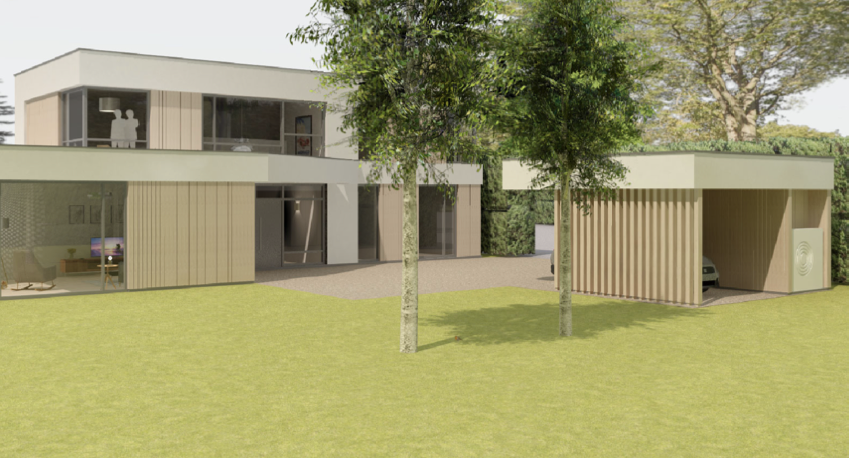
Thanks, it is a rendering of the final plan. The carport is 5.6mx5.6m. The space the car goes into is 3.3m wide and then there is a garden store at the other side. there was no need for two spaces so we decided a big space plus a store was better. The front of the store is 1.75m from the front of the roof so you can tuck the front of a car under there if you want.
-
We did decide on a carport, as much as anything it is a little cheaper and also looks less bulky, making it easier to see the garden as you enter the property. The saving is not enormous, it mainly comes from the foundations. I think if you are on a corner and the side where the carport faces the road then it will need planing permission. Effectively, a corner is like having two fronts. The roof has to be designed to take windloads, we will have an SE look at ours. I will put the cabling in to connect the panels back to the house as it will be easy to add them to the roof.
-
Dot and Dab vs adhesive for insulated plasterboard
AliG replied to AliG's topic in General Construction Issues
Plastering the walls would certainly help with airtightness. I don’t know how good insulated plaster is in practice. Can’t imagine it’s anywhere near the performance of PIR. Skimming the plasterboard would only be necessary if you like the finish. You can just tape and fill otherwise. However, a suspended timber floor is awful for airtightness and presumably has no insulation under it. Do you plan to take up the floor too? I am no expert on stone walls, however as I understand it from older houses in Edinburgh often it is only heating the inside of the house that stops water making its way right through the walls from the outside. They tend to be sandstone which may be the issue. If you insulate the inside of a non cavity walk I am not sure what measures have to be taken to avoid water damage. Hopefully someone can help you with that. -
Dot and Dab vs adhesive for insulated plasterboard
AliG replied to AliG's topic in General Construction Issues
I would strip it off and replace it as otherwise you are going to lose quite a lot of space. I don't see any benefit of putting it onto studs if that is your plan, this would still create an air gap as well as wasting space. Or is the plant to put insulation between the studs and plasterboard on the front? I would use insulated board as it loses the least space. If you run the numbers losing 100mm all the way round your house is a big percentage of the floor area. In an ideal world you would strip back the plasterboard and try to make the walls behind as airtight as possible. If they are airtight, dot and dab or Insta Stik would work fine. If not you will have issues with air movement. In this case, I think @Nickfromwales method of sealing the top and bottom of the boards is best. I did suggest this to the builder but was told it was not needed as it was airtight behind the boards! -
I would echo many of the points already made. Try to face the room you use the most south and west. I would not put a WC through a utility/cloakroom. Nor would I combine those rooms. You'd be forever tripping over shoes and things trying to get to the WC. Would you want visitors going through your utility room when they come to visit. It seems like the storage area has been designed so it can be changed back into a garage, if you don't ever plan to do this, just make it part of the house. the you can put utility and plant room there. I think three sitting areas downstairs is too much. A room with an en suite that can be a study now and bedroom if needed would be better. I would probably have a smaller main bathroom and a second en suite in this size of house. Not sure what your family situation is, but teenagers or visitors would probably prefer their own bathroom. Don't bother with a fire/log burner in the kitchen. Will never be used in a well insulated house and is an expensive hassle. The current design is fine, but seems maybe a bit conventional. I guess it depends on whether you have planning constraints or a look you want to achieve, but I would think an architect could do something a bit more contemporary. The large areas of glass on the upstairs hall and the kitchen do not match well aesthetically with the other windows and I think the reason is that they are a more modern feature on a house that doesn't have a modern design.
-
Sorry, should have said 24A. It is 32A single phase 24A three phase
-
7kw is ample, most cars can only take a 7 or 11kw AC charge anyway. My car takes 17kw as I have three phase. So i get 240v x 16a x 3, but that is pretty unusual. Keeping it easy if we assume 350kw per mile, then you can charge 20m per hour. It is highly unusual for someone to drive 200 miles in a day round trip and certainly would be exceptional circumstances to then turn around and do it again within 10 hours. On the other hand the local Tesco has been installing 7kw points. For the average 20 minutes I spend in there it isn't worth getting the cables out.
-
About time. My mate just bought a new build and I think they wanted £1000 or £1100 for a chargepoint. Clearly this will be added onto the price now, but it needs to be done. It seems to say associated parking spaces, so it would apply to flats with allocated parking. If you ask me doing it in this case is even more important as it will be a lot more expensive and difficult to add points to flats after they are built.
-
That's really self building. I don't know how someone can do that much work themselves. Lovely house. Bit odd on the budget, trying to do things on a tight budget, but £37k on Internorm windows. They could have got something similar for £10-15k less.
-
No, exactly the same standing charge as single phase. The wait from my phone call to meter install is around 6 weeks. I too wouldn't shift to Octopus without already having a smart meter as I have heard horror stories of people being stuck on their high variable tariffs for months. At the moment I expect to shift to Octopus Go. I wonder how long they can keep up 5p/kWh during the night when Octopus agile is way higher than that.


