AliG
-
Posts
3211 -
Joined
-
Last visited
-
Days Won
11
Everything posted by AliG
-
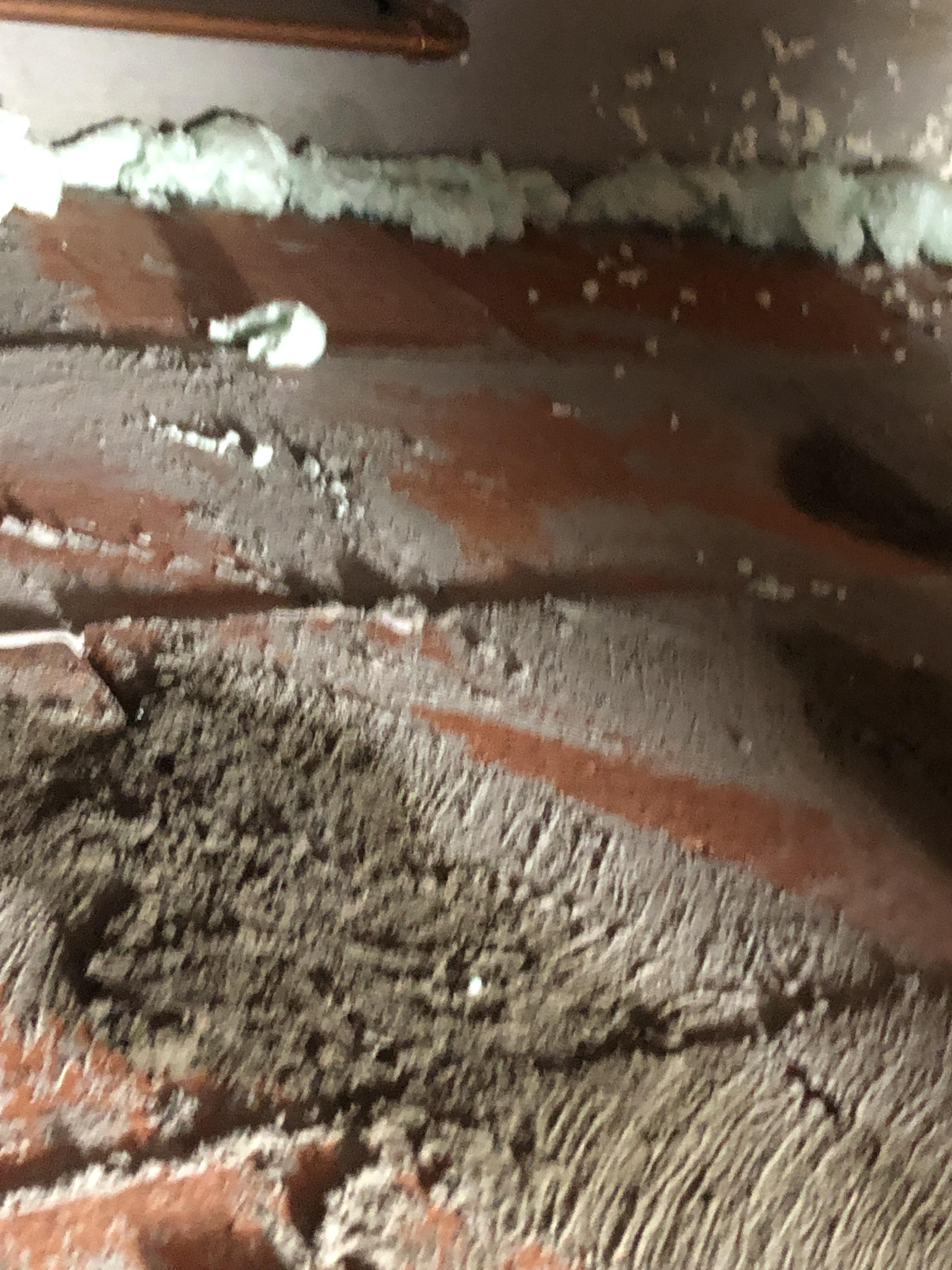
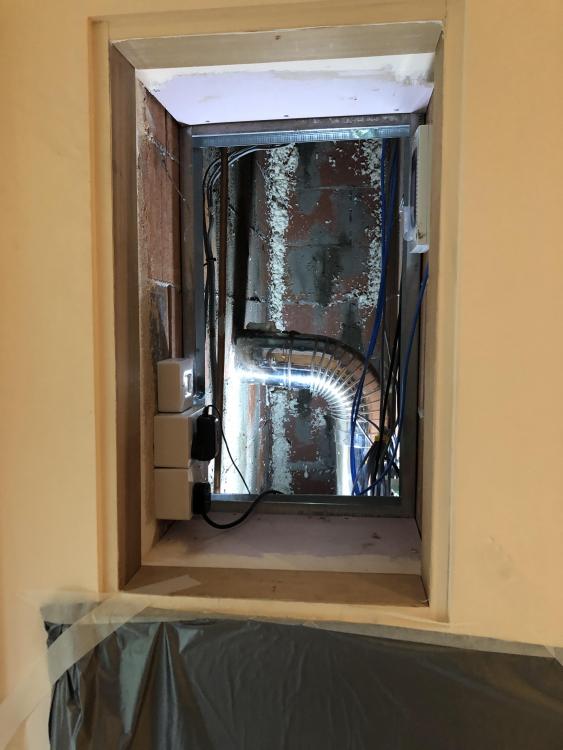
OK, a very messy morning - I made up the mix and was really struggling to get it into the holes. The problem is that I am working through a small opening and cannot get the right angle on the brush. I was using a small broom and at full stretch between the head and the mix on it, it was very difficult to control. So I tried a small roller and a small brush taped to the end of a pole. These worked much better and I could work the mix into the vertical joints. But I suspected that the main issue was the space between the first floor slab and the outside wall. In the end the only way to fill this was foam. I attached an 8mm pipe to the can and attached the pipe to a brush handle. I had tried this before but was running into problems at maximum reach. I ran out of hands to both keep myself steady and squeeze the trigger. Plus due to leaning from a set of steps at a steep angle the step would start to slide out from under me. This time I enlisted my wife. She held the can and squeezed the trigger as well as standing against the steps so they did not move. This worked much better allowing me two hands to direct the foam and hold myself steady. It feels a lot less breezy in there now. I am also taking this opportunity to put a wifi extender in there to get a better signal out on the terrace. When you close triple glazed doors that pretty much kills the signal and sometimes I want to sit outside and stream stuff. Just waiting for the foam to dry to scrape some of the droppings off and tidy up.
-
Not sure what the issue is but I got somewhere by using the escalating complaint method - Officer, team leader, head of planning etc. I wouldn't worry about NIMBY objections, most of them are farcical and ignored. The COVID excuse is preposterous. Planning is the kind of job that should be unaffected. I worked from home sitting in the dining room for over a year and got more work done. Planning officers couldn't make site visits so should have more time. TBF I do have a friend who is a planning officer and he sounds very overworked, there has been a big increase in application numbers. However, this brings in more fees so funding should not be an issue. Lack of qualified staff might be though. Now we have a BC application that is taking months and months. Architect recently got an email saying that the officer had been on long term sick and was back. This also happened with planning when our house was applied for. The thing is, no one tells you that they are off sick, they just let you think you are being ignored and cases do not seem to be reallocated.
-
It's a fake chimney. There is a twin wall flue that goes out through the wall. That's the top of it in the bottom picture.
-
Off to B&Q later. Absurdly it looks like I have to buy 25kg of lime. I'll post the results when I am done.
-
Thanks @JohnMo What’s the water ratio I would use in that mix?
-
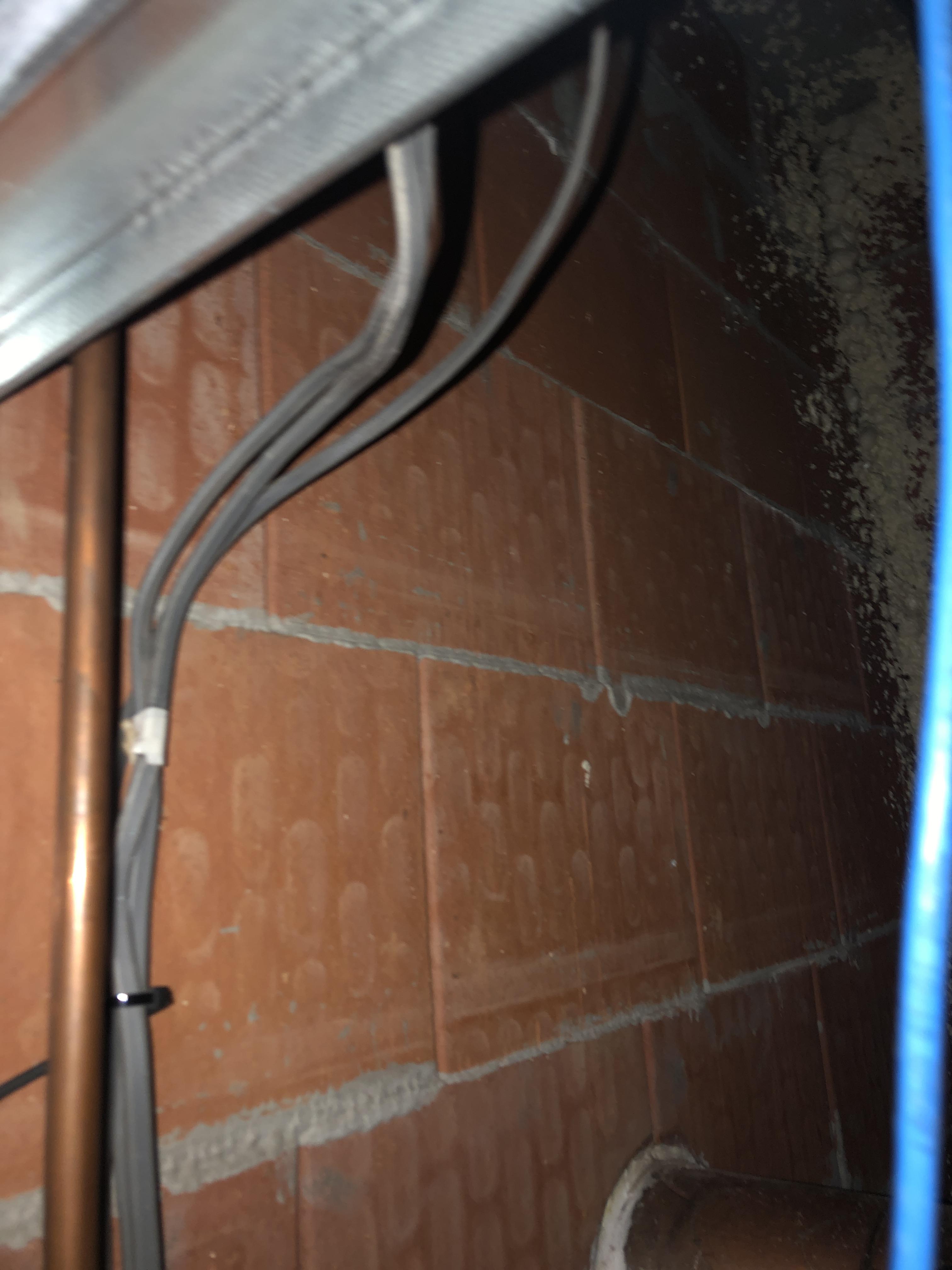
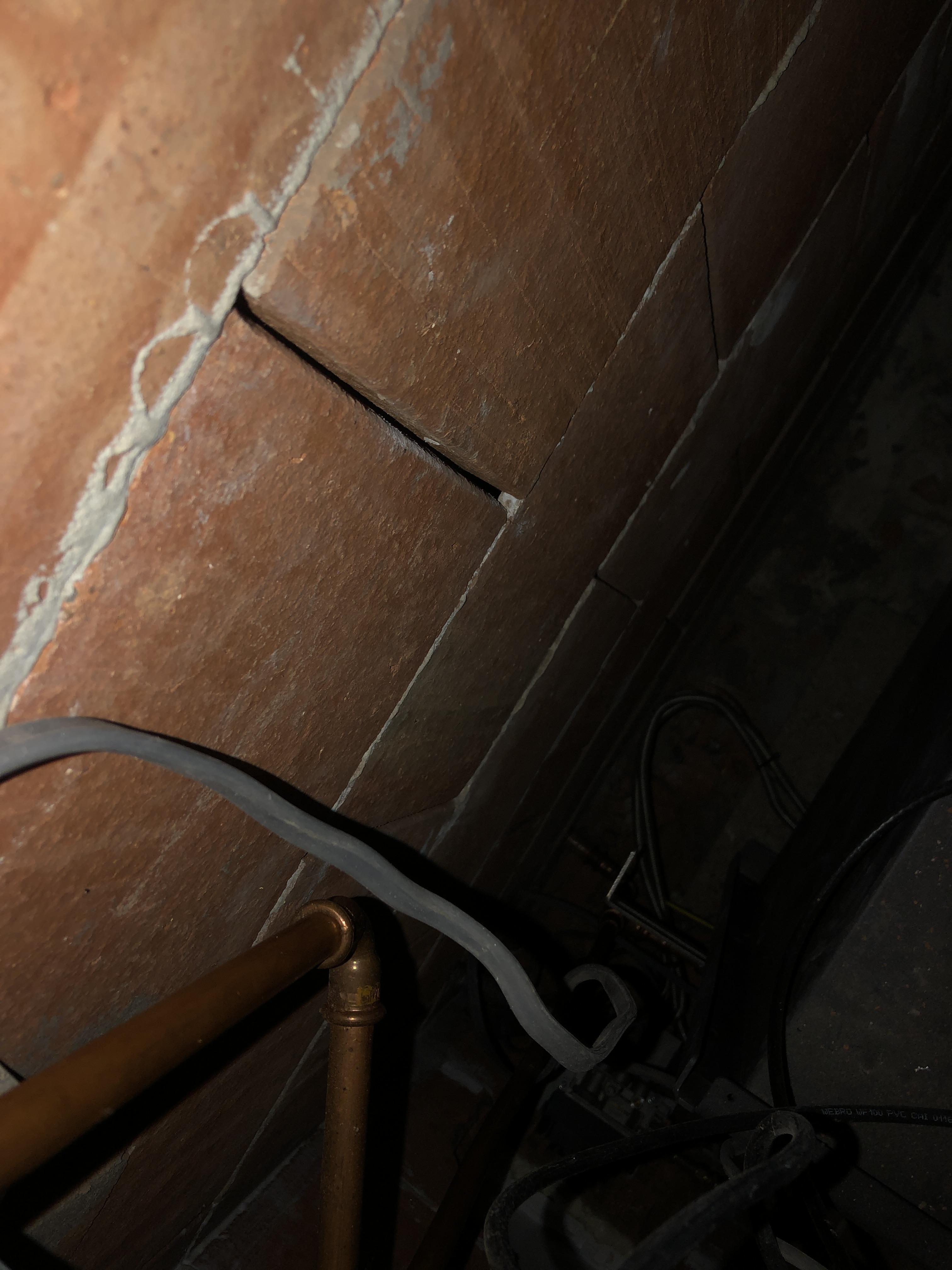
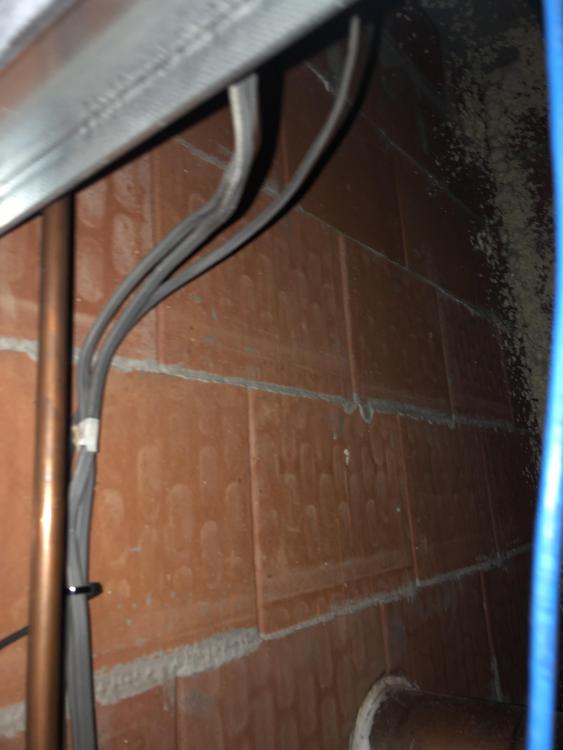
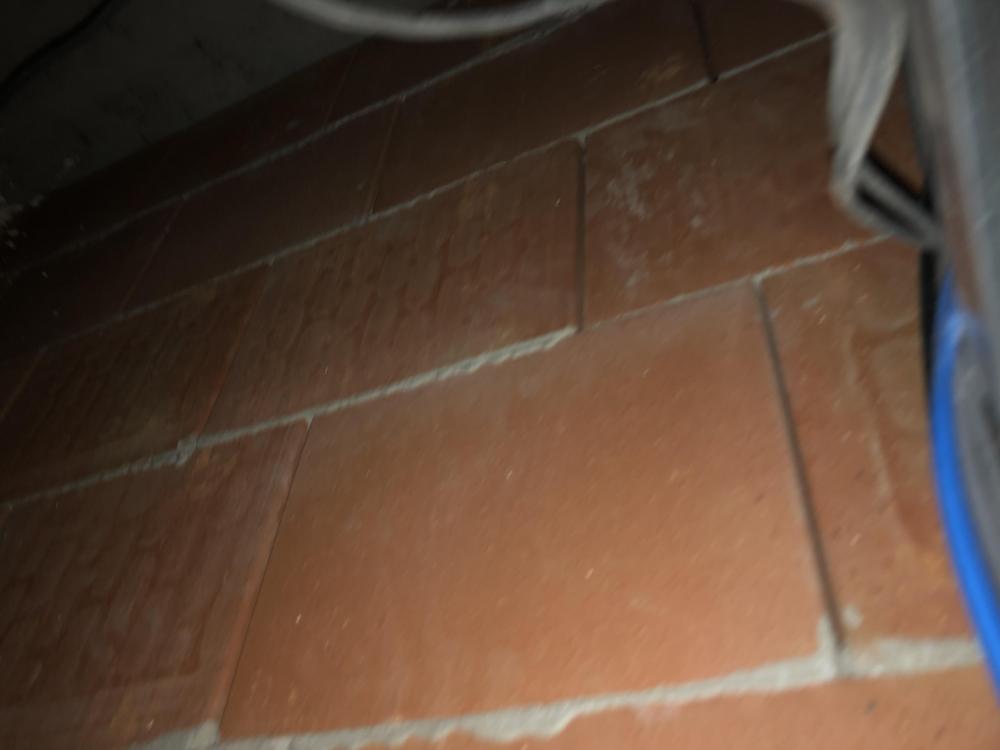
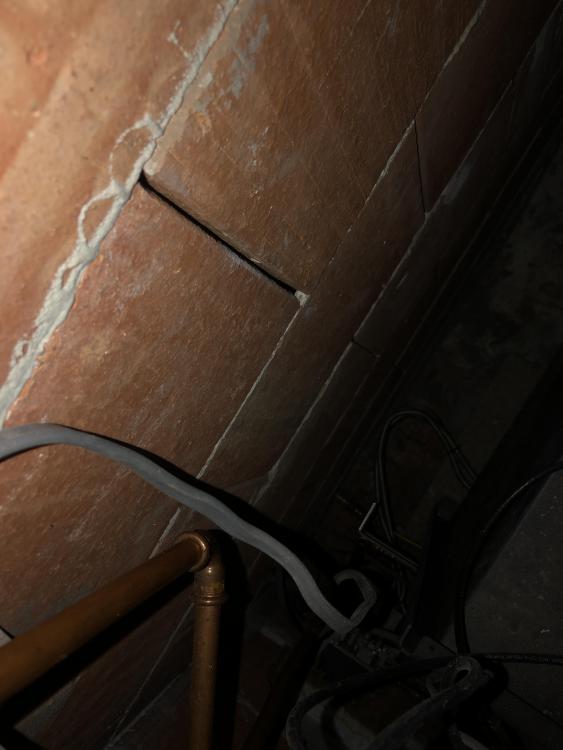
I am almost done with filling in all the gaps the builders left before I get my second airtightness test. One job I have been putting off doing, but want to do is the inside of the chimney breast. The idiots put the large coat on the outside of the chimney breast, and did not parge inside it before putting the fire in, despite being asked to a couple of times. It is obviously draughty in there. I cannot figure out exactly where the draught comes from, it might be a number of places. Inspecting it, there is around a 10mm gap at the top under the slab, so that may be allowing air in from the cavity. There are also vertical gaps between the blocks as Porotherm does not have mortar in the vertical joints and various gaps in the corners where it meets the outside wall. There are door frames behind these gaps so they may also be a source of air leakage. I have tried foaming up the largest holes, but having looked at it I cannot foam up all the vertical joints. It is also difficult and messy as I am working through a roughly 400x600 hole at the side and some areas are around 2m away from where I have to work. So I was thinking of using a long brush to try and parge the walls. The area is only around 4-5 square metres so I don't mind about the cost/m of what I use. Just something easy to mix up and that won't drip and run al over the place. It also needs to be able to fill in gaps around 10mm wide. I was thinking of buying this. https://www.amazon.co.uk/Bostik-30812571-Cementone-Render-Repair/dp/B01D8FRGMI/ref=sr_1_1_sspa?keywords=plaster+render&qid=1636887565&sr=8-1-spons&psc=1&spLa=ZW5jcnlwdGVkUXVhbGlmaWVyPUEyQko4Q1hRWlU1NFBHJmVuY3J5cHRlZElkPUEwOTQxOTU0WkFYUVJaWFMyUE9IJmVuY3J5cHRlZEFkSWQ9QTA4ODEyNDgzMjFWNEw1U0ZDT1lUJndpZGdldE5hbWU9c3BfYXRmJmFjdGlvbj1jbGlja1JlZGlyZWN0JmRvTm90TG9nQ2xpY2s9dHJ1ZQ== Any thoughts?
-
The done thing is not to put UFH under cabinets etc. However, I notice in our house that because of this when you stand near the kitchen island the floor is annoyingly cold. You don't want it under showers due to evaporation I guess also under a larder cupboard and made under the fridge and freezer as they would have to work a little harder to stay cold. Otherwise I don't see why it can't be put everywhere.
-
Worktop delaminating: which glue to use?
AliG replied to ToughButterCup's topic in General Construction Issues
You can turn off the auto opening function. I also believe that it only works in the Eco mode, so you can run another program to stop it happening. Doesn't help you much, but as soon as I saw this feature I made sure it could be turned off. We have quartz worktops, but I still didn't want steam constantly coming out of the dishwater and possibly damaging the door. You'll never save enough energy to cover the cost of a new door/worktop! -
Notice of intention to issue Enforcement Action
AliG replied to Susan61's topic in Introduce Yourself
I think you should stick to the relevant facts and not get into arguments that muddy the waters. State why you believe you have complied with permitted development which asks for similar, not identical materials. Showing other examples of dormers in the area may also help in this case. State the facts regarding the inability to source other materials and the fact that you did try to engage with the council re this but received no reply. Arguments re the environment, waste of everyone's time and money etc will be considered irrelevant. Hopefully this is enough for them to see sense. -
I try to provide areas myself. Often when asking a tradesperson to quote they will overestimate and then price based on this. Funny that. It also leads to over purchasing of materials. The trade view is that they don't want to waste time by running out and they don't pay for them so ordering excess materials is not their problem. For example, if you ask a tiler to measure a bathroom they will include the area where the bath, door, windows and mirrors are. I take all of these away then add 10-15% to the area depending on how complicated it will be. I still have a load of spare tiles in the garage from doing it this way. When doing our house my builder calculated the area of one room totally incorrectly. It was then I discovered that he didn't know you could scale and measure an area on a PDF plan. I had to show him how it worked.
-
I think you will require a test just to put your mind at rest. However, asbestos was mainly used in insulating and fire proof products. It is unlikely to be in residential plaster/board. If you had ceiling tiles or Artex I would be more concerned. Even if there is asbestos there, it is cumulative long term exposure that is most concerning and you would not have reached that point.
-
The research evidence on security alarms
AliG replied to Adsibob's topic in Networks, AV, Security & Automation
Yes this is what I was talking about, as I understand it steering locks are not that secure. Again these are a nice visual deterrent. Why not move on to an easier target. -
The research evidence on security alarms
AliG replied to Adsibob's topic in Networks, AV, Security & Automation
A few years ago there was a spate of cars being stolen around our old house. People broke a door lock and came into our kitchen, but the alarm went off and scared them away, so a small piece of anecdotal evidence there. On the other hand, neighbours across the street were on holiday and people broke in. It took them less than two minutes to silence the alarm, search the house for their car keys and drive off. I caught it all on our Ring camera, but could only see what was happening and not identify anything specific. Discussion with neighbours then ensued. Everyone wanted a high tech and expensive wa to protect their cars. This was ridiculous in my view. The best way to stop burglaries is physical protection. If they cannot get in or see anything worth stealing they will move on. Certainly here, mos burglaries are to get car keys and the simple solution is to put you car in the garage. We have been doing this every day for years now and had no further issues. I just could not persuade people to do this instead of spending money on more exciting, but less useful high tech solutions. Maybe it is best to think about how to increase security and what gives the best cost benefit. 1. Physical security - Locks - After our french door lock was broken, I was surprised to find that an enormous percentage of burglaries involve lock snapping as had ours. We replaced all our locks with higher quality locks where this could not happen easily. This cost just a few pounds per lock and the mind boggles that window companies and builders do not fit these as standard as the extra cost on new doors and windows would only be a few pounds. A total no brainer. Laminated glass - Again, a very high percentage of burglaries involve broken windows. My parents were broken into by simply chucking a brick through their patio doors. All of our windows are laminated. I consider this one of the best ways to prevent burglary. It would be quite hard to get into my house or already replacing windows. Great if building a new house, too expensive otherwise. You can add film to existing windows to the same effect, but this is not that easy. Lights - The data you attached suggests that security lights are a cheap no brainer. LED lights now mean that you can light up your house quite cheaply and easily at night. We have dawn to dusk lights on permanently. They can also make it look like you are at home, up early etc. Again, a cheap no brainer. Secure your car - Garage, bollards, gates etc. A decent percentage brurglaries are to get your car keys. If you car is in the garage or behind bollards or a gate then they will move on to an easier target. It could well be free to put your car away, it also stops it frosting over, keeps it cleaner etc. Total no brainer. 2. Alarms These probably are of minor deterrent use, but the key thing is do people actually use them. We had our alarm on when broken into and it scared them off. Today our alarm is app connected and very easy to set from in bed our when out/ on holiday etc. I can turn it off when on holiday if someone wants to check the house then back on. I feel that using the alarm is key and that the right kind of system today makes using the alarm much easier. Monitoring etc need not be expensive. We have a wireless system, professionally installed. The lack of cabling makes the install match cheaper. Monitoring and servicing costs £250 a year. You get part of this back in reduced insurance. However, I would say that monitoring is only useful when not at home and the main deterrent factor is that the alarm wakes you up and scares off burglars. The reason I think insurance companies like to see you pay for this is that it tells them the alarm works and you use it. People are more often than not at home when burgled. 3. Cameras. I have CCTV cameras, but I am very skeptical of their worth. The reason for this is that most burglaries occur when it is dark and that you cannot identify people in the dark on a camera. Similarly all it requires is putting on a big hood to cover your face. I have them so that I can monitor what is going on around the house and for a bit of a deterrent, but I consider other things much better security. I think a Ring type doorbell camera is probably better than CCTV as a lot of people will try your front door to see if anyone is home and to see if it is left open. 4. Don't be overly flash with easy to steal stuff. Much as this smacks of victim blaming. Putting loads of expensive stuff on display is very tempting. Again the evidence you posted shows that burglars look at risk/reward. What do most people have of value in their house that could be easily stolen nowadays. TVs have collapsed in value. Maybe laptops. Jewellery, watches, cash etc are much higher value small items. If you show off these things it increases the chance of being targeted. Similarly if you have an expensive car, put it in the garage. Why would you break in to a house to steal a car when you don't know if it is even there. You car is likely worth multiple times anythignthat could be stolen from in the house. In smart many kinds of physical security cost next to nothing to massively reduce your chances of being broken into. Not flashing your wad of cash and wearing your Rolex everywhere would also help, but is probably not relevant to most people. After this cameras and alarms are more expensive with less incremental improvement, but the combination of multiple approaches will likely make you safer. To me an alarm is relatively cheap compared to the hassle and distress of being burgled. -
Boiler leaking water drops since January 2021
AliG replied to plumbingo's topic in Boilers & Hot Water Tanks
The COVID risk of getting a qualified plumber to fix this is minimal. Most of the risk would come from talking to someone not wearing a mask in a confined space. Open windows and leave him on his own to fix it if you are worried. Messing around with a boiler whilst unqualified is a lot more dangerous than COVID. -
Sorry. Commenting while jet lagged! I didn’t realise the other drawing was a revision as it looked so different.
-
As you are making a lot of changes, I think I would go further and do more with the space. I personally would never ever have a WC open onto the kitchen, it is not good for privacy. I am not clear what that space outside the pantry and WC is supposed to be used for. Also why would the pantry be so far from the rest of the kitchen Do you need a pantry, it looks like you have plenty of kitchen cabinets. Is that space behind the stairs a study at the moment? I would think you have room for a study and with everyone working from home now that's would be good to have. Did you consider having an entrance to the kitchen at the back of the stairs so you can go straight there from the front door instead of through the lounge? Maybe that space is too tight. If you had a more central door in the kitchen, I would take the area behind the stairs and make half of it utility room and half of it WC. Then I would make the whole WC/Pantry/Entrance area a study or even downstairs bedroom/en suite. IF you cannot get the kitchen door into that area then it might be too far to get to the WC from the kitchen.
-
Not quite. The three phase guy can’t do gas and they forgot to organise a separate gas meter install.
-
Perfect worktop doesn't exist - but how about optimal?
AliG replied to puntloos's topic in Kitchen Units & Worktops
That’s right. We used to have butchers block effect laminate in the utility room that I really liked. But as I’d tell my daughter a stone worktop is “swanky”. Apparently this is a word only old people use. -
Perfect worktop doesn't exist - but how about optimal?
AliG replied to puntloos's topic in Kitchen Units & Worktops
I am perfectly happy with our Silestone. We had black granite then white/grey granite in our last house and I liked them too. Granite is more heat resistant than quartz and harder to stain. I think most of the staining issue with quartz though is that people go for lighter colours. You wouldn’t have known if the black granite was stained. We have a small amount of Dekton that our BBQ is set into and objectively it seems to have the best qualities for a worktop in that it is heat resistant to 500C I think as well as stain resistant. There seemed to be less variety available and less polished surfaces but looking now it seems that there are more choices. I think though all of these are quite durable and I would go with what you like the look of and price of. Corian to me seems too easily damaged and stained, the same with wood. -
Thanks for the shoutout @Ferdinand I’m on a plane for the first time in two years so not as easy as normal to comment. Lots of things I can say that might be worth thinking about as general design points. 1. I too live in Scotland. I don’t like porches but you should always have a canopy at the front door to avoid visitors getting soaked whilst you come to let them in. 2. We also have a covered area outside, a sitooterie as our architect calls it. We often end up out there even though it is raining. However they do shade the windows quite badly which you might want to think about with that being the largest window in the lounge. 3. You are right not wanting the hot water cupboard in the kitchen. Also, and I see this all the time, architects should not be allowed to design kitchens. They seem to have no idea. The pantry is on the other side of the island away from where you will be cooking. That is an awful design. Also the kitchen door opens up into a tiny little space and you have to squeeze past the breakfast bar to get into either the lounge or the kitchen. Really poor. My rule is that you should always try and keep the area entering a room as open as possible and place fixtures far away from the door. This will stop your house feeling cramped even if it is not. I also doubt understand why you would want a breakfast bar right next to a table with the chairs bumping into each other. Do you really need both in what is a relatively modest sized room. 4. It sounds like you are quite flexible on space. Why not attach the garage to the house. It makes it a lot easier to store stuff in there and you can get in and out of the car without getting cold and wet. 5. Hard landscaping is very expensive and can be quite harsh. I would break up that area in front of the house. 6. Again, living in Scotland, you want to maximise the light available. I don’t mind too much the house facing north for the views, especially the bedrooms. They have less need for light during the day. However the real error is putting the kitchen and lounge on the east end of the house. My wife likes to sit outside in the morning and even on a nice day it is often freezing early on. Our old house faced east and the back and it was dark in the kitchen by 1pm. The afternoons and evenings are much more pleasant in Scotland. You can sit outside until midnight on a nice summer day. What we find is that the paving soaks up heat over the day keeping it warmer in the evenings. The architect has shown a lack of imagination. The house does not have to line up with the plot at all. It can be at any angle. I think it might be better to have the lounge and kitchen at the other end of the house. But I really think the T shape is poor at capturing the light and need to think about it
-
I assume that the market believes that the spat with Russia will be over eventually so gradually prices this in. The price is lower again for 23 and 24. The BBC News website had a quite outrageous headline on Thursday, I have copied the link to the whole story. This problem is mainly being caused by Russia and the BBC actually printed that Putin had stepped in to help with no mention anywhere that Russia had created the problem in the first place. I am appalled. https://www.bbc.co.uk/news/business-58815665 I just made a complaint to the BBC, the article makes out Russia is helping us out when in fact they are costing millions of British consumers a fortune.

-
If they are connected properly the panels will generate electricity irrespective of being "registered". Is the hot tub actually connected to the ASHP or it it using its own resistance heater? Is it inside or outside and how well insulated is it or the room it is inside?
-
Gas markets have been insane in the last two days. The 240p price from Friday hit a high of over 400p today before closing at 265p when Russia said they would add to supplies.
-
From this your water heating energy use is 2598 kWh/year. Note they assume that you also use 1720kWh to top it up with the immersion, something many people on here do not do. Anyway that is 7kWh/day from the ASHP. The space heating need is 4908kWh. This is likely only over around 6 months, so 27kWh a day. Peak days would probably be around twice this, so 50-60kWh a day. Thus your maximum requirement from the ASHP is likely around 60-70kWh/day. A 5kWh pump could do this comfortably. Often the pump will be oversized to 8kWh to give more capacity for heating hot water and to help it run at a slightly better COP.
-
It goes in on Thursday. I have been worried will it be cancelled if my provider goes out of business but I’m ok so far.