SteamyTea
-
Posts
23860 -
Joined
-
Days Won
200
Everything posted by SteamyTea
-
It is not you, as an individual, that they are concerned about, it is the possibility that several thousand people, who all have the same idea, do the same. The very thing you are after is only there because of our restrictive planning system. So it looks like you need to do it under the radar. Get a bit of woodland that has a decent access to a road (one thing that you need anyway), fence the area off so that it is obvious that it is private land, get a borehole drilled for your water. Then do nothing for 2 years. Then put a small, but old looking, shed, somewhere visible. Leave for a year. Then take it down, for another year. Then put up a slightly better one. This will, hopefully, attract attention. But why the authorities are looking at the shed, they may not notice the small cabin that you have hidden somewhere else. Or buy a small farm, rent out the house and most of the land, and live in a small corner of it. Or move to a country that allows this sort of thing.
-
If I see some thus summer I shall buy them. Should last till i am 100. They are, without doubt, the most comfortable chair.
-
I used to do painting and decorating when i first started lecturing. Happy days they were.
-
I am decorating, I hate the mess it makes. Took a day off from it yesterday, now got more to do.
-
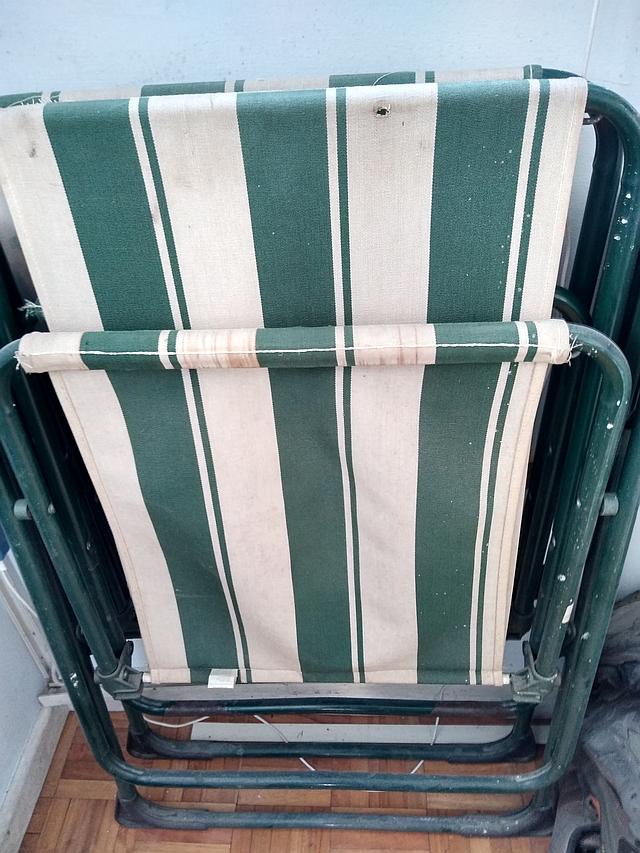
I love those chairs, 35 years sterling service they have given me. Does amaze me that just a bit of bent tube, placed on a wall can block a radio signal. I wonder if I place them there at 1 AM, the radio signal to my E7 meter will get blocked and I get cheap power from then on.
-
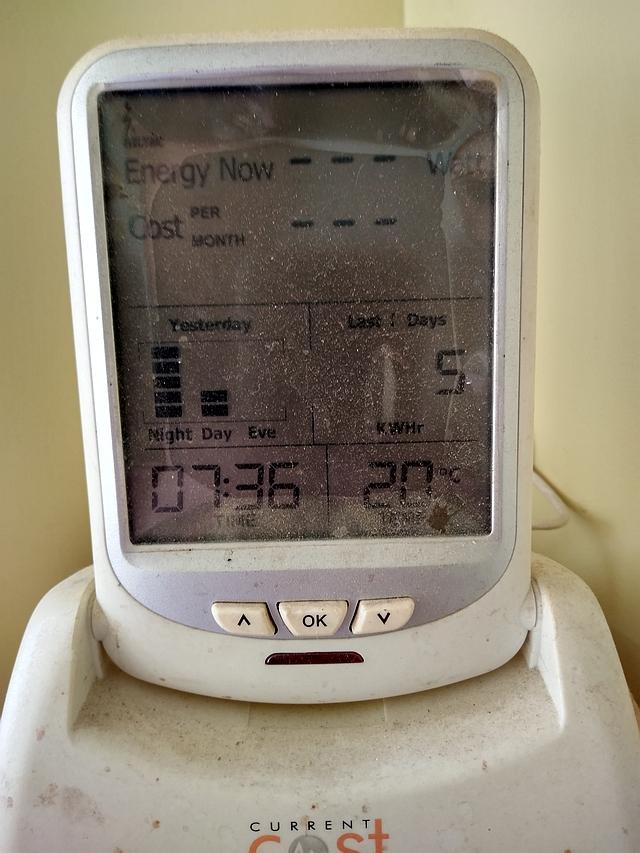
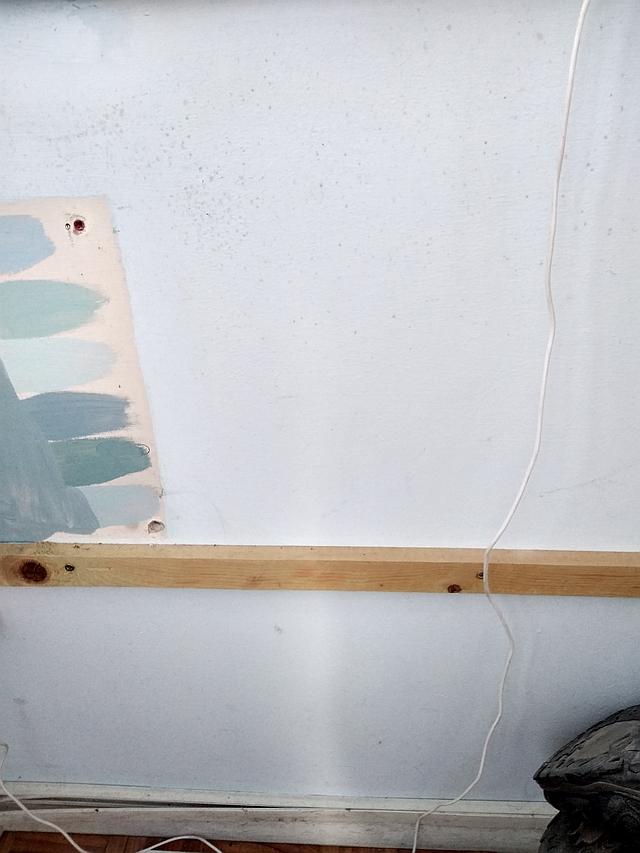
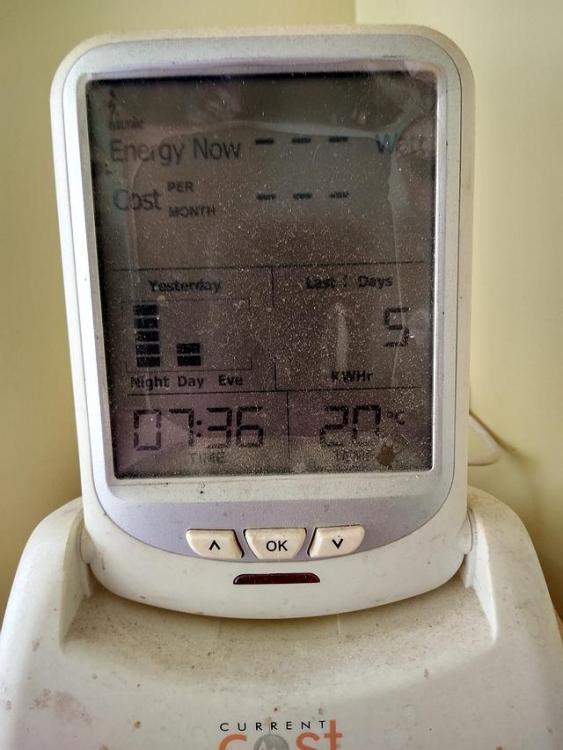
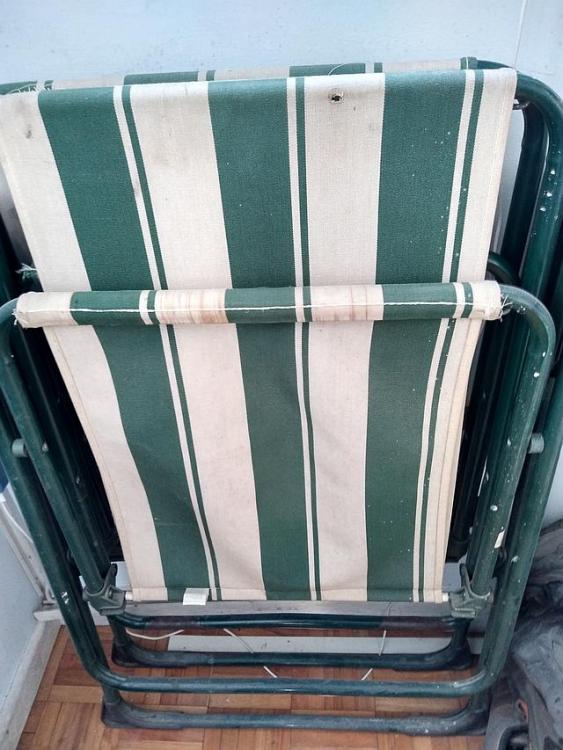
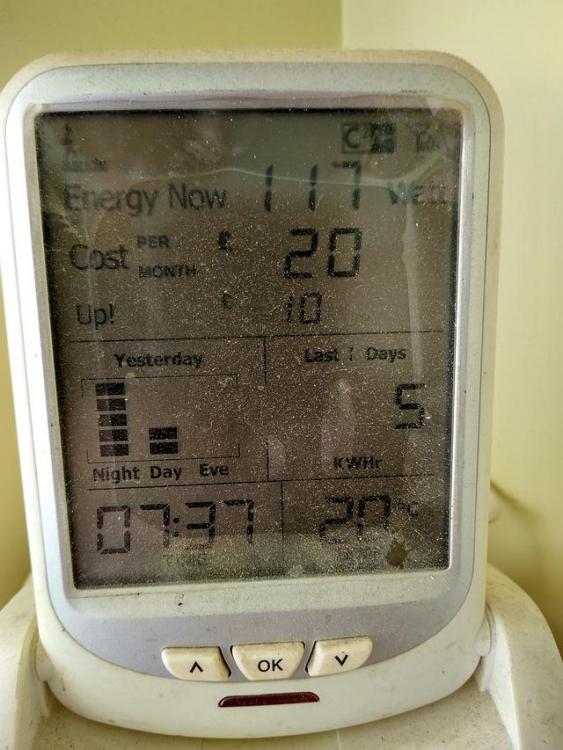
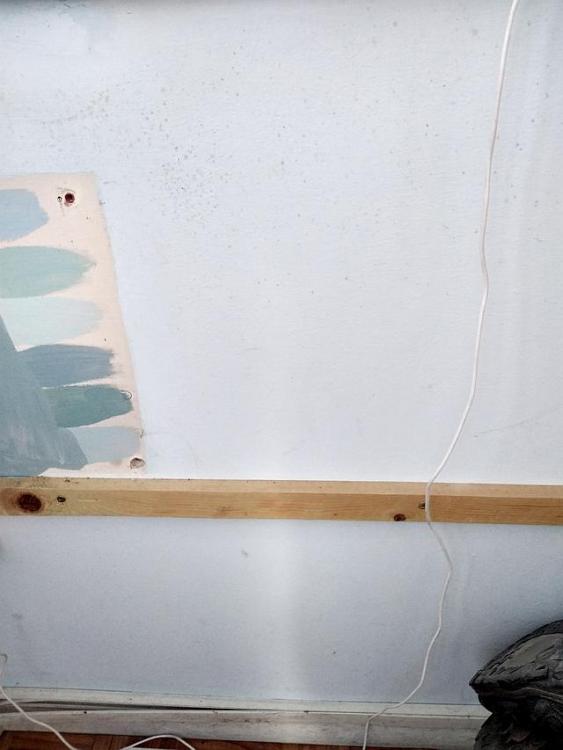
While making my cuppa (or 3) this morning, I noticed that my energy meter was not reading current usage. This happened the other day so I changed the batteries in the sensor and all seemed fine. Then I remembered something from years ago when I had the same problem. It is caused by my collapsible chairs, the ones I bought for a tenner in 1985, from the Esso garage. This must be why, when I sit in the sun on one, I feel so relaxed. Here is the photo evidence. Meter with chair in way-->chair in way-->meter with no chair--No chair.
-

A Energy Rated unvented cylinder
SteamyTea replied to Robert Clark's topic in Boilers & Hot Water Tanks
Need to make it look like a Dalek, would scare the crap out of nosey small children when then open the door. -
A Energy Rated unvented cylinder
SteamyTea replied to Robert Clark's topic in Boilers & Hot Water Tanks
Rather than fret over the actual insulation on the cylinder, can you make the cupboard it is in insulated? I could only put a standard replacement in my cupboard, but then filled the gaps with a combination of mineral wool and sheet insulation. Over halved the thermal losses. -
Me too.
-
Which wood material to use for Sliding Door
SteamyTea replied to overdrev's topic in General Flooring
Birch faced ply. But it is heavy compared to normal cheap ply. Is the area going to get wet at all? -
When @Joe90 and myself set up his MVHR for monitoring, we put a small cut into the ductwork, popped the sensors in and then taped over the hole and cable. @MJNewton Am having an look at your scripts to see if I can make sense of them. Is there a reason that you read the sensors with Bash rather than Python? Not got to the bit about RDD yet.
-
Oil Prices nearly 30% Down
SteamyTea replied to Ferdinand's topic in General Self Build & DIY Discussion
Yes it was, and I did not support it. I had a wager, in 2008, with the science department technician that oil prices would drop. A year later it was almost half the price ($91 down to $53). It was a refining bottleneck that caused the 2008 spike. -
Well the girls did not want you to go back, so final for you.
-
Yes, we established that when we were out on our last dogging adventure.
-
And as you stand up from the bath to open it, what will the neighbours say?
-
I shall get back to you when I am more awake as I would like to know how an RRD works, I have never managed to get one going. But while I think about it, how easy is it to group data by say RH at different temperatures and times. So something like: Between 00h an 01h Temp Range between 00 hours and 01 hours 0 to 1, mean RH 1 to 2, mean RH 2 to 3, mean RH and so forth, and maybe putting a count in to get a temperature distribution.
-
Oil Prices nearly 30% Down
SteamyTea replied to Ferdinand's topic in General Self Build & DIY Discussion
Yes, it was a quirk because of lack of storage. But who remembers when there was talk of $250/barrel being the new normal? -
Oil Prices nearly 30% Down
SteamyTea replied to Ferdinand's topic in General Self Build & DIY Discussion
Oil prices gone negative. I filled up yesterday, (expletive deleted). -
On tonight's COVID briefing (may have been on PM just before it) there was a comment about how well the public are accepting of the lockdown. Better than most countries apparently. Is this because most of us hate our jobs?
-
Get a cheap saw and a half decent planer/thicknesser.
-
Emersion heater timer
SteamyTea replied to Russell griffiths's topic in Electrics - Kitchen & Bathroom
I bought some, all about the same price, one sort lasted a few months, the others have been in over 10 years now. These are the ones that lasted, and they have battery backup. https://www.amazon.co.uk/DIGITAL-IMMERSION-HEATER-TIMER-LG-DIHT/dp/B0066NEBO6 -
I think we should discourage working for cash, we are going to have to pay back about £3tn (all government debt). Email the brickie and ask if he sent it out on April 1st as a joke and tell him to turn up.
-
I had the forerunner to it. POS. 13 months old the drum bearing went. Could not get spares, Hotpoint had taken the model off the market because it was so unreliable. Eventually got my cash back from Tesco and an extra 100 quid. Bought a Bosch, still working very well ten years on.
-
I have my small (500W) fan heater on. Been decorating most of the day, left the back door (NE facing) open. Bloody freezing in my kitchen now.