SteamyTea
-
Posts
23836 -
Joined
-
Days Won
200
Everything posted by SteamyTea
-

Insightful piece on more or less today.
SteamyTea replied to MikeSharp01's topic in Environmental Building Politics
But Little Tim Hartford's mate got 3 hours of gardening for 300 quid, not 1 hours gardening for 300 quid. I better write to him before September. -
Wish I had one. Left home at 6 AM and forgot to open the upstairs windows. After 11 hours driving in 30+°C temperatures, and an hour in the old folks home, which was very warm, I get home and my bedroom is 32°C. I just want to sleep deeply.
-
Yes. It is easy to forget that it is the change in load that makes the difference. Very much the same in thermodynamics.
-
Top of the class for me .
SteamyTea replied to Pocster's topic in Energy Efficient & Sustainable Design Concepts
Bankers were they.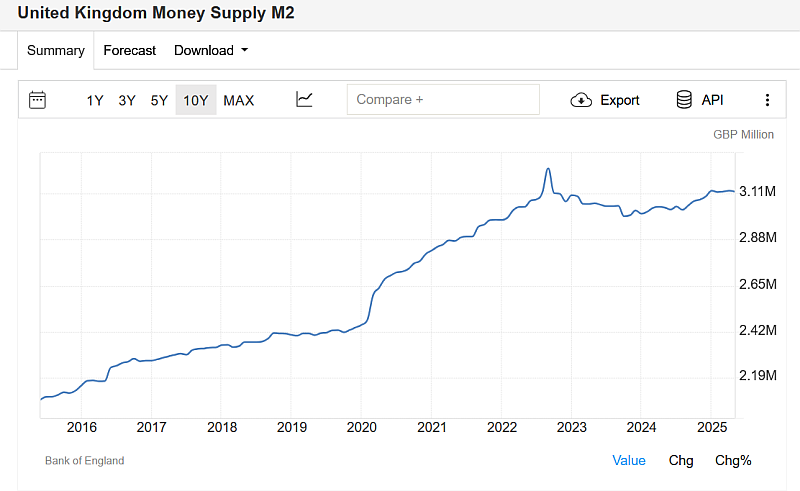
-
X-Spurt X is the unknown, spurt is a drip under pressure.
-
Top of the class for me .
SteamyTea replied to Pocster's topic in Energy Efficient & Sustainable Design Concepts
It may be hidden here: https://bregroup.com/expertise/energy/sap/sap10 It is a rdSAP standard, so this document. https://bregroup.com/documents/d/bre-group/rdsap-10-specification-10-06-2025 -
You trying to get me into trouble. I find a good squirt on the soles of bare feet stops them running away. @Pocster taught me that. 3 in 1 works as well.
-
Won't the WD40 stop the squealing.
-
Not sure I understand your concern here. You will need some access to it for cleaning, even in a well run kitchen, things still managed to find their way in. In commercial kitchens, baffles are used to catch all the fat and grime. Not seen them on domestic extractions. They are easy enough to make.
-
This is from the BBC

-
Belgium is closer to Trevor than I am.
-
Top of the class for me .
SteamyTea replied to Pocster's topic in Energy Efficient & Sustainable Design Concepts
Why should they when a stern letter to the Daily Telegraph, or a badly informed one to the Daily Mail, will get policy changed to more fossil fuel burners and higher prices. Only got to see how a small group of right-wingers has got control of the EU climate committee this week to see what damage can be done. Don't let the better be the enemy of the best -
Top of the class for me .
SteamyTea replied to Pocster's topic in Energy Efficient & Sustainable Design Concepts
Isn't an EPC to do with reducing energy usage, which has the side benefit that is also reduced CO2 emissions. I agree that the system is not perfect, but it has been around long enough that we know how it works. -
Go to Trevor at cylinders2go (Telford) and mention my username and the forum Did me a good deal and it was delivered in a couple of days.
-
Top of the class for me .
SteamyTea replied to Pocster's topic in Energy Efficient & Sustainable Design Concepts
Why unfair? Those technologies do not generate power on their own. -
Spend an extra hour in the car in the A30 and save yourself more disappointment. Out of interest, did you pay by credit card, though I am not sure if consequential damage is covered by Section 75.
-
Kw/h is thermal mass. And electric comes from unicorn farts (that was either @DamonHD or me said that over a decade ago, but neither of us remember who said it first, but happy to take credit for it, not as if I am walking The Fraud Path at the minute).
-
Look for a taper on the edges then.
-
Dimples down. It creates more surface to whatever it is bonding to. Actually I don't have a clue on those council slabs, but when we made tooling for concrete slabs, the edges had a slight taper on them so the slab realised from the mould easily. The slightly small face became the top. That face could have any texture you liked on it. Those slabs look like they are stamped out, hence a texture on both faces. Stamping, or high pressure moulding, allows for less water usage (just the correct amount), better filling of the tool, less waste, faster processing times (minutes rather than hours) and a more homogeneous product that takes up less manufacturing space.
-
Planning Permission, Heights of Fences, and Public Rights of Way
SteamyTea replied to Ferdinand's topic in Boffin's Corner
Think that is a heathen thing. We feed our children, Tom Bawcock fed the whole village. Should have got Tesco to deliver, it is only 3 miles away. -
Planning Permission, Heights of Fences, and Public Rights of Way
SteamyTea replied to Ferdinand's topic in Boffin's Corner
With Cornwall being different again. It is Mousehole, so as long as a small child can roll a barrel of pilchards down it, then there is room for a campervan. -
A pause for breath… (& to take stock of cost of foundations…)
SteamyTea commented on G and J's blog entry in Da Bungalow
We have a Flora Day down here they do the Fury Dance on it. -
Planning Permission, Heights of Fences, and Public Rights of Way
SteamyTea replied to Ferdinand's topic in Boffin's Corner
I am sure you have seen this, about the width. https://www.gov.uk/guidance/public-rights-of-way-landowner-responsibilities No idea about height on the boundary, some buildings are the boundary, and after quite tall. Took this yesterday. Not much more than a metre wide in places.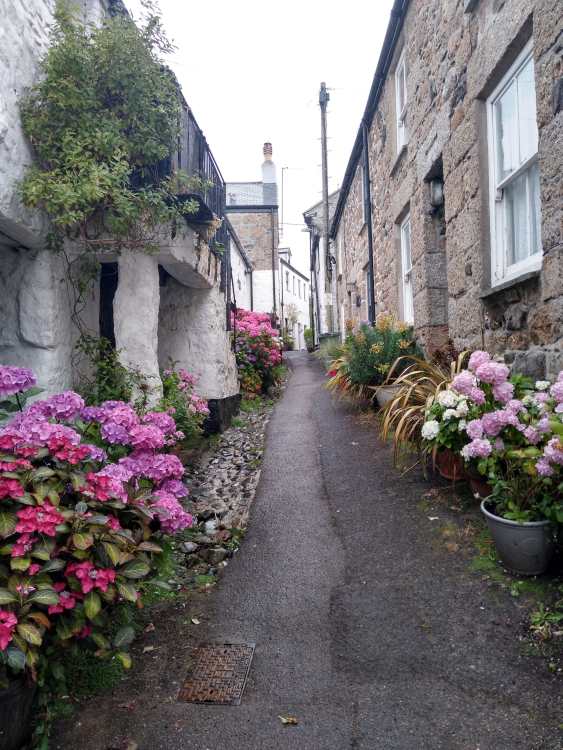
-
While they can heat, or cool, the air by a few K, there is not much airflow though MVHR, so not much power into the room. Fitting them into ductwork is really for forced heating/cooling systems.
-
UFH Design - LoopCAD, Heatpunk,Spreadsheets & Copilot
SteamyTea replied to Adrock's topic in Underfloor Heating
As @JohnMo says, more floor insulation. Once you know the total, worse case, heat losses, it is relatively easy to work out the pipe spacing. I cannot think of a good reason to go greater than 16mm tubes. I think 20mm is for very long runs and lots of tight bends. Check you can do the full loop with one length, you really only want joints at the manifold.