SteamyTea
-
Posts
23375 -
Joined
-
Days Won
190
Everything posted by SteamyTea
-

MVHR ? Who needs it? I don't.
SteamyTea replied to ToughButterCup's topic in Mechanical Ventilation with Heat Recovery (MVHR)
There seems to be a lot. https://scholar.google.co.uk/scholar?q=effects+of+elevated+co2+concentration+on+sleep+cycle&hl=en&as_sdt=0&as_vis=1&oi=scholart -
Looks a bit like EPS. EPS has a k-value to 0.036. PIA-brochure-Fundamentals-Symbols-and-Terminology-of-EPS-Thermal-Insulation.pdf
-
Pipes & Plastics in the Sun
SteamyTea replied to Spinny's topic in General Self Build & DIY Discussion
How timely, from this weeks comic. Why do plastic clothes pegs fade and get brittle in the sun? One reader draws on his chemistry days to explain why some types of plastic become fragile after exposure to ultraviolet light 16 April 2025 Caroline Burrows/Alamy Last Word is New Scientist’s long-running series in which readers give scientific answers to each other’s questions, ranging from the minutiae of everyday life to absurd astronomical hypotheticals. To answer a question or ask a new one, email lastword@newscientist.com I recently bought plastic multi-coloured clothes pegs, which have slowly disintegrated in the sun except for the yellow ones. Why? Peter Holness Hertford, Hertfordshire, UK The phenomenon that destroyed the non-yellow clothes pegs is called “unzipping”. Many years ago, a chemistry colleague told me about it. His explanation was that the sun emits high-energy photons capable of breaking chemical bonds. This explains things like sunburn and curtains faded by sunlight. Most plastics are polymers, which are made from smaller units called monomers that link together through chemical bonds. Polyvinyl chloride (PVC), for example, consists of repeating vinyl chloride subunits. In turn, the subunits consist of carbon, hydrogen and chlorine atoms. Sunlight has been known to unzip PVC by dislodging hydrogen and chlorine atoms, creating hydrochloric acid and causing further erosion of plastic subunits. Unzipping potentially affects other plastics, too. It can be slowed or prevented by introducing certain chemical additives to the material. So, one possible explanation for the survival of the reader’s yellow pegs is stabilising additions of this sort. Another explanation for the disintegrating pegs involves both light absorption and heat. The colour of the plastic affects the amount of light reflected or absorbed, and hence heat, with darker colours absorbing more than lighter shades, such as yellow. But without chemical and spectroscopic analysis, it is impossible to know whether the reader’s yellow pegs were protected by their colour or additives, or perhaps a combination of both. -
A while back, and on another topic, @saveasteading commented about making data files smaller. I did a brief description about that happens, but thought I would spend a few minutes showing some real examples. The data file I used was some electrical grid data from 2012 to 2025, averaged, minimumed and maximumed at the half hour level. This created a large spreadsheet (I know, should be using a database) that was 227,954 rows by 75 columns, with 17,089,587 data points in it. I saved the file in 3 different formats: Comma Separated Value, .csv, a basic text file that is good for importing text based data. Open Document Spreadsheet, .ods, this is the format that LibreOffice Calc uses by default. Microsoft Excel Spreadsheet, .xlsx, as this is used by a lot of people, and probably by far the best spreadsheet package still. I then separately compressed all three files, then compressed and encrypted to see what the difference in size was. Finally I compressed and encrypted all three files into one .zip file. As expected the .csv file was the smallest of the uncompressed files, same when compressed, with encrypting making no difference in size. Compressing and encrypting all three files into one made no difference to overall size. So what have I learnt. No need to compress files individually, better of doing them all into one file, and encrypting makes no difference to size, so may as well encrypt. Results below:

-
- 1
-

-
Hot Water Cylinder Usage and Losses Estimator
SteamyTea replied to SteamyTea's topic in Boffin's Corner
I thought Excel opened them now. I shall save a copy as an .xls and post it up. DHW Cylinder (Excel).xlsx -
I was a bit bored on yesterday's car journey, so I started to let my mind wonder onto important things. So I have taken a stab at making a DHW calculator based on cylinder volume and insulation levels. The main points are in the pop out comment boxes. The variables are internal cylinder height and diameter, insulation k-value, insulation thickness, top of cylinder water temperature, base of cylinder water temperature, minimum useful delivery temperature and the room that the cylinder is in ambient temperature (the cylinder base temperature is the same). I am not sure if it is correct, but if anyone wants to check, there is a password in the comments, then you can see the inner workings. Feel free to suggest any changes. DHW Cylinder.ods
-
It is starting to sound like an Ugandan Hotel.
-
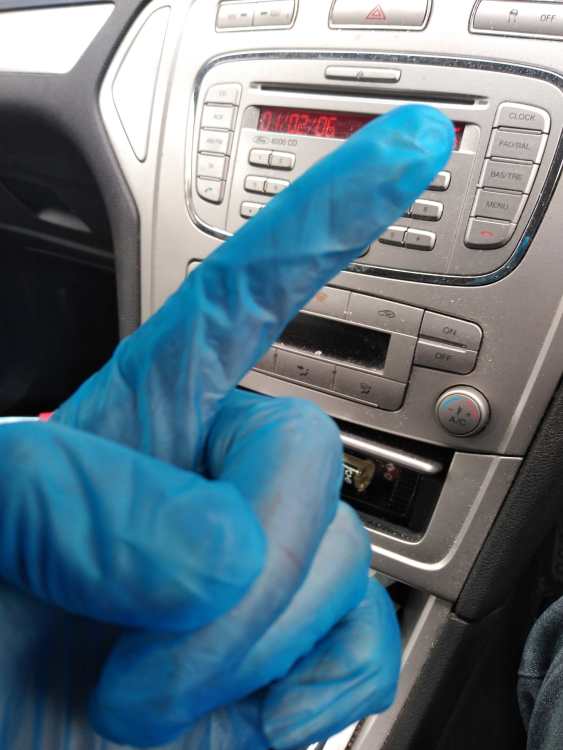
I could have dropped off that used blue rubber on my way back. You could have fingered some Lumberjack's favourite PU to your hearts content. That will fill the slot and never come off again.
-
I am ready
-
Using an existing ASHP hot water supply to heat a pool
SteamyTea replied to peekay's topic in Air Source Heat Pumps (ASHP)
Legionella is not the problem, that needs atomised water to get down the windpipe and into the lungs of immune system compromised people. Ghonheria would be a bigger problem after the immaculate and particular folk have had their swingers party. -
Using an existing ASHP hot water supply to heat a pool
SteamyTea replied to peekay's topic in Air Source Heat Pumps (ASHP)
The worst job I have ever done was cleaning out the spa bath DE filter at the Sheffield YMCA, I have no idea what those young men did in it. -
ICF How much more expensive ?
SteamyTea replied to Dave Jones's topic in Insulated Concrete Formwork (ICF)
We need a dedicated rant section, similar to Boffin's Corner. Then let our level headed @Pocster be the moderator for it. -
-
Using an existing ASHP hot water supply to heat a pool
SteamyTea replied to peekay's topic in Air Source Heat Pumps (ASHP)
That is an inline heater isn't it Yes. Nothing fancy at all. Could be used for inline heating, but at around 2.8 kW, would need a relatively slow flow rate (I could work it out, but can't be bothered). Safety would be my concern. Not sure what you mean. Water will get thinner as it heats, though limescale may make the heating element thicker. I assume you mean Ancient Romans. Maybe this fellow can answer that, ask the right person on here you may get an answer. https://www.youtube.com/watch?v=wmax3ntBS0Q -
Using an existing ASHP hot water supply to heat a pool
SteamyTea replied to peekay's topic in Air Source Heat Pumps (ASHP)
A Willis heater. Used them all the time for spa baths we made over 30 years ago. Could have a heat exchanger and a Willis in series. A bit about evaporation losses from water surfaces here. https://www.thermexcel.com/english/program/pool.htm Bubble wrap is as good as anything. But make sure no one can get in the pool when it is on. -
Try sticking it where the sun don't shine. Always works for me.
-
I don't, and always manage to get it though his letter box.
-
Mine has a unique aroma.
-
Density based stud finder recommendations
SteamyTea replied to BotusBuild's topic in Tools & Equipment
The proper term is densimeter. https://www.anton-paar.com/uk-en/products/details/portable-density-meter-dmatm-35-basic/ -
Water, probably dog's wee. I am passing Bristol in Friday, more than happy to add to the liquid reservoir. More than happy as long as I don't have to pay the congestion charge that is.
-
Concrete science and sustainability discussed
SteamyTea replied to saveasteading's topic in Boffin's Corner
Basically yes. You need to disable the cloud service, usually easy to do. You can also, usually, change the default location that different applications saved files to. This is a bit harder. It all depends on the format that the image is saved as. jpg is a compressed format, so compressing it again often makes the file larger as it has to add the algorithm that the compression uses. Formats like bmp and tiff can be compressed, tiff has an option to compress with the zip format built in. Raster images, which are just dots on a grid, can be reduced in a number of ways. You can have reduce the number of colours, say from 32 bit to 16 bit. Increase the number of pixels that get averaged i.e. a 4 by 4 colour, hue and brightness to 8 by 8 average, you loose fidelity though. You can also reduce the number of pixel in the image, from say 1200 wide by 800 high to 600 wide by 400 high. The image is them around a quarter of the size. Again, fidelity is reduced and when you zoom in, it gets very fuzzy. It really depends what quality you need. If it is just for a screen background, you can resize it to screen resolution, and it will look fine. CAD files (vector) are a bit different. By default they are created with efficient algorithms, a start point, an end point and a formula that says what happens between those points, that is why they can be zoomed in on. CAD files do have a lot of other stuff attached to them though, and some formats add just about all the options available, even if they are not used. It is worth getting a copy of Irfanview, as it opens dozens of image file formats, and can save to dozens, it also allows easy resizing and compression. 7 Zip is a good, free, portable compression application that can crunch files, and encrypt them as well. Audio files are a different kettle of fish, they are much more complicated than image files. Though there are compressed formats i.e. mp3. These use a variable 'bit rate' and frequency clipping. -
Concrete science and sustainability discussed
SteamyTea replied to saveasteading's topic in Boffin's Corner
Aviation is really not that bad. If you look at the CO2/1000 km tonne, or even the CO2/passenger km metrics are not too bad. Cement production is similar. Like all things, it really comes down to using them sensibly. IT seems to be obsessed with speed and data transfer. One of the things I used to show my students, 25 years ago, was the difference between the same text as a Word document, a text file and a compressed text file. Why worry about about upload speeds when you can often make the data 50 times smaller. -
Concrete science and sustainability discussed
SteamyTea replied to saveasteading's topic in Boffin's Corner
Is that the same one I posted up last week? There is a good Curious Cases about diamonds. Much more interesting than you would imagine. https://www.bbc.co.uk/sounds/play/m0029rg8 -
Using an existing ASHP hot water supply to heat a pool
SteamyTea replied to peekay's topic in Air Source Heat Pumps (ASHP)
That size is basically a small spa bath. Get a separate ASHP for it and keep it covered. If you get a nice rash on your body, change the water. https://my.clevelandclinic.org/health/diseases/23358-hot-tub-folliculitis -
Only one U-Value = 1/ (thickness / k-Value)