SteamyTea
-
Posts
23851 -
Joined
-
Days Won
200
Everything posted by SteamyTea
-
Think it is better to start a new thread about this. This is about people venting off their frustration about government policy.
-
Don't it work because it takes time to charge up the capacitor, this is what shifts the phase. I take it that the capacitor/s are after the transformer/s. Can you work out the RMS voltage?
-

ITV 8pm, my beautiful green home
SteamyTea replied to joe90's topic in New House & Self Build Design
So glad I did not rush out and buy a telly then. -
It is based on the reheat time. Any heating system will take a while to start producing thermal energy at the desired temperature. Once at that temperature, and assuming the set up is correct, maximum CoP will be delivered for the conditions. So basically it is ((stored energy + added energy) - consumed energy) / time. So you need to work out those to get s volume. No need to go to 3 decimal places, nearest kWh will do.
-
Built some professionally. Not as simple as they seem. Copy a Proven WT6000 Or just buy one for a quid a watt. https://www.hitwind.com/product/proven-wt6000-6kw-used-wind-turbine-for-sale/ If you have the room, why not PV and some storage. Simpler and easily scalable. Not sure if you need MCS to get payments now. Think you can deal directly with the energy companies.
-
I would still fit one. You are assuming that there will always be enough water volume, at the right delta T, to make the ASHP function as intended. Higher than needed return temperature, or too low a flow rate can also throw an error that stops the pump.
-
If you park up in The Swan Theatre short stay carpark in High Wycombe, they have a similar finish on the stair well wall. Has an interesting odour, piss and detol. At least down hear they only smell if pasty and fish.
-
Now the stairs are in, how are you going to render the walls?
-
It is to do with the reheating time versus the heat loss time. If the time difference is too short i.e. you are only heating one small loop in the system, say it is spring and the kitchen door is open because you are gardening. Then the losses will be relatively high, but the input from the ASHP will be much higher. This will cause the ASHP to switch on and off quite quickly. That is not good for the CoP and not good mechanically for all the components that have to switch on and off.
-
What is the smallest volume of water that the ASPH can deal with? Then make it larger.
-
Think we need a bit more information. Got a link to a report or product?
-
Flat roof considerations: Safety, Rain and Shine
SteamyTea replied to puntloos's topic in Flat Roofs
Just lift s few tiles and poke them in. Climbed a slab near St. Just. About 50 m high. Top 2/3rd had nowhere to put in protection. Pretty scary that was. Did see a sunfish from the top, so worth it. -
Flat roof considerations: Safety, Rain and Shine
SteamyTea replied to puntloos's topic in Flat Roofs
@joe90 This is all we use, can usually find somewhere to wedge one in.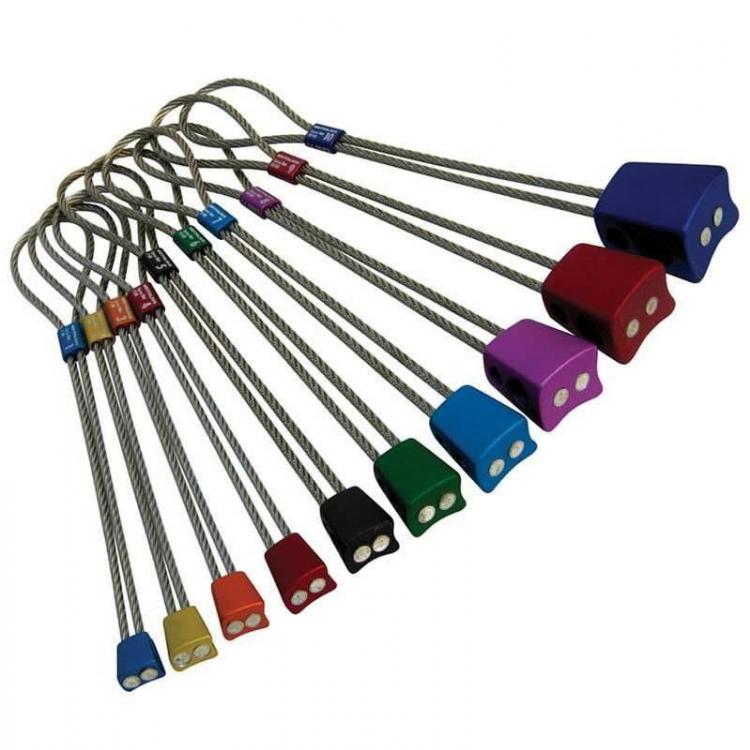
-
Judging by the electrical grid emissions in Scotland, was 0 this morning, no electricity. You all still burning peat to keep warm.
-
I am wondering if they are talking about 'Safe Zones' which are electrical regs. The places you can and can't fit switches outlets, cables etc. Being a chef, I will say, that it is useful, for that odd occasion that you are using 3 or 4 zones to be able to turn the pan handles around so they are not over something hot. So maybe a smaller hob may make life easier.
-
Welcome Building Regulations are here: https://www.gov.uk/government/collections/approved-documents
-
you would be better off using that, as long as the flow is good.
-
Is that because it is a converter i.e. the capacitors are charged up to around that voltage?
-
Or red sticky tape. Why not Bluetooth enabled light switches. If you are within a few metres if the room, it will turn the light on. To save multiple lights being on, it can scan for the strongest signal and turn the weaker signal lights off. Useful for people that like technology.
-
Regarding radiator sizing. It is the same calculation as working out heat loss through a window, door, wall, roof or even a DHW cylinder. It is the product of the power flow, surface area and temperature differences. There is a slight modification for convection currents, but they can generally be ignored in low running temperature systems. As a general rule, as something gets hotter, compared to the surrounding temperature, it needs a disproportionate greater amount of power (energy divided by time) to maintain that temperature. I have never done the calculations on a low temperature systems, but it might be useful.
-
Depends how deep into quantum physics you want to go. And phase change.
-
How do you calculate delta T for a heat loss calculation with UFH
SteamyTea replied to Adsibob's topic in Underfloor Heating
kWh and kW But think you meant kWh on the second one. -
How do you calculate delta T for a heat loss calculation with UFH
SteamyTea replied to Adsibob's topic in Underfloor Heating
I may not have linked to the latest versions. It does rather, like most thing, depend on the size and insulation levels. Have a look at the manufacturers blurb about heat loss, then double it. -
That will be around 3700 m3 of water. Taking a worse case scenario of the water being at 4°C, and allowing for a 2°C drop in temperature i.e. taking out half the energy, That will be about 15.5 GJ. So about 4.3 MWh, so quite a lot, just a little lower than the total energy required by my house for a year (but I have a stupidly small house). How is this pond refilled?
-
Better off with the more expensive to run storage heaters downstairs. You really need to do a room by room heat loss calculation otherwise it is all guesswork.