SteamyTea
-
Posts
23383 -
Joined
-
Days Won
190
Everything posted by SteamyTea
-

The UK is wasting a lot of wind power
SteamyTea replied to SimonD's topic in Environmental Building Politics
"the Sunday Mail can reveal" The bastion of all things renewable. -
You get a secondary advantage when PV is on a roof. As it takes energy way, that is energy that cannot heat the building below, as long as the energy has somewhere to go. So with a bit of forward planning, if you heat water and charge batteries around the high production times, your house will be less hot.
-
OK, I was sitting in the sun and getting warm, even though it is only 5.5°C. Now time to load up with half a kilogram of carbohydrates and animal proteins.
-
@Drellingore It is all to do with exceeding electron shell energy levels and electron 'holes' in the atomic structure. If you can imagine a book shelf and you are hurling books into it, some will hit the wall and bounce back (reflection), some will be too high and miss (jumped up 2 energy states/shells), and others will be too low and fall to the ground (below shell potential). About, in perfect conditions, 40% will land nicely on the shelf. These are the photons that are in the Goldilocks zone. Now the real fun starts. As a photon is easiest to model as a mass less particle at the speed of light, and a massive particle at rest, two different physical principles have to be used. When the photon hits the silicone it has to instantly change states and become a particle with mass. That mass then has to act like a snooker ball and knock an electron out of place. Sometimes this works and the now free electron has to find a hole to fill. This happens about 50‰ of the time. That, and the 40% earlier, account for the efficiency of around 20‰ efficiency of PV. When it does not happen, because the electrons have mass, and are moving, they have energy. There are two rules here, momentum and kinetic energy. Depending on the speed and angles involved, some will heat the module, reducing efficiency, but importantly, reradiating photons (why the module mass does not increase, apart from birdshit and wood smoke particles). Some of the particles will easily find a hole to make a temporary home in, others will have to travel further away. Luckily the silicone is doped with other elements that means, in the lowest energy state, there is an excess of holes. On average, when the sun is shining, there is deficit of holes, so spare electrons find their way out via the wires and to any load in the circuit. If the module is unconnected, it acts like any mass with an energy input and rises in temperature. A similar cycle happens in the load, but in reverse. Why your light shines and your motor turns. As for the 'direction of flow' this is where the very poor analogy with mechanical plumbing breaks down, it was never a good one anyway. Electrons have a negative charge, empty atomic shells (the ones with holes in them) cause the atom to become positive. This creates a 'field' that, like a magnetic field, can do work, but only where the field is disturbed I.e. the load. So basically photons dislodge electrons, electrons then find a new hole, the ones that can't find one locally keep moving, and will eventually do some work, while re-emitting photons. This is only a partial model of what happens. If it was easy to describe, it would not be worth a PhD.
-
Yes. No load, no problem. The only time the inverter gets really warm is at maximum power. So when pumping back into the grid in June. Why you want the inverter in a cold place with plenty of airflow. Not stuck up in a loft.
-
The UK is wasting a lot of wind power
SteamyTea replied to SimonD's topic in Environmental Building Politics
Slowy. And I am sure that there will be talk of cheap energy for people that live near a windfarm, again, again, again, again...... -
The UK is wasting a lot of wind power
SteamyTea replied to SimonD's topic in Environmental Building Politics
Grant Shapps has been appointed as the new Secretary for Energy Security and Net Zero. -
I am having 'strap for breakfast'.
-
Ignoring your consistant misuse of units, I think you mean kW as that is power. kWh is energy i.e. how much fuel is in the tank. The @cos= 1 is at 100% of possible power transfer. AC voltage and current are out of phase by 180°.
-
I just swap the c for a p. Kills half an hour.
-
Got the night off. Here is more mine.

-
Is this any help? https://designbuilder.co.uk/helpv7.0/Content/_Ventilation_model_detail.htm#Natural2
-
Is there a recognised BSI standard qualification for that? You can probably submit your own calculations as I doubt a BCO would know how to check them.
-
Good job he don't live in St. Agnes. (I am trying to remember the last time I had a nasty, think it was a small Phelps from Hayle, about a decade ago)
-
And the conclusion, in 12 words or less?
-
Have you run the house though Jeremy Harris' spreadsheet? Down here there is a chain on retailers called RJ. Stands for Rubbish and Junk.
-
They are going to try selling in Cornwall again. Did not last long the previous time.
-
What is there not to like about this chap? Depends where they were bought. Not all pasties are equal.
-
New member - stuck for what to do next to warm the house
SteamyTea replied to Sparrowhawk's topic in Introduce Yourself
Make a DIY air leakage tester. Basically a fan in a bit of board that fits in a window aperture. It is easier, though not easy, to sort leaks out before they are covered in insulation. -
They can test the particulates for isotopes to establish where it comes from i.e. oil, gas, timber, soil, salt water. Now if that is done in the popular press reports, or at least the science papers they are based on, I don't know. The correct measure is ug/kJ delivered when comparing energy sources, not ug/m3 as just adding extra air to the exhaust skews the results and does not reduce the quantity of particulates released.
-
About 15m to the kW. So about 9 kW. Does depend on how much water is flowing past.
-
Dig deep enough and you may find some coal, all problems sorted then.
-
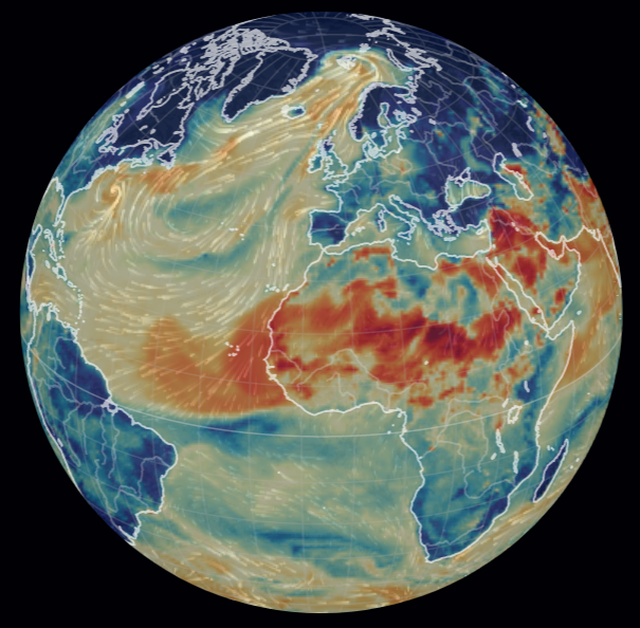
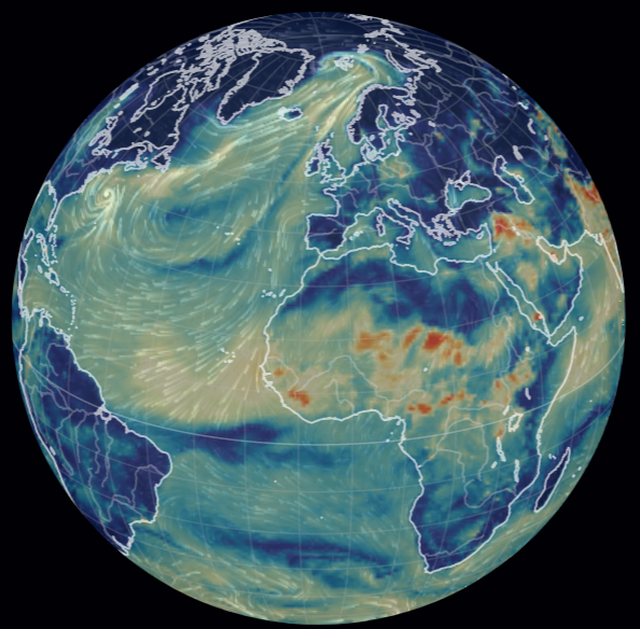
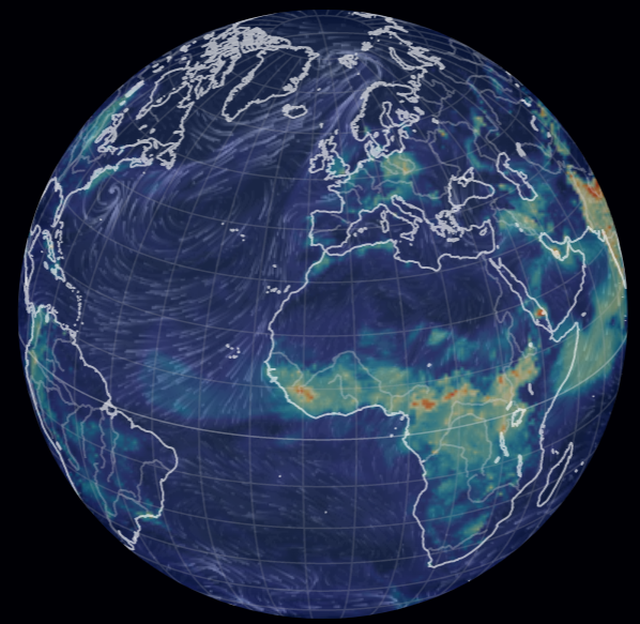
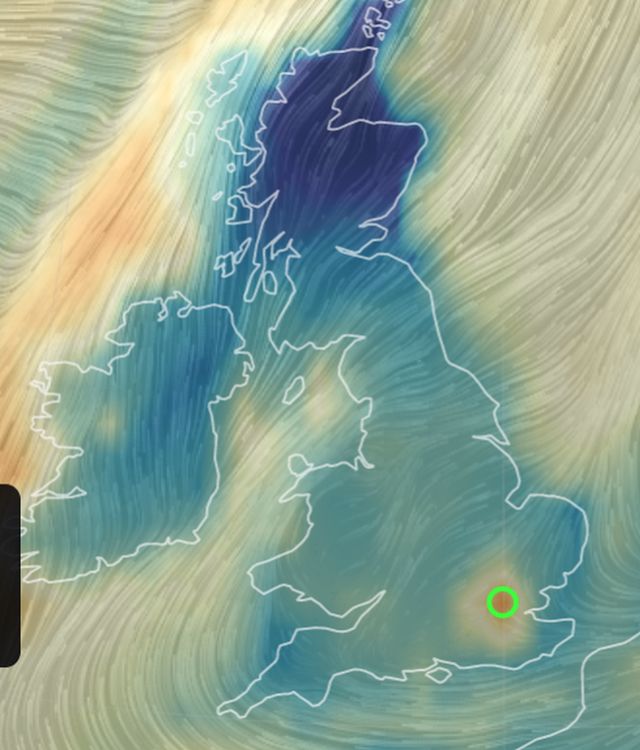
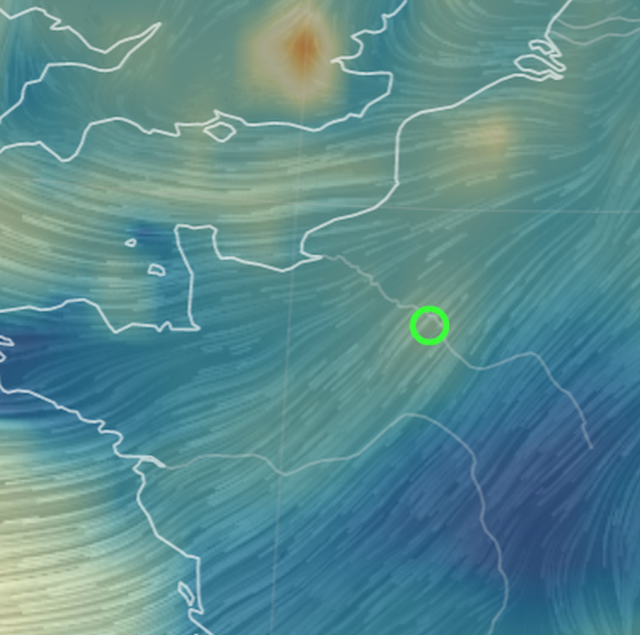
They stay in the atmosphere for quite a long time. So plenty of opportunity to be inhaled. PM10 PM2.5 PM1 London PM10 Paris PM10
-
Generally about 10% under. But then it was easier to add an extra 10% to the capacity.
-
Does that not say something to you. Apart from gaseous oxides, where is the extra mass going?