


SteamyTea
-
Posts
23847 -
Joined
-
Days Won
200
Everything posted by SteamyTea
-
I found having more than 8 on a wire it became unreliable. You can change the resistor value which helps, but not sure by how much. I have used 10K, but never 2K.
-

Cost effective supplier of green roof accessories
SteamyTea replied to Adsibob's topic in Flat Roofs
Could you use some plastic guttering, square section, on its side. It is only to stop sliding until the plants are established, and to deflect water runoff to a drain. I would have thought agricultural fleece would act as a filter. Go to the GQT website, they know all about everything garden related. -
Keep the ideas coming, it is quite interesting.
-
Just try it, nothing much to loose really. Not even worth procrastinating about.
-
There has been a lot in the press recently about this, and down here we have seen record breaking sea surface temperatures, and nationally we have probably had the warmest June ever. Now we (scientists) know that the underlying problem is the increase in atmospheric CO2e gases and land use change. So rather than bang the same drum about reducing energy usage, insulate homes, population control (though that is more about prejudice than anything else), blaming other countries etc, let us assume that we have missed the boat on mitigation, and are now into resilience. How can the UK make itself resilient to climate change and weather variation. So to kick the ball off here is the start of my list about what we have to look at: Agriculture Flooding Drought Storms Travel Energy Production Education Industry/Commerce I am going to go against my usual optimistic outlook and assume that within a decade the above areas will become a real problem. So how can the normal home owner help in this global problem?
-
The manhole cover collapsed in my drive last week. It was a private sewer pipe that got adopted by South West Water a few years back (never got my insurance money back). I contacted SSW and they looked it up on their map (some old software that just happened to be developed my an ex of mine back in the 90s), found it, came around decided it was dangerous, got it covered over and then repaired, all within 3 days. Brilliant service. Thames Water on the other hand, hopeless. They installed a meter at my parents house about 20 years ago, billed on estimates, but cannot locate the meter to actually read it. So as the house was empty for most of the last year, and little usage for the previous decade, a huge over payment that may not now be recoverable (the smart electric meter is faulty as well, so another challenge). So try your local water board first.
-
Can you just run a normal, cheap hosepipe around the garden, block the end and then punch holes in it where you want water to come out. I found a small holes in my pipe was brilliant at water my indoor plants when I need to water my front garden (tap at back of house). It also washed the furniture, walls, electrical sockets....
-
Burning wood is not green, or chemical free.
-
What if fair? Without know the number of trading TF companies that go bust every quarter, compared to the number in the business every quarter, and what the outstanding liabilities are, hard to say if 6% is fair or not.
-
I worked Sundays.

-
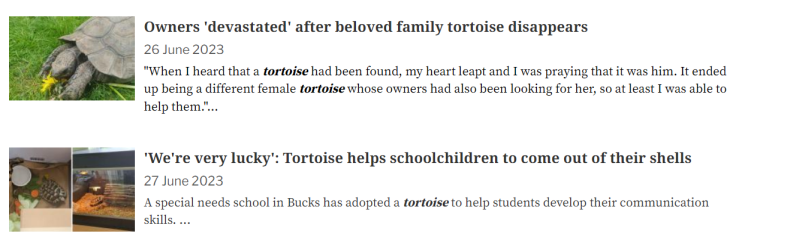
I was reading the Bucks Free Press and these two stories caught my eye. I may have solved a serious crime.
-
Down my way there are now a lot less restaurants. But selling more own brand and discount products.
-
What is a screwdriver like this called?
SteamyTea replied to Sparrowhawk's topic in Tools & Equipment
https://www.amazon.co.uk/Silverline-427633-Impact-screwdriver-bits/dp/B000LFTU1O/ref=asc_df_B000LFTU1O/ Just twist the right way, then twat it with a mallet.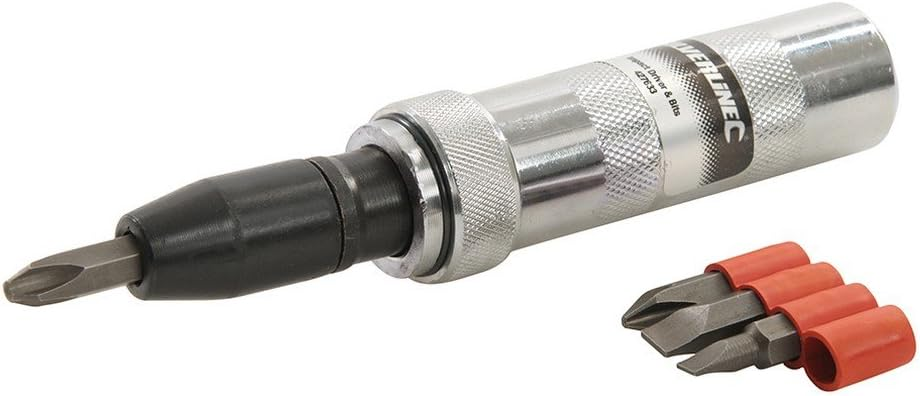
-
What would happen if they went pop before realising the drawings?
-
Is that why my Ford C-Max is almost the same as my neighbours, Nissan, Peugeot, Audi, and flat bed truck. Strip out a 1980s Ford Sierra and a BMW 3 series, they basically look the same. Engine and steering at the front, gearbox just after, differential and half shafts at the rear, all held in play with linkages and springs. Standardised standards and design techniques does not mean standardised looks, anything but in reality, as more time can be spent of product style differentiation.
-
So have I. https://www.framehomes.co.uk/ I was impressed and since I went over a decade ago, I think they have tripled in size.
-
Failed teacher is now an inspector.
-
Odd isn't it how terms of payment can put one off a building system, it really should not be like this. The responsible manufactures of building systems really do need to sort themselves out over this.
-
There is one note of caution, if you come to sell the house, new viewers may distrust the 'no heating upstairs as it is not needed' position. A slightly bonkers idea would be to run the upstairs heating loop on a small secondary heat pump and use that harvested energy to control the upstairs air temperature, and dump the excess energy into your DHW.
-
Plumber put together a thing … and I have concerns
SteamyTea replied to mjsx's topic in Boilers & Hot Water Tanks
Well that relies on an expansion vessel and a PRV being fitted, which relies on this plumber having done that. -
Heat loss is not purely from heated slab to room air. The rest of the room is also losing heat. Just do some power calculation, they are not dependant, in themselves, on temperature. That is the second part of the simultaneous equation (remember them from skool).
-
Yes, a stratification issue. I get about a 3 K temperature difference between floor and ceiling during the heating season. There are a number if areas to calculate. Assume that the top layer of air downstairs is 1 K higher than the mean downstairs temperature. Then assume your upstairs floor is 4 K cooler than the ambient downstairs. Work out the power going though the floor. May find that with a delta of 5 K, your numbers i.e. 140 W are not far out. You can also increase the MVHR pipe diameter, this should help increase power delivery to the upstairs, and reduce noise. Easy to do if MVHR is in loft. Then think about your lifestyle. How many non sleeping hours do you spend upstairs? Not many I suspect. As usual, it comes down to the numbers.
-
Why not just get the mail redirected, and a sign saying so on site. £76 a year.
-
The scientists, engineers and accountants already involved. Forget the politicians, the pressure groups, do gooders, naysayers and delusional. Taking the current price structure of our electrical generation, which price favours gas production, who would have thought that wind and solar would contribute nearly half of the production this year. But it has. So even while hampered but obsolete taxation, it is still the cheapest form of new capacity. So trust the people in the RE industry, and ignore the rest, they are so far behind the curve they are becoming a cult.
-
Most interesting. Technology Inside the gigafactory producing the greenest batteries in the world Northvolt says that its massive factory in Sweden will soon produce enough batteries each year to power a million electric cars, with a much smaller carbon footprint than those made in China 27 June 2023 By Michael Le Page The Northvolt Ett factory in Sweden Northvolt Ett On a journey out of Skellefteå, an industrial town in the north of Sweden, I pass several large factories. But they are all dwarfed by my destination – Northvolt Ett, the first battery “gigafactory” to begin production in Europe. “You need to see it to believe it,” says Anders Thor of Northvolt, the firm behind the factory. He isn’t wrong. As Thor points out, the Pentagon – the largest office building in the world and home to the US defence department – could fit into the site with plenty of room to spare. Much of Northvolt Ett, which stretches way off to hills in the distance, is still a building site. Wearing safety boots, I trudge across the hot, dusty gravel to the side that has been finished – a series of enormous grey buildings where battery production is being slowly ramped up after beginning in 2021. When it is finished in around 2026, Northvolt Ett will employ 4000 people and produce 60 gigawatt hours of lithium battery cells a year, enough for a million medium-sized electric cars. Everything here is on a vast scale. Eventually, a 1-kilometre corridor will run across the site to link buildings, says Northvolt’s Sanna Bäckström. But scale isn’t the only claim to fame here. Northvolt says that, once fully operational, the batteries it produces will be the greenest in the world. You have probably heard the myth that electric cars don’t reduce greenhouse gas emissions because so much carbon dioxide is emitted to produce them. This isn’t true – electric cars emit less than fossil-fuel ones, even where electricity comes mostly from fossil fuels. But manufacturing electric cars does currently produce more emissions than manufacturing conventional cars because of the batteries – and that is because the process is still largely powered by fossil fuels. Inside the factory Northvolt Ett “Batteries so far have been produced mainly on coal power,” says Thor. “If you use coal power, you repeat the mistakes of the past, creating a large carbon footprint.” That is why this factory is in the north of Sweden where there is plenty of hydropower and renewable electricity. The emissions per battery made here are 70 per cent lower than those made in China, says Thor, and Northvolt’s aim is to get that figure to 90 per cent. There is no way to independently verify this claim, but simply siting a factory in Sweden rather than China would reduce the carbon footprint of a battery by 40 per cent, a recent report by the non-profit organisation Transport & Environment concluded. That is based on how much electricity comes from low-carbon sources in these countries. At Northvolt Ett, there are separate buildings for each of the three main steps in the manufacturing process. It starts with the production of powders containing the raw materials that make up the anode and cathode. We aren’t allowed into this building, as respirators have to be worn inside. Read more: Efficient battery could charge electric cars 60 per cent in 6 minutes In the second step, housed in two buildings more than 340 metres long and 110 metres wide, the powders are turned into a slurry using giant mixers, explains Bäckström. These slurries are spread on giant rolls of very thin foil and then dried in enormous ovens. One tiny part of these ovens is the only internal part of the factory I am allowed to photograph. The anode and cathode are made on different sides of the building before being interfolded and placed in a cell, which is then filled with electrolyte. The process takes place in positive-pressure rooms to keep out contaminants and is largely automated. The factory site is large enough to contain the Pentagon Northvolt Ett Finally, there is the formation and ageing building. “It’s like a cheese factory,” says Bäckström. I am not allowed in there either, but basically when a lithium battery is first charged, a film forms on the anode whose properties determine battery performance. Afterwards, batteries are monitored for several weeks to ensure their quality. Off in the distance, Bäckström points out the latest building to be finished, which will house the largest battery recycling plant in the world. It will recover lithium, nickel, manganese and cobalt, and supply half of the materials needed for cathode production here. Northvolt’s efforts to make battery production greener go well beyond the factory gates. It is buying raw materials from nearby mines where possible and also intends to use electric trucks to ferry materials to and from the nearby harbour. Read more: Ultra-tough battery survives hammer blows and being run over by a car The company has also set up a test site for electric planes at the small airport nearby. Northvolt is developing lithium metal batteries specifically for aviation, with an energy density up to twice that of conventional lithium-ion versions. The former have anodes made of lithium metal, reducing weight compared with the coated copper foil anodes I saw being made. I leave Skellefteå greatly encouraged. It is fantastic to see a company investing billions to do things at the speed and scale needed if we are to get anywhere near net zero by 2050. But as massive as it is, Northvolt Ett isn’t enough. With more than 10 million cars sold in Europe every year, we still need a lot more battery gigafactories. Michael Le Page’s trip was paid for by Vargas, the parent company of Northvolt

