


SteamyTea
-
Posts
23847 -
Joined
-
Days Won
200
Everything posted by SteamyTea
-

Solar - Where to start?
SteamyTea replied to DazRave's topic in Energy Efficient & Sustainable Design Concepts
We have our own on here. -
Solar - Where to start?
SteamyTea replied to DazRave's topic in Energy Efficient & Sustainable Design Concepts
@DazRave I am not ignoring your questions, just trying to write a a bit of a guide that will cover most of what you want. One problem with forums is that the same questions get answered over and over again, usually by the same people. I would quite like to avoid that, and now seems like a good time to start. May take a few days, and hopefully I will have something for you. -
I just love a hash 4af3a3b61d25366b7b1efa7923eea289.mp4.2618557127cdcfbcb915c3701917b219 Bit extreme, I would have just redecorated.
-
Just about to hang my washing out, drying will be solar powered.
-
Is there a limit to how much cash can go in an ISA, seem to remember it is £20,000. So you and your better half can put in £40,000. So £2k a year. Many on here like to rough it in a caravan.
-
I am looking forward to seeing how these perform. I could hang two or three modules on my SW facing front wall, would be almost enough to cover my day usage.
-
Solar - Where to start?
SteamyTea replied to DazRave's topic in Energy Efficient & Sustainable Design Concepts
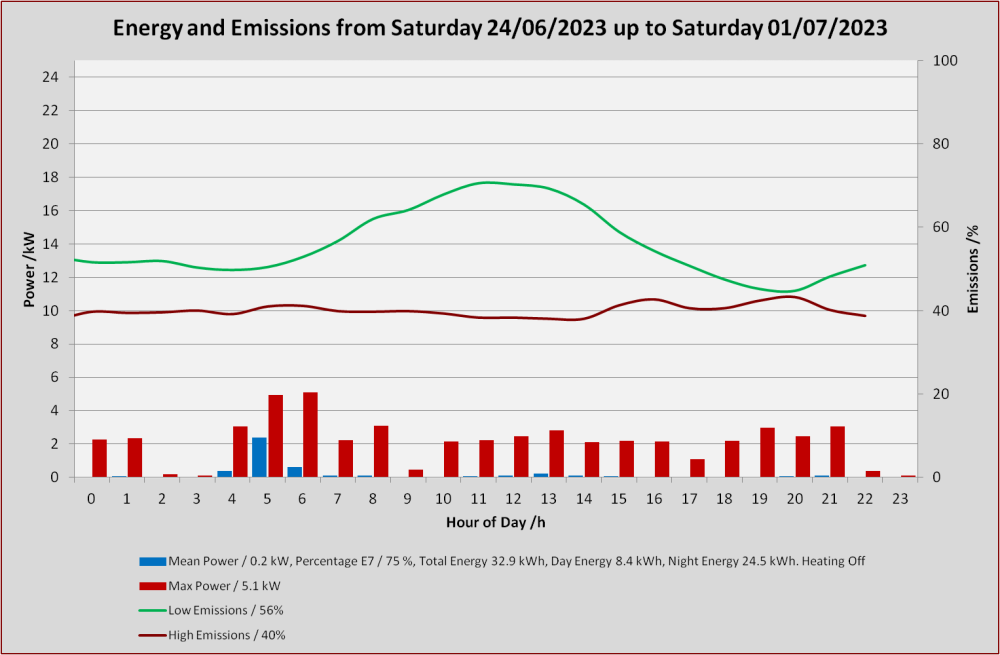
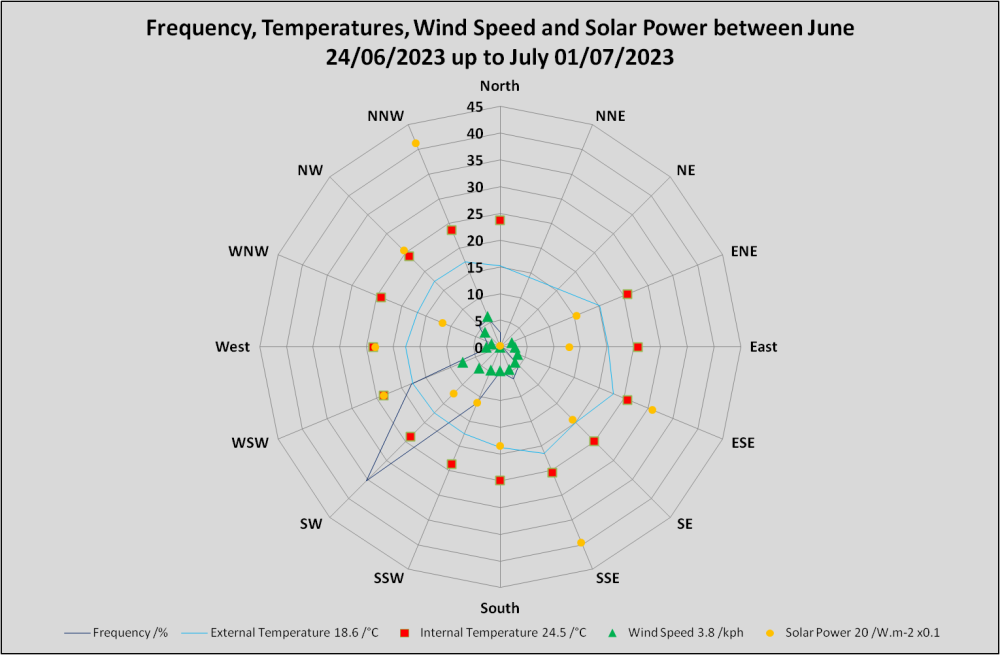
Do you know how much, have you thought of doing some decent monitoring (better than a smart meter shows i.e. every few second or every Wh, zero draw times, minimum draw, maximum draw). We all like power, but how much do they actually use? Measure them. You will need an 'islanding' system, they generally cost more as they have to totally isolate the house from the grid when there is an outage. As it is in the summer, is it trees, or too many local PV systems causing over-voltage shutdown. You could ask your local DNO if they will allow you to fit PV over the usual 4kW/16A per phase. They can, in exceptional circumstances, refuse a smaller system. Not really a switch, the PV/Battery system delivers at a slightly higher voltage than the grid delivers, so power naturally flows to the nearest load. It depends on what the minimum load the system needs to start. As I mentioned earlier, some need to 'see' a 200W load before they do anything. So worth looking into that. Lots if monitoring is needed, it is cheap and easy enough to do. You can make useful charts as well.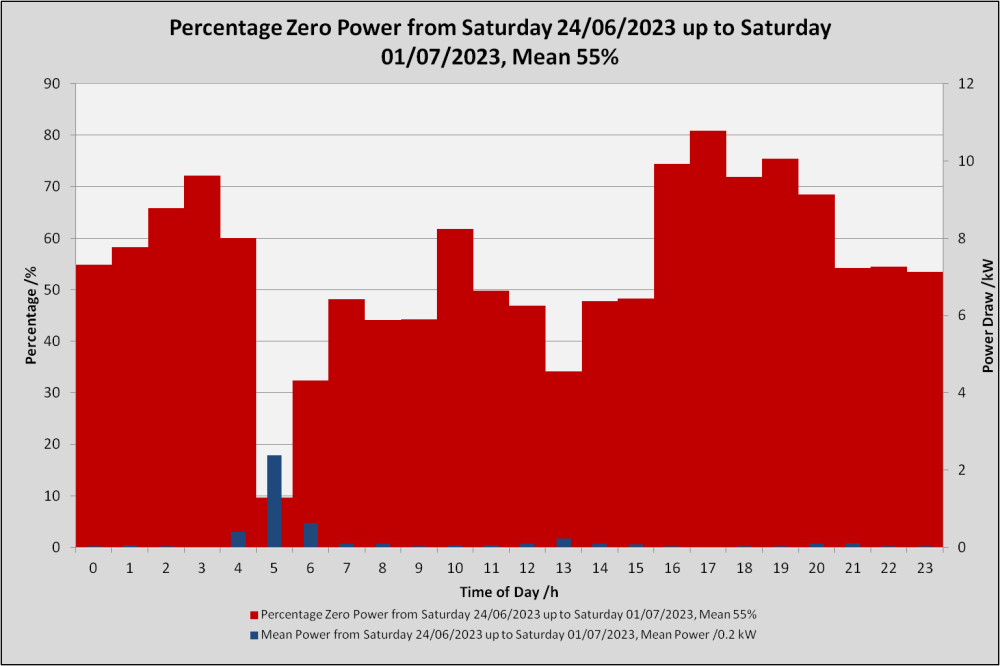
-
Cost effective supplier of green roof accessories
SteamyTea replied to Adsibob's topic in Flat Roofs
I do my own, mirror and camera. Even got an attachment to trip orifices. Very good it is. Think it cost a tenner in The Middle of Lidl. -
Property is £120k, different market entirely.
-
New member - stuck for what to do next to warm the house
SteamyTea replied to Sparrowhawk's topic in Introduce Yourself
Can you clad that side? -
Caravan makes sense to me, especially if you fit an A2AHP to control the climate on the cheap.
-
Cost effective supplier of green roof accessories
SteamyTea replied to Adsibob's topic in Flat Roofs
1 down here. -
So 12k a year, your build will probably take 3 years. So about equal to your current savings.
-
Solar - Where to start?
SteamyTea replied to DazRave's topic in Energy Efficient & Sustainable Design Concepts
Nor are your reading skills. -
How much is the rent?
-
Solar - Where to start?
SteamyTea replied to DazRave's topic in Energy Efficient & Sustainable Design Concepts
I was being ironic. -
Solar - Where to start?
SteamyTea replied to DazRave's topic in Energy Efficient & Sustainable Design Concepts
No, PVGIS assumes 14% losses on the PV side, probably similar on a DC side. But I was making an Anti-Sales pitch. Batteries are all the rage, and tomorrow there will be a 'game changer' i.e. V2G, Hydrogen, novel chemistries.... -
Solar - Where to start?
SteamyTea replied to DazRave's topic in Energy Efficient & Sustainable Design Concepts
It can be scaled though by multiplying until it gets to your usage. There may be marginal saving to be made on the system install prices. My savings are made by not importing a lot of the time, last week was 49%, made up of 43% over the night 7 hours and 52% over the day 17 hours. That saving has probably cost me less than £100 for a few timers and the monitoring kit. Been making those saving for the last 15+ years now. I suspect that having PV and battery storage makes people a bit more prolific with their usage as they think it is cheaper, so a lot of double counting goes on. -
Solar - Where to start?
SteamyTea replied to DazRave's topic in Energy Efficient & Sustainable Design Concepts
But you will have spent quite a few thousand quid on a system to mitigate against price variation. I use about 1.3 kWh/day, consistently, the rest of my usage is at night (remember I ma on a basic E7 tariff). If I charged up at night, say 2 kWh to cover losses and variation, then that would currently cost me 30p a day. Say I could get a battery system installed that can store that amount for £2000. £2000 / £0.30 = 6 years 7 months How much would I save at current prices. Day rate is currently £0.486/kWh, so on average, and my day usage is pretty consistent, £0.63/day, an increase of £0.33/day. £2000 / £0.33 = 6 years. There are some big assumption there, fitting a system for £2000, highly unlikely, and energy prices stay at todays relatively high amounts. To be realistic, the system would have to cost around £500/kWh. And even then it is marginal and relies on a £0.15 to £0.2 price different between day and night rate. I am not, but we can look at historic 'half hour' rates and adjust to today's prices. You are the programmer, so write something that will link to this https://www2.bmreports.com/bmrs/?q=eds/main -
That is population, not housing, as you claimed. I do agree that there is probably a good correlation with population and water usage. It may be a case of not potable water being a problem, but waste water not being treated effectively. We just flush it into the sea down here.
-
Solar - Where to start?
SteamyTea replied to DazRave's topic in Energy Efficient & Sustainable Design Concepts
Shall I point you to your topics about battery storage and adding extra? You use a combination of PV and one of the many, confusing, Octopus tariffs to charge your batteries. Now I admit, that you are selling some back to Octopus, but that is a very short term benefit, come winter, it will cost you I suspect. But as you said about the car, if you want something, then you get it (mind you there are many think I want, but have no hope of getting). Regarding the 'how much hot water do you need', that has been answered nicely by @Marvin. Enough and only a little more. As for having batteries charged up 'to use with anything', it is an expensive way to heat water when you need it. A 12 kW shower will soon gobble though your battery storage, and that assumes they can reliable deliver that sort of power. Do you know the cut in power your SE/PW systems needs, will it run 20W of light bulbs? Or 10W for a laptop? Many systems won't. Was it @Radian that showed a chart of his inverter getting confused when the induction hob was on? I can't remember. That bit is true, but seems to have been answered, finacial. -
Solar - Where to start?
SteamyTea replied to DazRave's topic in Energy Efficient & Sustainable Design Concepts
Stop mucking about, you would have all the storage in the nation if you knew the difference between Kw and kW/h. -
Bonjour. Sound a sad situation. I suspect the first thing to do is get a valuation. Then look at the taxes, France has some odd ways with properties, well they did 40 years ago when we sold up. Then there is the 'eco' bit to think about.
-
Solar - Where to start?
SteamyTea replied to DazRave's topic in Energy Efficient & Sustainable Design Concepts
Not just the length of time, it is the power of each heating source. If your kettle is about 2.8 kW and your gas boiler is 20 kW, then 5 minutes for the kettle is 0.23 kWh, boiler 5 kWh. So get some proper timings, the power ratings and we can see. And outputs. What size is your battery system and what is the utilisation like? Finding the Goldilocks zone is the hard part. There are 3 parts to having a battery system (4 if you include cost). The actual usable storage, the kWh. The charge rate, the input kW. The discharge rate, the output kW. It is this last one that is important as some system need a 200W+ load to start delivering and may top out at a 2 kW load, though I would hope most would be capable of 3 kW at least (enough for a kettle). -
Polyurethanes can shrink quite a bit. We used to work on 3 to 5% depending on the mix. Some of the fast setting elastomers can easily be 10% and continue to shrink for years (Look at a Panther Kalister dashboard, it was a perfect fit when I made the tooling). Think how plump your new furniture was compared to when it is a few years old. I have heard that you can buy 'aged' insulation, but not really convinced it is of any benefit. As for the picture, that looks like something went wrong in the manufacturing and storage. Probably it got wet somewhere along the line as it is warped and shrunk (warping is actually caused by shrinkage, think bimetalic strip). It is not a unique problem to just polyurethane, really a problem for all composite materials.




