SteamyTea
-
Posts
23847 -
Joined
-
Days Won
200
Everything posted by SteamyTea
-
 Yes, seems that the same 12 year old web designer does all the Reach stuff these days.
 -
Most of the inefficiency is not in the home these day, especially all electric homes. With generation changing to RE, inefficiency is, environmentally, a thing of the past as they don't pollute like combustion plants. This does not mean we need to go back to 100W incandescent lightbulbs and 32inch CRT TVs, just that overall, electrification is a much better system than combustion.
-
I think it is done via a URL to a webpage that then has the functionality you are after on it.
-
I think this is just bad reporting. https://www.worksopguardian.co.uk/news/people/more-than-a-dozen-square-metres-of-forest-open-land-and-water-in-worksop-and-retford-developed-upon-4285045
-
It is easy to put some code in a QR. https://www.the-qrcode-generator.com/
-
Thought you were in Lithuania, not Romania.
-
I like this idea, what model fogger did you buy?
-
Most cost effective way to get to passive standard using block
SteamyTea replied to CalvinHobbes's topic in Heat Insulation
Change the bulb to a 3W one. -
I am not over keen on them, but I look out onto stony ground, then a stone wall, I think a bit of green, on the shed roof, will help. Not sure how much soil it will need for one of the succulents I have, it seems to grow like a weed on concrete slabs.
-
Used to make aerated composites, was interesting work. One part was a stone effect shower tray. Can't think why no one has one. The customer never got us to make the bath tub he designed. Rigid.
-
Was one of my concerns as well. I did think, if designed as a stand alone beam, rather than as part of a panel, then a strip of WBP ply glued over the flange would help. It was really something I wanted to try out, gut said it should be alright, but there is nothing like actually testing something out. I did my apprenticeship making parts for destructive testing machines. Was interesting seeing the machines being tested themselves.
-
While a bit overkill for a shed, I like the idea. A bit of PU resin and GRP would make something very stable, and strong. I had to make some carbon fibre beams once. Not sure what they were ultimately used for, but amazingly rigid and weighed very little.
-
A person, but maybe a green roof. Be nice if I could hang my kayak from it if I can get enough height. I want a shed where I can open up one side (near enough). That way I can make the door like a garage door and get an extra 1.8 covered area. That way I can do dusty work but still be out of the sun, or the rain. I was thinking of using the decking as the flange. Make it in panels and then just glue and screw together. Basically all panels will be the same, i.e. 2.4m by 1.2m and just do infill panels to make the roof slope.
-
The cone on the bonnet, or should I say hood.
-
Only that I can easily make one very cheaply. Probably less than a tenner each.
-
Removing expanding foam from brick
SteamyTea replied to embra's topic in General Construction Issues
You can get it on eBay/Amazon I think Nitomors uses it as the active ingredient. But as others say, leave it to weather, PU hates water and sunlight. -
Is network gear mounted on wood ok?
SteamyTea replied to vagrantly3893's topic in Networks, AV, Security & Automation
Will be fine as long as nothing crushes/cuts it. Or unless you have a very strong electro magnetic field next to it. -
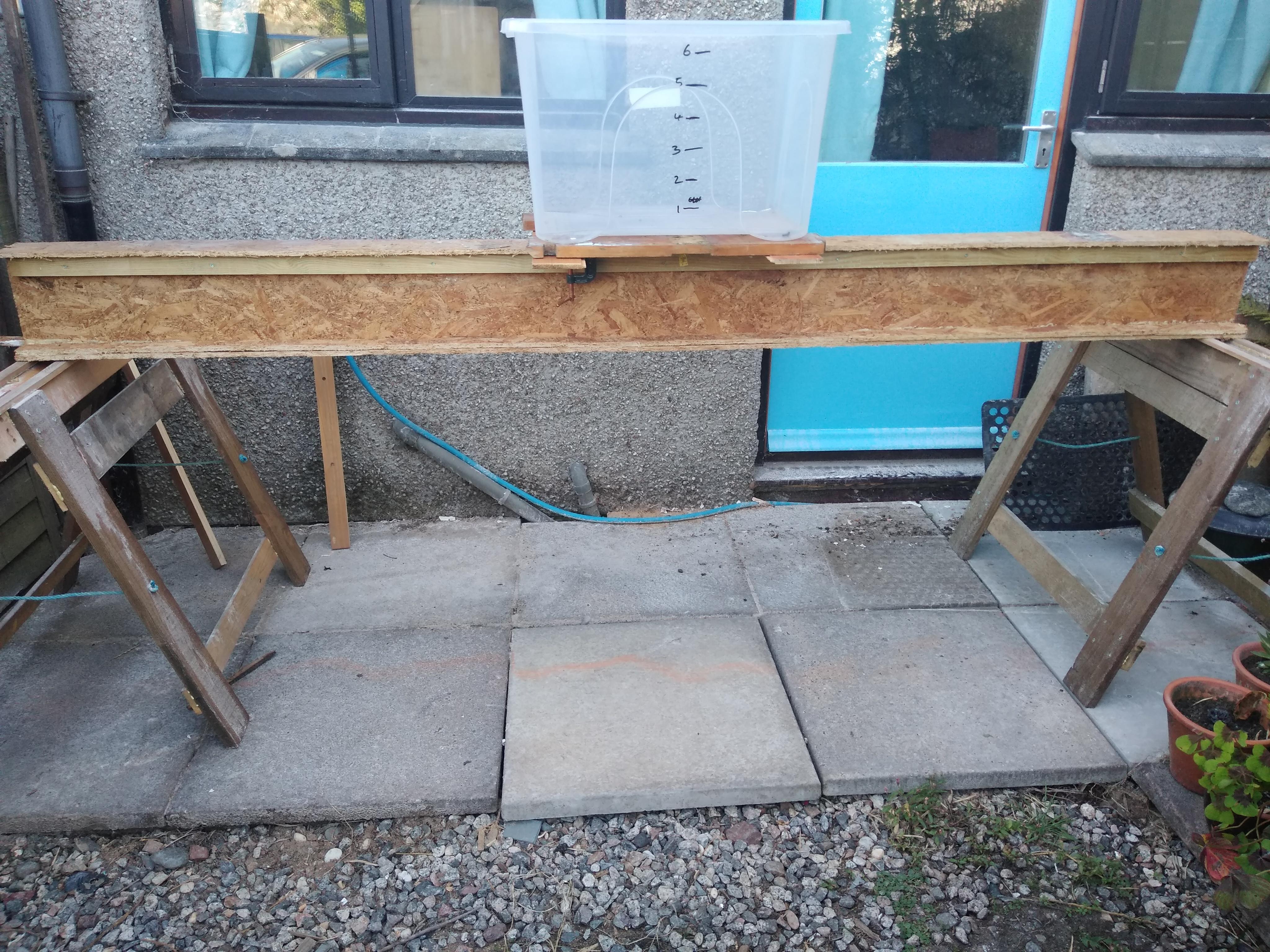
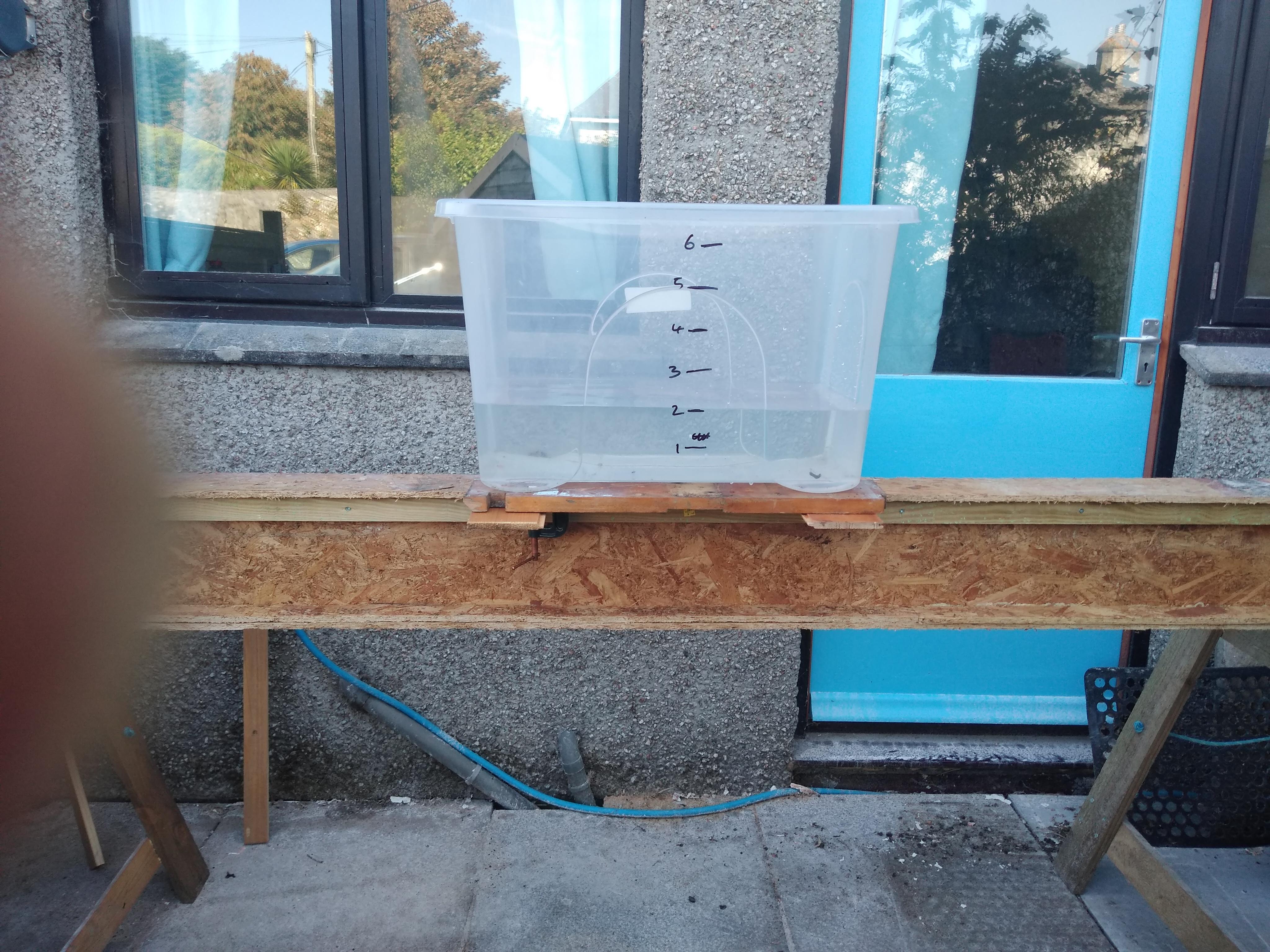
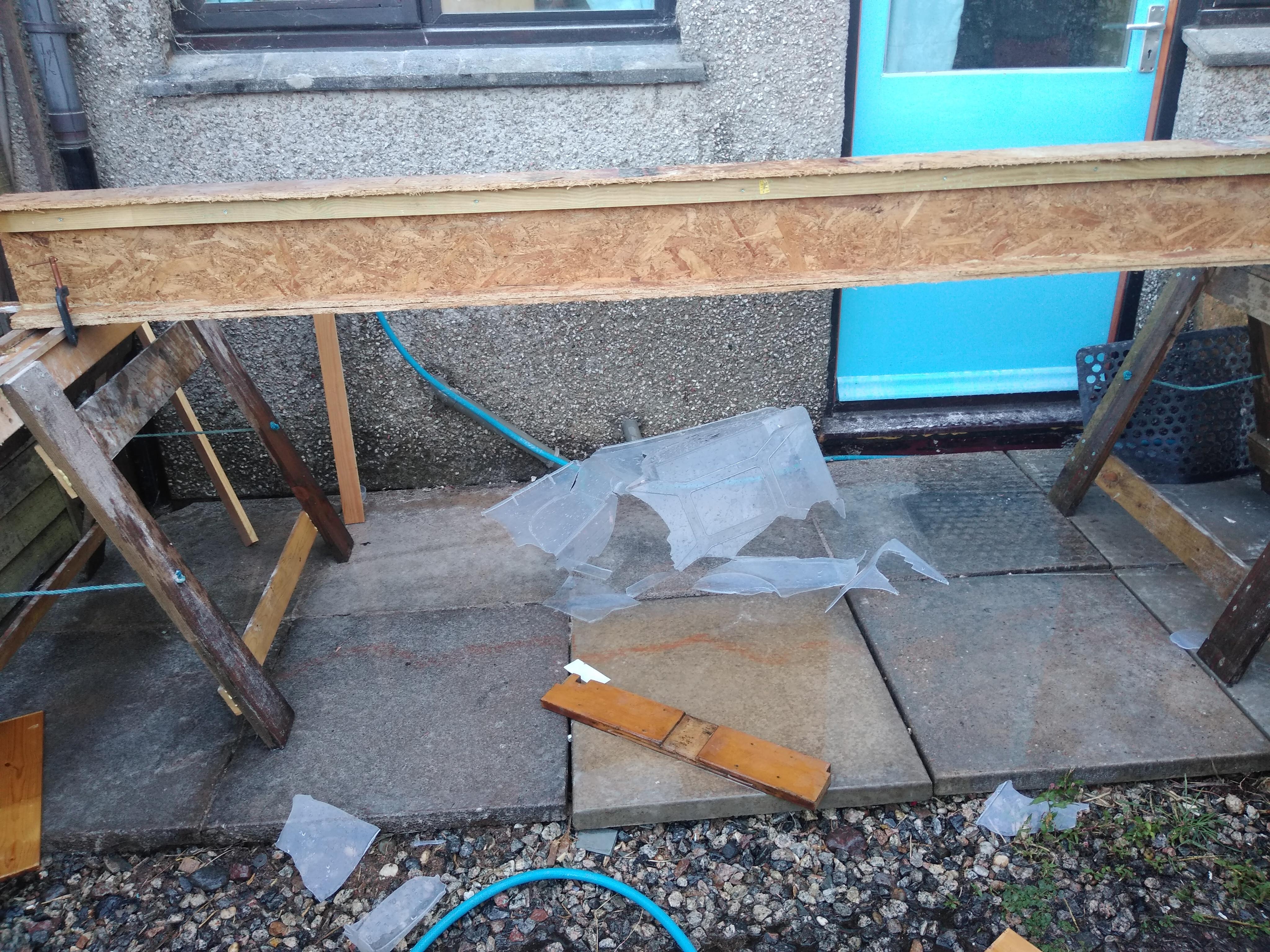
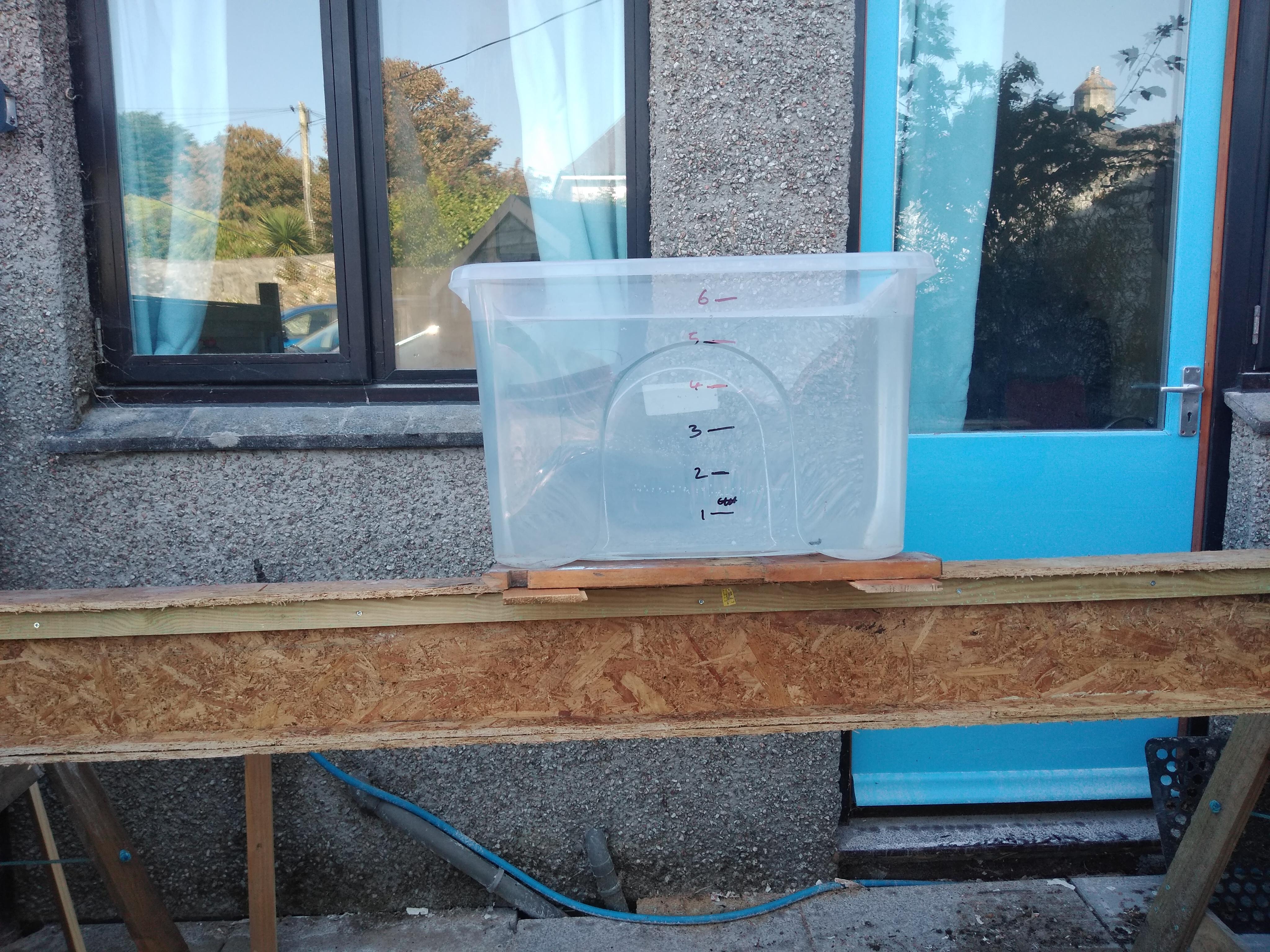
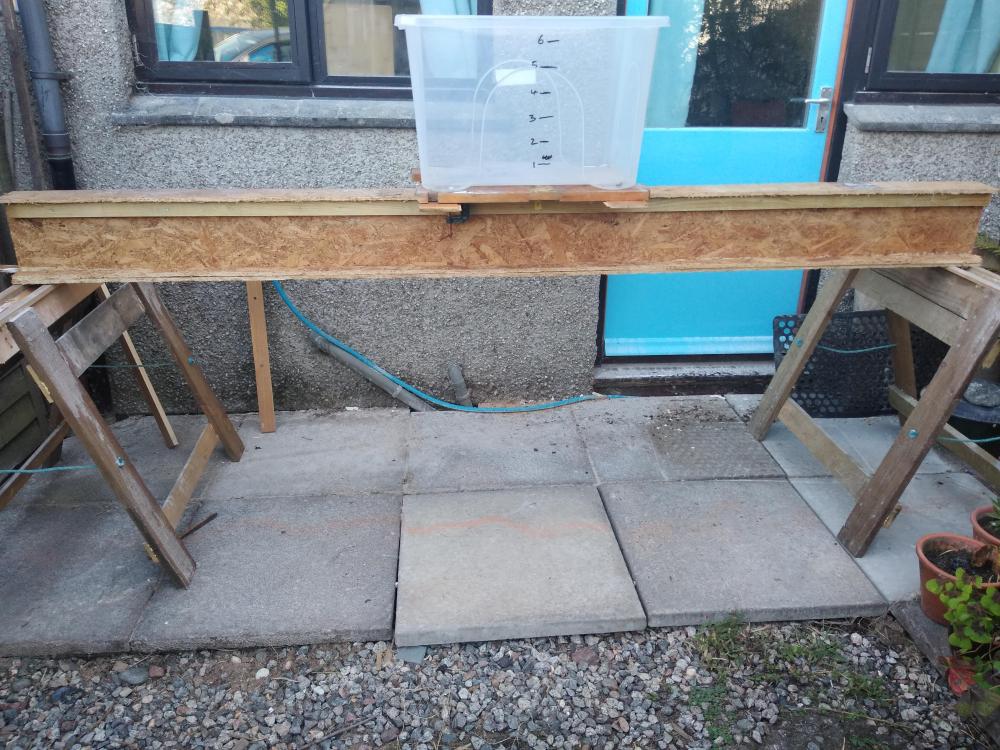
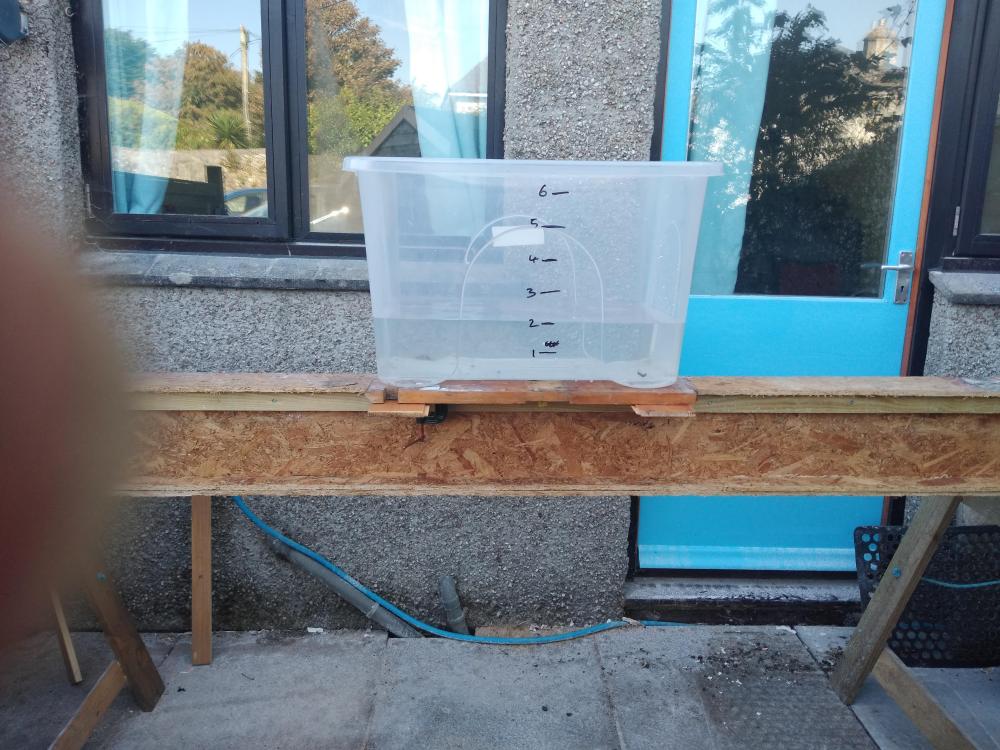
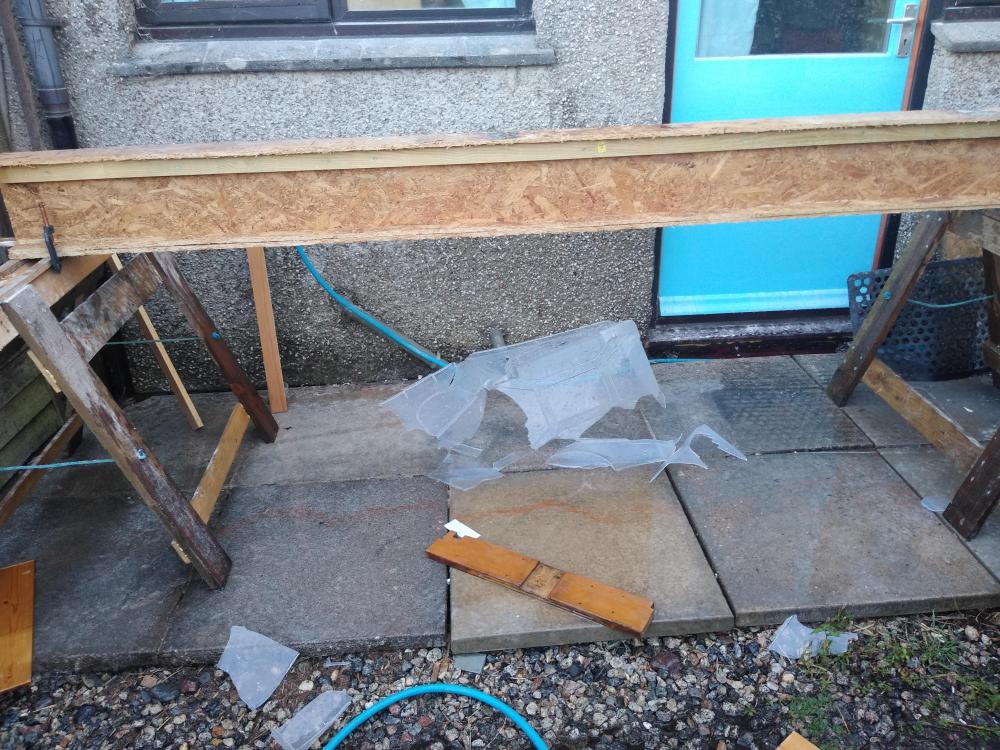
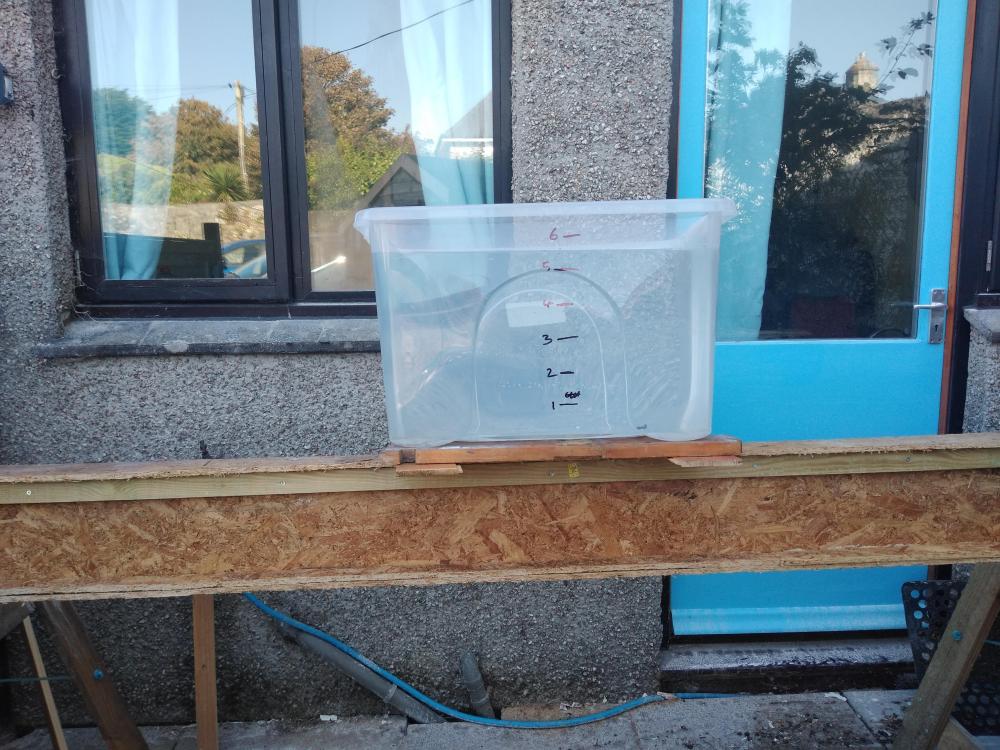
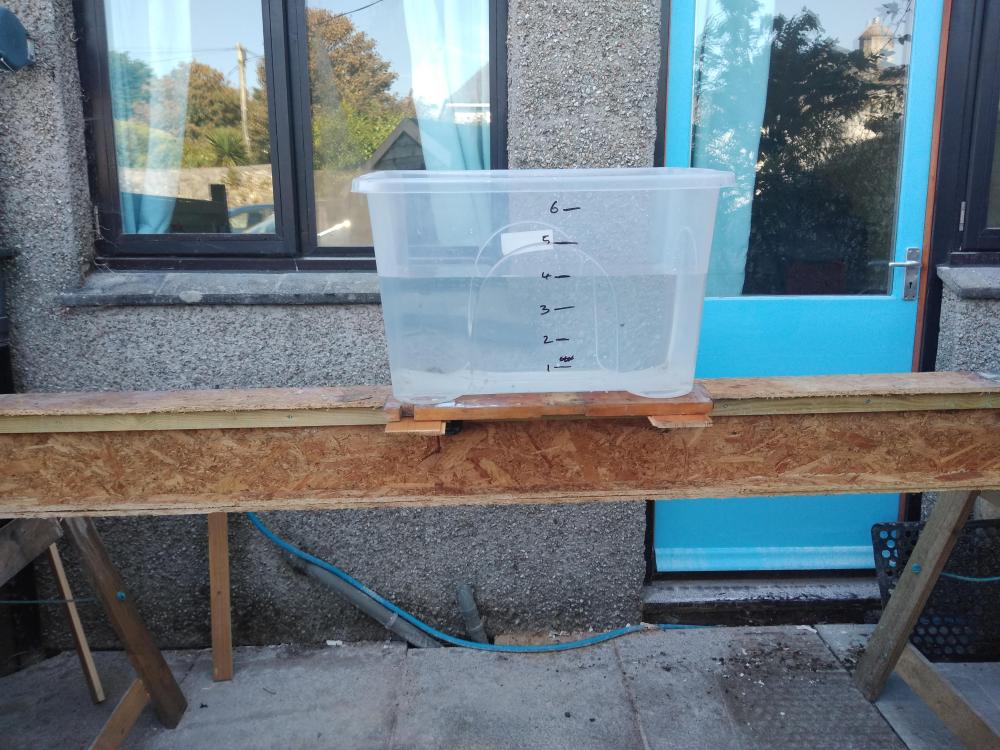
Tomorrow I go back to work after 2 months off. Now I have totally wasted that time, so thought I better catch up with a little experiment I had in mind. With some old 9mm OSB, I made a 200mm deep beam. It is 2.26 m long, and held together with cheap PVA 'no nails' type adhesive (cost a quid a tube). The flange is 100mm wide. One flange is 2 layers of OSB, the other is 2 strips of timber, 20mm by 35mm holding the other flange in place. To test it I put a box on it and filled it with water. It basically only moved 6mm when I had put 52 kg of mass in the middle. Some of that will be because the whole thing became unstable on the trellises. The result is shown in the last picture. Going to be plenty strong enough to make a shed from, so may use cheaper, thinner ply and smaller battening timber. I think I will get @Gus Potter and @saveasteading work out the numbers, my moments if gryration were jumping out the way when the box of water fell.
-
https://phoenixnap.com/kb/raspberry-pi-ftp-server @ToughButterCup can get his missus to sort that out no problems.
-
Banning f-gas and the move to r290
SteamyTea replied to HughF's topic in Air Source Heat Pumps (ASHP)
Possibly. Some BEVs have heat pumps that condition the batteries as well. Then add on the 'services' to keep them connected, it is a marvel that they can go anywhere. -
Columnist and Technology Our priorities are all wrong when it comes to new technologies We can't get life-saving drugs, but we can get dubious self-driving taxis, says Annalee Newitz By Annalee Newitz 30 August 2023 A member of Safe Street Rebel places a cone on a self-driving robotaxi to disable it in San Francisco, California Josh Edelson/AFP/Getty Images AFTER dodging covid-19 for several years, I finally tested positive for one of the leading causes of death where I live in the US. I’m vaccinated, but also in a statistically vulnerable group: I’m over 50, and I used to smoke. For people like me, the US Centers for Disease Control and Prevention recommends treatments including the new drug Paxlovid. Studies show it reduces the viral load in your cells, preventing hospitalisations, long covid and severe symptoms. So I wanted to get it as soon as possible. After staring blankly at my positive test, I went online and requested a late-night video chat with my healthcare provider, One Medical, which was recently bought by Amazon. Let that sink in for a minute, my friends. Some of you may be navigating the difficulties of a national healthcare system, but for those of us in the good old USA, we get our healthcare from techno-capitalism. And no, the free market version doesn’t solve the problems of state-funded systems. My video call was routed to a random nurse somewhere in California, who told me there was no evidence Paxlovid was helpful against covid-19 because “there are so many new strains”. I said I had read articles saying it was, and he replied, “Oh, let me check.” It seemed as if he was doing a Google search. “No,” he said after a moment, “it only helped three strains ago. I can’t prescribe it for you. It would be off-label.” I felt like I was being gaslighted. Paxlovid was approved by the US Food and Drug Administration for use against covid-19 in May. I was in a vulnerable group identified by our federal government. I knew this guy was wrong, but I was too sick to argue. So I made another video appointment online with a different random nurse for the next morning. She took a look at my chart, talked to me about my symptoms and history, and finally prescribed the drug. I was lucky. Friends of mine have had to go to the emergency room to get a prescription, while others have suffered through weeks of debilitating symptoms or months of long covid because nobody would prescribe it. None of this makes any sense. When the US made it available under an emergency authorisation in late 2021, Paxlovid was touted as the miracle drug we would all be taking for covid-19. But, as a recent survey found, doctors are leery of prescribing it. No one is quite sure why. There is no shortage of it and its main side-effects are pretty mild (a weird taste in your mouth, stomach upset). Yet I was denied a potentially life-saving treatment when I needed it – at least at first – for no good reason. So much for the idea that when an amazing new technology is available, we will all have access to it and our lives will be better. Instead, we get questionable technologies that nobody asked for. Case in point: As of this August, California has authorised two companies – Alphabet/Google-owned Waymo and General Motors-owned Cruise – to run fare-paying, self-driving taxi services around the clock across all of San Francisco. Before this, they had been allowed to test their cars in a limited way in the city for a few years. The vehicles have caused all kinds of mayhem. They have interfered with emergency vehicles, stopped in the middle of intersections, got stuck in wet cement, created bizarre traffic jams and even killed a dog. One autonomous car drove through caution tape around a major house fire, rolling over fire hoses and menacing people on the scene. To stop it, firefighters had to take an axe to the car windshield. Waymo and Cruise passengers use an app to call one of the cars, then jump into a vehicle whose steering wheel moves on its own over an empty driver’s seat. Within a week after rolling out autonomous taxis across the city, one was in a collision with a fire truck (the car’s human passenger was taken to hospital but had no major injuries). It seems like every day, we hear about another crash or traffic jam involving robo-taxis. A local activist group called Safe Street Rebel declared a “week of cone“, where it urged people to put road cones on the hoods of self-driving cars. Apparently this is one of the only foolproof ways to make the cars stop. In a TikTok video that went viral, activists showed people how to position the cones properly and urged cities to stop greenlighting autonomous cars and fund public transit instead. Meanwhile, Cruise is addressing problems by agreeing to halve the number of taxis it has on the streets. It isn’t clear how this will fix anything, since the issues have plagued autonomous cars for years. And yet the city’s train and bus systems, which once worked brilliantly, are underfunded and failing. I can’t get a widely-available drug that can mitigate a life-threatening illness without a fight, but I can easily hail a robo-taxi that may cause mayhem on the streets. The future is here, but it’s absurd.
-
No, but I am sure I could form a biased opinion based on nothing but ignorance and prejudice and axe grinding. A lot will depend on what you want to capture. A car registration and clear image of a face, say of someone getting up to mischief, is a lot harder than the body of a panther in the forest, just to prove it was there once.
-
Banning f-gas and the move to r290
SteamyTea replied to HughF's topic in Air Source Heat Pumps (ASHP)
As I said earlier, Aircon in cars is not really the environmental issue. New piston rings, in your case, may have been. (I am wondering if I can get another 14k miles out of my throbbing dual mass clutch then I will have done 250k miles on it) -
House is Too Airtight
SteamyTea replied to Newlands Ian's topic in General Self Build & DIY Discussion
The dew point is one. Td = T - ((100 - RH)/5) Where T is ⁰C, RH in % and above 50. For a longer explanation: https://en.m.wikipedia.org/wiki/Dew_point -
Banning f-gas and the move to r290
SteamyTea replied to HughF's topic in Air Source Heat Pumps (ASHP)
So if the gas leaks out of them, no point getting a regas. If your Aircon draws 5 kW, which would cool a 5m³ cabin a huge amount, it would drain a 100 kWh battery in 20 hours. It takes 0.33 kWh/m³.K to cool air. So if you had a total temperature difference equivalent of 20K, that would be 6.6 kWh, so about an hour's drive to use 7% of the charge. I suspect a BEV Aircon used a lot less power, maybe 1.5 kW.