SteamyTea
-
Posts
23839 -
Joined
-
Days Won
200
Everything posted by SteamyTea
-

Wall mounted basic ASHP for workshop
SteamyTea replied to Mudmouse's topic in Air Source Heat Pumps (ASHP)
That is the one thing that is stopping me getting something similar. -
How about a dimmable, colour change, LED light. Got to be worth a try as it could be a very cheap fix. No one wants bright lights in a bathroom, except pornographers and @Pocster, which amounts to the same thing. Just seen the bottom of that quote. If the light bulb work, it is only £3k.
-
Justifying the cost of stupidly expensive toasters
SteamyTea replied to Adsibob's topic in Kitchen & Household Appliances
-
I need a couple of car radiators. Then we can get on with both projects drekly.
-
Wall mounted basic ASHP for workshop
SteamyTea replied to Mudmouse's topic in Air Source Heat Pumps (ASHP)
With this. https://www.ebay.co.uk/itm/266041448775 And one of these. https://www.ebay.co.uk/itm/353229779754 -
Shall start tomorrow, all I need is a trip out in an old, renovated, Capri to give me inspiration.
-
Will the budget go as far as fitting the pipework and vents? Can fit cheap inline fans then. Or make your own MVHR.
-
Justifying the cost of stupidly expensive toasters
SteamyTea replied to Adsibob's topic in Kitchen & Household Appliances
WEE stopped that happening about a decade ago. -
Justifying the cost of stupidly expensive toasters
SteamyTea replied to Adsibob's topic in Kitchen & Household Appliances
Don't forget to get a new bread knife
-
Justifying the cost of stupidly expensive toasters
SteamyTea replied to Adsibob's topic in Kitchen & Household Appliances
Actually, that toaster seems quite cheap, but you will need one of these. Egg Soldiers for breakfast.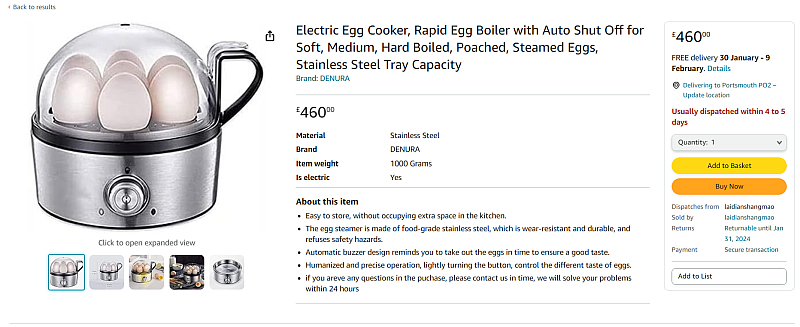
-
Is it hidden in here https://www.gov.scot/publications/regulation-electricians-scotland/pages/1/
-
Justifying the cost of stupidly expensive toasters
SteamyTea replied to Adsibob's topic in Kitchen & Household Appliances
More than what they spend on reliable and repeatable automation. (James May is editing the Today show, um, today. -
Justifying the cost of stupidly expensive toasters
SteamyTea replied to Adsibob's topic in Kitchen & Household Appliances
Does that mean it can't do French toast. What I do. At work I often toast over 100 slices a day, plus rolls, buns and muffins. The last toaster I bought was from Argos, less than a fiver. £10.40 now. £200 / 25 years = £8/year My £5 pound one lasted over a year. -
Disabling Weather Comp during mid winter?
SteamyTea replied to Andeh's topic in Air Source Heat Pumps (ASHP)
That is the problem with swapping 'deals'. The savings are generally so small that they are not worth the bother. -
I would need a spreadsheet to calculate there permutations. Unless I am missing something stated earlier.
-
Not always. It depends on the areas of the floor, and to a smaller extent the walls. @FM2015 How much headroom do you have? Can you create a thermal break between the slabs, floor and walls. Basically a small channel around the perimeter?
-
A litre of water has a SHC of 0.0012 kWh for each elevated ⁰C. If your mean temperature difference is 7.5⁰C, and your flow rate is 1.5 litres/hour. Your power delivery, per loop is around 13W. 1.5 litre/hour seems quite low to me. Or should it be per minute. Changing to minutes would make your power delivery 60 times larger, about 780 W.
-
How an MBC WarmSlab Has Actually Performed based on 6 Years Data
SteamyTea commented on TerryE's blog entry in The House at the Bottom of the Garden
You can probably get away with 4 temperature loggers. Flow , return, room and outside air temperature. Something like this. https://www.ebay.co.uk/itm/115424989748 -
Did you do an earth continuity check?
-
I use this as my automation. It is useful as it can switch devices, sense moisture and temperature, and tell useless plumbers to (expletive deleted) off. And I have spares.
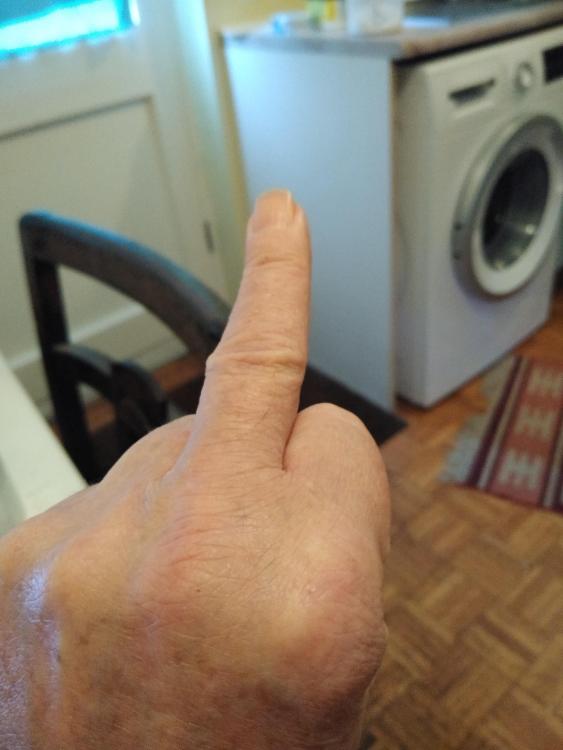
-
It is a shame that there are not decent drawings of plumbing systems and all the pumps/valves/controlled gear that was originally installed. I am with @Gus Potter KISS
-
Post up how you do that please. I keep meaning to research it a bit more, but don't seem to have free time and enthusiasm at the same time.
-
You may be able to run an evaporator chiller off it. Can the Ecocent type water heaters cool a house?
-
Heating Engineers - Hydronics qualifications
SteamyTea replied to IGP's topic in Other Heating Systems
Engineers should. Technicians may not. Really about time the term 'engineer' was protected. Most places require a higher level qualification at least. In the UK all you need is a printer. Self identification could be killing people. -
The research evidence on security alarms
SteamyTea replied to Adsibob's topic in Networks, AV, Security & Automation
Or the installers are selling your house plans and content lists, along with extra information like dog ownership.