SBMS
-
Posts
1075 -
Joined
-
Last visited
Everything posted by SBMS
-
Currently planning on ASHP positioning relative to plant room. Plant room is on top floor (room in roof) and, by my calculation, it's going to be a 25m run from the outdoor unit, to the cylinder, controller and plumbing etc. All of this 25m is inside the house/thermal envelope (just an annoying, complex route, and it's got to get from ground level to 6m to attic floor)... Is this going to be a problem?
-
New build designs........ Comments please
SBMS replied to GK22's topic in New House & Self Build Design
Looks great @GK22 - it seems your design ethos carried through into the build. Did you hit your 2k per sqm target for build cost? -
Think you need/would recommend a cavity tray in the parapet across the cavity.
-
First floor, no radiators/larger radiators ???
SBMS replied to Post and beam's topic in Air Source Heat Pumps (ASHP)
How about UFH upstairs? -
100%.
-
A phased approach to BC drawings / approval?
SBMS replied to Alan Ambrose's topic in Building Regulations
We were given conditional approval that requires further information prior to the construction of that element (specifically it states relevant structural calculations from roof engineer prior to roof construction..) LABC also specifies conditional approval is a ‘thing’. Am I getting my wires crossed? -
For anyone interested, I can now answer my own question and the answer is no, in my instance it’s not worth it! Had costs from our contractor to incorporate a basement (we are doing a swim spa pool so much of this space would be taken up by that anyway.). Difference between just sinking the indoor swim spa and making the full extension a basement is circa £50k. Considering only 7m x 4m of that is useable space we are going to go back to plan A to sink the pool and keep the rest at ground level.
-
A phased approach to BC drawings / approval?
SBMS replied to Alan Ambrose's topic in Building Regulations
Our private BC is happy for us to defer certain elements until the end. So things like MVHR calcs to meet ventilation regs etc are deferred. Even some calcs for floors were deferred to the flooring engineer for later, and we are cracking on. -
And when there’s an issue with the materials or they’re not on site and your builder has 5 brickies ready to lay… that’s £1000 gone. We are open book with builder. He sent across everything - labour, materials and then his %. But critically I could see what he was paying for blocks etc. some volumes were low so I didn’t bother looking but I found a couple of materials in volume - such as blocks that I could Source slightly cheaper. Sent the cheaper prices to him and his merchant matched them all. So I don’t think there’s a massive incentive for builder to get better price on materials if it’s open book. But it does mean you can get better price and the builder pays for it and manages it so no VAT to cover. Best of both worlds?
-
Thanks @JohnMo. Wonder if its cheaper to insulate the external walls with 200mm of EPS (bigger hole, bit of labour), or internally with 200mm PIR...
-
Exploring a mad idea to extend what was going to be just a 1.5m hole for an indoor swim spa, to an actual basement with a cinema room.. Am trying to work out what insulation to use. I am thinking of 100mm PIR stuck to the walls. 300mm waterproof concrete walls. Is there a U Value calculator that'll approximate this, taking into account that the walls are underground? I used ecotherm IWI calculator and with 215mm block walls and 92mm insulated Plasterboard is around 0.23.. Would this be much improved with another 85mm of concrete wall, and by virtue of being underground?
-
I did yes, we were put in touch with a local installer. Where are you based?
-
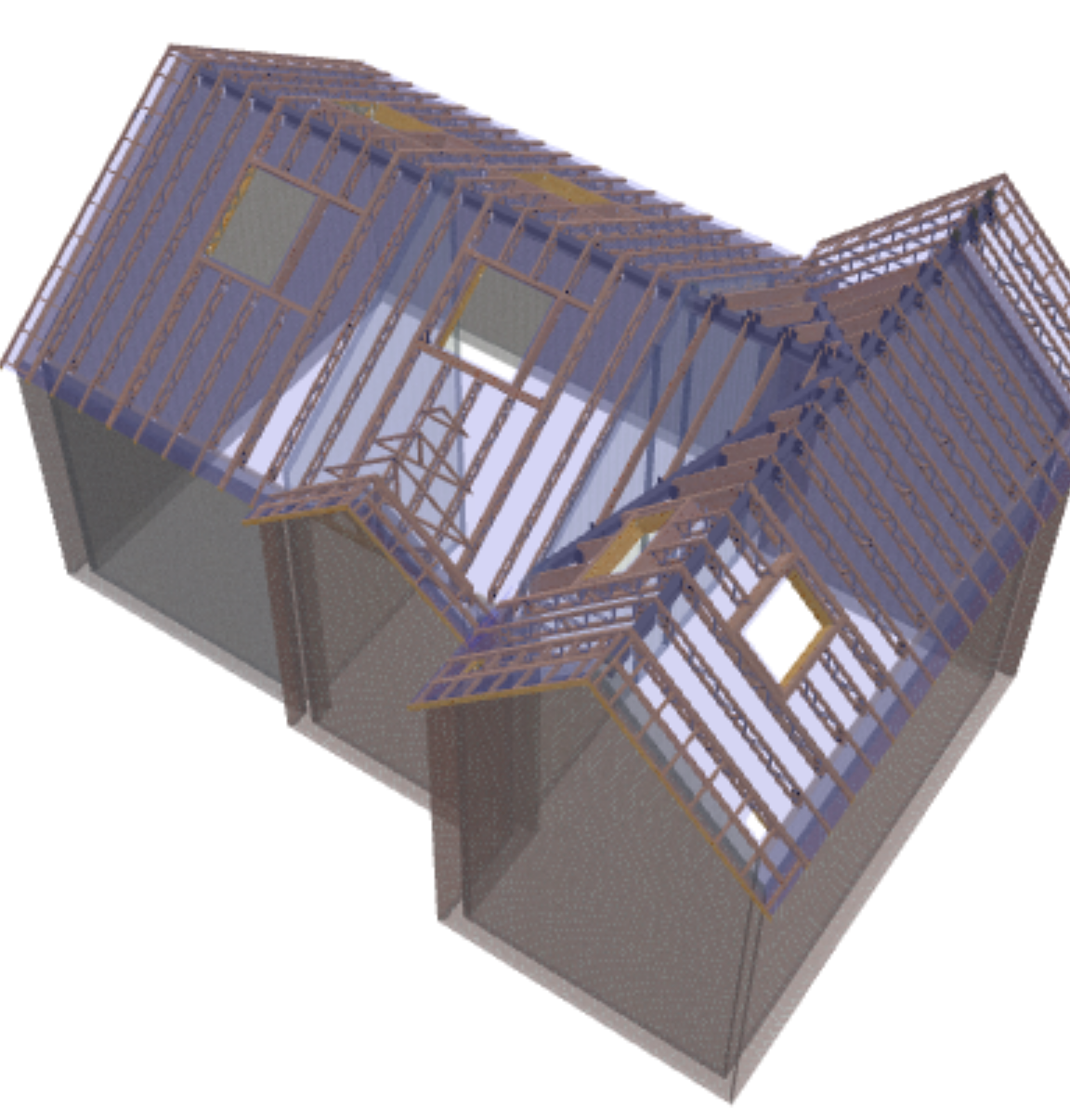
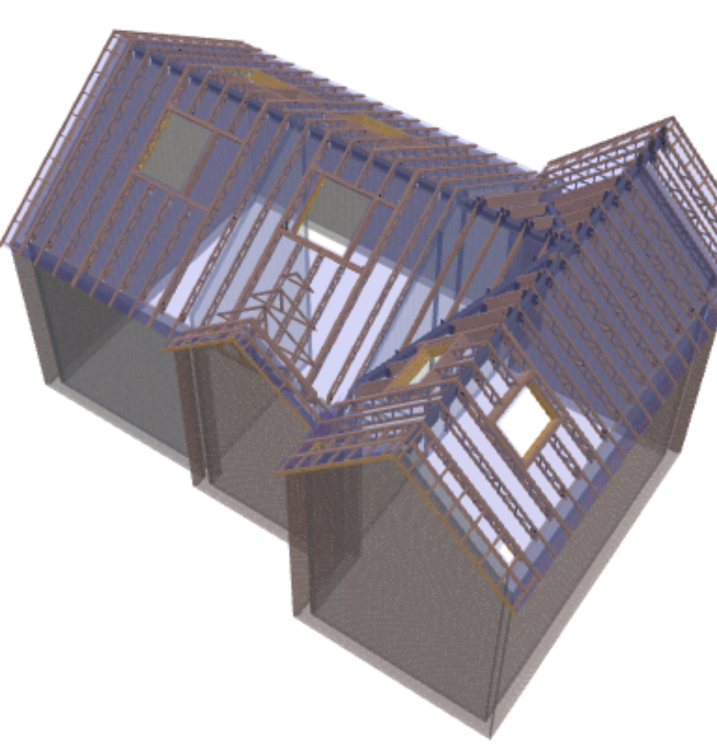
I think some posi joists span up to 8m but not sure about posi rafters. I can’t see many roofs they wouldn’t work on. Our roof design below was around 7k, I had an attic truss design done as well which was 6k. it’s probably cheaper to install trusses but you cant get trusses deeper than few hundred mm. so by the time you extended the rafters to get 300 or so mm depth for cellulose it’s probably a wash. But we do have ridge steels which you wouldn’t have with trusses which added to the cost. About the same again price wise for the cellulose. I think that’s comparable to PIR with the cutting and fitting costs but a better job with cellulose from What I understand.
-
Checking out a company at Companies House
SBMS replied to Alan Ambrose's topic in General Self Build & DIY Discussion
Usually yes. It’s one of the principal reasons for holding companies. HoldCo will typically have little to no trading activity and riskier activities occur in its subsidiary trading companies. That being said the holding company may have financial responsibilities to its subsidiaries but these are not mandatory so usually not made. Typical exception would be if trading co wanted to borrow money - the lender might ask for a cross group guarantee. Especially if the trading company is shifting its profits up to the holding company - which they often do. Retained funds can often be misleading because of exactly what you’ve described. The cash generating trading company shifts all its profits and cash to its group parent thereby shielding this cash from any trading risk. Doesn’t mean the trading company is in any way small or at risk, just financially prudent. What are You buying and can you escrow the funds with a third party if you’re concerned? -
Our brickies leave out every fourth brick at the bottom of the cavity on external skin. They then get in regularly to clear out any snots and ensure all clear at end before beads are pumped in and those bricks replaced 👍
-
I second this. 200mm walls, EPS beads, 0.15 u value. Gets everywhere. Leave brickies to do what they do well (lay bricks) not install insulation. I’ve designed out any manual labour/skill with insulation on ours. EPS beads in wall and blown cellulose in roof.
-
Not in masonry walls!
-
Was yours fibre to the premises? Regs have changed requiring gigabit ready internet for all new builds (Scotland included as of last month) so new builds can’t pick up copper based fibre anymore.
-
Congratulations!
-
Not 100% @JohnMo.. If there's no fibre infrastructure 'local' to the property (ie in the road) you'll need to engage Openreach directly and you'll need to do it through the developer portal. You will need to sign up as a 'developer' (even though you aren't) and register as a single site. Basically - Fibre available in road -> BT/ISP can get you sorted, easy peasy. No Fibre in road -> Openreach will need to bring fibre from nearest spine (this is usually a fibre new build programme, or infill). ISP won't help (as openreach will charge the FTTP service), you'll need a developer services provision and its only openreach (or VMO2/City Fibre post fibre unbundling if in urban area etc) that can provide backhaul connection and infrastructure. Capped at £2k for you, but they can charge more if there is significant cost to service you (in which case you can be excused from the building regs requirement for gigabit ready to the property). If you need a hand knowing what to click on the Openreach Dev site for signup as a self builder let me know... I posted it somewhere else on here as its not straightforward as it is geared toward Ltd Co's signing up as developers.
-
Sounds like this is exactly what latent defect warranty is for. @Saul - completely feel for you, sounds awful. I hope it can be rectified without a demolish/rebuild.
-
Is this what build warranty is for? Can you use it?
-
Understood re implemented upon substantial completion.. is there this same requirement for application though? Ie house must be substantially complete at the time of application?
-
100% correct Bramco. It doesn't even need to be an appeal inspector - our own LPA readily accept and approve infill applications outside of the Local plan settlement boundary, where the planning statement does a good job justifying the location as part of the 'village'.
-
@IanR sorry but you're not correct here. From our application (approved) and many others in our borough: The term village is not defined within the NPPF and is therefore a matter of judgement. The High Court ruling of (Julian Wood v. The Secretary of State for Communities and Local Government and Gravesham Borough Council [2015]) is relevant in respect of interpreting NPPF paragraph 154 [NPPF paragraph 89 at the time of ruling]. In summary, the Court of Appeal confirmed that whilst the settlement boundary, as defined in the Local Plan, would be a relevant consideration, it would not necessarily be determinative as to whether a site is located in a village for the purposes of NPPF paragraph 154. In this respect, the judgement essentially concluded that a decision as to whether or not a site was in a village required an onsite assessment as to the situation on the ground. This ruling has been widely acknowledged by **our LPA*** and consideration of limited infilling sites in villages in the Borough have previously been assessed on this basis. Therefore, if your plot is greenbelt within a settlement boundary, its a slam dunk and the infill provision can be used. However, the definition of a village is not fixed and is a matter of judgement. Our planning consultant proved the village extended to properties not within the defined settlement boundary (which in any case is out of date being as it is many years old forming the local plan) with arguments such as being within a “…linear but continuous edge of settlement location, and whilst outside of the ‘existing built up area’ allocation, the site does read as being a part of **village***" and providing other granted applications in the area that also are outside the official settlement boundary. Planning officer's response in their approval report: "…whilst it is clear that the application site is outside of the Local Plan defined village boundary of**our village***, it can be considered to read as being part of the village of **our village**" I'm becoming a bore on this, but a (good) planning consultant really is worth their weight in gold in applications like this...