SBMS
-
Posts
1075 -
Joined
-
Last visited
Everything posted by SBMS
-
Sounds like we got a result then!
-
We requested 3 phase and were told the transformer couldn’t cope so it’d be 10k or so cost for us to foot for the transformer upgrade. They also offered us an alternative though which was a 40kva connection (3x60 amp) whereas they normally offered 55kva (3x80amp). Is there sufficient capacity for a 40kva connection?
-
VAT on Fibre connection
SBMS replied to JohnnyB's topic in Self Build VAT, Community Infrastructure Levy (CIL), S106 & Tax
Not sure where you have got 30Mbps from. Building regulations are pretty clear: Requirement RA2: Subject to a £2,000 cost cap per dwelling, install a functional gigabit-capable connection. Where a developer is unable to secure a gigabit-capable connection within the cost cap, developers must install the next fastest connection available, provided this can be done without that connection also exceeding the cost cap. If openreach can supply you for 2k+vat you would struggle to explain to BC why you cant install fibre to the property. But if BT will do it for free go for it! Sounds like you’ve got fibre in the road so it’s a minimal connection/civils cost. We had to bring it a mile down the road as no fibre on the lane. -
VAT on Fibre connection
SBMS replied to JohnnyB's topic in Self Build VAT, Community Infrastructure Levy (CIL), S106 & Tax
You will (in England anyway) need to show gigabit ready connection for building control. It also depends on what you’ll be getting. You might get a free ‘fiber’ connection that isn’t really fiber and is 50 or 100 meg. Getting a fiber line directly from openreach will only be fttp (fiber to the property) 1 gigabit or more ready. For us, about 1/2 mile down a country lane away from nearest gigabit trunk, £2k is a pretty good deal. Literally no one else on the road has fiber (except us now) and the cost to openreach will have been much higher than 2k with all the civils, pre pulling, ducting and overhead work they are doing. Check what BT will be connecting as I would be suspicious if they were going to run a true fiber line into your property (only openreach, virgin media o2 and a few other providers are actually authorised to physically install this infrastructure). And to answer the OPs question, openreach connection is NOT zero rated. I had a lot of back and forth and pushed them before they conceded that only the onsite works is zero rateable (which amounted to £56 of the £2k cost). -
We got 1gbps fibre in for our current built a couple years ago - would 100% recommend it over a 5g connection - if it’s available.
-
My airtightness strategy (on a brick and block build no less): Tony tray for the floor joists No external service penetrations (all soil pipes internal) except for mvhr Smartply propassiv for roof inner structure taped at joints, lapped onto walls and then we are going to use aerobarrier once wind and watertight to seal up There’s another post on here why I decided this route instead of membranes, tapes, parging etc Then keeping on top of builders is 100% more important than what architect draws. Especially if they’re not familiar with airtight principles. I modelled the heat loss and uncontrolled ventilation was a huge contributor so am hoping it is money and effort well spent. If it all works out!!
-
Starting a business helping Self-Builders, advice?
SBMS replied to LDNRennovation's topic in Surveyors & Architects
@LDNRennovation self build number 2. number 1 used a large architect practice. they designed a fairly soul less house. number 2 was much better but I think I’ve been a difficult customer for them because I’ve wanted to bring the knowledge from here - mvhr, thermal efficiency etc plus the usual irritation of being a self builder! I don’t agree that houses are easy to design as evidenced by most houses not being special or optimally designed. I think I would most definitely have been a customer to your service. I think your challenge will be the first time self builder. I know so much more second time around and would know exactly what I wanted from an architect. I don’t think organising trades or providing a passivhaus design is relevant. I think speaking to the things that matter to a self builder such as thermal efficiency, cost optimisation, efficient design etc with a good technology mix (3d walk arounds that you can do at your own leisure) would put you above a lot of the rest. I wouldn’t wed yourself to a particular build methodology (ie TF over brick and block). Research and convey how you would design and build each one. I know I wanted brick and block for a number of reasons even though architect wasn’t keen. I’m sure I’ll have a great quality, highly efficient home even using this build method. Architect isn’t so sure but remaining technology agnostic will maximise your market. Stay ahead of technology - suggest things like aerobarrier for airtightness (an example only) as self builders are often guinea pigs for newer ways of building. Fixed price upfront so customer knows what to expect. Bit of a ramble sorry but I think you have a good niche. -
Fair enough however pumped beads installed for me was less per sqm than I could get dritherm at. I think a pumped installation will get every nook and cranny that is tricky to do by hand, but each to their own 👍
-
Why not fill with EPS beads? Similar to 32 dritherm in thermal resistance (0.033) and cheaper when I priced ours up. FYI we are a 200mm cavity brick and block with beads and are at around 0.14 u value.
-
My thinking too. I’ll put up a post with info and photos when they arrive!
-
Do you know any jobs that have had it done?
-
Thanks @Nickfromwales - if You read up a couple posts that’s exactly what I’m going for and I’ve provided the quote as well. Will Report back Here on how it goes.
-
I think they’ve had independent testing that guarantees for 50 years without deterioration. But that’s their marketing speak!
-
Also just for devils advocate ive got 385sqm of external walls so about double yours. Plus some horrible full height vaulted areas. If I were to pay 2 lads 4 days at £200 a day to parge that’s still about £1600 Without materials - and it’d probably take longer than that as they’d need scaffolding or towers inside for tricky bits. And then there’s the worry if they got it all 100%. Then there’s the tapes etc for windows and labour for that on top. I think that’s a fairer cost comparison than doing it yourself with free labour. If I had time though I would - and would do a lot more on the build myself as well!
-
I agree that there are cheaper ways - but parging isn’t the only cost. Liquid membrane at floor and wall junctions, airtightness tapes (we have a lot of glazing) and an overall complex irregular building shape. I’ve not focused on how much it costs so much as what the return on the investment is. Getting airtightness right makes a large impact on energy savings and that’s what I focused on when looking at the cost of aerobarrier. That and the certainty of knowing, pre plaster what the airtightness is, and outsourcing this part of the build. In the grand scheme of things the 4K is an excellent return on investment if it can achieve the level of airtightness promised. In the context of the whole of the build it’s an effective ROI. But I do get your point John - in the same way it’d be cheaper for me to fit my Own windows, lay my Own bricks or pour my own concrete! This is something I decided to outsource for speed, and certainty.
-
Yes it’s about £3900 for our 380 sqm so around £10 per sqm. Sounds a lot but there’s no need for parging, or taping round windows or sealing floor wall junctions. They are aiming to get to 0.6ACH or lower.
-
Not especially to be honest - I did ask them and they said it was ultra low VOC, water soluble and effectively chemically inert. But would be interested if you’ve ready different!
-
We are doing our second build and have opted for 200mm cavity with eps beads. Coming out around 0.15 u value. We are doing dot and dab however I am going to use aerobarrier for air tightness. It negates the need for a parge cost on Inner block, performs sealing around windows etc. will be doing it pre plaster. Not commonly used on here so I will be reporting back how it goes when we get to that stage of the build.
-
No osb top deck? Can you GRP directly to the top of the insulation?
-
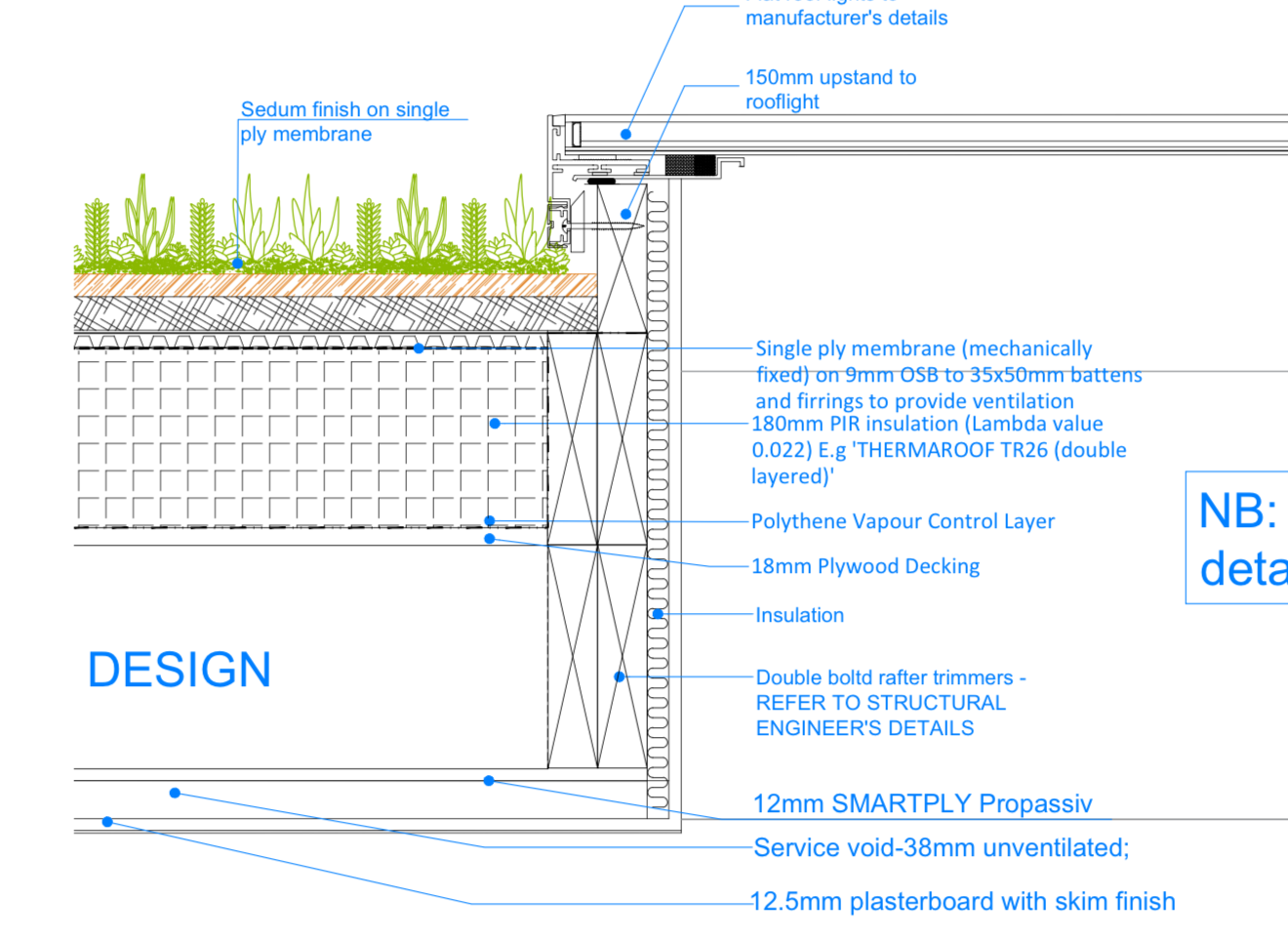
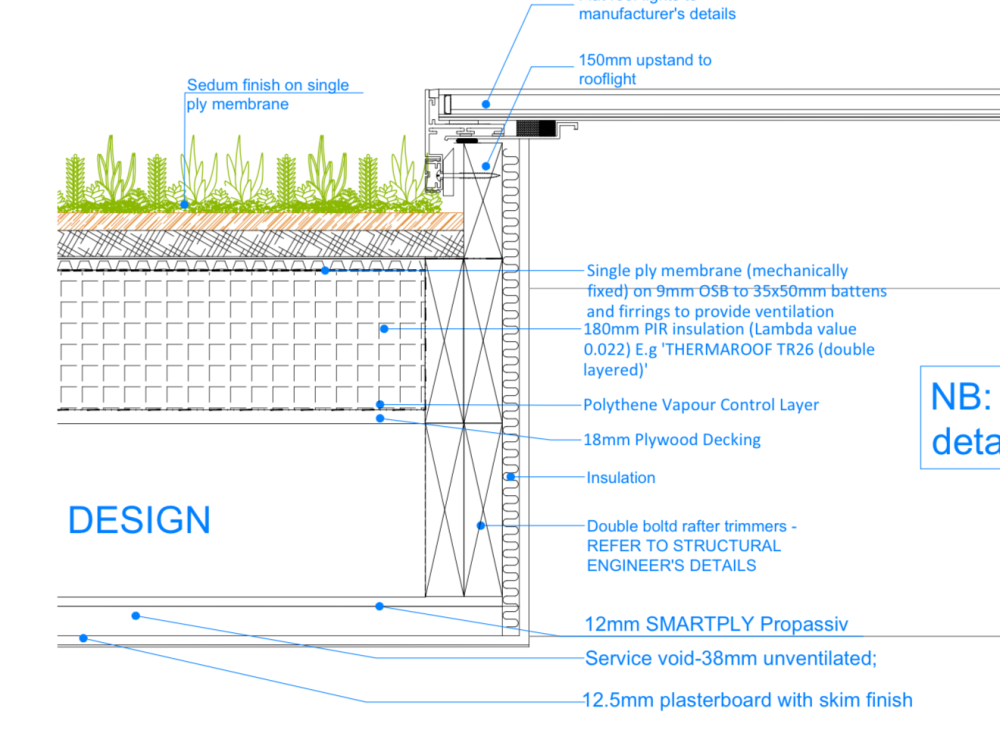
FYI plywood sub deck is already down as joiner followed architect drawing - so would potentially be rework to put firrings on joists. Should firrings go on top of plywood before PIR? More I look more I think architect has made a mistake?
-
@ETC can firrings be on top of plywood (sub deck)? Do they have to be below PIR?
-
Just noticed this on the architects drawings for flat roof makeup. The firrings have been specified as going on top of the PIR. There’s a comment regarding providing ventilation which doesn’t seem to make sense. Can firrings go above the PIR, or will this cause issues?
-
Good choice
-
Fantastic advice @Gus Potter
-
Roof insulation on the inside - quotes - discussion
SBMS replied to Garald's topic in Heat Insulation
Wouldn’t ordinarily recommend PIR but I think the best insulating material to use in this instance would be PIR, is there a reason you haven’t considered this? It’s probably close to double the thermal resistance to wood fibre, so twice as insulating?