SBMS
-
Posts
1064 -
Joined
-
Last visited
Everything posted by SBMS
-
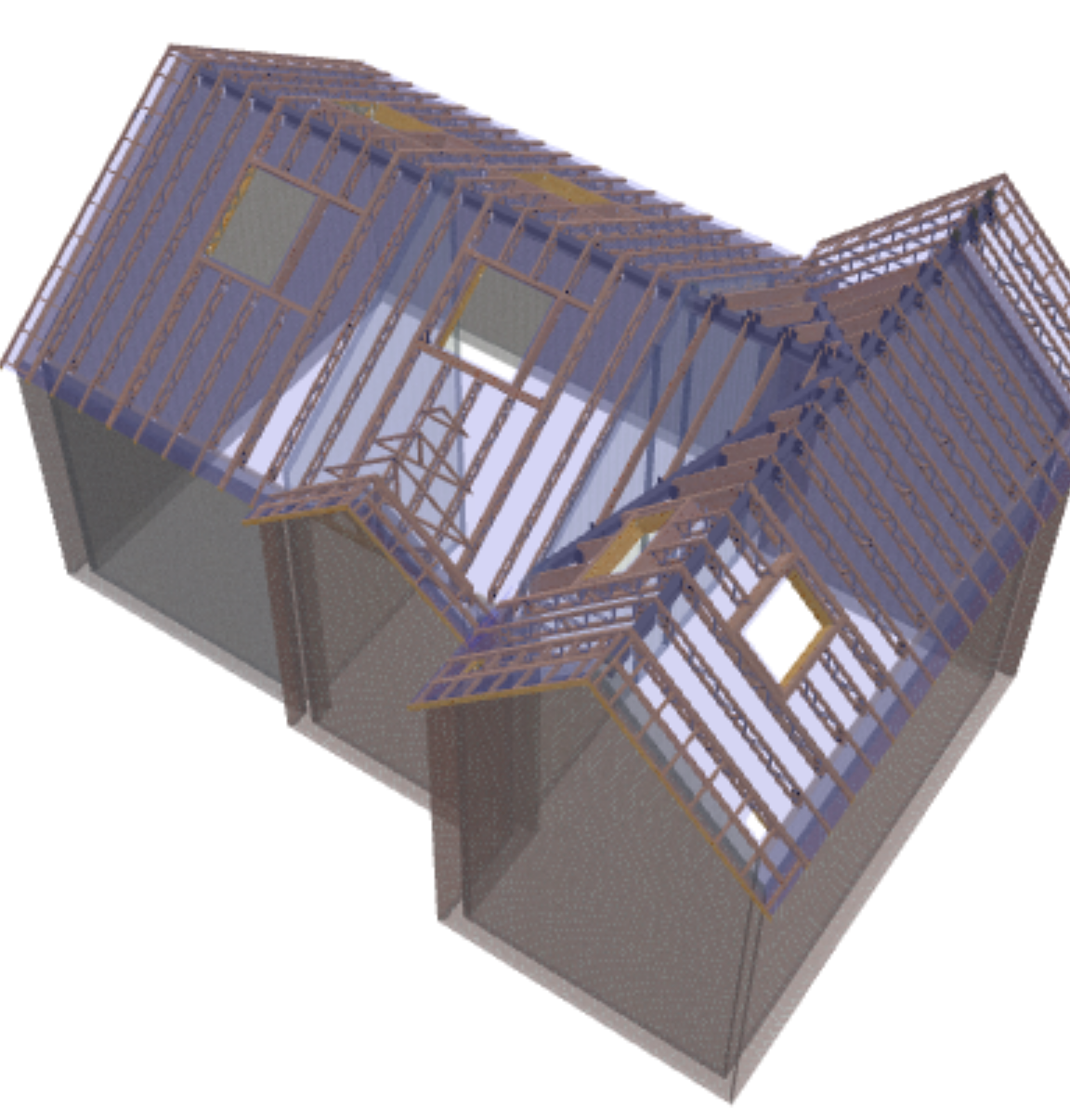
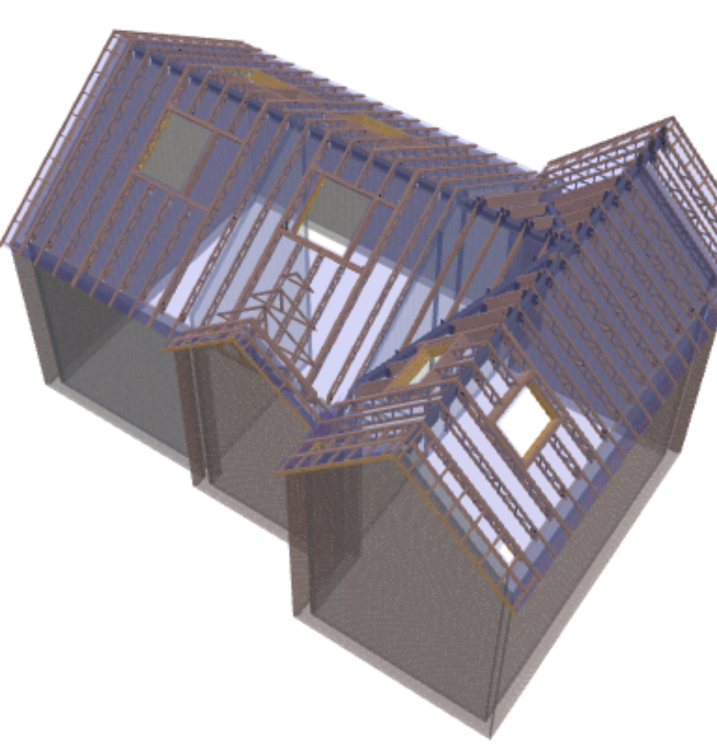
I think some posi joists span up to 8m but not sure about posi rafters. I can’t see many roofs they wouldn’t work on. Our roof design below was around 7k, I had an attic truss design done as well which was 6k. it’s probably cheaper to install trusses but you cant get trusses deeper than few hundred mm. so by the time you extended the rafters to get 300 or so mm depth for cellulose it’s probably a wash. But we do have ridge steels which you wouldn’t have with trusses which added to the cost. About the same again price wise for the cellulose. I think that’s comparable to PIR with the cutting and fitting costs but a better job with cellulose from What I understand.
-
Checking out a company at Companies House
SBMS replied to Alan Ambrose's topic in General Self Build & DIY Discussion
Usually yes. It’s one of the principal reasons for holding companies. HoldCo will typically have little to no trading activity and riskier activities occur in its subsidiary trading companies. That being said the holding company may have financial responsibilities to its subsidiaries but these are not mandatory so usually not made. Typical exception would be if trading co wanted to borrow money - the lender might ask for a cross group guarantee. Especially if the trading company is shifting its profits up to the holding company - which they often do. Retained funds can often be misleading because of exactly what you’ve described. The cash generating trading company shifts all its profits and cash to its group parent thereby shielding this cash from any trading risk. Doesn’t mean the trading company is in any way small or at risk, just financially prudent. What are You buying and can you escrow the funds with a third party if you’re concerned? -
Our brickies leave out every fourth brick at the bottom of the cavity on external skin. They then get in regularly to clear out any snots and ensure all clear at end before beads are pumped in and those bricks replaced 👍
-
I second this. 200mm walls, EPS beads, 0.15 u value. Gets everywhere. Leave brickies to do what they do well (lay bricks) not install insulation. I’ve designed out any manual labour/skill with insulation on ours. EPS beads in wall and blown cellulose in roof.
-
Not in masonry walls!
-
Was yours fibre to the premises? Regs have changed requiring gigabit ready internet for all new builds (Scotland included as of last month) so new builds can’t pick up copper based fibre anymore.
-
Congratulations!
-
Not 100% @JohnMo.. If there's no fibre infrastructure 'local' to the property (ie in the road) you'll need to engage Openreach directly and you'll need to do it through the developer portal. You will need to sign up as a 'developer' (even though you aren't) and register as a single site. Basically - Fibre available in road -> BT/ISP can get you sorted, easy peasy. No Fibre in road -> Openreach will need to bring fibre from nearest spine (this is usually a fibre new build programme, or infill). ISP won't help (as openreach will charge the FTTP service), you'll need a developer services provision and its only openreach (or VMO2/City Fibre post fibre unbundling if in urban area etc) that can provide backhaul connection and infrastructure. Capped at £2k for you, but they can charge more if there is significant cost to service you (in which case you can be excused from the building regs requirement for gigabit ready to the property). If you need a hand knowing what to click on the Openreach Dev site for signup as a self builder let me know... I posted it somewhere else on here as its not straightforward as it is geared toward Ltd Co's signing up as developers.
-
Sounds like this is exactly what latent defect warranty is for. @Saul - completely feel for you, sounds awful. I hope it can be rectified without a demolish/rebuild.
-
Is this what build warranty is for? Can you use it?
-
Understood re implemented upon substantial completion.. is there this same requirement for application though? Ie house must be substantially complete at the time of application?
-
100% correct Bramco. It doesn't even need to be an appeal inspector - our own LPA readily accept and approve infill applications outside of the Local plan settlement boundary, where the planning statement does a good job justifying the location as part of the 'village'.
-
@IanR sorry but you're not correct here. From our application (approved) and many others in our borough: The term village is not defined within the NPPF and is therefore a matter of judgement. The High Court ruling of (Julian Wood v. The Secretary of State for Communities and Local Government and Gravesham Borough Council [2015]) is relevant in respect of interpreting NPPF paragraph 154 [NPPF paragraph 89 at the time of ruling]. In summary, the Court of Appeal confirmed that whilst the settlement boundary, as defined in the Local Plan, would be a relevant consideration, it would not necessarily be determinative as to whether a site is located in a village for the purposes of NPPF paragraph 154. In this respect, the judgement essentially concluded that a decision as to whether or not a site was in a village required an onsite assessment as to the situation on the ground. This ruling has been widely acknowledged by **our LPA*** and consideration of limited infilling sites in villages in the Borough have previously been assessed on this basis. Therefore, if your plot is greenbelt within a settlement boundary, its a slam dunk and the infill provision can be used. However, the definition of a village is not fixed and is a matter of judgement. Our planning consultant proved the village extended to properties not within the defined settlement boundary (which in any case is out of date being as it is many years old forming the local plan) with arguments such as being within a “…linear but continuous edge of settlement location, and whilst outside of the ‘existing built up area’ allocation, the site does read as being a part of **village***" and providing other granted applications in the area that also are outside the official settlement boundary. Planning officer's response in their approval report: "…whilst it is clear that the application site is outside of the Local Plan defined village boundary of**our village***, it can be considered to read as being part of the village of **our village**" I'm becoming a bore on this, but a (good) planning consultant really is worth their weight in gold in applications like this...
-
Sorry @DevilDamo - I get that sequencing but wasn’t what I was asking. Say I am building a new house. It’s not yet wind and watertight, but I have an intention to add a rear extension under a PA application. When can that PA application be submitted? Do you have to wait till the house is finished? I know that you can only start the works under PD once the house is substantially complete, but can you put in a PA if the house is not?
-
So a property doesn't need to have actually been finished in order to submit the prior approval related to an extension under Permitted Development?
-
Out of interest, at what point can you apply for prior approval and LDC? We plan on adding an extension (under PD, but using prior approval as it is 8m at rear) to our self build once we are at wind and watertight stage. That is typically the stage our LPA accept PD rights become available. But can we put in the application for prior approval and the LDC prior to this? And then start work immediately once the building is substantially complete?
-
Which bits are contestable vs non contestable?
-
Plenty of green belt infill plots that have been refused around us. And upheld on appeal so I wouldn’t say it’s a given. Still open to interpretation as to the ‘facts on the ground’ as appeal inspectors like to call it.. is it an established frontage is often open to interpretation. Some authorities set a specific gap or plot size but this isn’t in the NPPF. Ours does not and typically only approves for single plot gaps. Anything larger doesn’t settle their test of ‘small gap in a continuously developed frontage’. Notable case in our area was dismissed by appeal inspector. He agreed with the council that it wasn’t infill because the gap was too wide, was more analogous to an agricultural field, even though it was between two properties. Settlement boundary is relevant when defining the actual extent of a village - as authorities will also look at where exactly your location is and whether the makeup of the surroundings constitutes making up the ‘village’. If your patch isn’t technically in a village then you can’t use this exception. Planning consultant first, if I was you, but keep the optimism 👍
-
It doesn’t sound like their reason for refusal was because there ‘wasn’t ever a building on the plot’ - which isn’t really a condition of infill anyway. If you can prove the settlement boundary extends to encompass your plot and there’s a clear gap then infill should be a reasonable scenario for planning. Did the council not address this in their response? Have you got the delegated report or link to application for us to look at?
-
Anyone else had cellulose and had problems with slumping... I assume its an installer issue rather than an inherent problem with cellulose in pitched roofs?
-
What problems out of interest?
-
If you could have had warmcel over foam would you have used that instead?
-
Have you got a contact for Gordon?
-
Was speaking to another installer that blows in Supafil Frame (https://knauf.com/en-GB/p/product/supafil-r-frame-21496_4206) - anybody used this in pitched roof?
-
@JohnMo - which foam did you use out of interest and what was your end U Value? Am happy to look at all options really, but have been very wary of foam for obvious reasons (mortgages being one)...