
saveasteading
-
Posts
10897 -
Joined
-
Last visited
-
Days Won
94
Everything posted by saveasteading
-

Help me cost up my new build (300sq m)
saveasteading replied to Indy's topic in Costing & Estimating
For interest, what would that sell for when complete? £1M to build plus all land and all fees, and something for yourself (20%) for risk and hassle. I'm not surprised the architect is being really helpful and pragmatic. Are they anticipating a percentage of a high build cost? Test their pragmatism and tell them a build budget. Plus some incentive like they don't get paid if it goes over. It is a simple design with plenty of internal walls so can be timber frame based. That will also reduce the amount you need Surrey builders. The more that comes in the package the less you need trades and also helps speed. eg the insulation and inner walls can be included, even wired and with windows and doors fitted I have built in Surrey, and had to take Kent workers there to get a sensible price and work ethic, and Kent is hardly cheap. As my other post, get rid of fake chimney. The planners are always surprised to hear it is fake but can't justify it when smoke is bad and wasting materials is bad ....and i could list 5 more reasons. So that is £2,000 saved and just another £198,000 to find...but I think you can. -
New build floorplans - opinions welcome
saveasteading replied to Indy's topic in New House & Self Build Design
Agreed it is not to my taste either. Also the utility coming off the lounge corner. I think most families with that size of house would want a separate 'snug' room. It would be very easy to change with the l shape, and moving the utility door. and a window into that dark corner. Also. Is that a fake chimney? it doesn't appear to impinge on the bedroom above. Fibreglass chimney stack and pot on the top? Not to my taste, an expensive folly, and not remotely sustainable. You asked for comments. -
Fire regs can sometimes be overlooked in the short term if there are other protections in place. For example alarms and agreement that there will be no visitors, a twice daliy sweep of fire risks. Depends on your bco but a sensible one would rather you discussed it than occupied regardless. suggest ordinary chunky doors but with intumescent tape round them...it stops air movement. Can't you get basic industrial fire doors for now?
-
Getting water to a manifold 25m away
saveasteading replied to saveasteading's topic in Underfloor Heating
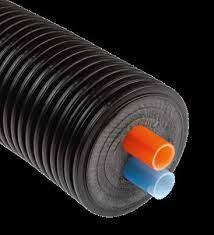
Thanks, I didn't even know that existed. Presumably resistant to UV, water, bacteria etc. 35dia seems to be £10 for 2m , so for 2 pipes is £10/m x 35m = £350 instead of 35 x £50 = 1,750...I like it. Ours will be in the dark, so only heat effects and rodents as threats. I think we would lay mineral wool on top as a secondary insulation and that is sorted. -
Ater a good dicussion with a local plumber it is pretty certain that we will be putting 2 ashp systems in to supply 2 zones, but they will both be in one area next to one plant room. The idea is that 1 big pump (15kW)would be working very hard, whereas 2 x 10 would be coasting and much more efficient. Therefore the feed from the plantroom will need long distribution pipes to the manifold. Ground floor concrete with ufh. Partial First floor is largely in the roof space with timber floor and will be big rads. There will be a convenient void between low walls and the outer wall, through which services can run, and we can insulate inside the stone wall. I think we must take the feed pipe to the first floor so that it can be insulated or we will lose too much heat in transit in the concrete floor. Is it normal or wise to use the specialist insulated pipes, or simply to use normal pipe then pipe-wrap (the superior one) then also wrap in mineral wool. This looks great but is £50/m, and it might be difficult to get round corners. Have used it previously outside from distant ashp to building but is it too much for inside? .
-
I have had a new basement with 1m standing water in it*. So yours is not so bad. Really, don't bother yet, if it can get soaked again, until you close the walls. Close the windows off with stud and polythene and it will not get worse. *Coming from rain and I was pleased to see that it was completely watertight. Once the envelope was completed and the pumping was done , it was 2 weeks of dehumidifier and no further problems.
-
It is the HSE explanation specifically for self-builders. I don't think any HSE inspector would worry especially as long as the site is safe and well managed. Insurance is another matter. Project ethos : Don't have any accidents. My broker once told me the opposite.....while taking the £15k premium.....that the chances of a successful claim were tiny, and the fee goes to fighting all claims, plus some residual risk....a and a big profit. Looking at Grenfell as an extreme example, there must be many levels of PI premium all towards the same risk, and it is being spent in court. Most small subbies have rubbish insurance cover (see small ads in the Sun) and it is very important to check it out, as it is often worthless. I had cladders once and their insurance said they were pipe fitters and 'no works above 3m'. We were at 9m. 'Nobody else has ever questioned it' he said.
-
Getting 20 litres out every day should make a huge difference. What is the cause of the dampness? Building works (which you can resolve with 20l/day) or groundwater seeping in which needs another solution.?
-
I admit I only know big jobs or my own diy. I always tried to keep trades apart however big the job. Groundworkers should not have steelworkers chasing along behind them etc. Steelworkers driving into groundworkers excavations that weren't there earlier, and groundworkers having to worry about stuff falling. It is very much easier to manage that way and the risks are much reduced. Once indoors the risks are very much lower. I recommend that to all self-builders. I worked as a specialist subcontractor on a few projects (for national companies) and they were awful: lots of procedures and signatures and stickers, but no real control and not nice sites to be on. HSE knew that and praised my readable and relevant risk assessments while criticising the main contractors' multiple folders of words. Paperwork is not the answer in itself. Common sense and thought is, but if you can't write it down, it hasn't been thought through.
-
PeterW, I'm not sure it is that simple. But the explanation is far from clear. https://selfbuildportal.org.uk/healthandsafety/ read all for context but The self builder acts as their own project manager, employing individual trades at different times.............the self builder will in effect become a contractor. In this case the HSE will expect self builders to demonstrate sufficient health and safety capability to meet the requirements of Part 4 of CDM 2015. Individual contractors will be expected to be able to advise the self builder on any specialist matters within their own work activities. The expectation on a self builder in this position will be on co-ordination and management , not on direct supervision of contractors on site. The self builder is entitled to expect contractors to plan, manage and monitor their own work in compliance with the CDM Regulations. So in principle the client is the Principal Contractor, and should follow the principle of putting all contractors in charge of their own works. That is how I read it anyway.
-
Quite right. And it is ok to say 'don't know' where contractors are not chosen yet. Then you will be on their list and they are likely to drive by at some stage, and may call in. The very worst thing you can do if and when they show up is have everyone on site denying they are in charge. The job will be stopped. There must always be someone in charge...you whenever possible and instruct someone else if you have to go out. They then have a walk about with you, and if everything is ok then that is the end. minor things get a discussion and letter, and everyone is safer. Sites are so much safer than they used to be. HSE don't want to see masses of manuals an paperwork, just a plan that everyone understands, and standards.
-
Well put. The Principal Contractor (note spelling) does not exist in this scenario. In any case they would ask the groundworker for their risk assessment which should be site and job specific. You can do the same. It should be easy to follow by all parties, including the site manager of any day. If they can't do that then they are no use to anyone, and will be as bad at supervision, safety and quality as they are at admin and risk assessment. It may be that their insurer demands a principal contractor., and that would say something in itself. HSE are decent folk with a tough job. All they want is safe working. No accidents means no problems for anyone. A risk assessment with method statement is an essential start.
-
Insulating a stone house
saveasteading replied to Col2021's topic in House Extensions & Conservatories
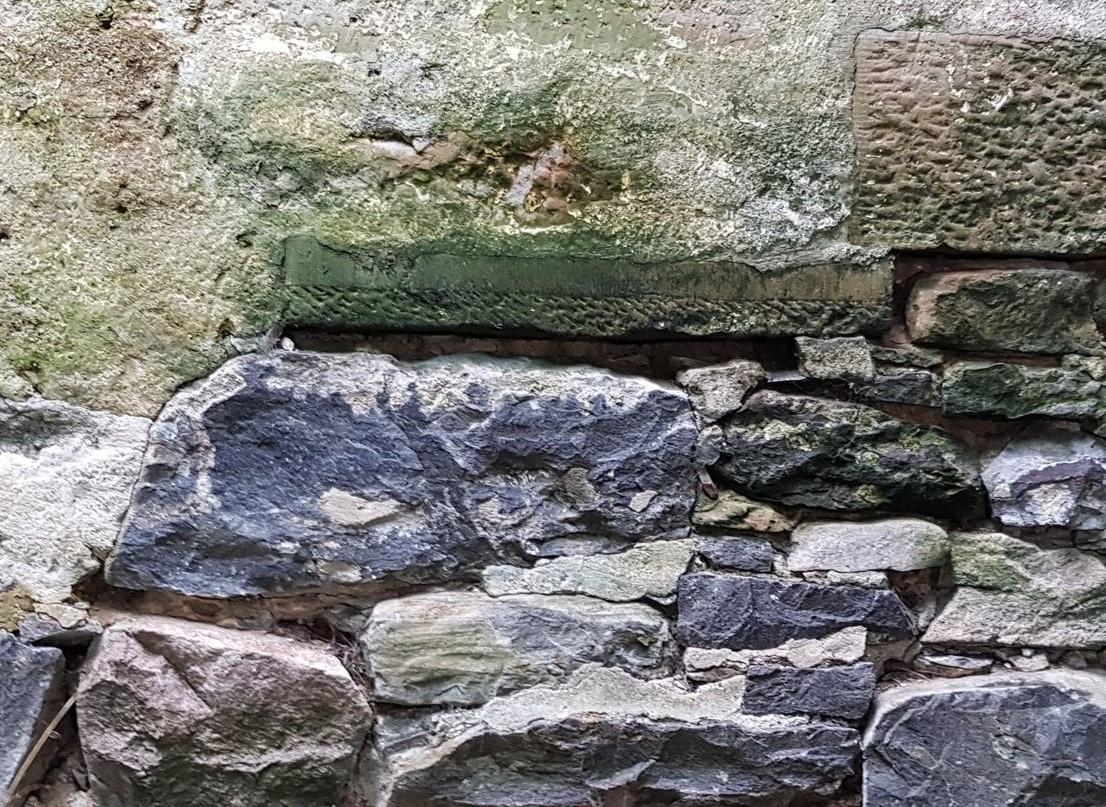
How thick are the stone walls, and do you know if they are a single stone, or made with inner and outer layers and rubble fill? Looks nice condition from this distance. Water overflowing from RH of gutter by the looks of it. Hardly surprising with no dp, but a valley tipping in there. What area of the country are you? -
-
Drill the holes for the screws, pump in some silicon, screw fit as normal. At the cable entry pump in silicon around the cable. You could do ore from above if it is accessible.
-
And if they were to choose to measure form where the ground is lower, then a bit of landscaping could resolve it. I have had such complaints/queries and it went away quickly, as it must have been a neighbour complaining but without any knowledge/figures/ clue...just higher than they liked. Planner keen to sign it off.
-
OK I see now that the slab is a structural solution to retaining the frame. So I think, uneconomic as it seemed. it is probably a clever solution. I had not heard of this method before so any photos or drawings would be appreciated, for my interest but may help towards a fuller answer to your query.
-
Minimum thickness of sand and cement screed
saveasteading replied to Porthole's topic in General Construction Issues
Presumably there is already a floor, hence keeping it all thin. If it is a concrete floor then it won't go anywhere and you should be ok with a thin screed. I have been happy with fibres. It looks strange with hairs sticking out but they rub off, and it can't do any harm in holding the screed together. 20mm celotex to persuade the heat to go up and not down? isn't a lot, but if it is a small area or comfort rather than efficiency then perhaps this is justifiable. If it is central (not exposed) then that helps too. I put an electric mat down on an existing concrete shower-room floor, with only 10mm insulation (then tiled) It loses a lot pf heat of course but is only on for short peiods and the floor is cosy then. So not ideal but it works. -
As IanR.... I think there may be a misunderstanding. A portal frame would normally sit on a concrete pad arrangement, with one to each column about 1m deep, and perhaps about 1m2. A 250mm slab is much thicker than the average warehouse requires, with loading 8m high, but still not suitable for a portal frame. However the insulation under such a floor would crush with the weight. So I am much confused. What dimensions are the building (approximately) and how far between portals?
-
You only need pretty stones for the face of it and can fill the rest with much cheaper material. Even new concrete blocks will be cheaper than that, and you can use damaged or demo material, which you may find free to collect of sites. Depending on where you live, quarry products may have different terms, Waste is whatever doesn't have a name and they cant sell as a product. Scalpings for example is a mix of poor stone and clay, just as it comes. Best explain to the quarry (or haulage company) and see what they suggest. Crushed demo concrete may be cheaper but is sometimes in demand for its greener credentials.
-
SAP Calculation U-Values vs Manufacturer Values
saveasteading replied to SBMS's topic in Heat Insulation
If you show them a proven (or stated) U value by a manufacturer, which matches your construction then they will plug that U value in. -
Smoke Alarm Regs change in Scotland
saveasteading replied to Temp's topic in General Self Build & DIY Discussion
A manufacturer of 10 year sealed units said that it means 'the life of the unit' and 10 years is acceptable, but don't refer to anything official. -
What do you want from an architect?
saveasteading replied to CharlieKLP's topic in Surveyors & Architects
The bottom line is that the insurers rarely pay out. Their risk is of occasional very large sums, but they spend a lot of effort in rejecting claims. That is why, I think, some surprising businesses get cover.....there is minimal chance that there won't be a get-out for the insurer at any claim. -
Is it possible to do under £200,000
saveasteading replied to willow171's topic in Costing & Estimating
No you won't. Choosing builders you can relate to (not just the sales people though) and Keeping a diary of who said what soon sorts out the chancers, and you will get the hang of it. -
An alternative to RSJ in providing joist support
saveasteading replied to Annker's topic in Lofts, Dormers & Loft Conversions
If you use an SE he can iterate until the best section is obtained for your purpose, whether that be cost /depth/availability. But usually people want the lowest (or no) fee so they get a safe size Cold rolled is easier to work with as it can be cut and screwed with everyday equipment, and is lighter to handle. If you need only a small number, then the local agricultural merchant will have some in stock.
