
saveasteading
-
Posts
10890 -
Joined
-
Last visited
-
Days Won
93
Everything posted by saveasteading
-
Why are the bricks white on some parts?
saveasteading replied to Lal's topic in Bricklaying, Blockwork & Mortar
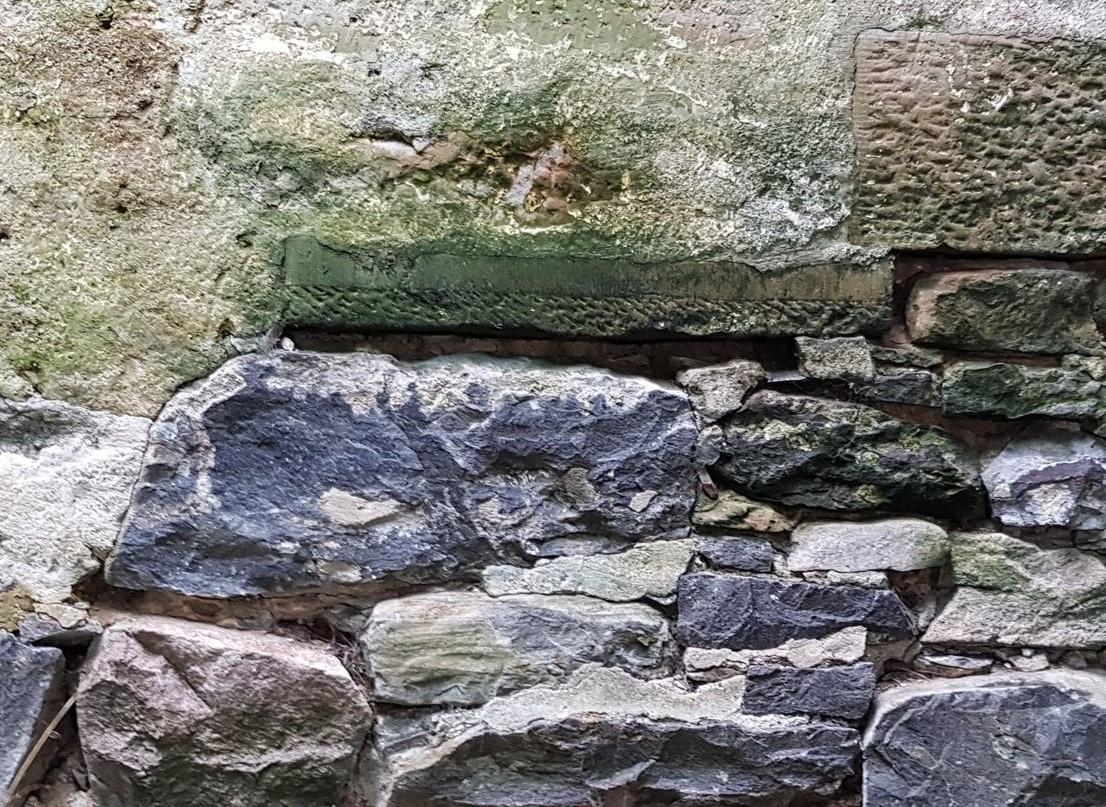
Not only that but it is a damp little corner with reduced air flow. Not a problem. Worth clearing the moss and any soil with it too, as that holds water. The salts might just fall off come the summer, or wash them off then. -
Floor tiles are never flat apparently
saveasteading replied to saveasteading's topic in Floor Tiles & Tiling
Any advice on whether a tile levelling system would work for us? I can foresee difficulty in furniture not sitting properly. I have poked at the levelling wedges in a shop but thought it was more for rough floors, or for amateurs. Will the tiles bend or break? Will the adhesive stay in place where lifted? Im thinking that test 1 is to put a weight on and see if it bends flatter. -
Floor tiles are never flat apparently
saveasteading replied to saveasteading's topic in Floor Tiles & Tiling
They were from topps, inverness. The staff were very good altogether in talking prices, openess about the repeats issue and delivery. I was just surprised that the displays didn't do justice to the mix of the tiles. At first visit they gave a good offer based on a large quantity. Anything they describe as a pallett gets a good price. It turned out that didn't mean a whole pallett of one type, just ' a lot' (more than a boot full?) -
Floor tiles are never flat apparently
saveasteading replied to saveasteading's topic in Floor Tiles & Tiling
In principle we don't like materials pretending to be something else. Wood would have been appropriate but over budget and dog damageable. UFH will work better too. Still, most tiles have only 6 patterns and strong features and 'knots' that would be in line...no real knots look the same. These tiles look so real. Topps contrived to have repeats even in their 1m2 display. But in real life we can lose the strong patterns in cuts and are happy. Good discount too. -
Floor tiles are never flat apparently
saveasteading replied to saveasteading's topic in Floor Tiles & Tiling
They seem to be managing fine just with adhesive and a level/straight edge. -
For information....we were advised and can confirm, that our 900 long porcelain tiles all have a curve in the length. Adds to the challenge. Fortunately laying them to 300 staggers reduces this 3mm difference. I hadn't heard of this characteristic. The team are taking to tiling. Superb for the first time. We are also impressed to find 19 different patterns, reversed makes 38, so it won't have visible repeats.

-
I like there always to be ventilation in a floor void. If dampness can get in somewhere, anywhere, then it should be allowed out again. In your case on a slope there is also a strong chance of water getting in, so I suggest holes at ground level on the downhill side...covered against insects.
-
Yes. It isn't "an idea", it is normal professional practice. There are sprays as an option for big slabs. Or keep wetting it.
-
How much rebar in a Nudura building?
saveasteading replied to Andrewb's topic in Insulated Concrete Formwork (ICF)
Have not thought this through for EPS, but on water tanks etc the use of lots of skinny bars is the norm to spread the effect as much as possible, esp avoiding cracks. -
I'd be surprised if the £30 merchants have any insurance (or morals). It would rather concentrate their minds, and those of the estate agents. I wonder what the tolerance is for 'inaccurate'?
-
OK happy to expand: I'd like you to have the perfect slab. The procedure in changeable weather is to 1. hope that the surface hardens before any rain comes or it will pock mark with the rain. 2. at whatever stage you decide, balancing rain marks and not scuffing the surface while laying polythene or hessian, lay the cover. This initial 'Set' can be 2 hours or 8 hours. depends on temperature mostly. 3. It should not need additional water. 4. Have a check, next day. Polythene will likely have a coating underneath of condensation. If so, leave it alone. 5. it is wet enough , so leave it covered for a few days, a week if you can. If you want to wet it further it can do no harm. BUT. if you are using hessian that keeps the wind off but allows it to evaporate so give it a spray with hose or buckets. It can't be too wet, and it won't absorb water unless it is a good thing. After a week, most of the chemical reaction has completed. A large proportion of the water has combined chemically with the cement and is now dry as well as hard. The remaining water can be allowed to evaporate. The chemical reaction creates heat, which you are also keeping in. Cold is very bad for concrete until set. I think the rule is min 3degC, but even then it will be slow to cure. In hot or windy weather the above changes a little , but not your problem at the moment. If extra water is added to the mix at pouring, this eventually evaporates and leaves air gaps in its place, too small to see, but weakening the concrete. Add 50 litres to 6m3 and that is 50/6000 and that doesn't sound a lot. But the majority of the concrete is stone, and so this is adding a high proportion of air to the vital cement paste. 95% of groundworkers want to add water for their convenience, and will try to avoid taking instruction not to add any. Refer to the concrete supplier if necessary. Nobody dies, as it isn't a bridge or a dam, but you will get lots of cracking and that may come through surface finishes. Concrete does not harden through drying but by chemical reaction. Only you and I and a few others know this. Most groundworkers think they know better than us. Concrete always shrinks when hardening. If done skilfully there are millions of invisible cracks. If done badly there are ugly wide cracks. If you have to remove areas of polythene for other works, then do so, but try to put them back asap. If I've missed or confused anything do ask again.
-
How do I stop dark tile edges from ruining the look?
saveasteading replied to Saned's topic in Wall Tiles & Tiling
There are white pens, intended for re-whitening grout. a bit like tippex correction pens. I think that would stick to terracota.- 1 reply
-
- 1
-

-
My current favourites. The head holds the screw whatever angle, including downwards, and they cut in and grip well too. Saves a lot of time finding and picking up, esp if working at arms length.
-
In commercial and public buildings. In houses they sensibly allow that they would be blocked open anyway. More importantly, we know the escape routes from our own houses. And now Scotland requires interlinked fire alarms so there is early warning. If you wanted self closers then the pocket doors could perhaps be hung on a slope.
-
What blocks are these? I did a deep basement using special concrete blocks that joggled about for interlock. But we still had to use a very expensive waterproofing layer outside it and under the floor. I'm nervous about yours. Is it fully designed, and can you tell us more? Re insulation, I would be happy with the floor, as the earth will come to some steady temperature, being a long way from cold weather. I think this is undervalued in theoretical calculations. So on the walls I would want PIR for maximum effect. 100mm again perhaps, (still getting some benefit from being away from the weather) then vcl/ stud/ 25mm service void then 1 layer plasterboard. All assuming it stays dry.
-
doesnt effect plastic. OK. The bottle of drain cleaner I bought wasn't supposed to melt plastic either. Maybe it was organic plastic. I was very lucky that it just distorted rather than dissolved. I suspect it was an untested cheap product from a diy outlet, so I only buy branded fittings now.
-
And obviously uncontrolled and in the hands of opportunists. When / if people eventually understand the value of good insulation, then perhaps this will become regulated.
-
Including cheap and nasty shower outlets. That becomes a very big job to replace. So i won't use a bottled drain cleaner unless i know the fittings are proper quality. That may mean undignified and repeated struggles with a plumbers' snake but so be it.
-
Can the BCO require a job to be done by a given date?
saveasteading replied to ToughButterCup's topic in Building Regulations
No I think it might be expectations though. Take in your 3 year old car to a trustworthy garage. They expect it to pass but do the tests they have to. Take in a 20 year old thing, and they expect it to fail, and i think will look harder at nooks and crevices. BCO similarly has expectations. Hands on , self builder is not knowingly cutting corners, but may have knowledge gaps. A small contractor that they know, who has and refers to the drawings. It's going to be ok. One BCO told me that the most issues were on main contractor (the big names), big developments. The chain is so long that the work is done by a secodary gang of a 4th tier subby. They don't know what they are doing or why, and don't care. He asked one such why the reinforcement was not in place when concrete was due in an hour. "On its way". He went back in an hour to see the concrete laid but no reinforcement. There follows lots of paperwork and unpleasantness. The contractor prob moaned about being picked upon. -
How much rebar in a Nudura building?
saveasteading replied to Andrewb's topic in Insulated Concrete Formwork (ICF)
Thoughts with the benefit of ignorance. I've tried to use ICF but couldn't make it work commercially. I suspect ICF is under-researched. The manufacturers could commission load testing and provide accepted detailing. This would probably reduce the amount of reinforcement. But they don't want or can't afford the cost. But as it is, every SE is taking their own decisions on it. An ICF skin has a small core of reinforced concrete. If hollow concrete bocks are used in this way, the blocks contribute significantly where eps cannot. Perhaps Jenki' s design is the right solution and the others underdesigned. Is there also a tendency for ICF buildings to have bigger clear spaces? In traditional houses the rooms are small, providing stiffness to the construction: and hundreds of years of practical experence as compared to ICF. -
A proper epc takes hours to prepare, and knowledge of the construction, boiler efficiencies etc. The output is then a summary of multiple factors, with fairly arbitrary loadings attached to them. (These are changing at last eg gas is good, all buildings use cooling). My business invested in the program and a lot of training so we understood where the flaws were. But then still had to pay an independent company to do it again for every new building. For £30 or £90 you are getting a piece of paper based on negligible input and standard house construction. Depends what you need and want. We did a conversion from a small barn to be a store with small office. 40mm composite cladding . No floor insulation. Our Client got his own assessment for renting it out. Very cheap and a B rating, whereas it was clearly only a D at best. It worked for him. Whether the assessment was incompetent or cheating (what rating do you need) I have no idea. A family member was offered a free energy rating by the electric supplier. Totally pointlessly but to tick a box. He spent 5 minutes in the house. When told of added insulation and draught proofing he said that was of no consequence and not of interest...Victorian terrace therefore based on standard construction. If selling, do what you want. If buying, dont trust the epc/sap.
-
Great Crested Newts -District Level Licensing
saveasteading replied to Furnace's topic in Planning Permission
Good point. And to close....with your new knowledge of the process, what would you do differently another time? -
Can the BCO require a job to be done by a given date?
saveasteading replied to ToughButterCup's topic in Building Regulations
As Temp suggests. BCO is probably correct that this is unsafe until the gap is safely closed off. He is probably liable if an accident happens when no Juliet has been fitted. You can politely and professionally advise your proposals. This could be a bit of osb screwed inside the window/door until the proper balcony appears. Or get some metal trellis that would look better. That would allow temporary habitation/ conditional sign-off. They will not accept assurances that the door will be kept locked. So it is a nice letter and £30 of work. -
Great Crested Newts -District Level Licensing
saveasteading replied to Furnace's topic in Planning Permission
Settle for that. Everyone happy. But this is what your newt consultant should have done for you. -
The science behind sewage treatment plants
saveasteading replied to Crunchynut's topic in Waste & Sewerage
I always decribed drain survey recordings as dirty videos, despite nobody ever laughing.

