saveasteading
-
Posts
10075 -
Joined
-
Last visited
-
Days Won
82
Everything posted by saveasteading
-
No seal at stove pipe to logburner collar
saveasteading replied to Hunter7's topic in Stoves, Fires & Fireplaces
Small claims court will appreciate your trying to use the trade body to resolve the issue -
What is the maintenance required
saveasteading replied to CalvinHobbes's topic in Roofing, Tiling & Slating
Well.....the coating is equally vulnerable if damaged. No screws, so the screws won't leak, but they shouldn't anyway. Buy the best screws and the epdm washer twists itself down with the screw and completely seals the hole and protects the metal. I reckon my business did 250,000m2 of roof. = 2.5M screws. Any issues were of untightened or missing screws and apparent at first heavy rainfall....moral use an experienced cladder offering a year's maintenance. What slope? -
-
Suggestions for garage roof material. DIY.
saveasteading replied to saveasteading's topic in Roofing, Tiling & Slating
Well I've never refused anyone else.... -
I've got ideas to half the cost that this is going to be. Don't commit. Interested to hear other comments first. BTW do you have good access ?
-
I first assumed that the pir and stone are penetrated by the piles so that the concrete loads them directly. But then the stone does nothing. Drawings should make this clear. It's good that they are not withholding this info because the operative cost must include all the effects on other materials. For example if it needs a heavily reinforced raft.450mm is already massive, and £50/m2 for concrete purchase alone....that is bridge construction.
-
Suggestions for garage roof material. DIY.
saveasteading posted a topic in Roofing, Tiling & Slating
My son in law currently intends a profiled metal roof on the new timber garage. It is my preferred material too but we have to watch budget and time and ease of diy. There are no planning or bco constraints. The conversion uses existing and replacement slates , and iron grey profiled sheeting, but they are apart We also used a glued rubbery sheet on a small flat area. I've done old-fashioned felt myself so would happily propose that. But there must be better, modern alternatives. Suggestions and comments please. The slope dimensions are approx 5.5m x 3.2m each of 2 slopes. The surface will be osb, but could still be ply.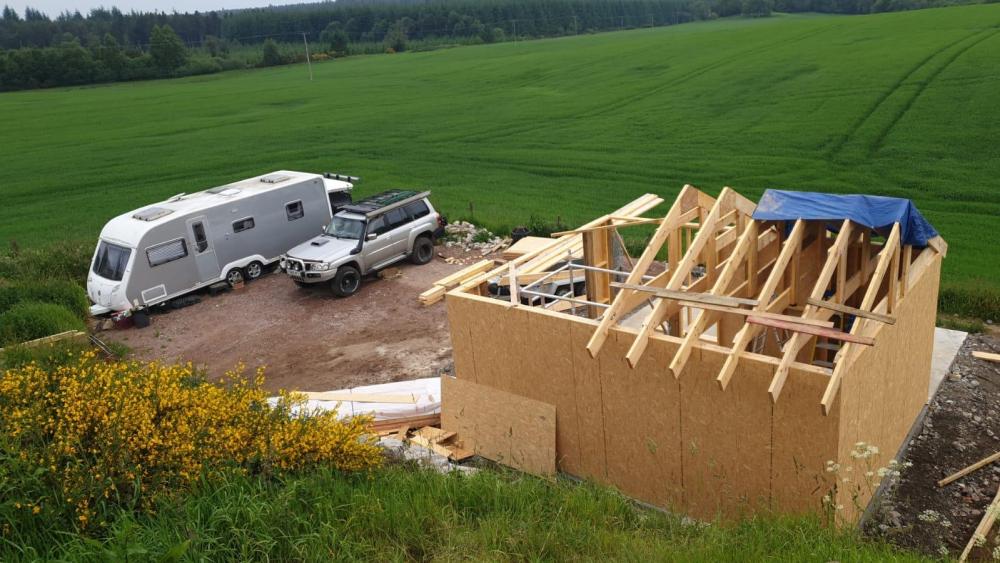
-
My grandfather also did this in the civil service, and used a green fountain pen. The amount of forms subsequently reduced.
-
Oops Vonrractong should read contracting. Perhaps a German contractor.
-
The same applies with augers to remove earth before filling with concrete or gravel. The resistance is shown in the cab, telling the operator when to stop....all precalculated to suit the pile design and the ground. Some augers are pulled out to leave a cylindrical hole, sending filth everywhere including the lovely clean stone the pilers required. Others cut a screw shape out of the ground to be replaced by concrete. The fins provide additional resistance.When demolished a concrete auger emerges.
-
I know professionally and also recently on the self build that most groundworkers don't much care for levels. Even the bigger contractors delegate so much to small gangs who just dig. What's more, drainage design consultants concentrate on getting the water away, but not necessarily the most economical way ( pipe sizes and slopes, and trench depths.) I worked on huge vonrractong projects and now see how we made it easy for the workers using profiles and travellers. So they didn't have to look at drawings or use levels, but got it right. Nowadays I suggest the methods and groundworkers just want either a single level for a laser , or work "off the bubble There must be an awful lot of wrongly installed drains. ...working until they don't.
-
Mostly his current or previous employer, groundworking companies.
-
No seal at stove pipe to logburner collar
saveasteading replied to Hunter7's topic in Stoves, Fires & Fireplaces
OK keep up informed and good luck. I would suggest a solicitor's letter is next. That will hopefully concentrate his mind and it will be very clear what happens next. I predict he jumps and sorts it and you won't see court. But don't discount trumpian excuses as a first response as he seems to bully by default. -
We hired a jcb with operator for the day that was well worthwhile as he overcame some issues by experience and, of course, knowing his machine. He said he had never, ever, seen anyone check the level of the tank and that it was also correct at inlet and outlet....and that after doing it maybe 40 times before. Fortunately he didn't discourage us getting it right. I highly recommend a quick and easy means of checking the level under pressure: in a deep hole with people shouting that they haven't got time. Think it through or come back for suggestions.
-
No seal at stove pipe to logburner collar
saveasteading replied to Hunter7's topic in Stoves, Fires & Fireplaces
There is no suggestion that you haven't been reasonable. So after your reasonable and final letter sent by recorded delivery ( you get to see the receiver signature online) you either get a response or don't. The likelihood is a reluctant agreement to sort it, which is where my "have a friend there" applies. Or you get legal. Small claims court, and an easy walkover for you. Some legal advice advisable but also reclaimable. -
sit a foundation on top of the screws and this may mean you don't need a Radon barrier as there is airflow underneath? My first thoughts are a perimeter trench including the piles, concreted as a ring beam. Then beam and block floor. radon barrier isn't much more expensive than a good dpm so isn't the greatest concern. I did many methane barriers using the raised slab principle or gas vents, but always used a methane resistant membrane. It will help it sail through building regs.
-
I feel there would have to be certainty that the ground was reasonably uniform. A screw could go through solid clay which would provide pullout resistance but be sitting on soft fill, or even rubbish. I assume that large numbers of screws allow some contingency. I've been interested but wary for decades. A Dutch system by experts provides considerable comfort.
-
Perhaps in a different form....."reasonable care and expertise." And then there are the exclusions....I had a roofer who was not allowed to work above 3m and there were more like that. You have probably been more professional than they, who had chosen the cheapest quote from The Sun.
-
Except the insurer would have denied responsibility because the policy will have conditions about taking expert advice.
-
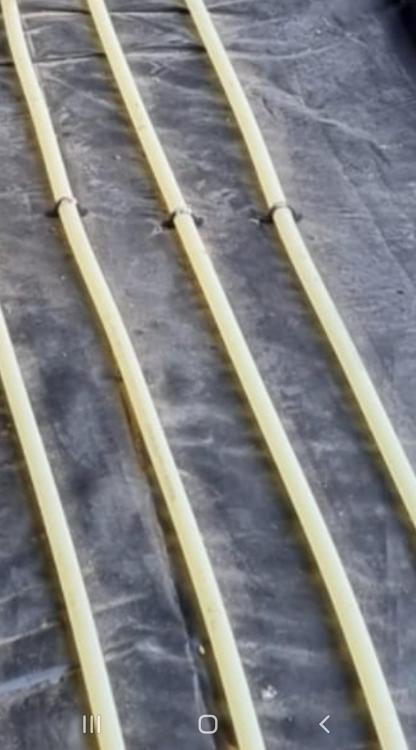
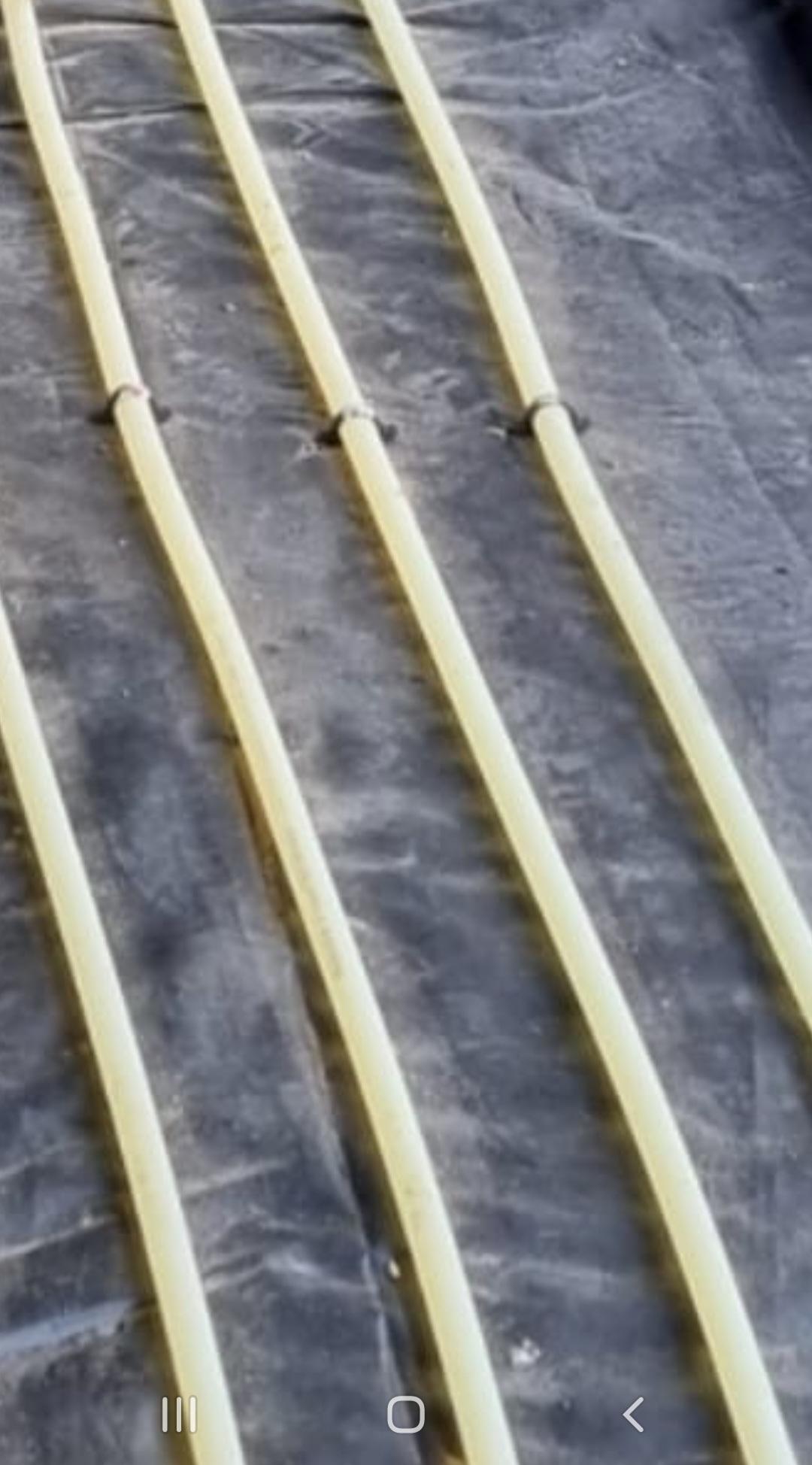
Kooltherm K103 - underfloor heating clips ?
saveasteading replied to bmj1's topic in General Construction Issues
Yes...I couldn't find figures so we chanced it too. A good comparison may be carpet underlay. Unless specially made for ufh, it is a good insulator. -
What building regs apply to a wooden garage,?
saveasteading replied to joe90's topic in Garages & Workshops
We bought a picnic table made of this. Very heavy. Just make sure that loads are on the external areas...the middle is much looser ie don't recess bolts.. -
What building regs apply to a wooden garage,?
saveasteading replied to joe90's topic in Garages & Workshops
Great idea. Some of them are really strong yet take a wood screw. I once specified concrete lintels as the bottom plate../ kerb..there were 4 storeys going on top though. I'll ak our gang to work out rheir materials cost later. Often you can buy a timber thing (pergola etc) cheaper than the timber. But these guys seriously wanted to build this as a stick build so the decision was made. Labour cost will be food and drink...lots of both. -
Final (hopefully) bit of tape and membrane done today
saveasteading replied to Thorfun's topic in Ventilation
I'm just saying in case it alters any real life designs. I'm not questioning the result but there is always more to learn. 1 is very good though, well done. Last time I supervised one they wanted the upper floors closed off by shutting doors. No suggestion of that with your multiple floors? -
Final (hopefully) bit of tape and membrane done today
saveasteading replied to Thorfun's topic in Ventilation
A bco once told me that air pressure tests for very large volumes ( esp high) are not accurate. I think that the fans just struggled to keep the space full or the air was buffeting around. That was in the first year of apt, so presumably resolved now. -
Kooltherm K103 - underfloor heating clips ?
saveasteading replied to bmj1's topic in General Construction Issues
You just pierce the membrane and insulation and don't worry about it. Pir doesn't really get wet. The membrane is to stop the wet screed flowing between joints and floating the pir.