saveasteading
-
Posts
10887 -
Joined
-
Last visited
-
Days Won
93
Everything posted by saveasteading
-
Stick built with osb outer skin and vcl, then a ventilation gap and treated wood cladding. Frametherm, from memory. Density is rigjt for compressing into the space and staying there.
-
Within the stud space we experimented on the practicality. Because stud never provides an exact, squared shape, it leaves gaps. We settled on using half thickness in pir and then dense mineral wool pressed in over it. The thinner pir can be fitted more precisely and the gaps are small and sealed off, thus becoming small insulating pockets. It's a compromise. As a bonus, the vapour barrier can deflect a bit when services are going in the service void.
-
 Minimise it. There are sometimes options on how to build that can save on muck away and replacing with concretd/ gravel etc.
 -
Truly DIY SIP construction…
saveasteading replied to G and J's topic in Structural Insulated Panels (SIPs)
Excuse me nit rereading from the start but. Make your wall with a cement board outer sheet, or brick. No need for a cavity. Or forget sips. -
Fire protection of steels and this example?
saveasteading replied to Alan Ambrose's topic in Building Regulations
Don't ever do that. There has to be an approved thickness of intumescent paint, usually white, and it has to be sealed with the official top coat. This can be coloured by the manufacturer. -
You are asking for quotes to get a feeling for the cost, as they can't give firm quotes without a design. Thus these are guesses, some high maybe some low. There may be a bigger contractor with the experience to estimate this fairly accurately. They might spare it a couple of hours to do this, but it would still only be a guide not a firm offer. Also please note: word will get round that you are asking multiple contractors. Only one can get the job and a proper quote costs them time and money. Just go to 3 or 4. Assume somewhere in the middle for now, but get it designed.
-
Fire protection of steels and this example?
saveasteading replied to Alan Ambrose's topic in Building Regulations
All of it is relevant. It is a complex subject and the rules are a simplified part of it. To diverge from approved (fire tested) details is difficult but possible. It may be possible to build as the picture because the timbers are dense and very large....the charring acts as a fireproof layer, leaving enough timber to remain robust. But getting it approved would be tricky. More likely as @Conor suggests..it is a pretty picture of a UK noncompliant structure. Perhaps it is in another country, or it is now painted in intumescent varnish. -
Planning Permission battles
saveasteading replied to Indy's topic in General Self Build & DIY Discussion
If it is any comfort. the best planning officers used to become appeals specialists based in Bristol. It has since been become a subcontracted, privatised system. I don't know for sure, and would love to know, but I feel that they probably win it by offering the lowest bid. then they don't give it enough time or consideration, and look for the easiest way to make a decision. I have seen a few appeals over recent years where it was clearly a quick decision without further consultation, especially of technical matters out-with their skillset. ie someone far away with no knowledge trumped the local councillors and planning officers. Perhaps analyse their prime reason for the decision and see if there are holes in the logic. -
Go on, we can take it.... I've never liked the term earthwool, implying green credentials, when it is made using a lot of energy. Clever marketing though. to their credit, Knauf now say this... we have decided to discontinue Earthwool® from all of our branding.
-
As mentioned in another post, i did dooks yesterday, not knowing the term. Concrete column with empty bolt holes. Stick in the hole. Screw to stick. Dook is seldom mentioned in my dictionary searches. Dook / Douk interchangeable with doul, ie dowel, perhaps.
-
Family tell me they used a dry composting toilet (sawdust) at a campsite at the weekend. We've got some sort of septic tank that has functioned for many years. It's too close to the building and probably just a tank with an 'accidental' hole in it. But it has historic rights and buiding reg's don't apply to the shed. The main property will get a new treatment tank. No tips on joinery. Of course if gets easier after the corner goes in. By strange coincidence another discussion yesterday mentioned dooks. I did this to fix the LH stud to the concrete frame, there are empty bolt holes and i filled them with a stick, and screwed in.
-
Erection of 1.8m fence adjacent to highway
saveasteading replied to Amala Singh's topic in Planning Permission
So you shouldn't. -
There are 2 of them in this film and one holds it up while the other does fixings. These concrete screws look useful. And the soft concrete helps too...no flints in that. And its not windy. Maybe I'm doing ok considering. The joiners / carpenters (acc to location,) are chuckling and saying nothing, i feel.
-
In my experience they get used to £x a day and ' won't get out of bed for less'. This takes about 4 months of hanging around at home until they are told to swallow their pride and earn some money. That was in proper recessions though. I feel that now they will be somewhere between: having some slack time, but not cutting their prices.
-
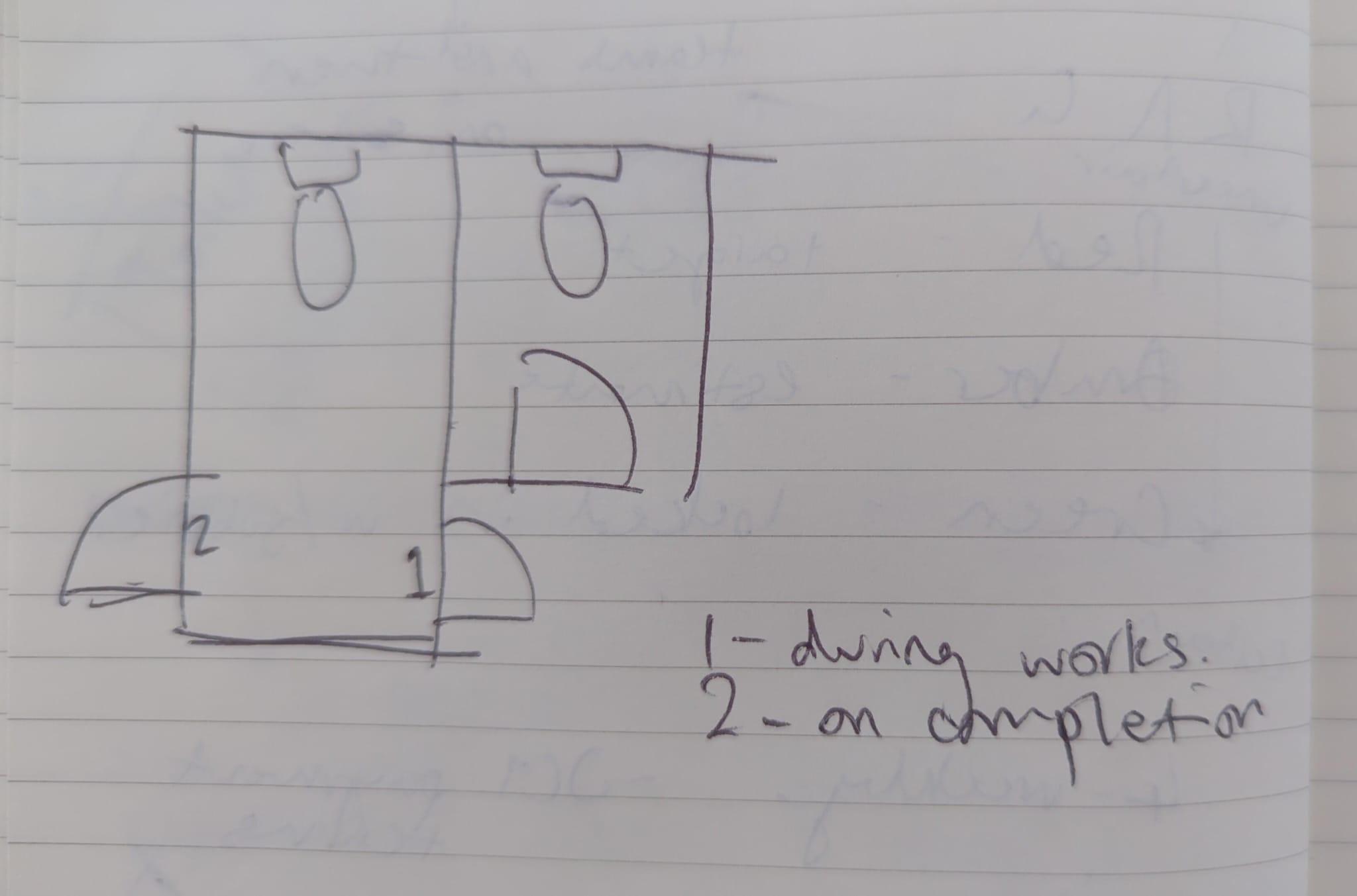
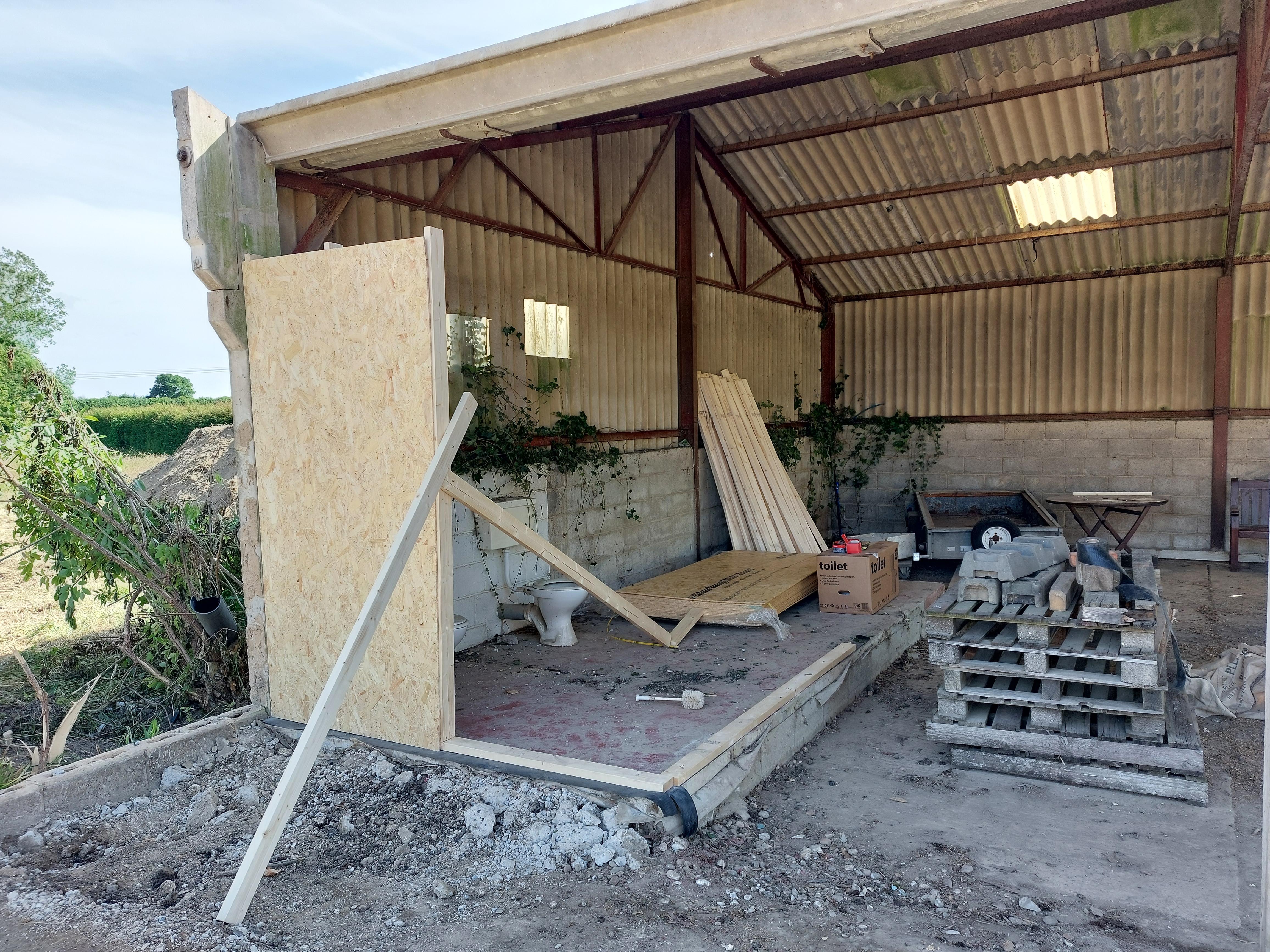
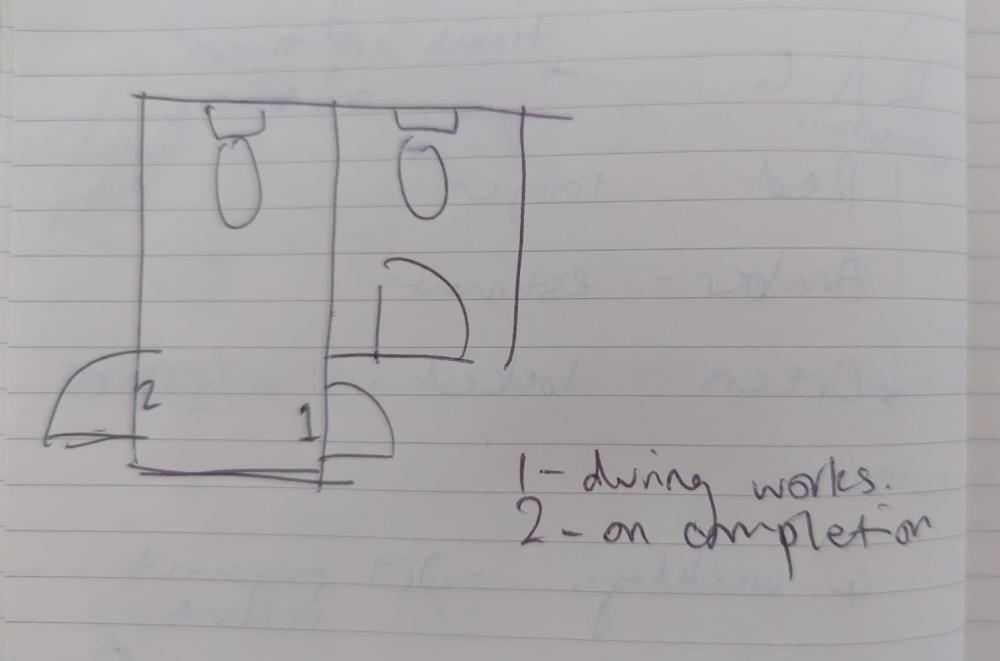
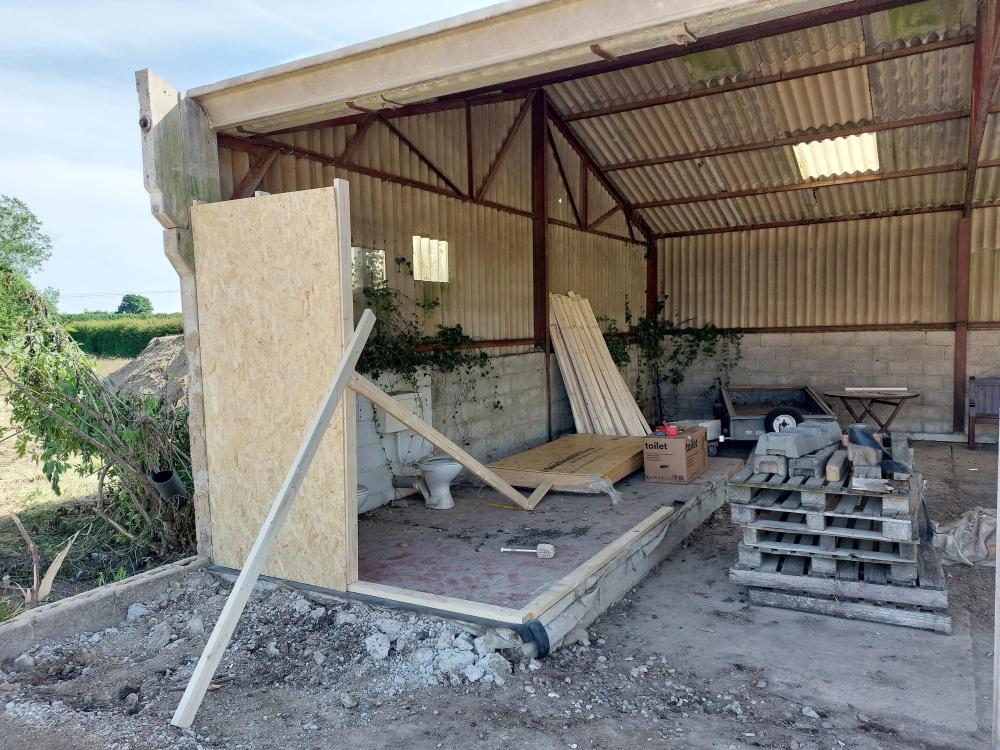
There are 2 redundant toilets in a steel shed, from a previous use. They drain to a septic tank but are in need of replacement. the enclosure was previously removed for reasons of yuckiness. I'm making up 2 new wc's to be used during the construction process rather than hiring a chemical one. M and F. Then on completion, one will become a workshop/garage wc and the other have garden access. The roof is 3m plus away so these won't reach it, and won't have ceilings ( ventilation). I have successfully fixed the sole plate to the concrete floor. Then I started putting up studs but gravity is winning. I could make up panels on the floor but they would be too heavy. There must be a technique for a solo person doing this. I using 80 x 40 stud, and 11mm osb ( which is rather fragile and screws want to go right through. I have a nail gun, but little experience with one. So I have been putting up a stick at a time with a sturdy angled screw, then hoping to get in noggin before it falls over. The nail gun then helps to stiffen the joint. overnight I've put up a couple of braces. I am working to this detailed drawing.
-
ill do a new post.
-
Someone was discussing the noise from a concrete crusher. I can report now from today's activity that it is a constant noise but not especially loud at 10m distance. The digger loading it was very much louder. The dust would have been a problem if it hadn't been disappearing in a harmless direction.
-
OK. so it was a very good suggestion, but hard to find. Type 2 will drain a bit better but it ruts until covered over. But who said you need highway quality sub-base? It isn't a motorway. My go-to is recycled road planings. ask a haulage company what they have.
-
I've been using the Fischer duoplugs today for the first time in earnest. it was for fixing down a sole plate to old concrete. it went really well, and the grab of the screws was so good that it was difficult to get them out again. I was especially pleased where holes were slightly out of line, or had wandered off. Ihe plugs seem to adjust to whatever hole was available. With traditional plugs I would have ruined a few and resorted to matchsticks. I need some advice on studwork working single handed (no ceiling)...there has to be a trick.
-
We have a reconstituted granite one, where bits of salmon look exactly like pink the bits of stone. It never looks dirty, but never looks sparkling. suits me.
-
Type 1 will allow the rain to pass through, but doesn't have voids for storing it. Remind me if you were required to use type 3 or store water.
-
In approximate terms , the load of a wheel will spread at 45 degrees into the ground. With dry hard earth you don't need much spread. With wet, weak earth you do. Plain grid will work a bit, but you really need sub- base. The membrane isn't for strength but to keep the sub base separate from mud beneath. Or to keep the pretty stones in the grid above the lower layers, which isn't usually necessary.
-
Treatment Plant discharge into watercourse
saveasteading replied to Lincolnshire Ian's topic in Waste & Sewerage
I'm not here to argue. But I do maintain that (x +120) is greater than x. If you are really interested? Yes. -
Treatment Plant discharge into watercourse
saveasteading replied to Lincolnshire Ian's topic in Waste & Sewerage
Easy for me to say I know. I don't know your site circumstances , or whether anyone in your team has either the interest or design skill in this subject. I'm talking principles and best practice here. I've been doing these designs for decades, and I feel it shouldn't still be seen as radical. I think the big developers have had some control in limiting the improvements in standards. and the EA , as government employees, are also constrained in their control. Of course it does. if you add your 120 litres to the drains or watercourses, it has added to the rainfall quantity therein. Say 'negligible' instead of 'no' and I'd have to think about it a bit more. When 120litres creeps over a dyke that is your 120 litres along with a lot of others'. it depends on housing density of course, what percentage of the drainage is from the imported water going into drains. So yes, for a small house in the countryside. No for a house on an estate, but it all ends up in the drains, sewage works, rivers, flood plains downstream. More water is more water. These are minimum standards. What is 'best' is to reduce water to drains and watercourses as much as reasonably practicable. It's like driving past a school at 33mph because you won't get fined. 30mph max is the published standard. 20mph may be more considerate. All are permitted by the government. Anyway this, as many other decisions, will be yours. For general interest. Not many people know that if you don't send any rainwater to the sewers, you get a big cut in the charges, for this year and every year. And that sewage charges are based on the mains water used. Use less (barrels/ harvesters/turning off the tap) and you pay less for water but also less for sewage., and quite right too. -
Large tree stumps where house will be on the plot- foundation help
saveasteading replied to Jane W's topic in Foundations
Thanks for the thanks. It adds to the human kindness total for the day. Its good to know when it makes a difference, whether if moving a project forward or advising of risks.