saveasteading
-
Posts
10887 -
Joined
-
Last visited
-
Days Won
93
Everything posted by saveasteading
-
How to measure the angle of a patio?
saveasteading replied to puntloos's topic in Roofing, Tiling & Slating
good point. but if the water is only for gardening it will be ok. But not for domestic use. It is in your control, to not use nasty chemicals. Is there an overflow and where does that go? -
Advice please on core drilling a slab
saveasteading replied to saveasteading's topic in Barn Conversions
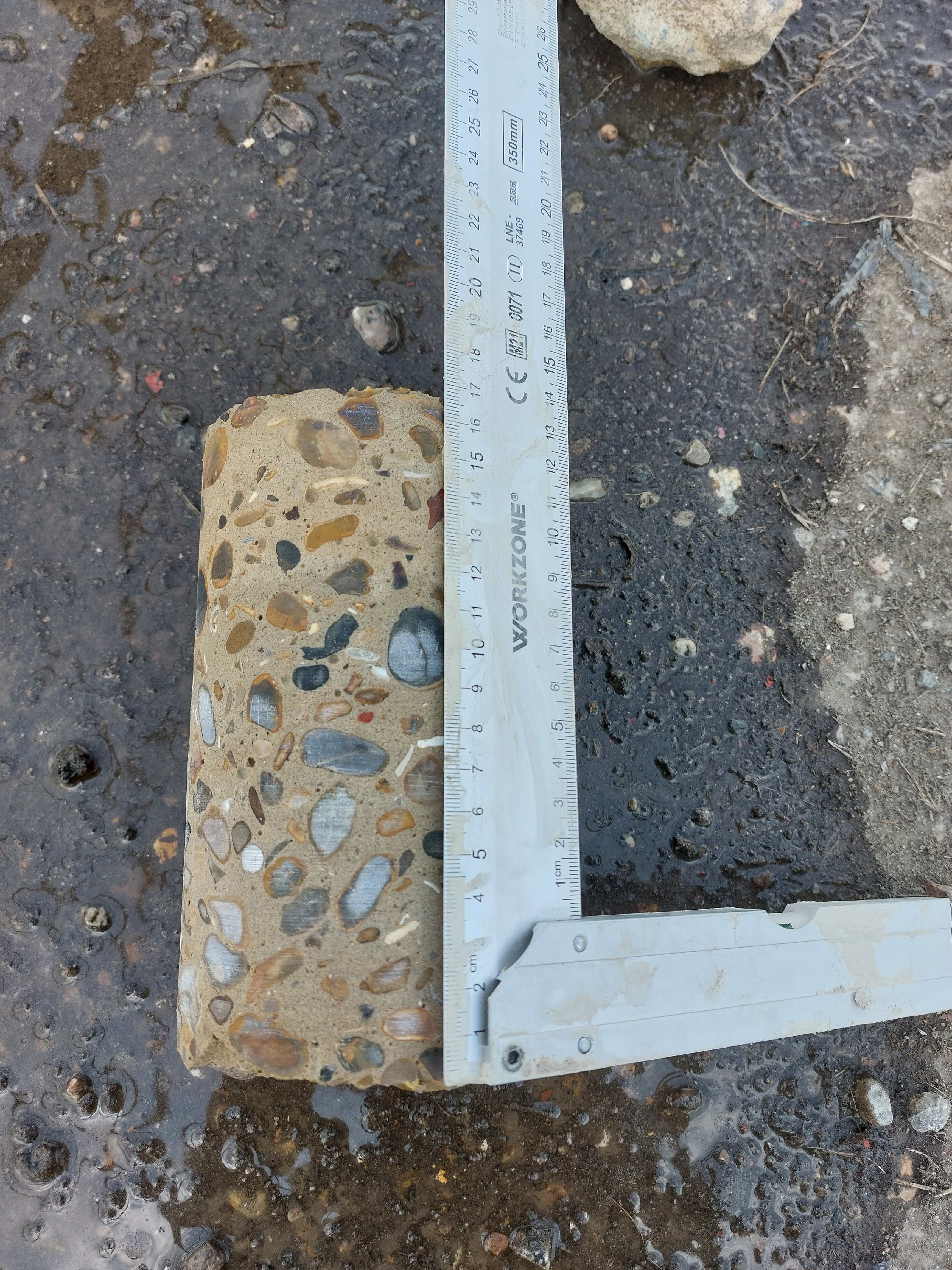
Here is a core, 6" as designed, and the others are thicker. There is often about 5mm of paste on the surface from overworking, but this is concrete all the way. A sandier mix than I expected but it is gritty and strong.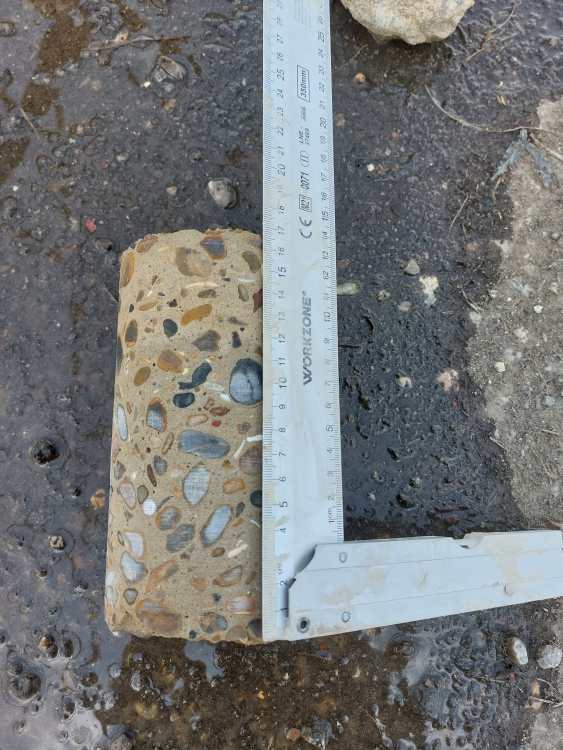
-
Advice please on core drilling a slab
saveasteading replied to saveasteading's topic in Barn Conversions
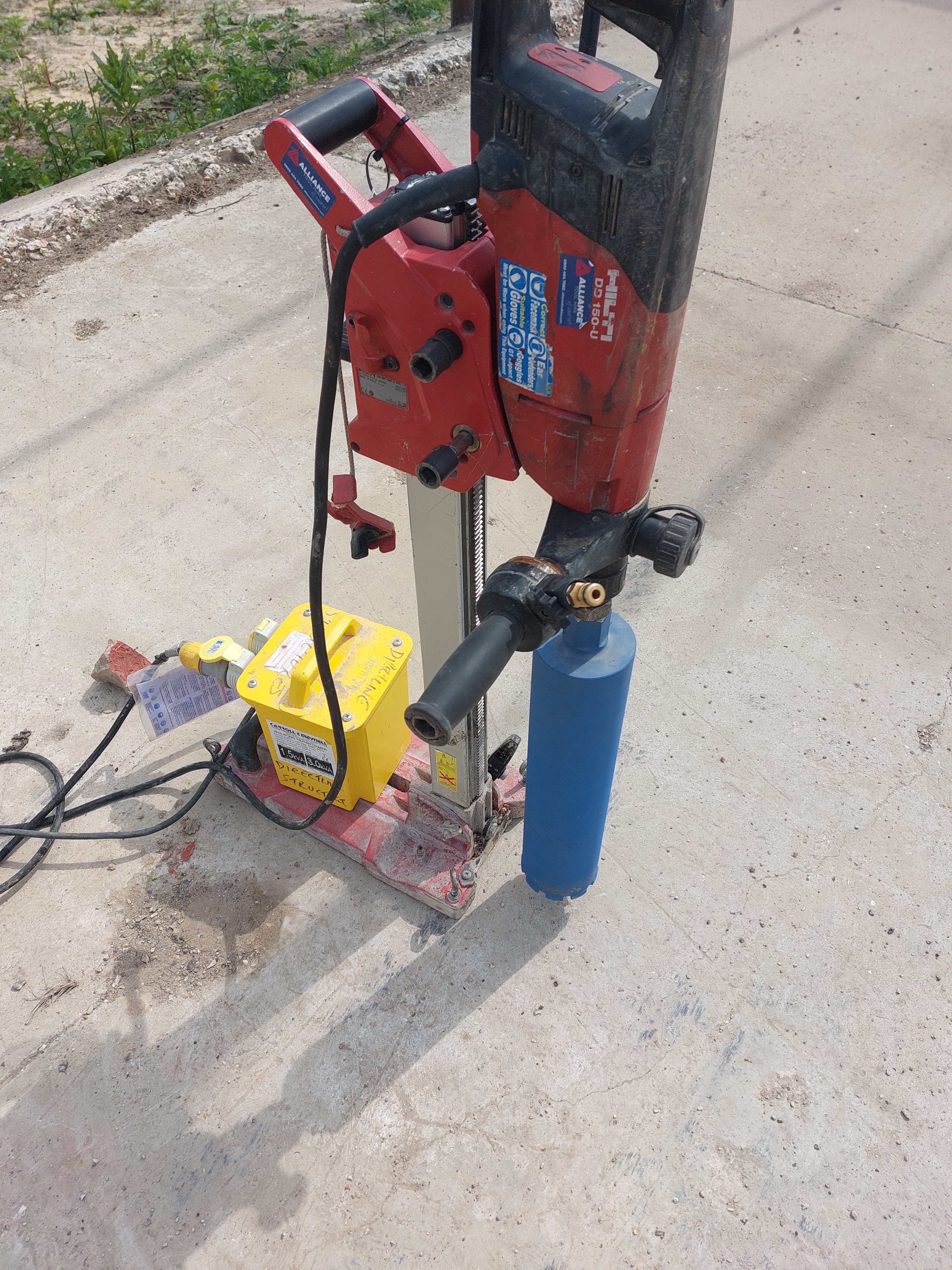
No camera holding assistance is forthcoming as I head off to do the fifth and final hole. The task requires 2 hands and 2 feet. But here is a pic of the setup. The transformer position is for temp stability.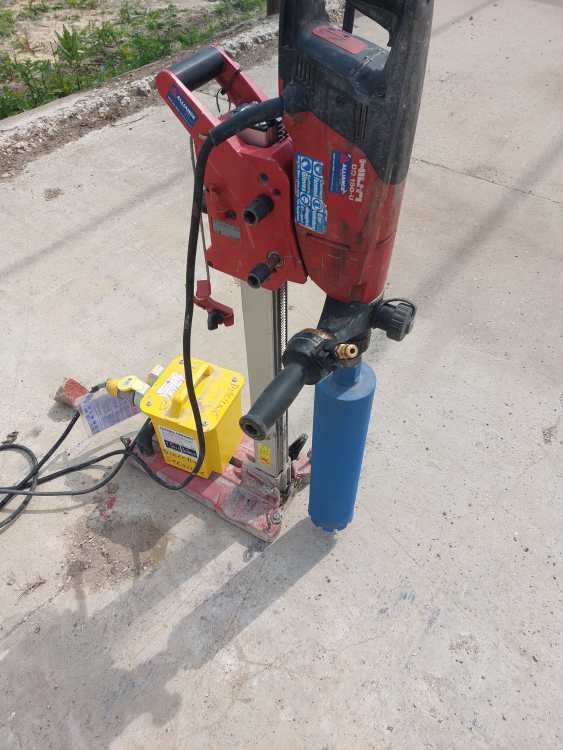
-
Advice please on core drilling a slab
saveasteading replied to saveasteading's topic in Barn Conversions
If the machine is idle or disconnected, is the transformer still drawing current? -
1. I would suggest finding an old (of the time) manual of building details, that will show how this is built. Second hand book shops, or online. What is the issue that the current tiling needs to be replaced? 'all-round poor quality job' sounds awful. 2.Perhaps this is your starting point. First find your roofer. 3. I hope your self confidence is justified. this is a very big undertaking physically and technically. Meanwhile, while the tiles are off, the rain will be getting in. You are going to need scaffolding, tarpaulins, tools, insurance and there is a risk of it going badly wrong as you learn on the job. A roofer sounds like a good investment, and maybe cheaper in the long run. They may do it in 8 weeks but you may take 20. Aren't we all. So choose a fair and knowledgeable one.
-
How to measure the angle of a patio?
saveasteading replied to puntloos's topic in Roofing, Tiling & Slating
that is flat really. That is because you haven't dug it up during or just after a downpour. e water is going somewhere. The volume of the gaps between stones, plus the empty pipe is probably swallowing up all the water, so you would have to delve down to find water. It first runs through the gravel. If it gets deep enough it enters the pipe and some may run away. The rest will percolate downwards. -
How to measure the angle of a patio?
saveasteading replied to puntloos's topic in Roofing, Tiling & Slating
yes. but NB a french drain will always allow some water to seep downwards. But it will not harm the foundation. It is there to pick up large quantities and take it away. Everyday drizzle will not be taken away, and so the wall may be damp. sloping away is usually better if you have the choice, for that reason and to avoid weeding and annual cleaning of the surface gravel. -
It must affect perceived value if enough, like you, don't consider them. Omitting parking saves cost. The market decides whether that is more profit or a lower price or both. I wasn't being cynical although the multiple conditions may suggest that. In attractive, self contained places like Edinburgh, there are tens of thousands of people who live centrally in nice flats and don't need or have a car. In the suburbs it is quicker to take a bus to town than to drive. A reliable bus service with bus priority is an important factor.
-
Advice please on core drilling a slab
saveasteading replied to saveasteading's topic in Barn Conversions
So....I am washing down a wall. A big pipe gets plenty of water there but it is slow moving. A thinner hose ejects water at speed and displaces the muck. They would fill a butt at much the same rate. Friction ignored for simplicity. ???? And the reason for 110V is safety. I break the cable / hose and the water soaks but doesn't pummel me ( electrons travel slowly through me to earth) Would 55V be safer yet? -
Perculation Test Results Problem
saveasteading replied to Lincolnshire Ian's topic in Waste & Sewerage
That is very suitable surely.Why is this one area so much better? Perhaps the ground is broken up by long gone tree roots. Show the result to the bco and work out the length of French drain that works, and/or add a pit. Fundamentally this water must not run off your site. That is all you have to resolve. Some bco's are relaxed about allowing old-fashioned rubble- filled soakaways. Also discuss the soakaway for the foul outfall. I think the regulations are crazily onerous on this and your bco may agree. -
I think it is ok to build these IF they are in a substantial and self contained town or city, with good access to all facilities by public transport or on foot. AND they sign a contract acknowledging that they won't have a car, and that agreement is enforceable. AND that the Town Plan is somehow able to ensure that services remain in place. People buying them will pay a fair bit less because of the cost of the parking space. They will have bought into the concept. Anyway, people with nice cars generally want to see them out of the front window, or know they are secure, and will not park them a street away.
-
Advice please on core drilling a slab
saveasteading replied to saveasteading's topic in Barn Conversions
explain implies a making plain or intelligible what is not immediately obvious I am none the wiser. Is there perhaps an analogy I might understand? Mr Watt, Sr Volta, Herr Ohm and M Ampere got into a fight...... -
Advice please on core drilling a slab
saveasteading replied to saveasteading's topic in Barn Conversions
On that. I had a pressurised water tank , but could have used a hose. I thought this was for cooling, and it clearly does that as witness the very warm water coming out of the hole. But it seems to be crucial in turning the dust to slurry which probably lubricates the process, but certainly removes the muck. The finished hole is very clean. Everything got hot. the transformer, some of the extension plugs, and the core and adjacent concrete of course. 2 of my extension plugs fused, with 10A fuses which I thought should be ample. Not that I have checked the sums. re the power supply. It was 50m from the site supply to the furthest hole, so I used 240V leads p the the 110V transformer next to the work. For reasons someone else can explain, 110V runs out over long distances. -
Advice please on core drilling a slab
saveasteading replied to saveasteading's topic in Barn Conversions
I have one more to do so may ask for spousal assistance. The whole kit wants to rotate counter to the drill, of course. Plus it lifts at the drill end in response to downward pressure on the rig handles. this must have been serious kit, and serious expertise. I wonder if it had a bolt down through the drill, so it would come out with the core. Or Acrows across the room. Anyway, the tech guy should be given a job in the army where he could do some good while being contained. Where has the filth gone? No cooling water? -
Perculation Test Results Problem
saveasteading replied to Lincolnshire Ian's topic in Waste & Sewerage
Perhaps you could expand this simple and good advice so that it sounds more technical for the bco. There is seldom a need for expensive and complex solutions. what figures do you have for the 3 tests? does the site slope? -
Perculation Test Results Problem
saveasteading replied to Lincolnshire Ian's topic in Waste & Sewerage
Lagoon, swale, pond? As well as the soakaway. The rain disappears now presumably. Or a long French drain, like a drainage field or spread several directions. -
Advice please on core drilling a slab
saveasteading replied to saveasteading's topic in Barn Conversions
I like that BH members say nothing if there is nothing to say. I've had a day with the machine. 4 cores successfully removed and the quality and thickness is all good. I didn't bolt it down, instead using 14.5 stone carefully placed on the stand and applying the lever pressure gently. If I was 11 stone it wouldn't have worked. I am now the BH expert on the reality....a hole should take 10 minutes but 4 holes took 5 hours, including umpteen hassles. -
Small house using I-beam portal frames
saveasteading replied to pir8ped's topic in New House & Self Build Design
Try a local University. It is basic stuff, with the application of an increasing load, measuring deflection and failure. Deflection will always be the main criterion, with 1/180 likely to be appropriate, so you could bodge that test yourself. A bco won't accept your diy tests. However the failure of an efficient portal frame with deep webs will often be in the bottom flange kicking away sideways. Again a test can find this, or it can be triangulated out. I'd think the main reason for an SE declining the work will be the small size of the project (and fee) as compared to the complexity of first principles calculations, and the risk if there are problems. I had the pleasure of renovating a timber portal frame from the 1950s. What's more, it was a tapered frame so very efficient indeed, The webs were made of t@g fixed vertically. -
No. Street gullies catch leaves and sticks and stop them going in the drains. But also yes...some bits would get through. It probably belongs to the drainage company I think you should contact them.
-
Does 50mm dia of air move as fast as 100mm dia of water? Fluid mechanics won't be the bco's main expertise. So yes ask first. Probably OK, and I could have proved it 50 years ago.....if indeed it is the case. Could you squeeze a rectangular duct of similar area in instead?
-
The mother of all mat wells
saveasteading replied to Tom's topic in General Self Build & DIY Discussion
So big, it would have been easier to raise the rest of the floor. -
The mother of all mat wells
saveasteading replied to Tom's topic in General Self Build & DIY Discussion
This stuff is brilliant. I didn't know it was still available. I used another brand over an area of wonky old floorboards, then carpeted it. It remained flexible and intact for ....well it was still fine when we moved about 10 years later. Thickness varied 5 to 15 or so. -
....is a completely different animal with different challenges.
-
No. It is not skilled enough. Does it look like it has been through someone? Probably not. are there fibres it it, or sticks or leaves . or paper? I looks very like a proper drain built with the housing, and linked to the mains drains. Being too lazy to read back again..what is the question? The answer probably begins with, leave it alone.
-
I have hired a serious bit of kit, a Hilti D150 drill with stand, and a 110mm diamond core drill. One of those drills and a core a bit like that but longer ( and blue) I'm looking for any experienced advice. This is to take samples through the existing floor slab which is clearly very strong, and which the drawings from 40 years ago say to be 6" thick. I simply want to confirm the thickness, and the quality by inspection, and will take a few cores. They sold me some anchor sockets to drill into the slab to hold the stand in place. I wasn't expecting to have to do that, Now I see that the 4 bolts that should screw down into the floor are jammed. Therefore I know that the previous hirer did not have to bolt it down. Maybe they are really for horizontal drilling. it also looks like a very precise bit of drilling for those 4 fixings. Has anyone used one of these? Will it likely work without bolting down? especially if I take it very slowly and gently on the lowering handle. I have a water connection for it. But there is no instruction leaflet and I am deemed to be an 'experienced operator' who did not need a demo. All the signs are that it will indeed be as designed, 6" thick on average with a single layer of mesh, probably stamped in after the pour. ie a thorough design with rural construction processes. So it will need this heavy drill to get through it. Has anyone used one? Any other suggestions or hints? Just for fun, assuming this works, I am estimating an hour per hole, including moving it, if it doesn't need bolting down.