saveasteading
-
Posts
10887 -
Joined
-
Last visited
-
Days Won
93
Everything posted by saveasteading
-
I recognise it, ie have seen one before. I think it may be a backflow prevention valve, fitted just before an outside tap. It is so that a hose immersed in a bucket cannot provide a flow back into the mains system in the case of reverse pressure.
-
It looks like an unused sewer. well built and in good condition. Have you dared to examine the nature of the deposits? If you project the pipe directions you should find other manholes or likely connections to buildings. then you can pour water in and maybe see where it goes. I would certainly not mess with it. Is it a problem in any way?
-
Replacing first floor joists
saveasteading replied to Jawbkk's topic in Party Wall & Property Legal Issues
+2. It proably does not even need to reach the wall. -
Yes that or a real possibility of the chimney collapsing. Although i am that Engineer I still wanted the bco to agree. The local bco is probably able to advise as it will likely be a common thing in your area.
-
Knocked out chimney breasts is a scary thing. Do these people have no idea? I've seen a chimney hanging on nothing but the half brick party wall and a ceiling. We built in support using the brackets made for the purpose and got bco approval. How many other houses have the same? I'm inclined to keep the chimney and support it.
-
I couldn't get mine to grow either.
-
Central heating system and Asbestos
saveasteading replied to TheMitchells's topic in Other Heating Systems
50 years old. Heat. Assume asbestos for now. But don't panic.if you don't snort it you will be ok. The advice above is good. Shop around and someone will remove it properly, safely and not too expensively.....or tell you it is clean. -
I think all plumbers say to put rads upstairs. It is what plumbers know and do. Hence the expectations of most occupiers and future buyers are probably the same. I'm thinking of short runs of aluminium skirting with ufh pipes in them. Perhaps we need some visual link to confirm they are actually radiators. A control knob adjacent, whether connected or not? Coloured red? Sign saying 'warning: skirting may be hot!' Otherwise a quote from @ProDavesaying ' don't be a wimp, it is warm enough with the heat from downstairs and 18° is plenty'.
-
For a commercial kitchen the fan is huge and very, very noisy. Far more proportionally to cooker size than for most domestic fans and kitchens. I suspect that even the next level up for a domestic use would be unacceptably loud in the home environment. But why not an additional extract into the wall behind the hob?
-
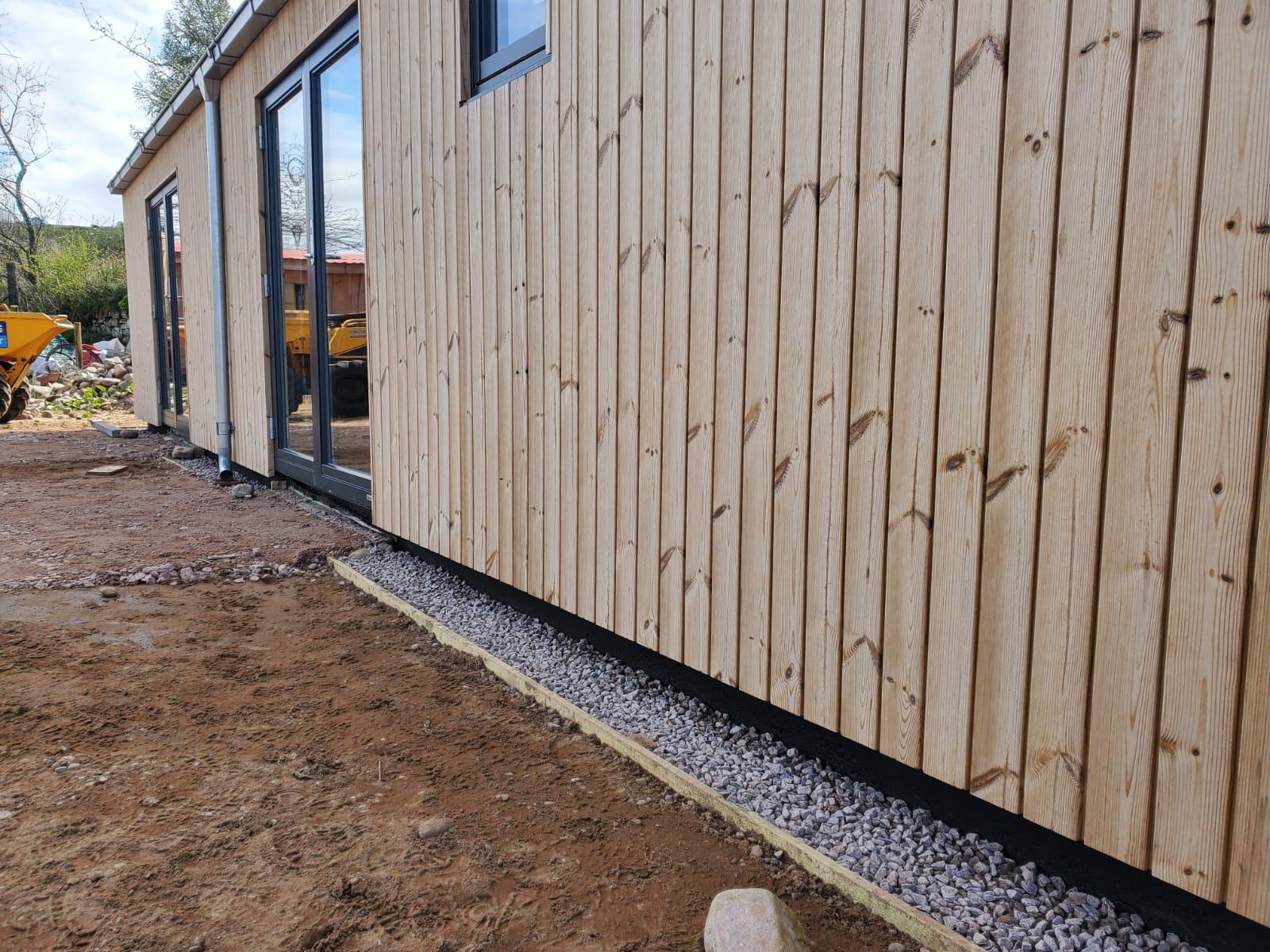
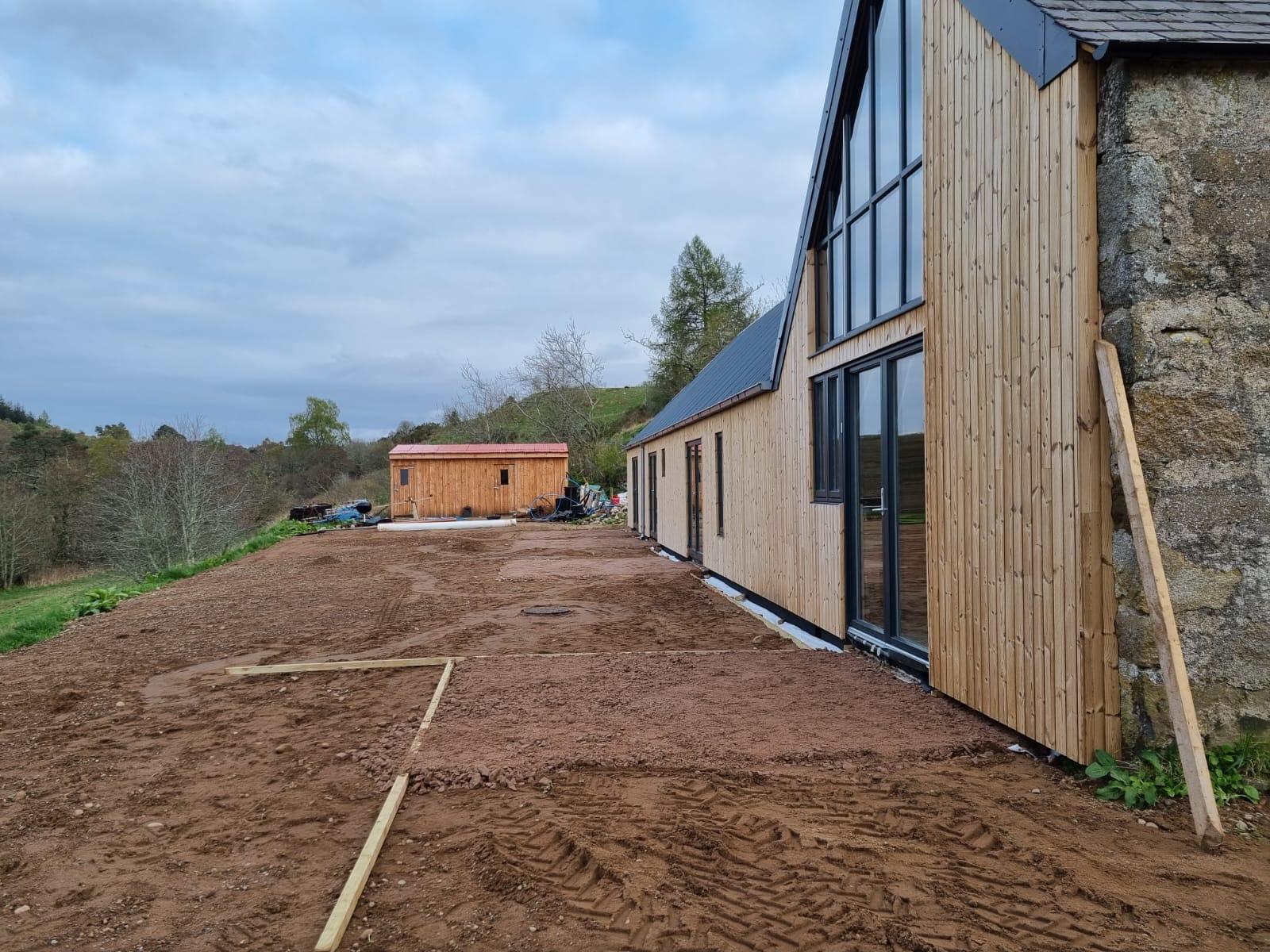
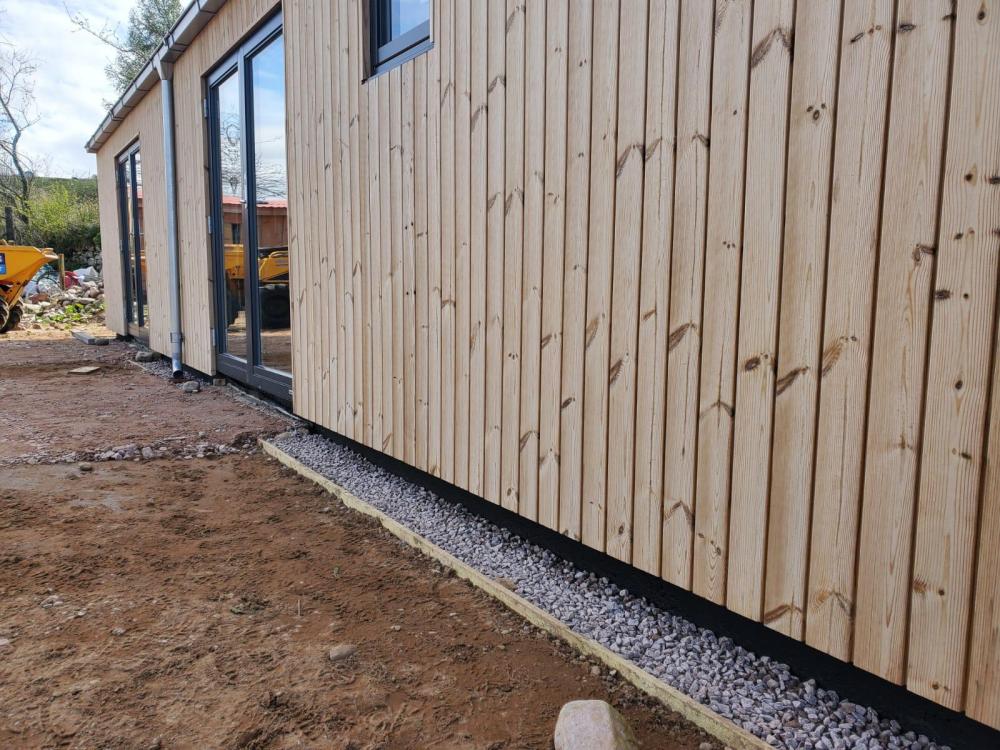
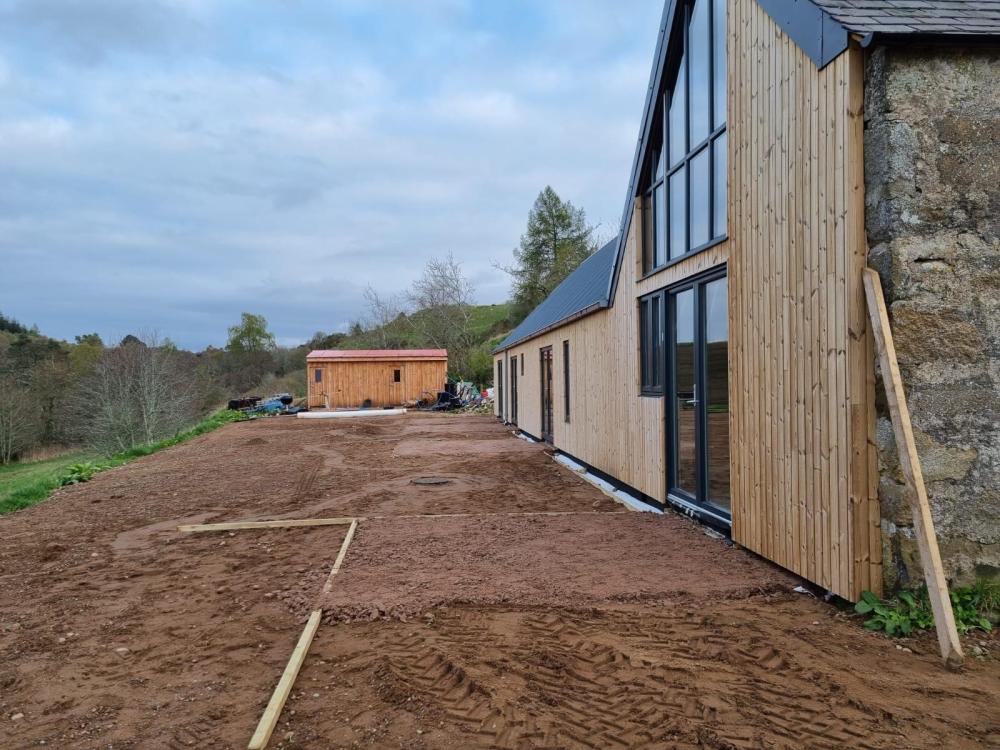
And more russwood. This is about 6 montgs after fitting and rhe fading has commenced. The shed behind is in normal softwood.
-
Pretty standard. It can be cheaper, considering time and diesel, than extra visits to the merchant. But the cost can be 10% more plus the disposal. How good are you at measuring materials requirements exactly? But yes, watch for excess. We had a decorator who tried to charge for everything he bought.....enough sandpaper and cleaning stuff for his next 10 jobs. We got the impression that nobody normally questioned such things.
-
Another reason for this I forgot about. The turnover threshold for VAT is about £90k. For a one man band, having the materials supplied can help stay under this, as does cash: tut tut but his risk. For a man + lad + van* it is near to impossible. *(other genders are available) AND if your project allows VAT repayment, your typical small builder does not want to be dealing with 5% VAT processes. Against buying materials? watch the wastage. New stud/ tile every time. If I knew I was L , I wouldn't price it, as there is likely to be an M, N etc. Continuing the letters theme: OTOH Perhaps A B C etc didn't think it was a likely goer, and spent 10 minutes on the quote with high risk sums included. 5 prices is fair. but good luck.
-
I can be. I've had clients ask how I managed to remain calm when another party was being difficult. I didn't always feel calm perhaps. But I've lost my temper a few times recently at public meetings. Maybe it worked though. You are right though, sometimes it is best to listen and see what transpires. You've made me think. I'm thinking that I get very angry if someone is being unreasonable, whether through rudeness or bluster or bullying. I'm not angry if they are simply wrong or ignorant, or disagree with me, as I can go a way and deal with that by study and then another approach. I miss the old Building Regulations folders that I would take into an awkward bco meeting, and lay on the table: I could see blustering BCOs shiver at the sight. I didn't even have to say 'show me where it says what you are saying' because it was implicit. Fire is difficult. The reg's are not necessarily clear. I went on a 3 day course on fire, and found that the professors said it was difficult and inexact. Phew. And one of my biggest showdowns with a bco was about whether a stair could be timber, sheathed in plasterboard. Could have been expensive replacing 4 storeys of stair. He wouldn't give in, but found another way of agreeing it could stay. @ToughButterCup what do you think swayed the second bco s decision? The onsite reality didn't look high risk?
-
Don't be. These are 2 people making their decision. One ' by the book'( the very big book, summarising lots of study) the other on a perception of risk. This happens in other businesses too but every single building is different. Which did you agree with and why? Would I agree (i did a lot of fire study and design)? Why did you get a second opinion? I'm only arguing with the word cynical. Cautious, uncertain, ?
-
So either lay thr timber out now to fade. Then fix it in grey form and fire protect it. OR stain it grey and fire protect. OR choose a colour. OR just fix and protect it and find out if it fades anyway. My favourite. Who will see it?
-
There is very good advice above. It looks like an easy way to go bust, or a very hard way to make money. All I would add is. As a designer and contractor I won some jobs at half the next price. We made the intended margin. Occasionally we would not win a tender, but the contractors didn't last long. That was in a very specific field. Every building is different. If every building could be built at the same cost there would be one designer in the land and no point in many contractors tendering.. Can it be done? Maybe. But probably only by utter experts in design options for best value. It sounds scary to me. You need expertise but that costs. Maybe sell as is?
-
Perhaps discuss with the building inspector. If the chance of your wall catching alight is very low, for example because there is little chance of the neighbours having a bonfire, or their house is brick, or there is a pond adjacent, then does a year matter? Let it go grey elegantly silver, and then paint in intumescent. Risk is time related, so for year one you could be ultra-careful to avoid any fires adjacent.
-
A good article on crack width & waterproof concrete...
saveasteading replied to Alan Ambrose's topic in Basements
Yes. In a structural slab the cross section of steel is what resists the shrinkage, and in a structural wall or slab the cross section is chosen to provide the tensile strength required. But by using more bars of smaller diameter, at close centres, adding up to the same sort of c/s , the cracks can be made smaller ( in both directions) This was a very long time ago but I think I selected small mesh and tied lots of small bars to it, for ease of construction. If it works, then the tiny cracks are not visible. I expect they do 'heal' as a bonus. I probably specified concrete with smallish aggregate to ensure it flowed around all those bars. I hope the concrete was poured without extra water added on site, or it would defeat the object. -
A good article on crack width & waterproof concrete...
saveasteading replied to Alan Ambrose's topic in Basements
I have skim read this but may try again. In case it is of any interest here is my experience. I have designed large, above ground, water tanks for industry and for a hospital. I recall they were about 3m deep. Both were built and I heard no more, so I think they worked. The design codes at the time covered how to control the cracking. Maybe the codes have changed but it worked back then, and concrete will still behave the same way. Basically we used a lot of small reinforcing bars, so that the inevitable shrinkage resulted in micro-cracking.... millions of cracks that are too small to see, and water can't get through. Did it heal? Probably. These tanks could have been sealed on the inside but were not. The evaporation of water was not considered an issue, and perhaps that causes 'healing' as water soaks through. For a garage or other basement, the water is on the outside and it would be easy to tank the inside, but it might come off. A big basement I recall doing, we tanked the outside of the wall and slab using a bentonite filled sheeting. -
Picture?
-
this is how it is usually advertised.
-
It greys the same as softwoods. I haven't ever seen any architect's' photos of it in faded grey, with nail streaks, always in newly built gold.
-
Larger "Spark Gap" means fewer heat pumps
saveasteading replied to LnP's topic in Environmental Building Politics
Doe anyone know (or forecast) what solar panels will look like in 2 years? Will they be on a lightweight roll that is simply clipped or screwed to a roof or wall or anywhere? -
I once had a tentative complaint that a building was too high. I asked what their datum was and they had no idea. Sorted.
-
Larger "Spark Gap" means fewer heat pumps
saveasteading replied to LnP's topic in Environmental Building Politics
I understand that electricity prices are averaged out wherever you are. So @ProDave pays as if it was gas powered even though he will be getting wind power, costing 1/3 but not passed on locally. If people knew their price could plummet then wind turbines might be loved more.