


saveasteading
-
Posts
11094 -
Joined
-
Last visited
-
Days Won
98
Everything posted by saveasteading
-

Built-in wc needs maintenance. How?
saveasteading replied to saveasteading's topic in General Plumbing
Thanks all. Just knowing how to take the cover off is hugely important. I've managed to turn off the water, with a short screwdriver tied to a long string, so I didnt drop it to oblivion. Can't do more for a while but I will report back when I've had a chance to open up. -
I've always worried about this. There is a constant dribble into the pan, so the cistern simply needs adjusting or cleaning. But it is a concealed cistern with hardly any access. It is Roca so presumably they are made to be maintainable. We had this done about 10 years ago, but I wasn't much involved so trusted the professionals. I can't even see a maintenance valve in there. The lid comes off and I see a sturdy timber boxing, with a thin tank half covered by the stud. The flush plate must come off too. Any help please?
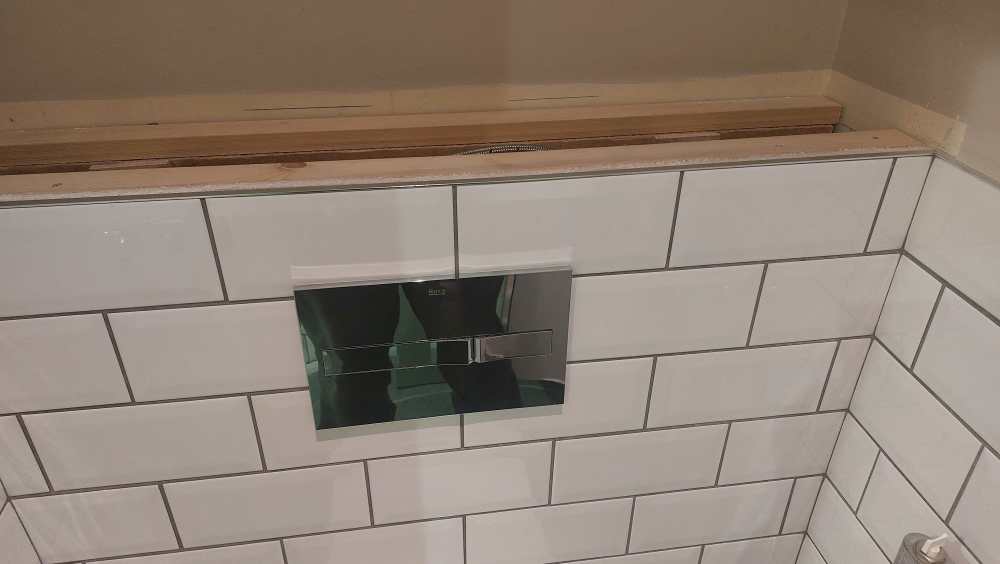
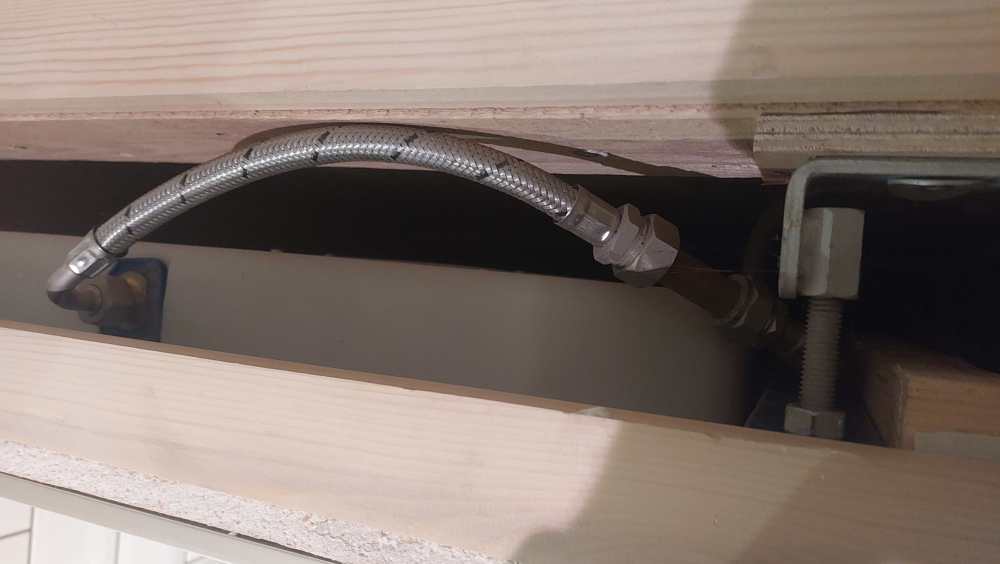
-
That video is great. The carboard seems to be smoking but not burning, which is very impressive. In the tests I have seen the fire made the paint expand about 10 times, and it became a very brittle ash-like material, but that provided insulation. Yours seems to have remained quite robust.
-
Envirograf are my favourite too. The original owner was a proper boffin who experimented and created lots of niche objects such as fireproof cat flaps. It's great when a small company can survive against the very big companies. How much did the stuff expand when you torched it? A story: I once handed about 12 pots of intumescent paint to a professional painter and told him how far each tin had to go in length of wall, and why, using as many coats as it took til it was gone. I think I even laid them around the room to denote each area. Only then could he apply the top coat. I thought that was easier to understand than using a depth comb. Did he understand? 'Yes, I know all about fireproof paint'. Next day, he proudly showed me that he had managed to use only half of the paint, and I could take it back 'it's expensive that stuff'. Never overestimate the intelligence of your workers. It can be inversely proportionate to confidence.
-
Last time I checked anyway.... Check the spec for this. Intumescent paint is moisture absorbent, so needs a special, expensive, sealing coat, which can be coloured. Eggshell over that is just decorative, but shouldn't replace the official seal coat...not without checking the properties anyway. I've never known a bco check intumescent paint spec or thickness*, and so I'm sure a lot of instances receive far less thickness than is specified, and/or no sealing kit. *(Happy to get an official looking piece of paper from someone. I wonder if that is 'orders' not to get too involved.)
-
Basement cinema room - worth it?
saveasteading replied to SBMS's topic in New House & Self Build Design
Top of head..... £60,000 extra, as 'self-build', more if by a main contractor. For the structure, not any other works. Add for risk if the ground is a challenge, liable to flood, or near other buildings. Don't forget the area that a stair takes up when working out the usefulness of the smaller size. -
Precautionary reinforcement of holes in joists
saveasteading replied to DKenn's topic in Floor Structures
Because if there were large loads to spread, past a big hole, then a surface only connection isn't carrying the load into the core of the timber. It might distort or twist off....needs lab tests with coffee sticks and mugs. -
Precautionary reinforcement of holes in joists
saveasteading replied to DKenn's topic in Floor Structures
Not 30 °, peehsps caused by costa's length constraints.. but why 30°? Trusses are made with 45° straps. -
Precautionary reinforcement of holes in joists
saveasteading replied to DKenn's topic in Floor Structures
Yes. But a number of small screws is less impact than a bigger hole for a bolt. -
Precautionary reinforcement of holes in joists
saveasteading replied to DKenn's topic in Floor Structures
With just one it needs to be somehow threaded over the pipe. -
Precautionary reinforcement of holes in joists
saveasteading replied to DKenn's topic in Floor Structures
I'm not understanding this. -
Basement cinema room - worth it?
saveasteading replied to SBMS's topic in New House & Self Build Design
Def keep it within the footprint of the rest. Will cost 3 x as much as an above ground build. It is a skilled design followed by skilled construction. So a basement is justifiable if land is expensive. -
Precautionary reinforcement of holes in joists
saveasteading replied to DKenn's topic in Floor Structures
Again overcomplicated. Screws instead of bolts. Simple rectangles of ply above and below the pipes. Both sides better than one side. -
Rust. The chances are low, the severity low, but you have one opportunity and it is cheap and easy.
-
I go with the PIR encasement, simply boxed against it. Thinking long term. This will be hidden away for ever. Don't be tempted to use mineral wool as it will be lovely for any rodents to live in if they ever find a way in. PIR will shrink , but it isn't a big issue. Sticky tape will fail in time. Use wire bands as ties. Bitumen paint the steel first, just in case.
-
Looking for example projects and extensions built on rock
saveasteading replied to Jimbobjones's topic in Foundations
and lined, not libed. I've only done it in ugly plain concrete . Call it brutalism as an excuse. But you could stain it, roughen it or clad in stone. -
Looking for example projects and extensions built on rock
saveasteading replied to Jimbobjones's topic in Foundations
You would drill into the rock, perhaps 4 or 6 times, and insert rods of 12mm or 16mm. So it won't fracture. Then build a small shutter, 500m square or so. Libed so that the concrete foesnt stick. Some reinforcement in there. Let's say 500mm high for now. Fill with concrete. 0.125m3. That's just one or 2 mixer loads to barrow to position. Dismantle shutter for reuse and repeat. -
Looking for example projects and extensions built on rock
saveasteading replied to Jimbobjones's topic in Foundations
What sort of rock? Is it a natural outcrop or under soil? A photo? In principle you can build straight on rock but you would expect to make a concrete base, bonded to the rock with steel rods in epoxy, then above in whatever material, probably steel. But if it is only about 1m, as suggested, then concrete or masonry. -
Precautionary reinforcement of holes in joists
saveasteading replied to DKenn's topic in Floor Structures
No problem then. Also, the floor boards add extra strength if well fixed.... but don't burst the pipes. You can fit these first to be sure.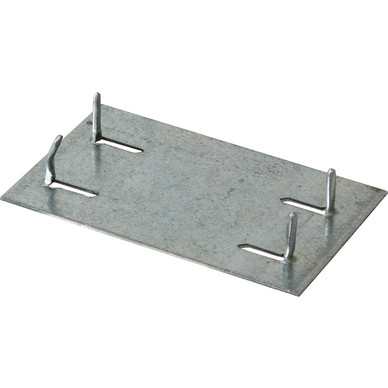
-
Precautionary reinforcement of holes in joists
saveasteading replied to DKenn's topic in Floor Structures
And are the pipes half way up the joists? If so , no problem. If cut through near the top or bottom that would be bad. What depth of joist snd span? -
Precautionary reinforcement of holes in joists
saveasteading replied to DKenn's topic in Floor Structures
These are static loads so any deflection will be a one-off , not a bounce. It follows that any pedestrian movement will be nearer to the walls, where strength is greater and bounce is less. If these joists have been designed for domestic use then the weight of beds and wardrobes is included. If the holes for pipes are through the centre of the joists then they have very little effect on strength. On the other hand if the above don't apply please give more details. -
Contesting final invoice - please help!
saveasteading replied to Tom's topic in General Self Build & DIY Discussion
You've made your case. It seems that silence is your best reaction....make them aware that you aren't panicking. -
400 posi joists but caberdeck sheets all 600mm
saveasteading replied to SBMS's topic in Floor Structures
Be aware that a 2.4m x 1.2m board may be shorthand for an annoyingly longer and wider actual size. You don't want to be cutting ends off. -
400 posi joists but caberdeck sheets all 600mm
saveasteading replied to SBMS's topic in Floor Structures
It is likely that there is a lot else you don't know. Keep asking. What is the project? -
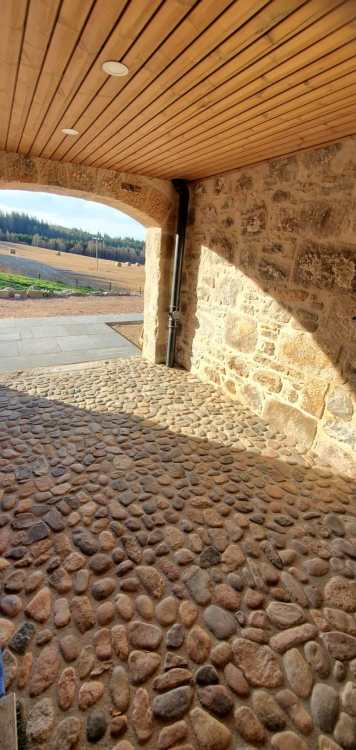
I'm so pleased with the way this turned out. It is a covered way through the whole width of the wing with the main glazed entrance behind the photographer. The floor is entirely of harvested glacier cobbles. These were formed when the glaciers had streams running beneath them, rolling stones along and forming these shapes. The cobbles are in bands in the sand , and were recovered when digging foundations and drains. They were carefully selected from a huge pile, one by one, for size and being flattish on one face. Most are rounder than these. The right hand wall and the arch are original, repointed in lime mortar. To the left, off camera, is an original timber clad stud wall, including a door, retained for heritage and interest, but there is a new wall behind it. There are pencil writings on the wood cladding, concerning numbers of sheep etc. Everything done by my daughter and SIL. 'except the straw bales' as they put it.
- 14 replies
-
- 28
-




