saveasteading
-
Posts
10104 -
Joined
-
Last visited
-
Days Won
82
Everything posted by saveasteading
-
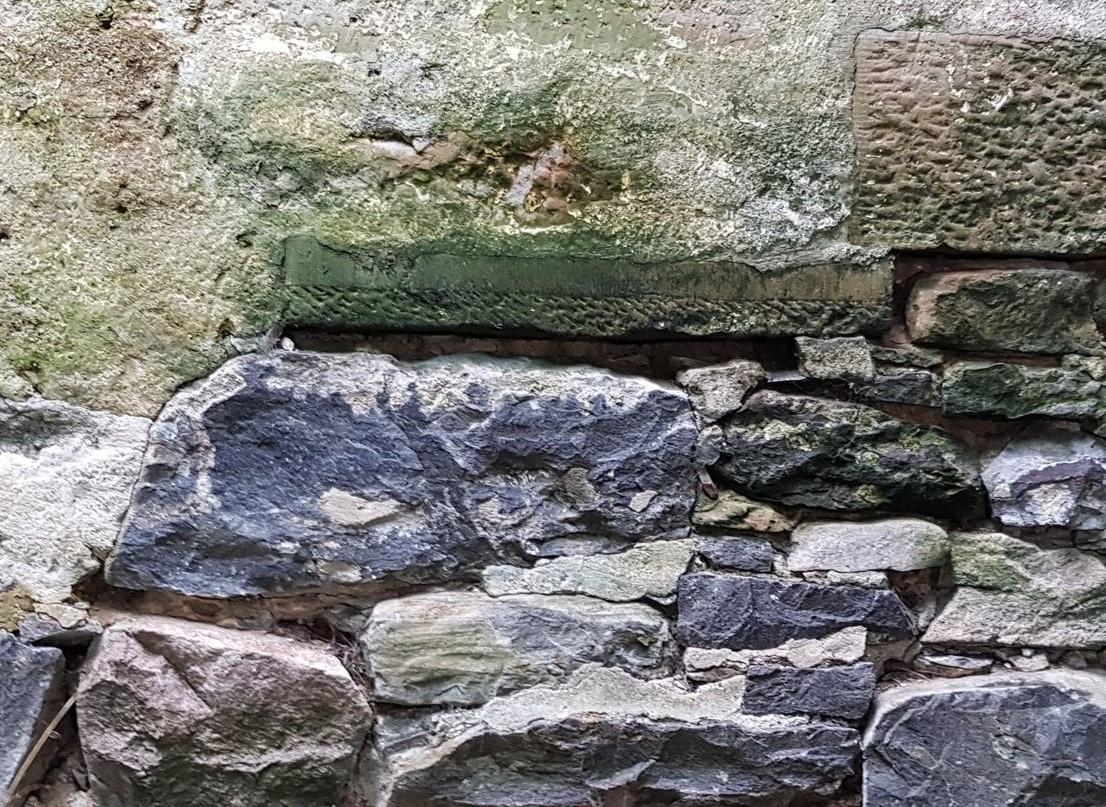
 It doesn't look used but there is a risk that an upstream source is restarted. So I would leave it be. But you could cover over it. There are frames that you put concrete or blocks in. You could turf over that. Or make your own with ply and concrete with some mesh. Clean out the earth while you have it open. That could be a bottom outlet or a roddong point. Unusual.
 -
All panels will curve naturally. Ask the manufacturer as they must know. Precurved panels can be made by some suppliers and it is essential for tighter radii. But it is expensive to buy and in transport. I've done a few curved roofs. The panels simply flop in place. The weight of the panel is insignificant against the huge uplift forces of the wind. But aluminium is soft so needs the specified fixings. Btw aluminium is generally more expensive than steel eg Colorcoat. The price quoted is very good though. Uk prices are hiked 20% over European i often found.
-
Slips more expensive than whole bricks when considering the tray behind, Less choice. Bricks Stronger against impact,( weather?). Spares down at the local merchant. Any bricklayer. Certainty of durability. Corners and openings are whole bricks, not thin tiles. Standard construction and detailing. Basically if you want it to look like brick, use bricks.
-
New self-build project - design method question
saveasteading replied to Benpointer's topic in Surveyors & Architects
The justification would be that you have submitted your proposal and are not asking for more space. So you don't need it. Whereas with an old house it can need enlarging to modern expectations. Otherwise every application would be on the understanding that it will be extended. -
New self-build project - design method question
saveasteading replied to Benpointer's topic in Surveyors & Architects
It is. But if you can build bigger, the middle of a house is relatively inexpensive to increase. -
New self-build project - design method question
saveasteading replied to Benpointer's topic in Surveyors & Architects
Debatable. I agree though that there is added value in a kit. You say you have a builder in mind. If the design is not experimental then they won't need lots of drawings telling them how to do their job. If you trust that they will price fairly, then they might either include design, or give you a name. -
You will have a dpm in over the insulation, to stop the wet screed from washing through between boards (it floats!). That also provides your air tightness and yes, lap it to the walls.
-
Ground beneath an uninsulated slab has a surprisingly good U value in a very big building, and the insulation manufacturers have stopped mentioning it. However there are diminishing returns if you have good insulation above it, as not much energy reaches the underside. For a typical house it is about 0.8 to 1.0, which isn't great. Therefore a suspended slab should be selected for other reasons*, and then add 10mm to the insulation if you want. * on clay, on hillsides, where access is tricky for vehicles, for low skilled diy, to rise higher without lots of fill., to get a floor without weather delay risk.
-
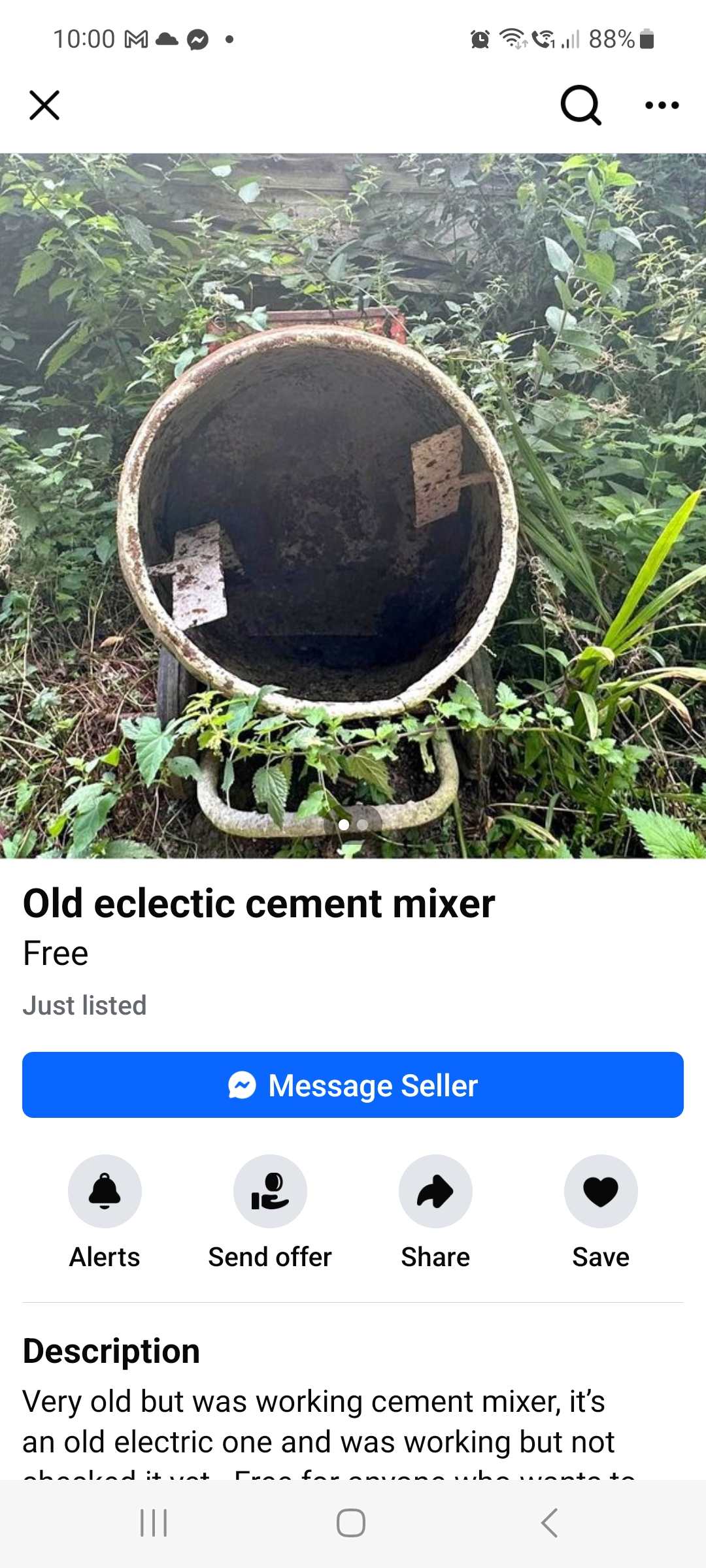
The main problem with an eclectic mixer might be boredom. Might have to try lots of mixes to keep it interested. I've messaged the seller who is going to try it out. Won't be free if it works, I suspect.
-
I have always chosen real bricks rather than slips and am still inclined that way. This sits on conventional footings. Needs a bricklayer though. I am also recently sold on the principle of a service void internally.
-
EWI with cantilevered external fixtures - eg. sunshades
saveasteading replied to Crispy75's topic in Heat Insulation
It did me once upon a time. Then I included the fixings in a wall conductivity calculation. It becomes lost in the decimal places. The bolt shank is say 10mm dia. The thread doesn't matter. Consider that in proportion to the wall area. Yes real heat will pass along the fixing, but you can stop a lot of it with a cap outside. You can work the fraction out yourself, for your own comfort. The convert that to £ and you will relax about it. It is very much more important to have a permanently solid fixing, and supervise it, if not doing it yourself. I would include some redundancy in that, eg if the calculations say you need 3 fixings, use 4. Why? because things go wrong in building...eg there may be a flaw in the wall. -
Medium Concrete Block Shrinkage
saveasteading replied to HHHAMSTA's topic in General Self Build & DIY Discussion
Photo? -
Is an individual STP worth the investment?
saveasteading replied to jumbletons's topic in Waste & Sewerage
Your turn to clear the pump might concentrate the mind. I lived briefly in a tenement where we took turns to clean the stair. If you didn't, big Aggie from downstairs knocked on the door! Then you did it. -
Go through the normal motions. The motor only pumps air down a pipe to make bubbles go through and add oxygen (and disturb the contents), as in an aquarium. Nothing mechanical is happening. In the first chamber, the solid contents sink or float and don't move through. No harm can be done. Good toilet paper is a pulp by the time it reaches the chamber anyway. If it was my garden irrigation then I'd assume the pipe was blocked and blow along it. Don't do that unless with some device.. Or the rubber diaphragm in the pump has stuck. Again blowing through it....or not. Have you given the box a slap?
-
Is 'it' the pump that bubbles air through the liquor? Turning it off will do no harm. The contents will continue to separate and digest just not quite so well. Have a look to see if bubbles are coming up. Phone Marsh on Tuesday. @ProDave has changed a pump if I recall so he might be along.
-
messed up a kitchen wall (metro tiles)
saveasteading replied to johnhenstock83's topic in Wall Tiles & Tiling
A good professional tiler uses a quick setting adhesive, from powder, and holds the tile for 20 seconds...and it stays put. Amateurs use slow setting adhesive to allow for adjustment, and spacers hold it in place. I suggest you go to a tile merchant and get some stickier stuff, and spacers. Tell them and they will be helpful. -
I'm sure that as a bricklayer, the branded one would be the wise choice. all day every day for a few years perhaps? thousands of hours and getting bashed with a shovel. For self build, not necessarily.
-
that sounds like politics to me. Wrong anyway. I have done some maths classes in schools when building there. I can't say I saw much difference in understanding or skills between private and LA schools. Of course some didn't have a clue. But what surprised me was how some who were decent at maths couldn't translate it into practicality. eg I showed them the building we were doing and asked them to work out the concrete quantity. getting the right digits was fairly common, with help, but very few could do decimal points. Does that sound right? Is it going to be half a concrete truck, or 5, or 50? No idea. One teacher said that the main help I was providing was in confirming hat I used maths (well, arithmetic) all day every day. ie it isn't only for an exam. I think you might be the answer. Volunteer as a classroom assistant immediately.
-
Where would they save money? thinner steel that will dent and distort. A weaker, slower motor? less stable stand (see @Nick Thomas)? there are lots of sizes. and the comparisons above are for the 110 to 130 litre range. The cheaper ones don't go any bigger though, probably for the above reasons....more steel needed. Do the branded ones reverse? for shifting stuck lumps, rinsing or for controlled discharge?
-
Is an individual STP worth the investment?
saveasteading replied to jumbletons's topic in Waste & Sewerage
If you did , say, a dipstick test every 6 months, showed there was no sludge, and kept a log with photos, I doubt there would be trouble, at worst a warning. BUT if there was contamination and they traced it back to you, as somehow they often can, the absence of tests and desludging would add to the consequences. I wonder if there is a diy way to deal with the top crust when there is one. Mix it back into solution to be digested? Bury it? -
I'm putting up a stud wall single handed. But I'm not skilled at it. I am screwing the framework once for control as i have only 2 hands. Then banging in nail gun nails for stability and strength. The gun cost me £70 off marketplace. It's a scary beast to use. If I was knocking up mass produced panels on the floor, I'd use the gun much more.
-
Agreed. But if you bought a screwfix one and used it hard but reasonably, and it failed in 6 months, you would take it back. Maybe it doesn't mix as well, so uses more time, and that would not suit a professional bricky. But for me mixing a barrowload or two it might be fine. Or it doesn't tilt well? or is horrible to clean?
-
also, the builder can realise that the SE is not unreasonable, and any future suggested change should be put forward , not done unilaterally. This joiner may have used this product on many projects and 'know' that it is generally ok, but your project may have more uplift.. OR the SE doesn't know this product which might be ok or suits some projects but not all. Both / either can learn.