
saveasteading
-
Posts
10104 -
Joined
-
Last visited
-
Days Won
82
Everything posted by saveasteading
-

What fixings may I need to stop leaks?
saveasteading replied to David001's topic in Roofing, Tiling & Slating
Ok. a bigger washer won't really help, in fact it is more difficult to get it flat. You have a tiny hole to fill. The screw fills most of it so I suggest you just bodge it with silicone and 'glue' the screw into place. Some into the hole and hand turn the screw in, then slowly with a spanner as there will be little to no resistance. If you want to glue the washer down to then , no harm. Use good silicone mastic. Get a known brand. clear.. One that says it is for outdoor use, stays flexible for ever, and is UV resistant. You could add a small, angled stripe of silicon just uphill of the screw to divert any water that is running down the crown , away from the screw. -
What fixings may I need to stop leaks?
saveasteading replied to David001's topic in Roofing, Tiling & Slating
I don't think anyone uses rubber, but continue with the term. I have really only just noticed that the screw you show is on top of the crown. this is going only through two sheets of cladding and is not structural. It is a stitching screw. It is unlucky to get a leak there . The gash will help cut through but i suspect it needed a drill first. The screws running in a horizontal line are holding the cladding down on the galvanised purlins and will be different to yours shown. Any of them a problem -
Good. I wouldn't dream of pouring a finished floor out in the open, even for industrial use.
-
What fixings may I need to stop leaks?
saveasteading replied to David001's topic in Roofing, Tiling & Slating
Wider and a steeper thread so that it forms it's own thread in the hole. The screw you have surprises me. Most have self cutting points. Yours have needed predrilling. The first 3 or 4 turns are only for cutting its way in. The others can grip the sheet. Yes 1mm more will do. The heads will be standard, as will thecaops in size and colour. Roof screws are a product where buying the big brands is worth it. SFS is prob the biggest. Ejot too. I got my sfs screws with the buildings. For odds I would contact Southern Sheeting. Decent people. Not that your order is going to excite anyone. -
'How to sort it tips' from joiners please?
saveasteading replied to saveasteading's topic in Barn Conversions
Bent chippies prefer tame houses. -
'How to sort it tips' from joiners please?
saveasteading replied to saveasteading's topic in Barn Conversions
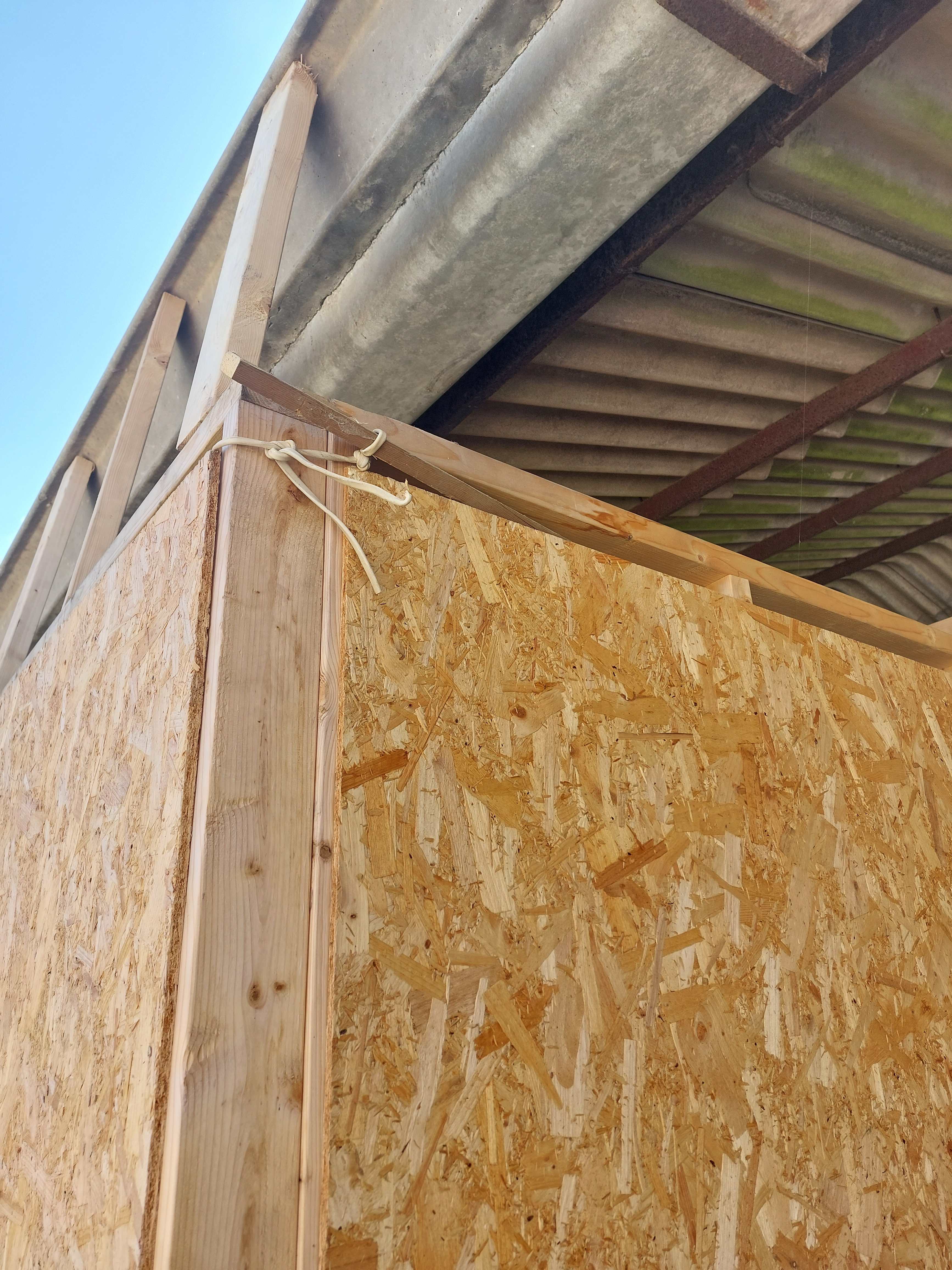
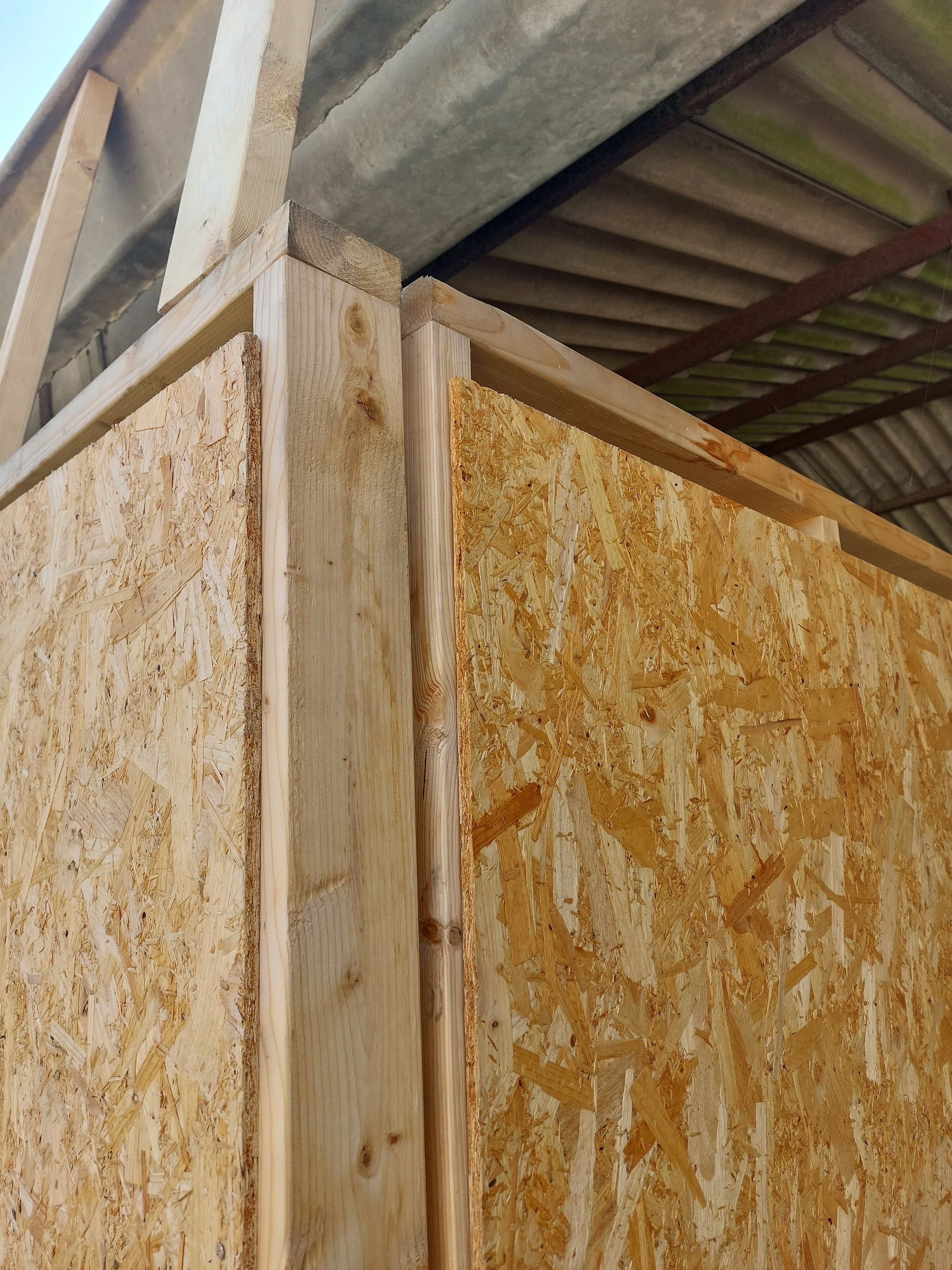
Pic now attached showing length of cable and lever of roofing batten.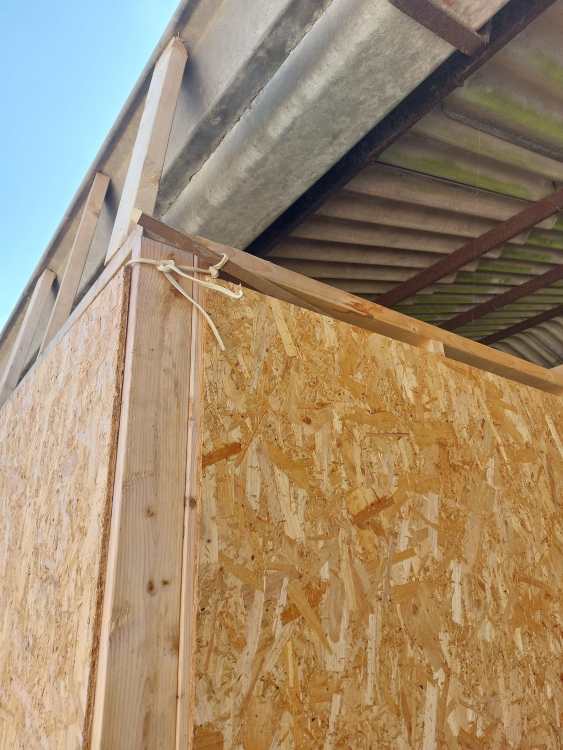
-
'How to sort it tips' from joiners please?
saveasteading replied to saveasteading's topic in Barn Conversions
Exactly so. At the second attempt the windlass brought it to 10mm. Any tighter and the flex was about to break again...twisting failure. From there I used a heavy threaded hex head screw, with a predrilled hole in the 2" stud to clear the threads. One at about 600mm down , pulled it in tight there. Repeated at top. There was lots of pinging of osb screws so that needs looking at. Simply in looking for the photo I saw the windlass potential, so it goes down as another success for BH. -
'How to sort it tips' from joiners please?
saveasteading replied to saveasteading's topic in Barn Conversions
Here it is. A powerful clamp would do it but I don't have one. Going to try a Spanish windlass.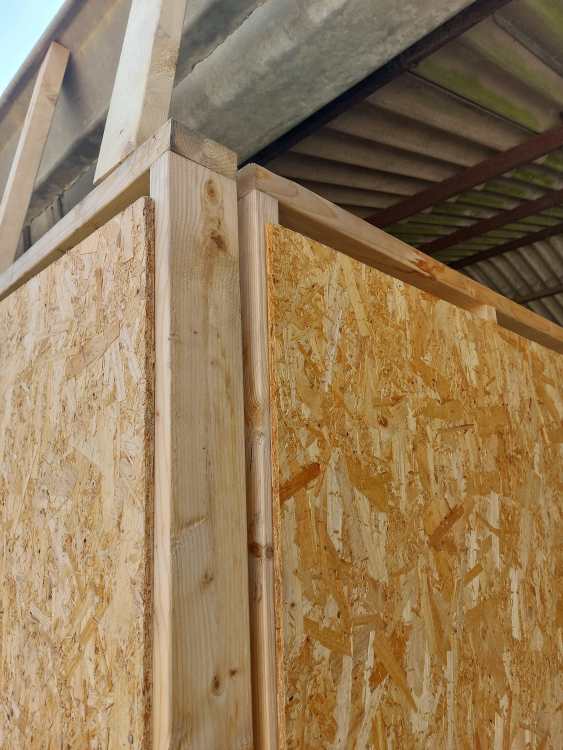
-
Moving a manhole for an extension add on
saveasteading replied to OldieNewbie's topic in House Extensions & Conservatories
Yes. If they are, and many arent. It doesn't always work if the levels are tight, as a diversion is usually further. -
That's worth a lot. Of course any slab or wall can have lots of insulation. Is the slab the finished surface? Thinking about weather affecting the pour.
-
'How to sort it tips' from joiners please?
saveasteading replied to saveasteading's topic in Barn Conversions
I have a suitable implement already. holding that in tension while driving the screw , while on a stepladder, may be the challenge. I should not have given it the opportunity. -
'How to sort it tips' from joiners please?
saveasteading replied to saveasteading's topic in Barn Conversions
will do. I hadn't thought of asking the collective brain until sat here. -
I have been very slowly constructing a toilet enclosure, using 4 x 2 and osb. It is under cover but open to the air. As I am working alone, and not the strongest, I have limited the size of premade panels, and some details aren't too clever. At an external corner, I have studs on both panels and didn't fix them together at the top. . With leaving it a fortnight, one of the studs has bent in the 4" direction, and there is a gap of about 30mm. Any tips on how to bend that back before I whack a big screw or 2 through? I have vague recollections of my father using wires on nails, perhaps levering with a claw hammer or nail bar. I am doing this dreadfully slowly. nothing is quite square or lining up. The main lesson is that properly, fully made panels on the ground and including the osb, must be the way, if there is muscle available to heave them up. Also that a lumpy concrete floor makes panel building on it very tricky. Fortunately a rough* job will suffice, as it will be site toilets and then a workshop toilet. *Characterful / rustic
-
any bounce at the raw stage will disappear when more concrete or screed is put on top. The thickness adds to the overall structural thickness, eg 150 beam is now 250mm overall, and the effect is squared. Outside? make sure the top surface slopes away and is waterproof. ventilate any voids.
-
If the stone is all above the plastic before and during then yes, it should be ok. ie no wacker to plastic contact or it will break BUT I've never done that. The wheel loading will do it for you, and maybe add a few stones if needed.
-
What fixings may I need to stop leaks?
saveasteading replied to David001's topic in Roofing, Tiling & Slating
As @dpmiller says. When squeezed the right amount, the washer will compress and expand into the screw thread. You should see a slight bulging outwards, much as you show. except that yours is wider to one side only. The likeliest problem is overtightening / not in straight. With the screw system I used, you would normally not replace that screw with another the same, on the basis that the thread it had cut in the panel or purlin might be damaged. Instead we used a 'repair' screw, which had a wider shank and coarser thread. It did not need to be self drilling as the hole is there. This also allows for the case of a mis-drilling. Do not be tempted to use a big washer instead. the vital element is the inner contact from rubber washer to screw. BTW the coloured cap is only for aesthetics and to protect a carbon screw from rusting. When looking for a failed screw, I would often find that the cladder had bodged the job and the screw was not gripping properly, and that he had then put some mastic (tube or tape) in the hole as another bodge, before the screw.. They knew very well that this was wrong and didn't get another contract. -
fitting seals on 300mm twin drainge pipes to bends
saveasteading replied to scottishjohn's topic in Waste & Sewerage
This sounds like a manufacturing issue. Half a mm will make all the difference. I wonder if pipes get wider or thinner as moulds wear out? -
Are there figures? I would hazard a payback in heat loss of £50 / year for the small area of lower resistance at the sole plate. For an extra foundation cost of £10k on an average house? There are other reasons for the decision but that isn't a conclusive one for me. Which supports my point too. It does not need to be that strong.
-
fitting seals on 300mm twin drainge pipes to bends
saveasteading replied to scottishjohn's topic in Waste & Sewerage
twice the price and still a pain? I withdraw my suggestion that they are easier. -
fitting seals on 300mm twin drainge pipes to bends
saveasteading replied to scottishjohn's topic in Waste & Sewerage
I have found that one of the differentiators between the big brands and the others is the ease of connecting. It doesn't matter too much on straight runs but does with bends. Does that make them worth the price doubling? Maybe if you count the time. Lesser known (here) makes from abroad can be OK too. We used Funke from the local drainage merchant. Decent price and easy joints. Go to the drainage merchants and be annoying in finding what works well. It's likely that all their makes are good. For a one off you can feather the spigot end with a file, then once started it should slide in with a squirt of detergent. -
I think it will adhere OK. Whether it is a good idea I don't know.
-
I consider all options but 99% I will choose strip footings or pads, except on loose fill. The building sits on solid foundations. The slab and insulation only support room loadings....an upright piano being the heaviest it will ever support, and a theoretical, slight compression of insulation won't matter. No need to get more complicated and use specialist workers either.
-
architect vs. architectural designers
saveasteading replied to TryC's topic in Surveyors & Architects
Because you want novelty and a statement. Or because there are challenges or opportunities on your plot. If you want none of that, buy a standard kit house, with no changes. Rooms may be small, but it may be just right for you. Also it will be a proven design and everything should simply slot into place. -
If mulched it will reduce to 5% of the volume and you have lot of mulch. The domestic ones only take one branch at a time, maybe 20mm dia, but then drag the secondary twigs through behind. hiring a commercial mulcher will cost a bit. If you have time and/or help, snipping the branches down into 30cm lengths the volume also reduces a lot. to 10% perhaps? Then you can dispose of it or pile it up to rot. How much the volume reduces never fails to amaze me. Plants are good at taking up lots of space with minimal ingredients. It follows that hedges don't make powerful bonfires and they need constant feeding and attention.
-
Can you just fit a metal cover and put a plant pot, or a seat over it?