


saveasteading
-
Posts
11094 -
Joined
-
Last visited
-
Days Won
98
Everything posted by saveasteading
-
We dont know the circumstances. Anyway, nothing that a few bars would not resolve...but needs calculations. It's just not easy getting 750mm down with a spanner, or even getting the nuts on the threads. I once took a building down and found there were no nuts. I suspect many more elsewhere are not tight.
-
It could be formed in brick or block, with tie bars, and infilled. This became my standard detail on hundreds of bases. If you have to set it below floor level to conceal the bolts, then allow for that. This assumes simple vertical loading, otherwise more thought is required.
-
That's a long way down. You have to cast bolts in, or drill and glue to precise positions. Then fit a base plate over them to level, and fit the nuts. That isn't easy and is worse with other obstructions. Can you raise the pad to slab level in concrete?
-
That's surprised me, being just 10% more. What about the fancy perimeter eps former?
-
It's Spanish. It's done plenty of work without bursting into flame. But I'm wondering where is that heat coming from? A poor connection causing sparking, or something glowing in there? If a cable or connector is undersized or making a poor contact, does it become an element? The innards are very simple.
-
Rather late thinking this. Are these comparable? Competitive prices from multiple manufacturers and merchants for a non load-bearing product v a branded , specialised product. Can anyone advise on the premium?
-
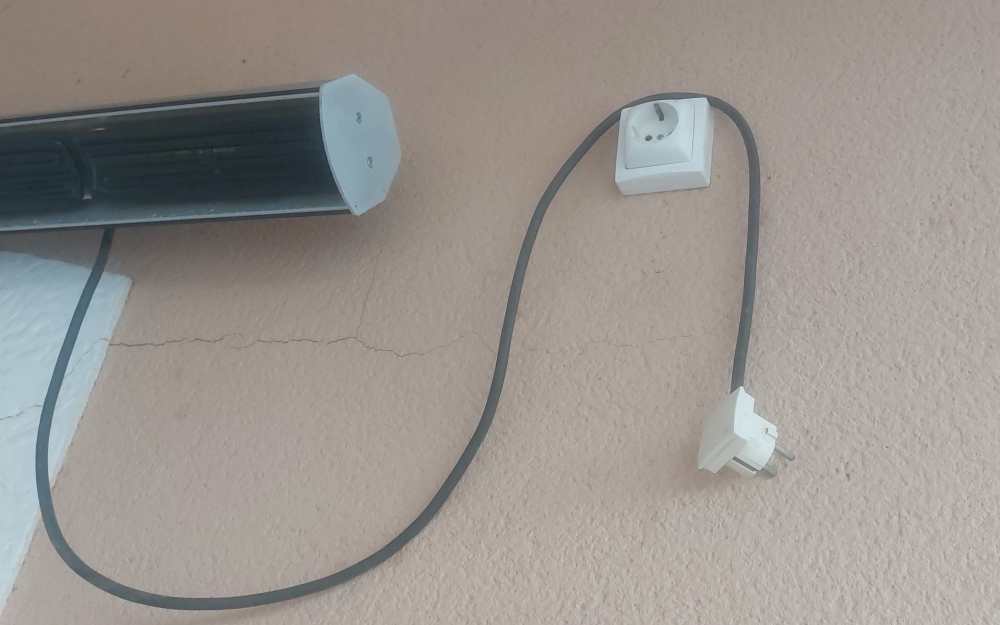
This socket (NB 2 pin not UK) gets hot when powering the adjacent heater for an hour or so. I think there is brown staining around the pin sockets. The plastic is handleable . The pins are too hot for comfort. It is 230V, 2 pin, no earth. The heater is infrared, 1200W with the original cable but a local plug which is a standard one but rather shabby compared to UK expectations. I've no idea what the mains cable is intended to supply, but presumably a wall heater of some sort. Of course, if it was switched, the heat would not be noticed. What makes it hot? Danger? Action?
-
 Good advice above. It's scary for a contractor too. You do a month's work and invoice less some retention, and carry on working assuming your client will pay. Then if you don't get the last payment then it's a loss of time and money. Once the materials are on site the contractor can't take them back. One Client even foolishly told me that he never pays a bill if he doesn't need the supplier again and true to that he didn't pay the last bill...but being prewarned I had left something crucial undone. It shouldn't be like that. Client and contractor talking about it is useful. Be prepared to pay more often. Eg fortnightly instead of monthly. Even paying for a big delivery the next day.
 -
We must take every question seriously, assuming the enquirer is a complete novice. Well, a tube has one hole or two holes, depending how you look at it.
-
Architects, ballooning fees and estimates
saveasteading replied to Drellingore's topic in Costing & Estimating
Yes it might. But starting without trust is not optimal. -
Architects, ballooning fees and estimates
saveasteading replied to Drellingore's topic in Costing & Estimating
There are a few matters which justify a higher price related to cost. 1. Insurance and especially PI are based on turnover. 2. If there is a problem then any compensation might be more. 3. A bigger project has more detailing unless the rooms are simply bigger. 4. If project management is included then a bigger job has more supervision. 5. Does a dearer job have a more demanding client? BUT if it is simply that the spec is higher then only 1, 2 and maybe 5, apply. I think either it would be fair to have a cost based on input plus another based on value. -
Architects, ballooning fees and estimates
saveasteading replied to Drellingore's topic in Costing & Estimating
That's sensible. % of cost is a bad idea. Better get a fixed quote. That's untrue. Better just tell them that's your offer. -
They don't build cavities well either, which is why I like full fill rock-wool. No mortar can get dropped down the cavity. If there is a way of pretending the insulation isn't right then I have missed it.
-
I think I need something clarified. Are you classing a groundbearing slab as a raft? It isn't reinforced , as there is no bending, and only has crack control mesh. Warehouse slabs are not rafts. They are usually uninsulated because they have heavy loading and an unheated, or reduced heat, space. I am suggesting a very simple slab on the ground. No reinforcement needed but I would add the minimum. Then the insulation of your choice : actually I have a hunch towards 100mm eps with 100 pir staggered over it. Gut feeling again, but based on many decades of prior thought and prejudice, plus stuff picked up on BH.
-
Because it's an easy answer and takes ten seconds. Yours included. One of Parkinson's laws applies. There you are that's yet another one.
-
He would spout Shakespeare. But David would praise you for providing an insect haven.
-
Thanks for your summary. I feel it is a tiny bit biased towards expecting a raft to be better value. I confess to having the contrary expectations. Also that I would expect to PM myself, using fairly ordinary local builders. That is a lot of value.20% of more. To tweak yours. 300mm eps = 150 pir as insulation. Similar cost. Less dig pir. Raft needs 2 layers of heavy ish steel, compared to 1 layer of the lightest. Raft has a deepened perimeter snd at walls. Raft is poured in the weather. That's a risk. With my contractor hat I don't like delay or risk. The detailing for insulation is standard and easy. Of course raft people say otherwise. Now. I was a professional estimator for yonks. I'd rather fancy doing a roper cost comparison but haven't the time. Gut feeling. 20% more for a raft. Maybe 30%. Justifiable if not PMing it. As for trees. I quickly looked at the tree tables but couldn't see hawthorn. The nearby founds will be no deeper than 1.2m, the rest at 1m, i'm pretty sure. Forget piling too. It won't be necessary. Other people can advise. Are there any special measures to protect the eps at the perimeter or for the interface to the walls above?
-
And allow insects a nice winter hibernation spot. Up to you.
-
The hawthorn hedge at 7m isn't a problem, even for clay. My immediate thoughts. Keep it simple. The 500mm of soil has to go. Strip footings to 1m below ground level. Brick or block to floor level. Hardcore ( pref type 1 but any well graded stone.) 300mm th. Concrete slab 100mm with mesh. Or thicker if the builders aren't superb. At this stage proceed with superstructure. 200mm pir. 60mm screed with ufh. And this is the finished floor at 160mm above ground. Add dpm and another layer above the pir. That should be very much cheaper than a raft, and is non specialist.
-
Between a Roof and a hard place....
saveasteading replied to Mulberry View's topic in General Self Build & DIY Discussion
Don't count on it. Proper cover is very expensive. Especially PI. I've known many cases of businesses taking out the least that can keep them legal / get them work. They should have provided the info to you before starting the work. I had a roofer once who's cover excluded any work higher than 4m. Because that was cheap....small ads in the Sun. -
So would I. But perhaps the first one fills and overlows to the second. Thud the first tank is fuller and easier to pump. And yes, a settlement tank before them. Divided by a porous manifold. maybe a net.
-
Failure to comply with Planning Conditions.
saveasteading replied to FarmerN's topic in Planning Permission
I look forward to reading the progress of this argument. Photos of the hedge planted? Every plant died? Was it all dug up again? Perhaps the planners need to stipulate 'plant a living hedge, look after it, replace any deceased plants, and do this for 5 years after occupation, after which apply to get the permission signed off. Presumably the condition was acceptable at the time. Plant a hedge and I'd be interested in a blog about it. -
Failure to comply with Planning Conditions.
saveasteading replied to FarmerN's topic in Planning Permission
Tell your friend that it may be a big deal ...or not. A condition can apply prior to, during or post construction. All are conditions, so all must be complied with or it does not have approval. This may raise itself when another application is made, to the same property or nearby. It would also arise during the enquiries stage of a sale. If the issue is so minor that nobody cares, or circumstances / fashions have changed, then he can make that case. -
We will put in a tank between the house and soakaway, be part of the journey if you will. I'm thinking 3m3. For the pump, I Can choose to immerse a battery pump with a hose or to a simple standpipe. Or a quaint village pump type thing. Perhaps both. It will be fed from 180m2 plan area of roof, so it will take 15 mm of rain to fill it. July rainfall is 61mm. Maybe I should go 4m3. I'll look on 'marketplace' for a tank. But for now, I'm going to think of whether ibc × 3 is sensible. At the right price, £25 yes. But people seem to want £50 or more. Then how to stop it caving in when empty? It should never float because it will be full in wet weather. But a couple of spikes and a cable is simple. All suggestions welcomed. The BuildHub rwh for cheapskates/ the sustainably minded. @Temp @marshian What would you do differently another time?
-
Between a Roof and a hard place....
saveasteading replied to Mulberry View's topic in General Self Build & DIY Discussion
I agree you delay this. They are expensive but essential if it goes to adjudication of court. At this stage you are getting together the essential information. I recall sitting with an expert witness who was effectively interviewing me to support our own case. It was worthwhile in itself, in getting our case tested. After 2 hours or so he said that I knew much more about it than him and that he would now write his report. A few pages cost several hundred £. 2. Get a move on. The other party might be rearranging their business and then disappear this one.


