
ProDave
-
Posts
30862 -
Joined
-
Last visited
-
Days Won
427
Everything posted by ProDave
-
I had a very good relationship with our builder, and I am sure if I had discussed with them my concerns about the weather, they would either say don't worry it will be fine, or they would re schedule. I would not expect them re scheduling to increase the cost in any way. It is in their interests that the foundations are correct.
-

Just about to start the first fix electrics
ProDave replied to Triassic's topic in Electrics - Other
Lighting. 2 way or more switching of HALL light as well as landing. My preferred make of switches and sockets is Scholmore Click Mode Run socket cables horizontally around the room from socket to socket, with a bit of slack, then if you decide you need an extra socket later it is easy to add. -
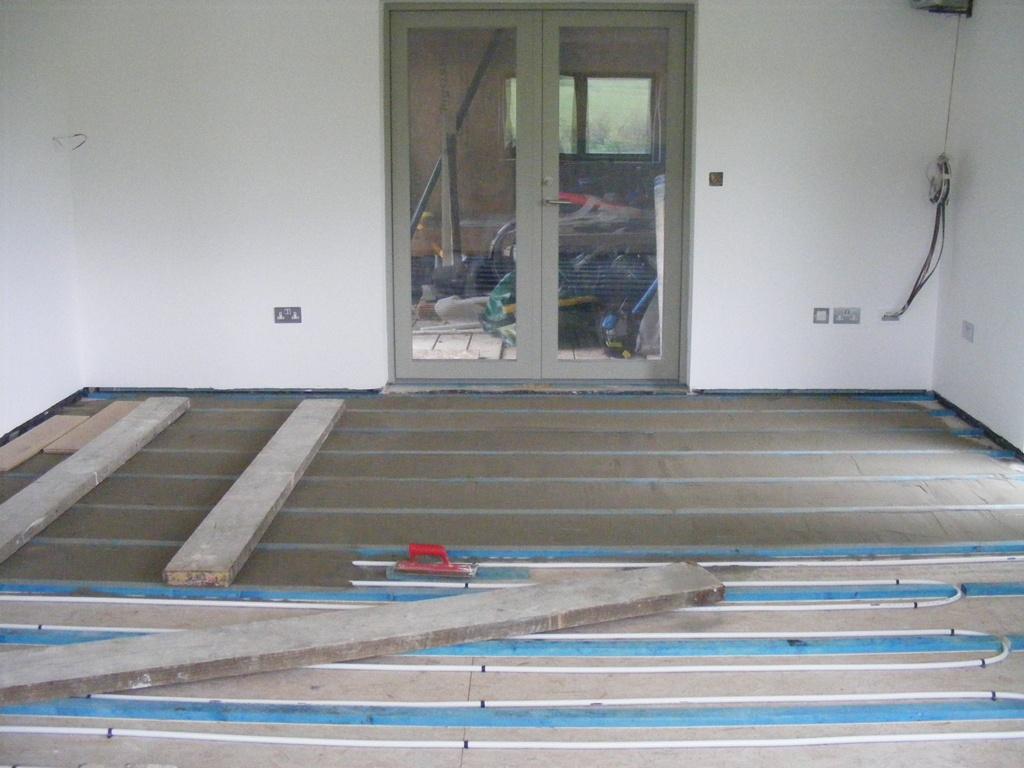
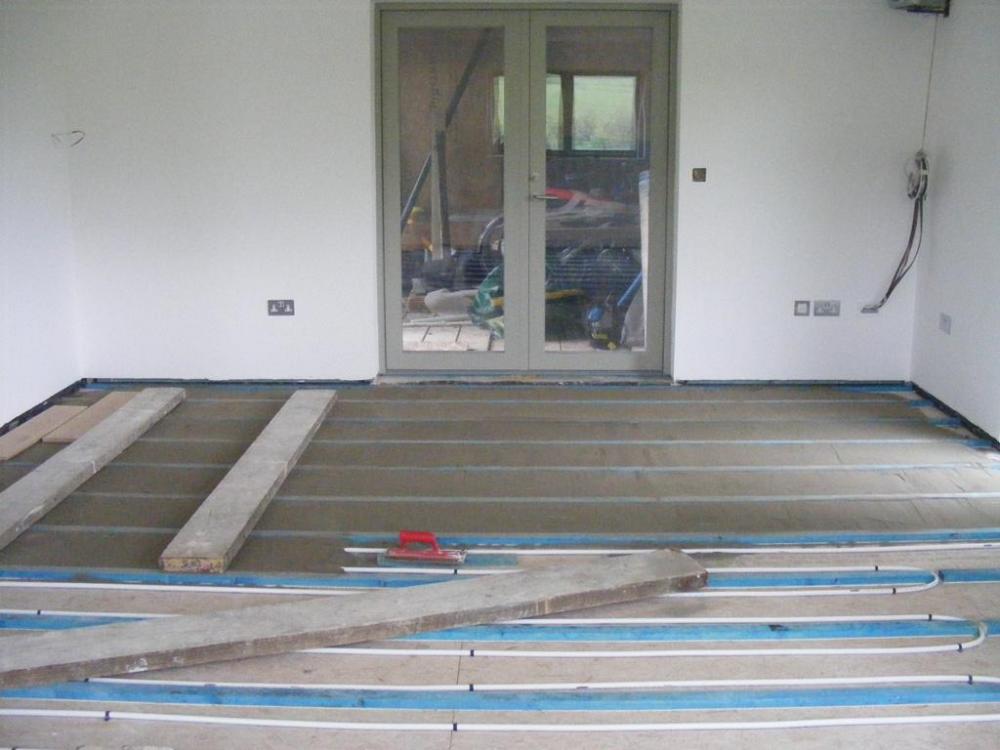
Very simple actually. 11mm OSB deck over the joists. This is just to support the pipe and pug mix. 25 by 50mm battens following the lines of the joists. These are notched where needed for pipes to pass. Pipes laid between battens and pug mix added. Final floor on top, in this case engineered oak boards. The boards sit on the battens, not the pug mix, that is there just as a heat dispersant.
-
Got broken in to last night ....
ProDave replied to ToughButterCup's topic in General Self Build & DIY Discussion
I think I related the story of early on in the build, the builders were late on site one morning. Three of their van's were broken into over night and all the power tools gone. I was under strict instructions not to touch any of their vans until the police came to our site that morning to fingerprint them all. This sort of thing is rare up here, the police thought it was a gang from "down south" who worked their way down the A9 over night targeting vans in all the towns and villages on the way. -
A very sad situation for the builder.
-
Tonight's episode was surely a lesson in over developing a difficult site . Can't afford to build the house, I know lets build a smaller one first to sell to finance the big one. Oh hang on nobody will buy the small one while the big one is still a building site next door. Makes our build the new house before selling the old one look like a walk in the park.
-
If you want cheap, look at the system I used, burying the pipes in a non structural dry sand / cement screed (biscuit mix) Downside is you have to size the joists for the extra dead load. But in our case we had a big pile of sand left over so it was just the cost of a few bags of cement.
-
I suspect the issue it the heat output (watts per square metre) for a given water temperature will be lower than spreader plates as there is much less to disperse the heat. But in a low energy house that is probably okay.
-
This does not add up. I just do not believe if you phone the police and say "My neighbours builder is tipping soil in a forest" that they are going to turn up knocking on your door. It is hard enough to get a policeman to attend when a real crime is reported. And even if they do, you simply inform them your builder has an interest in the forest so no law is being broken.
-
To be honest, hearing what you say about this neighbour, I would be moving, not extending.
-
I have been paying £550 pa site insurance via Buildstore, so £1250pa seems double what I would expect.
-
Got broken in to last night ....
ProDave replied to ToughButterCup's topic in General Self Build & DIY Discussion
No it is not your fault. It is the fault of the scroats that do this sort of thing. We should not have to live in a society where we have to baracade ourselves in like we are in Fort Nox. Lets hope the insurance do the decent thing and stump up for your losses. -
Windows....which company did you choose and why?
ProDave replied to Tom's Barn's topic in Windows & Glazing
I found it really quite simple. I got quotes from 6 suppliers, the ones I can remember were Russel Timbertech, Rationel, Internorm, and Katzbeck. Rationel were the cheapest, and the second best in terms of Uw value. Only Internorm beat Rationel's Uw value, but they were twice the price. They were fitted by the builders that built and erected my frame so I bought them on a "supply and fit" basis (so VAT free) I have the Rationel Aura plus aluminium clad windows and very pleased with them. -
What supply infrastructure is in the area? If it's a typical rural 11KV overhead network it might be cheaper for the DNO to run an overhead spur from the nearest 11KV line and your own pole mounted transformer. Whatever, the best way to find out is ask them for a quote for a supply to the house site.
-
ASHP with small buffer for UFH?
ProDave replied to oranjeboom's topic in Air Source Heat Pumps (ASHP)
Is it this heat pump? https://www.ctc-heating.com/products/air-to-water-heat-pumps/ctc-ecoair-400 No mention there of inverter drive. That does not mean it does not have inverter drive but that is a question I would want a definite answer to before I bought one of those. -
Easy. Three individual 2 port motorised valves. One for downstairs UFH one for upstairs radiators one for DHW. The 3 channel time switch (plus a room thermostat if you wish for the 2 heating zones) turns on the motorised valves. In the case of the UFH it turns on the downstairs motorised valve and the UFH mainifold pump. Each of the motorised valves has a microswitch, connect all 3 of them in parallel. That gives the logical OR function to send a "call for heat" to the heat source.
-
My neighbour now has a third leak. In spite of putting poison in all the holes cut so far the mouse (mice?) are still eating their plastic pipes. Imagine sitting there just wondering where the next leak is going to be and never being sure if the mouse it still at it or dead?
-
I am sure there are a couple on here will who will not like Orkney being describes as insignificant. The abundance of wind and low population density make renewable energy really viable there.
-
Norwich council houses entered for the Stirling prize
ProDave replied to joe90's topic in New House & Self Build Design
Looks good. It should showcase the fact that mass market housing can be built well. -
A previous cat we had would catch them but never eat them. One one occasion he came in with a mouse in his mouth, put the mouse down in his bowl of cat food and proceeded to eat the cat food. The mouse just sat there preening himself seemingly not bothered at where he was, until we took him back outside.
-
Isolators: easy to reach ? Where have you put yours?
ProDave replied to ToughButterCup's topic in Power Circuits
That would be a challenge in my 25mm service void. -
I have never seen a tank thermostat with a heater. I guess for tank heating the hysteresis is not such a big issue? I have only seen accelerator heaters in room thermostats.
-
Isolators: easy to reach ? Where have you put yours?
ProDave replied to ToughButterCup's topic in Power Circuits
Re putting it all on a grid plate. I cringe when I see that. With so many large cables crammed into a small back box, and often in a hard to reach place, there is so much scope for things to be less than perfect inside there. It would not be my first choice. -
Isolators: easy to reach ? Where have you put yours?
ProDave replied to ToughButterCup's topic in Power Circuits
I am clearly not "on your page" but the brother of your previous sparky. My Oven isolator is in the cupboard above the oven. Frankly if you need to turn the oven off, it is easier to go to the consumer unit and flick the rcbo labelled "Oven" It is there because the regs say it must be there, but I don't want clutter. Likewise the hob isolator (on the island) is in a cupboard underneath the hob. I only have 1 isolator above the worktop, and that is for the dishwasher, immediately below it. In the utility there is an isolator for the washing machine and tumble dryer. The Fridge is a big free standing one. It plugs into a socket behind it. Because it is free standing not built in, it does not need a separate isolator. -
kill grass and weeds permanently
ProDave replied to deuce22's topic in Landscaping, Decking & Patios
In case it is not obvious, I will make it so. This stuff is concentrated, you dilute it massively before use. 5L will last you a very long time and cover a large area.