garrymartin
-
Posts
502 -
Joined
-
Last visited
-
Days Won
6
Everything posted by garrymartin
-
That's a great observation to make and something that might have been forgotten. 👍
-

Isolation Switch for three-phase power beyond 100A
garrymartin replied to Boba's topic in Consumer Units, RCDs, MCBOs
It's 100A per phase. I'm more interested in why one of the phases has a 60A fuse and the other two have 80A fuses?? Were you given a reason, or have you requested it for some reason? -
Potential garden room/gym - early stage ideas
garrymartin replied to Adsibob's topic in New House & Self Build Design
Don't forget building regulations... In brief: 1) Building Regulations do not usually apply unless you want to sleep in it 2) Under 15m2 INTERNAL floor area can be installed close to any rear boundary 3) Over 15m2 and up to 30m2 needs to be a minimum 1m from any boundary If you want to put up small detached buildings such as a garden shed, garden room or summerhouse in your garden, Building Regulations (except Part P for Electrical works) will not normally apply if the floor area of the building is less than 15 square metres INTERNALLY and contains NO sleeping accommodation. If the INTERNAL floor area of the building is between 15 square metres and 30 square metres, you will not normally be required to apply for building regulations approval, providing that the building contains NO sleeping accommodation, and is either at least one metre from any boundary, or it is constructed of substantially non-combustible materials. I kept it to below 15m2 for mine. It's well insulated and works well as a room despite the 2.4m restriction, but as a gym, you'd probably need higher ceilings for anything that involves you putting your hands above your head, so as you note, you may have to dig down if you don't want to apply for planning permission. -
Welcome and fingers crossed for a reasonable quote on the electrics! 😉
-
Hello! And, err... our appeal was dismissed :-(
garrymartin replied to garrymartin's topic in Planning Permission
Yes, extended content. But also specific evidence in rebuttal to the reasons given for refusal and for dismissal at appeal. It's also clear about the law regarding determining "significant and demonstrable harm". It's not enough to just state something, there has to be demonstrable evidence to support it, and therefore the Council must provide that evidence. -
That's exactly how we are approaching it. We want to build to Passivhaus standards, but we won't let that dictate how we want to live and how we want to experience our new home. If there is tension between those things, strict Passivhaus will lose out every time.
-
Hello! And, err... our appeal was dismissed :-(
garrymartin replied to garrymartin's topic in Planning Permission
Agreed, but I found that I'd come across some old case law that said one thing, and then when you search on that case title, you'd find something later that referenced the ruling and may have clarified some position or other further. It was a lot of work. I started searching case files in date order to save that extra work. Having something more current as a reference would definitely be a good idea. I've seen one site say the 2nd edition is due in August and another saying May 2025 so not sure when it will come out. -
Hello! And, err... our appeal was dismissed :-(
garrymartin replied to garrymartin's topic in Planning Permission
Yep.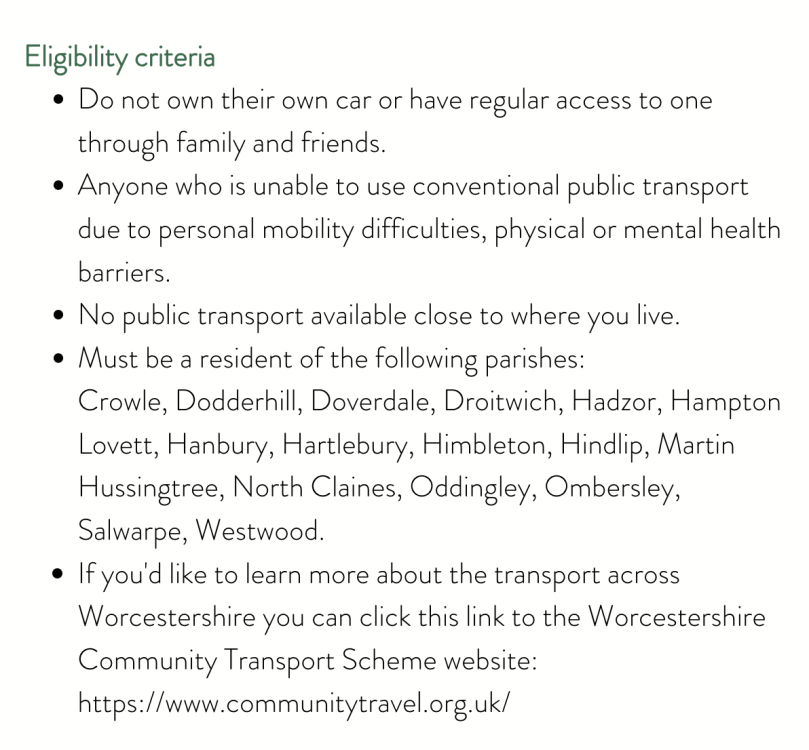
-
Hello! And, err... our appeal was dismissed :-(
garrymartin replied to garrymartin's topic in Planning Permission
New, 2nd Edition version is due any time soon I understand. The current version is 8 years old now and that's a long time for case law to be updated. -
Hello! And, err... our appeal was dismissed :-(
garrymartin replied to garrymartin's topic in Planning Permission
Absolutely. The thing I find really frustrating is that the courts can't really overrule the weighting an inspector applies unless the process they took to determine the weighting was in error. So if the inspector determines, lawfully, that there is a conflict with a particular policy. It's then up to their professional judgement to determine whether they fancy it to be limited weight or significant weight and you can't challenge that. The only thing you can do (as I tried to) is introduce another, similar appeal that reaches a different conclusion as a material consideration and in doing so they should clearly articulate why they have departed from another inspector's view. Mine didn't do that though. I've got this paragraph in my Planning Statement "Although the professional judgement of a decision-maker in choosing the weight to apply is not something legally challengeable, this inconsistency undermines public confidence in the operation of the development control system." Not sure whether it will make much difference to the re-determination but I feel better for having explicitly noted it and if it does end up with a need for further legal scrutiny, I hope the judges will take that into account. -
Hello! And, err... our appeal was dismissed :-(
garrymartin replied to garrymartin's topic in Planning Permission
I found out there is one. But one of the conditions for use is that you don't own your own car or have access to one!! 🤣 -
Hello! And, err... our appeal was dismissed :-(
garrymartin replied to garrymartin's topic in Planning Permission
Thought it was time for a quick update, especially now the new Government have released their proposed changes to the NPPF. I spoke to one of the most highly regarded planning consultants in my area and they said they couldn't help me. They feel the two refusals and the dismissal at appeal have pretty much killed any opportunity to get permission. I don't agree with that, so I went back to my research and DIY submissions! I'm pretty much 100% convinced that the Planning Inspector made "an error in law and misdirected himself" on three points. The first is that he gave "significant weight" to the policy that restricts development in the "open countryside". This is defined as any land beyond the development boundaries. My research found several case law examples that prove this was an error in law when the 'tilted balance' is engaged. When a LPA can't demonstrate a 5-year supply of housing, then policies relating to housing supply are deemed out of data and the weight they are given in the planning balance is reduced accordingly. However, counterpart policies to those specifying housing allocations, such as the one that restricts development in the open countryside are all housing policies and hence should be afforded much reduced weight in the planning balance. The Inspector should have known this but did not take it into account. Secondly, the Inspector disregarded an appeal I had submitted as a material consideration. He is allowed to do this, but in doing so, case law says he must properly consider the evidence presented and he must give his reasons for departure from the previous decision. He did not do this. The Inspector had also commented that he had "limited details on the quality" of the cycle routes and so appeared to dismiss them as a valid, sustainable transport option. I've since learnt that both the road and the bridleways are the responsible of the local transport authority. Under the Highways Act 1980, the local transport authority are responsible for ensuring the safety, accessibility, quality, and suitability for all users, including cyclists. Therefore the third point is that the Inspector should have known this, and yet used the "unknown" quality of the routes to reduce the apparent availability as a sustainable choice. The Head of Planning got someone to respond to my questions on their behalf, but they chose not to answer any of them and simply repeated that their decision was as documented in the original application and if I disagreed with it I should go to appeal (even though the email clearly stated that I'd already done that). The Local Transport Authority have also not responded to my request for clarification on the word "intensified" when saying that any new or "intensified" access needs to provide visibility splay at 85th percentile speed surveys to justify safe access. I've got case law that demonstrates there are no legal or policy requirements to change an existing access unless use is being intensified, and intensified requires a qualitative change and not just a quantitative one. So I think I have that covered too and shouldn't need to do anything from an access perspective. I've also dedicated a section to the case law surrounding the determination of "significant" and "demonstrable" harm, explicitly detailing the evidential requirements - you can't just say something (like the inspector said he wasn't convinced people wouldn't just prefer to use a car) you must be able to demonstrably prove it. Clearly neither the planning officers or the planning inspector have done this in their refusals or dismissal. So today I've submitted a new Outline Planning Application with Some Matters Reserved, including a 60+ page Planning Statement making my position very clear, and with "guidance" that the detail is so comprehensive because you can't introduce new information at a judicial review, and hence if any decision requires further legal scrutiny, all the required supporting case law and material considerations are already in the Planning Statement. Hopefully, the planning officers will not repeat the same mistakes that I've seen previously from them and from the planning inspector, but if they do, then I am confident that they will have made a further "error in law" and misdirected themselves and I'll then go straight to judicial review rather than to appeal. Not giving up just yet... 😉 Oh, and I added some hard numbers. A Passivhaus Classic dwelling with solar PV and using a zero-emission vehicle delivers over 3,084 Kg/year in CO2 emission savings... -
Closest match seems to be a "pressure test valve" https://shop.westco.co.uk/15mm-cxc-pressure-test-valve.html But that doesn't explain what you're observing so not really sure.
-
We have something similar in terms of distance, but in reverse, so to answer your specific question, I think it will be fine. We have the dishwasher next to the sink, and the hob on the back run (with a bottle pull out for oils etc.) where you were considering moving the sink. A corner unit next to the dishwasher and under the hob has all the pans etc. that you'd use on the hob. Gives you a completely free peninsular work surface.
-
Usually depends on how deep the service void is. Some people fix to the batten. Some people put a thinner piece of timber across the void and fix to that. Some people put a (25mm in your case) piece of timber across the void and run cables through it. The trick is obviously not to go through any airtightness barrier if possible. If a solid barrier (smartply) you can glue your counter battens to it. If not, you'll probably need to use the vertical battens to take the fixings for the horizontal battens.
-
There's a common misconception that components must be certified individually if you want to achieve an overall certification. That's not the case. They just need to meet the minimum requirements for that component class. According to the Passivhaus Institut, while it is strongly recommended to use Passivhaus-certified components due to their guaranteed performance, it is not strictly mandatory for all components to be individually certified. The key requirements focus on the overall performance of the building rather than the certification status of every individual component.
-
MBC Timber Frame Open Day and Factory Tour 13th July 2024
garrymartin replied to garrymartin's topic in Timber Frame
I've eventually got around to typing up my notes and putting the photos somewhere accessible. See the new post below... -
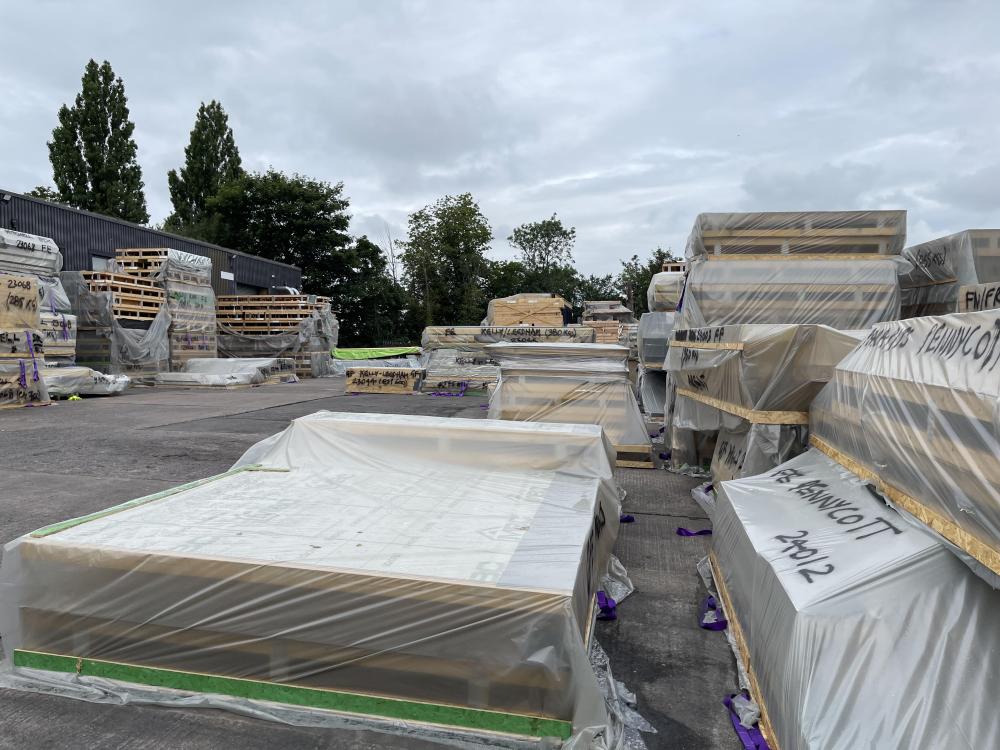
A couple of weekends ago, my wife and I spent some time at the MBC factory and got to ask some questions of the team there. There were quite a few different people there; sales, design, windows, even Kevin Blair, son of the founder Joe Blair, who took us on part of the factory tour. We were there for over 2 hours, including a 1-1 session where I covered any outstanding questions I still had. It was an informative day and great to see how they've developed and expanded. Seems they just keep buying more and more space whenever any adjacent units become available! Great session and I took a lot of photos. A couple are attached but the remainder can all be found at https://www.dropbox.com/scl/fo/11i21jn1n6ko1uclcbrm7/AMtb-Jt48ljlTc0lPfiQeKk?rlkey=f08zqofj4l1qllgrxphtnawtc&st=uxhdqk71&dl=0 They seem quite busy and are seeing an increase in demand from people building lots of houses, especially in the social sector where they explained it is easier for a company to secure any additional funding required for Passivhaus standards as they can offset it against potential future requirements to help with heating costs etc. From a pure materials perspective, they acknowledged the challenges of Brexit, COVID-19, etc. and how that initially affected costs and quotes quite significantly but things are a little more settled now and as they expand, they're able to secure pricing for longer periods as they're able to commit to larger orders. They're also sourcing from multiple suppliers and multiple regions as costs and availability flex due to growing seasons etc. Process Pre-start meeting - they discuss design guidelines and decisions with you and get your architectural drawings if available. MBC redo the designs in their software, including the 3D roof design. This takes about 4 days and they can then be provided back to your architect (if applicable) to update anything that did not translate from your original vision into an engineering specification. General arrangement - that design is then turned into the build instructions for the factory. The full structural engineering package is provided by Adept who MBC have been working with for over 22 years. They have 20+ engineers. Once erected - cut all your holes for service penetrations etc. and then MBC will come back to tape etc. and provide their full airtight package. These teams are all employed by MBC so are well versed in airtight requirements. PHPP - standard MBC timber-frame features are available for PHPP modelling, but they don't do any modelling themselves; you'll need someone to do that. Building Regulations - MBC don't do building regulations drawings/documentation so your architect or an architectural designer would need to do those. File ownership - MBC don't provide you with the source files from their various software packages but will do exports in various formats for you. General MBC Passive Foundation - they don't subcontract this (technically) as they own the company that does it. This is the same for the timber-frame insulation - they own that company too. You excavate the ground to (mostly) a 100kn bearing capacity and backfill with MOT Type 3. MBC then come along and puts in MOT Type 1, sand blinding, EPS etc. If you're putting UFH in the slab, you need to do this, MBC doesn't. Then comes the concrete. Site access issues - they can work around most issues. They've not been able to find some way to make it work. They send someone to the site to investigate constraints and then plan accordingly. What things influence higher cost - big open spaces, the weight of things (like green roofs) and features that require hidden fixings or complicated connection details. They have not seen any issues with mortgage companies or warranties concerning their timber-frame installations. Materials and Sources They source their materials from different places depending on the market and where things are growing. All timber is FSC sustainably harvested with documentation. They secure pricing with suppliers based on estimated cubed usage, and swallow any pricing fluctuations once a price for your timber-frame has been agreed. External walls and floors are treated. Some locations require additional treatments for things like longhorn beetles. Windows They supply and install Rationel and Velfac windows. Solarlux (generally aluminium) as a gap filler when there are requirements that can't be met by Rationel or Velfac. The Rationel windows are primarily timber/ali-clad with a larger profile, whereas the Velfac are composite, aluminium/timber and have thinner profiles. MBC are of course happy for you to choose windows from someone else so long as you use an installer that is manufacturer-approved and that they are installed to MBC airtightness specifications which they will provide. Choosing MBC to design and build the timber-frame and to install the windows can save some time in some situations; MBC will happily place the order for the windows based on their design drawings. Some window companies will want a structure to measure against unless you are willing to take the risk of measurements being incorrect. Furthermore, there is no possibility of the timber-frame supplier and the window supplier blaming each other for any issues if MBC does both! Installation of windows is by NKG as sole installers. They are very experienced with housing and deliver consistently good quality installs. Their window systems manager, Jason, was at Rationel for 15 years, was an installer himself for 3.5 years, and before that was a carpenter. How can you save money with windows? Bifolds are more expensive than sliders. The taller and wider the glass, the more expensive it gets, large spans especially. Openers are more expensive, but only marginally so in the grand scheme of things.
-
Our brief to our architects says we want a Passivhaus building but not to the extent that it constrains the way we want to live in any way. If we can achieve both, bargain! But if not, the ability to certify to Passivhaus criteria will be the element that we flex, not how we want to live. I'm in two minds about whether to certify it if we do meet all requirements. I like the idea of being able to say it is certified, but I'm not sure the expense is really worth it. As @joe90 mentions, I think any future occupants will be more interested in how little it costs to run and how much energy it produces rather than a certificate. I think this will be particularly interesting when (if) the Future Homes Standard and any requirement like that in Scotland ever makes its way to England regarding "Passivhaus-like" requirements...
-
We looked at it for our current en-suite remodel. Suppliers wouldn't provide a warranty for using it on the timber floor and shower tray. They seem happy if you're going on to a solid wall or floor, but it just doesn't seem to cope well with any movement and they said we could end up with micro-fractures that might leak. As it's a wetroom, we're back to tiles too.
-
Managing building control in a non-standard way…
garrymartin replied to Omnibuswoman's topic in Building Regulations
I'm with Dave on this one. Your limited funds will be stretched even further by doing work like this in sections. It's much easier (and less prone to mistakes) for a plumber or electrician to blast through the whole project rather than doing it in stages. If it's a question of the limited funds relating to right now, I'd be more inclined to pause this type of work until you do have the funds to complete it. The idea of completing one or two rooms at a time isn't a bad one per se, but you need to think hard about the things that should be done in those rooms, and the things that can be left until later. In our architects brief, we're very clear that we'd rather get all the structure and facilities in place within our budget, even if that means we have to come back to them in the future when funds allow to complete rooms - the sauna and bathroom are probably two good examples here. We know we want them, but they're not essential immediately (en-suites obviously). We just need to make sure we have the space and that the key infrastructure (i.e. electrics and plumbing) are in place and we'll then "finish" them at a later date if we don't have the funds available to do it along with the main build. -
Change of mind re planning approval for double garage/annex
garrymartin replied to Deejay's topic in Planning Permission
Yes. You a) don't actually need to own the land you apply for planning permission on, you just need to notify the owner and b) don't need anything to be split from a deeds perspective at the stage of applying for planning. Do remember though that your "red line" should show the land you intend to develop *including* any land required to get you to the highway, and that you should "blue line" any other land that is owned by the same owner as the red line. For example, my red/blue line map is attached. I don't own White Lodge, but my plot will be split for their garden. I have notified the owners, of course. Location Plan including Access from Highway.pdf -
Just Finished - Thanks for all the Help and Advice !
garrymartin replied to bob the builder 2's topic in Introduce Yourself
Couldn't agree more. Stunning. Great work Bob. Have you ever discussed the project details and financials on Buildhub? Would be great to understand a little more about the project, layout, size, and build costs -
I have an "acquaintance" who works for one of the large developers and has responsibility for finding sites and managing the site portfolio. They typically sit on land where they know developing it would not provide the maximum return on their investment; the future value conundrum. They only have so much capacity to build new housing, and certainly couldn't start on all the land they have available to them even if they were able to get permission for all of it. So they only bring forward land when the circumstances suit them, when precedents have been set in local appeals or in case law challenging appeals that mean they stand a good chance of getting permission when they might not have previously, or where the planning laws change in their favour. The problem with that is that there may be a wide range of other "developers" that might be treated more favourably from a planning perspective, who just don't have access to that land that the large developers are sitting on. So a community housing scheme or a group of self-builders might be able to get permission as under-served groups where the large developer wouldn't, but they just can't access the land. So here's my idea. If you are a developer, you should still be allowed to buy land, and can keep the land you have, but you must either turn that into deliverable housing within 5 years or you must relinquish the future rights for your company to develop the land for housing, and you must offer it for sale at the price you paid for it plus reasonable costs.
-
Disappointed in the thread title; thought you were pulling off a heist... 🤣