garrymartin
-
Posts
552 -
Joined
-
Last visited
-
Days Won
7
Everything posted by garrymartin
-

'How to sort it tips' from joiners please?
garrymartin replied to saveasteading's topic in Barn Conversions
Perfect solution! -
Percentage pricing seems to be much more a commercial building thing than a residential dwelling.
-
Depends on how good they are, what their qualifications are, and where they typically work (and on what). Usually something in the region of £150 an hour and up from there. You'll see some threads on here where people have paid £75 an hour (£4000 total) and some where people have paid double that but in different regions. Don't make the mistake of thinking about salaried hourly rates - they are not fully loaded costs for businesses and typically you'd have to at least double them to get anywhere near and then have to assume that you won't be getting that hourly rate for 40 hours a week as you'll have other things you need to do. I'd say £150 an hour would be difficult to argue with.
-
As you can see from my previous messages, our fees will be more than that. It's difficult to do direct comparisons because we don't know the details of your scheme, but it sounds to me like you understand the value you are looking for and what an architect will provide. Like us, you don't have a clear picture of the design. We have information about how we want to live, and the rooms we want along with their interaction with each other, but we are leaving it to our architects to do the hard work of interpreting those requirements and coming up with a design that makes the most of the plot and is sensitive to the surrounding area (we have three listed properties nearby). Our quote also creating some options in the early stages, and also includes all the PH design and modelling. It isn't just the drawings, it's a Design and Access Statement for planning too as well as a bunch of other stuff. @Dave Jones We're going to have to agree to disagree on your view of architects and the value they can bring I'm afraid. Personally, I'd say it's a reasonable quote. I don't have BR drawings experience yet, but that does feel a little on the high side though.
-
The forum search isn't the best. Here, try this https://www.google.co.uk/search?q=aerobarrier+site%3Aforum.buildhub.org.uk
-
Can ChatGPT secure me planning permission?
garrymartin replied to jayc89's topic in Planning Permission
I've had it reference case law that doesn't exist, detail planning appeals that never happened, and suggest book titles with authors for books that don't exist amongst others. It's a fantastic tool, but as @JohnMo notes, you should check absolutely everything. With the book titles, I let it know it had made them up and it apologised and then gave me another five make-believe titles! -
'How to sort it tips' from joiners please?
garrymartin replied to saveasteading's topic in Barn Conversions
Do you have a photo? It sounds like you might be able to put a screw in so that the head is exposed, then use your claw hammer to lever the stud back into place before securing with more screws, but a photo would really help to explain the best options. -
As an example, excluding any research time, my Statement of Case total editing time was 297 minutes. It contained 9 pages of text, with one half-page diagram.
-
It's going to be subjective based on what you needed to do to put your appeal together. What applications did you use to create the documents? You can often look at the properties to see how many hours were spent editing documents. How much time went into researching any case law or previous examples that you used in your case? You might try looking at your browser history to figure out what days you visited various sites and could then estimate a time for each day based on your research. Did you look at any other appeals? Did they have costs awarded? What were the costs? You need to be able to demonstrate how you got to a number, not just what the number is. Don't be afraid of valuing your time. You could have been doing other things, earning other income, missing out on opportunities etc. It all adds up.
-
Doesn't the WC door need to open outward for Building Regulations (Approved Document M)?
-
Electricity pole relocation
garrymartin replied to flanagaj's topic in New House & Self Build Design
Dear [Electricity Company Name], I hope this message finds you well. I am writing regarding the electricity pole currently situated on my property at [Your Address]. While I do not have any objection to having the pole on my land, its current location poses some challenges for me. Given the circumstances, I would like to explore options for relocating the pole to a more suitable position. However, I am currently unable to cover the costs associated with this. I understand that, under the terms of our agreement, I have the option to provide 12 months' notice for the removal of the pole altogether. I would prefer not to take this route, as I value the service provided and would rather find a mutually agreeable solution. Could you please advise on how we might proceed with relocating the pole at no cost to me? I would greatly appreciate any assistance or guidance you can offer. Thank you for your attention to this matter. I look forward to your response. Best regards, [Your Full Name] [Your Contact Information] -
Electricity pole relocation
garrymartin replied to flanagaj's topic in New House & Self Build Design
Superficially, and IANAL, it looks like you *may* be able to give 12 months' notice requesting the removal of the pole/equipment. They could apply for a compulsory wayleave, but if you are within your legal rights to ask for it to be removed, I'm sure they'd rather work with you to find a solution and would need to demonstrate that they had done this if they did apply for a compulsory wayleave. -
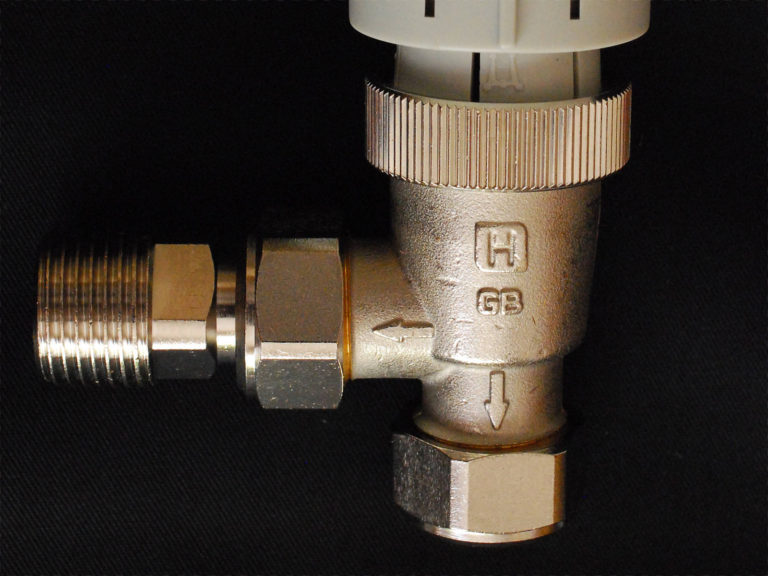
Not all valves are bi-directional. Check the valve to see if it has arrows going in both directions. Also, some radiators have flow diverters so will state which side the flow should be on. Check that too.
-
Electricity pole relocation
garrymartin replied to flanagaj's topic in New House & Self Build Design
100% The Electricity Act of 1989 required utility companies to secure their wayleaves, so if there was any issue with the legality of the 1936 wayleave, that should have been addressed at that time. If the DNO can't produce the legal documentation for the wayleave, and the associated plan (if applicable) then they have two options - apply under their compulsory wayleave powers to grant/renew it, or move the pole for you, potentially at their expense in return for you agreeing a new wayleave. Just keep pushing for the actual wayleave legal documentation or tell them in its absence, you want the pole removed. If they can't produce the evidence, they'll usually find some way to work with you to maintain the access they need. -
Electricity pole relocation
garrymartin replied to flanagaj's topic in New House & Self Build Design
Generally, no. Ask to see a copy of the wayleave and the associated plan. Post it here if you want some scrutiny but it's unlikely you'll be able to get it moved to someone else's land. It doesn't matter that part of the land has been sold; the wayleave would still be in effect for anything covered by the plan area. https://www.gov.uk/guidance/guidance-on-access-agreements "The difference between these forms of agreement had particular importance in the past, because the relevant form determined whether any subsequent purchaser of the land would be ‘bound’ (required to uphold) rights granted under the agreement and what Land Registry requirements applied. The Code reforms introduced in 2017 dealt with this issue. Regardless of form of code agreement (wayleave or easement), a successors in title (subsequent owners or purchasers) remain bound to code rights previously agreed." Our proposed plot has a wayleave in place for underground telephone cables and an easement for a 3" PVC water main. The terms of both allow us to request that they be moved (or removed), but the associated costs would be ours to bear. We can also only have them moved to land in our ownership - I can't request that they move them to someone else's land. Obviously, if someone else gives permission, then that is a different matter, but you would still be responsible for all costs. -
Smart Meters and Preparation for Eventual EV Charger
garrymartin replied to MJNewton's topic in Consumer Units, RCDs, MCBOs
Yes. Get an isolator if you can. Makes any future changes so much easier. Some companies will do this for nothing; others make a charge. Regardless, it isn't a massive expense and is worth it, but make sure you pre-arrange it otherwise the meter fitter may not a) have the parts and b) have the time to do it. -
Electricity pole relocation
garrymartin replied to flanagaj's topic in New House & Self Build Design
Wayleaves aren't necessarily tied to the owner. Conor has the right approach. Check your legal pack as it should be mentioned. Get a copy of the title for your plot and check for anything in there as it may be registered against the land or may be a specific easement. If there's nothing in your legal pack or title for the plot, ask SSE to provide the wayleave and then, assuming one exists, you'll be able to see the terms and decide how to proceed. -
To add to JohnMo's comment, it's generally because in a commercial context (think hotel) different rooms might want to be cooled or warmed independently. By having four pipes / two coils, the entire complex can maintain a cooling pipe run and a heating pipe run, and then the individual units can be set to either provide heating or cooling dependant on the occupant wishes by using either the heating pipes/coil or the cooling pipes/coil. As he mentions, with a single ASHP, you can only either cool or heat - you can't do both at the same time. The following text is in my notes by way of example; "Two-pipe systems are less flexible than a four-pipe system. The entire building is in either heating mode or cooling mode. The changeover from heating to cooling or vice versa is made manually, and there is always the possibility that unusual weather patterns might cause some occupant discomfort. Overall, the majority of the buildings on campus are on a two-pipe system. This means when winter starts to set in, the two-pipe system must be switched from cold water to hot water. If the weather changes and it warms up for a few days, the occupants of a two-pipe building could become uncomfortable. The building system could then be switched back to cold water, but the manual switchover requires a couple of days. By the time this is accomplished, the weather could cool off again. So as you can see, when it comes to heating and cooling a space with a two-pipe system, especially in our fluctuating Kentucky weather, it is a guessing game."
-
If it's Dorset Council, then the following has all the links to the information you need. Surprised highways didn't provide this information in their original response to be honest. https://www.dorsetcouncil.gov.uk/w/highway-development-control-advice
-
Councils pause local plans amidst NPPF uncertainty
garrymartin replied to Alan Ambrose's topic in Housing Politics
-
200+ metre utility connection
garrymartin replied to Oz07's topic in General Self Build & DIY Discussion
Top tip there. The drawstring in ducting is always to pull your own suitable drawstring through. Very rarely suitable for actually pulling cable. I wouldn't advise that. Get a proper cable pulling lubricant; it will be well worth the small expense. Ideal Yellow or Ideal AquaGel II are great for pulling cable. -
Generally, any vehicular crossing point cannot be within 10m of the corner of a street, 15m of the corner of a more major road.
-
It's weird that if they are policy documents, they are not publicly available... You are right though, if you'd just mentioned a document by name but hadn't provided it, and relied on it to make your case, I doubt the Inspector would ask you for it now as technically it wouldn't have been available to the LPA if it isn't public. It's sort of the same reason why you can only respond to the LPA statement of case and can't introduce anything new at that point otherwise you'd end up going around in circles with each new piece of evidence. It does sound strange. Did you have access to the policies mentioned at the point of appeal?
-
(By the way, it will be 14W/m2 and not 14kW/m2. I'm guessing you know that anyway, but just for anyone else who may be reading). Quick thought, is this perhaps a design with large vaulted, double-height spaces? What's the usable m2?