garrymartin
-
Posts
552 -
Joined
-
Last visited
-
Days Won
7
Everything posted by garrymartin
-
 Click is a Scolmore brand https://scolmore.com/products/type-a-c-usb-sockets
 -
Yes, USB-C generally charges much faster than USB-A, although it really depends on what you are charging, the cable you are using, and the capability of whatever sits beyond the actual port. Some USB-C ports with Power Delivery (PD) can pump out 240W compared to a USB-A port rated at 2.4A pushing out just 12W.
-
@-rick- has some great advice there, and I would echo every comment, especially those related to making an electrician's job just a little more difficult! Connector types and abilities have changed greatly in a relatively short space of time, so you don't want something that might be obsolete in a couple of years, or not as performant as you'd like. I'd also add that cables and connectors are more prone to damage when they come out of a socket at a 90-degree angle, and it's also difficult to push furniture back against them (as an example). I'd much prefer a plug-in adapter where the cable exits at 180-degrees below the outlet. Hope I've explained that correctly! Like in this image...

-
Passiv house costs.
garrymartin replied to Oz07's topic in Energy Efficient & Sustainable Design Concepts
It's in Part B somewhere, but I think it's 100mm not 150mm. You can also meet the requirement by having the floor slope away from the threshold, so it isn't mandatory. It's something to do with preventing diesel/petrol spills migrating from the garage into the house. EDIT - I decided to find it... Section 5.7
-
Passiv house costs.
garrymartin replied to Oz07's topic in Energy Efficient & Sustainable Design Concepts
Spot on. Passivhaus is only of near-equal cost parity if the building was designed to be Passivhaus from the beginning, including principles of form factor. If someone has designed a home, and then tries to make it Passivhaus, then you are almost in retrofit territory, which of course costs more. I think you can do one-offs too at significantly less than 30% increase in costs, but as above, you need to design from the outset. The garage door is a great example earlier in this thread. It looks like the architect/designer didn't consider this at the outset, and possibly made the fire *and* airtightness barrier/boundary the same, causing the requirement for an airtight and thermally efficient fire door, which was very costly. Separating those elements (fire/airtight) at the design stage may have resulted in signficantly less cost. It may not have been possible given site or design constraints, but just one example. -
Passiv house costs.
garrymartin replied to Oz07's topic in Energy Efficient & Sustainable Design Concepts
It very much depends on form-factor (easier to make savings on apartment blocks than one-off detached houses), but it is nowhere near 30%, and in some cases has been shown to deliver savings. And of course it also depends on whether you are certifying or just building to the same standards. This article https://www.coldwellsbuild.com/journal/are-passivhaus-homes-more-expensive-to-build has some better links, including to an Exeter City Council report showing how they have continued to reduce costs over the years - "Due to Exeter’s long-term commitment to Passivhaus they have developed unique expertise and experience which has enabled them to refine their delivery models and processes to drive down the cost of Passivhaus. This is reflected in the reduction in the cost premium for Passivhaus from 20 per cent in 2009 to 4 per cent cost saving, pre-covid for apartments up to 4 storeys based on the cost plans against Building Regulation compliant low-rise apartments." https://www.local.gov.uk/case-studies/exeter-city-council-passivhaus-exeter -
We have a very similar setup for switches and sockets. The only thing I can add from experience is to think about the bedside tables you are going to use (if any). The shelf of ours is right at the height of the sockets, so it means you can't fully push the cabinet back to the wall, and you have to pull it out to plug and unplug items. Small thing but annoying nonetheless!
-
Creating a sample is always the best way. You can then also get approval from the other half before manufacture! 😉 What you might also want to consider, given that it is custom and if you feel your woodworking skills are up to it, is stopping the grooves short where your sockets will go, giving yourself a 20-30mm perimeter of the solid wood. Something else to play with on a sample perhaps?
-
Help me identify this pipe and fitting please.
garrymartin replied to ProDave's topic in General Plumbing
Not sure why I ended up reading the Toolstation reviews, but if you are attempting something @ProDave just be aware that one of the reviews says "Designed for single use so not ideal. Can be disassembled to enable reuse with a little gentle persuasion." Might be wise to use the coupler approach if you do anything rather than try to disassemble the elbow... -
Yes. Perfectly OK for 3 and very easy for your electrician to make it 4 if you wanted.
-
Brickwork restoration & re-pointing
garrymartin replied to Ben100's topic in Bricklaying, Blockwork & Mortar
Was the roof height raised to get more internal height for ground and first floors, and the windows moved up? Has it been checked out, structurally? -
Bonus edition - Garden landscaping
garrymartin commented on Benpointer's blog entry in Contemporary build in north Dorset
This is just getting ridiculous now. Don't you know you're suppposed to have disaster stories, compromises, rogue workers, and budget failures? 😉 You and you're wife must be so happy and proud - deservedly so; you've done an amazing job. Love the terraces, and as @MikeSharp01 notes, we at least deserve an update once the planting has settled in, just so we can be a little more jealous than we already are. 🤣 Love it! ❤️- 12 comments
-
- 4
-

-
- landscaping
- garden
- (and 2 more)
-
This post came up whilst I was doing some research for my Timber Frame notes after @Great_scot_selfbuild mentioned Broadaxe. Frame Technologies aren't just based in the same location, they appear to be based in the same yard! All the signage on Google Maps Street View says Frame Technologies, but the location also shows Broadaxe Timber Frames and Firth Construction on the general map and it is the location both companies list as their address (Broadaxe and Firth). And yet Frame Technologies and Broadaxe Timber Frames do not appear to share directors or any form of ownership of one another. Not sure whether anyone else has information on the links between the two companies? Perhaps @Great_scot_selfbuild?
-
Does the UK really have the most expensive electricity in Europe?
garrymartin replied to SteamyTea's topic in Boffin's Corner
Looks like it should have been millions not billions... "Compensation costs for the curtailment of renewable energy fell by around 22 percent to 435 million euros in 2025, compared to the previous year (€554 million in 2024), showed a response from the German economy ministry to a question by Left Party parliamentarian Dietmar Bartsch, seen by CLEW." https://www.cleanenergywire.org/news/renewable-curtailment-compensation-costs-germany-decrease-22-2025 and https://www.sciencedirect.com/science/article/pii/S1364032118300091. The second link is interesting as it compares the UK and Germany. -
I bought a spare handle set when changing all the handles on the doors in our house. The previous handles had all been on for twentyish years and I'd never had to replace one. Less than a year in with the new ones and a bunch of stuff fell over in the garage, against the handle, and bent it badly. Now, the handles are still available to buy, but the moral of the story is these things do happen sometimes, and it's a small price to pay for a little peace of mind. I have a spare handle set (or more accurately, one side of a door now!), spare catches, a couple of spare hinges, a spare LED spot for the ones used across the whole of downstairs, and a few other bits and pieces. Never had to use anything other than a handle yet, and I'm sure some things like the hinges wouldn't be really difficult to replace, even if I had to do all three per door, but it's just a lot easier and my mind is a lot more peaceful knowing I have some spares to hand to fix issues almost immediately. I do make a habit of very meticulously keeping things like part numbers and supplier information when I do projects, so I don't always keep duplicates of everything, more so the things that I'd feel forced to change as a set if one failed and I couldn't source an identical replacement. I've thought the same thing about larger items and don't know where I'll end up for some of those in the future. Solar panels are a good example. Do you buy an extra one just in case one fails in an array of eight identical panels or end up with one looking slightly different to all the others if you have to replace it with something different because they are no longer available?
-
You asked about replacing and then talk about repairing and covering. They are different things. If you replace your tarmac drive, then you need to do so with permeable material or meet the other criteria. If you repair your tarmac drive, it is not new or being replaced. If you cover it with something else, it is not new or being replaced. You don't have to do anything with existing drives, otherwise the whole country would have needed to rip their drives up and replace them.
-
You need to remember that the valuation of the plot would likely have been made by calculating all sorts of variables in a standard manner, working backwards from the market value of a finished home. What you paid for the plot doesn't necessarily equate to the calculated value of the plot, especially when self-builders are involved. The plot may be worth more to a self-builder (and to you) than it will be worth to a small developer, but the mortgage company valuation has to account for the lower value when they are looking at potential recovery.
-
Unfortunately, yes, it does. New or replacement. https://www.gov.uk/government/publications/permeable-surfacing-of-front-gardens-guidance/guidance-on-the-permeable-surfacing-of-front-gardens
-
If the runoff can be managed on-site naturally, then the surface does not have to be permeable to be SUDS compliant. There should be lots of options that don't require you to rip it up.
-
Ashp, ufh and fancoils. Help!
garrymartin replied to lizzieuk1's topic in Air Source Heat Pumps (ASHP)
It was mentioned at the start of the thread that they might be looking at multi-room fan coils. I presume the ducting runs were discussed in relation to that device. The conversation then seemed to move on to single-room devices due to the potential complexity and lack of design experience. -
Absolutely possible. You can pressure test individual loops, or you can connect all the loops to each other and just run one pressure test. The manifold does not need to be in place to test the pipework.
-
No, it does not sound correct. New drives in front gardens over 5m2 need to be permeable or discharge to a permeable area, but that is only to avoid the need for planning permission. So, two questions. What did your planning approval say about the drive surface (if anything), and does the surface water from it discharge to a permeable area, or can it be made to? It's all about flooding and reducing pressure on public drains, so if that is not applicable, it's unlikely you'll need to change anything.
-
Difficult to tell from the angle of the photo, and you may need to bend the pipe to get round the vertical stud, but the first logical thing to do (as you have one leg capped and not in use) would be to use that leg to feed the connection through the wall (bit of extra pipe required), and put the cap on the vertical rising leg. That would remove three 90 degree bends from the flow going through the wall and is something you could do yourself with push-fit fittings.
-
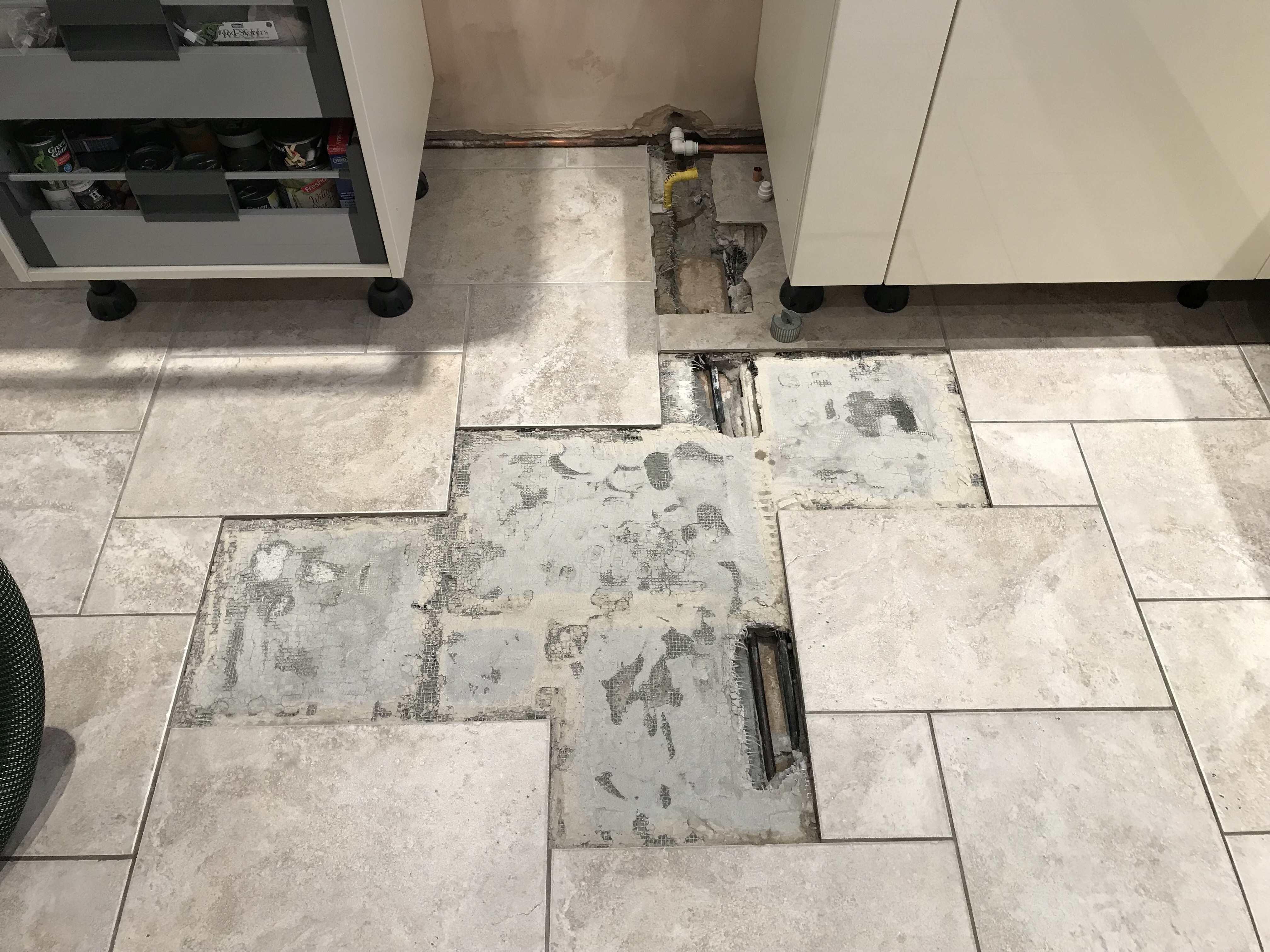
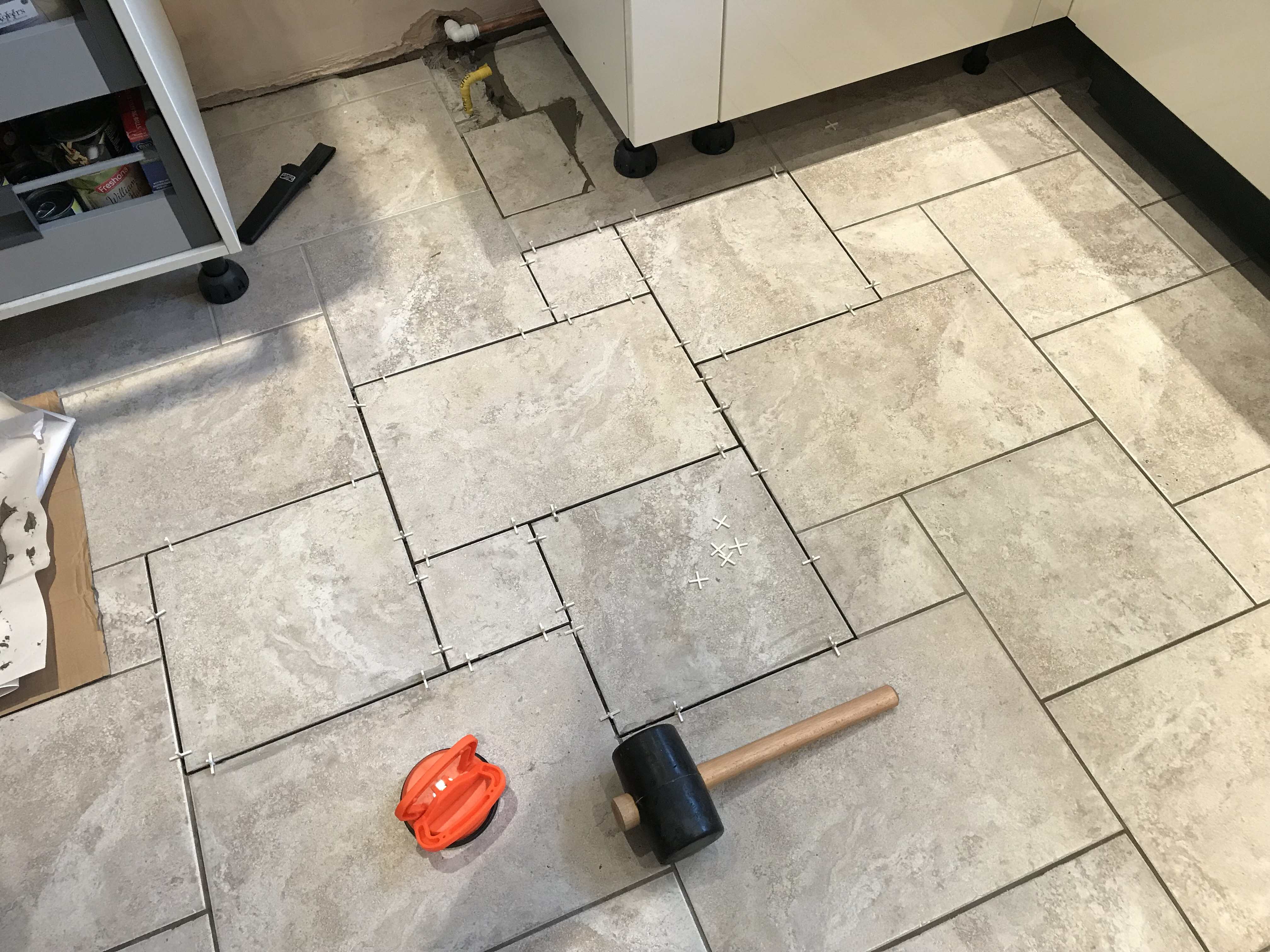
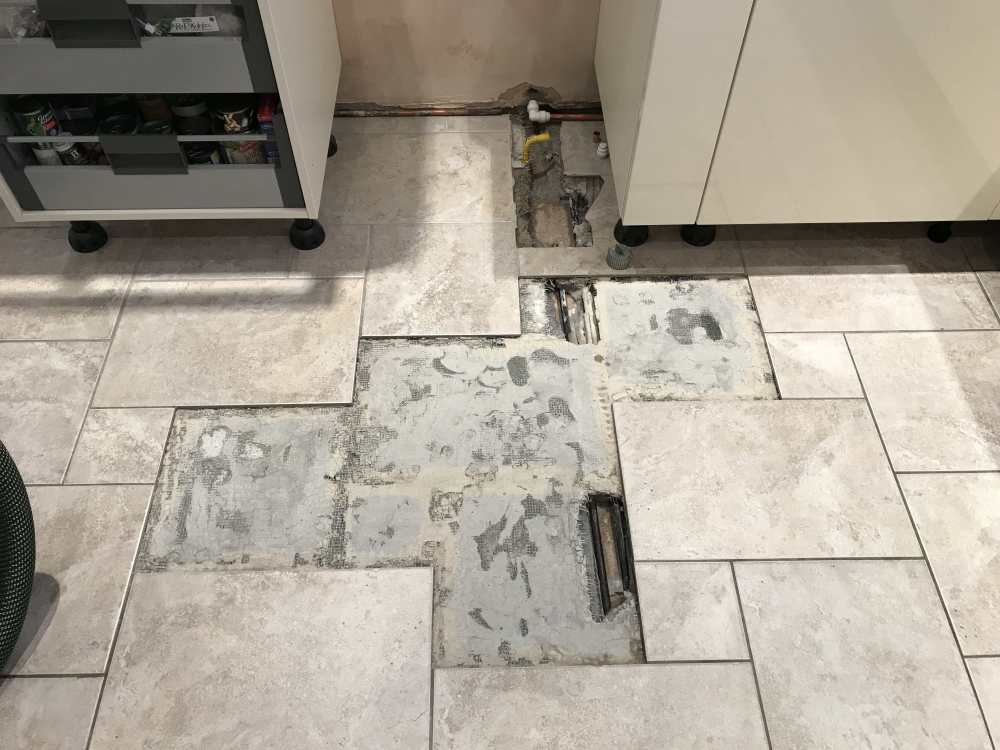
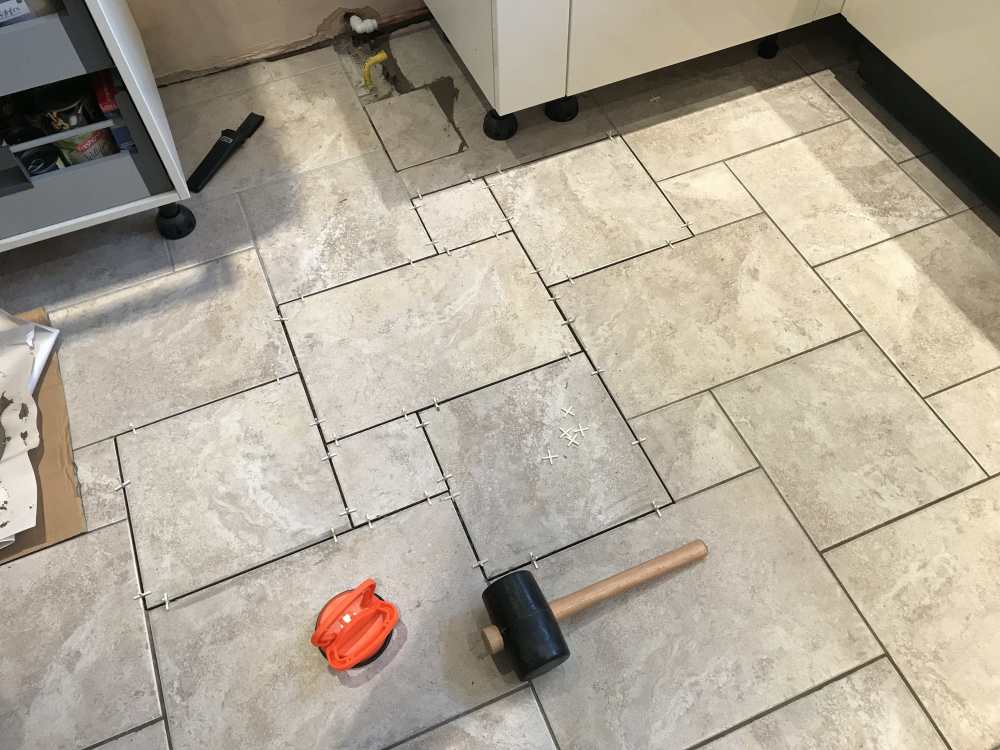
In real life, copper pipes under the floor might spring a leak (pinholes in bad copper that had been down for 20+ years and eventually corroded through) and you might need to dig stuff up to find the leak and effect a repair...
-
Bathroom wet UFH floor buildup
garrymartin replied to Super_Paulie's topic in Bathrooms, Ensuites & Wetrooms
Not for this particular topic, but for future reference @Nickfromwales, can I assume that where you are struggling with floor height differences, you could either rip the P5 up and ply directly to the joists, or you could put ply down instead of P5 for tiled areas in the first place?