


Alan Ambrose
-
Posts
3392 -
Joined
-
Last visited
-
Days Won
15
Everything posted by Alan Ambrose
-
LPAs playing around with 'validation' timescales?
Alan Ambrose replied to Alan Ambrose's topic in Planning Permission
@DevilDamo - by all means if you don't like my contributions, feel free to ignore them. There may even be a forum 'block member' option to help achieve that objective. In other news - the LPA admitted there were no application naming rules (actually there is one - the application name needs to be somewhat accurate) but the excuse was offered by the LPA "we just like to try and make them as short as possible, especially when they have to be advertised in the press". I think that means they were embrassed by the application name. The LPA also confirmed they would backdate the validation date to the application date. I just realised re the 8-week rule, that if you're the LPA, the best use of planning resource to optimise the stats is to get all the easy/quick-to-process applications done within 8-weeks (7.9 weeks is fine), then leave any that miss the cut-off on the back burner for as long as you care to or until some spare resource becomes available. Or until you become scared that you're going to hit the 70% special measures cutoff. But even then, you want to completely focus your resources on the 'can be done within 8-weeks' applications. Something like this distribution (below). If I was running the LPA, I might even issue red and green stickers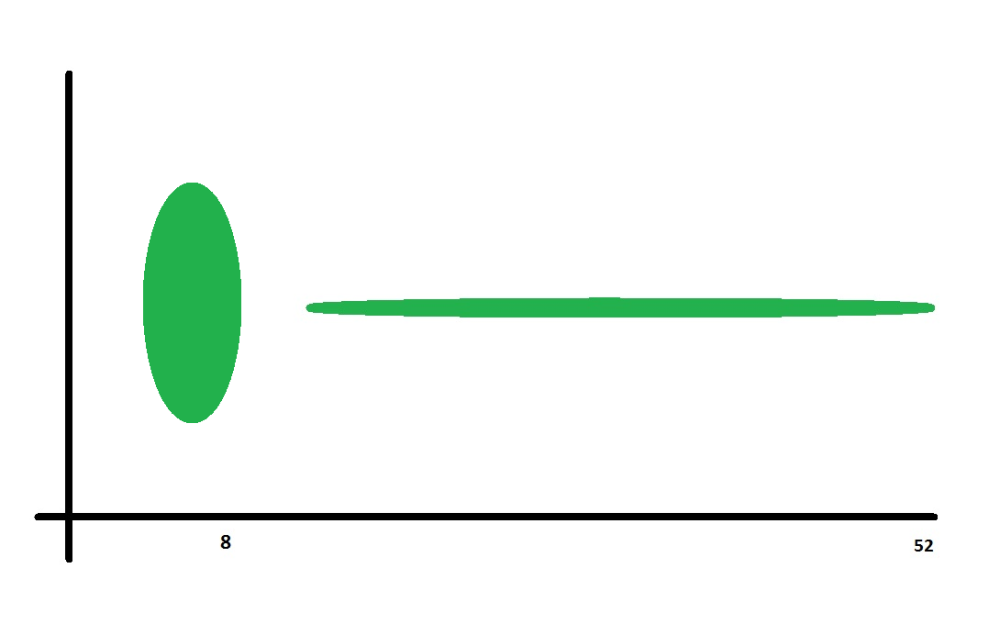
-
>>> Good job i did delay it. Yeah, sometimes procrastination is by far the smartest option.
-
I have a variation: Figure out a job, measure up, consider options, choose parts and materials, find cheapest supplier that has items in stock, get ready to order... Get distracted by something more urgent, then return to job sometimes months, sometimes years later. Look for notes on job. Realise I didn't make any notes or I lost them. So ... start figuring out the job again, measure up, consider options, choose parts and materials, find cheapest supplier that has items in stock, etc etc You can keep this up for quite a number of cycles or until you don't need to do the job anymore.
-
Brilliant and innovative at the same time.
-
LPAs playing around with 'validation' timescales?
Alan Ambrose replied to Alan Ambrose's topic in Planning Permission
Many thanks for that clarification. -
For expense, probably gas unless you have lots of insulation underfloor. Some on here, add both, so that they can have pampered toes when it's a bit cool but not warm enough to have the boiler running.
-
Anyone seen this old electric UFH controller before?
Alan Ambrose replied to Alan Ambrose's topic in Underfloor Heating
Thanks for that, much appreciated. -
Anyone seen this old electric UFH controller before?
Alan Ambrose replied to Alan Ambrose's topic in Underfloor Heating
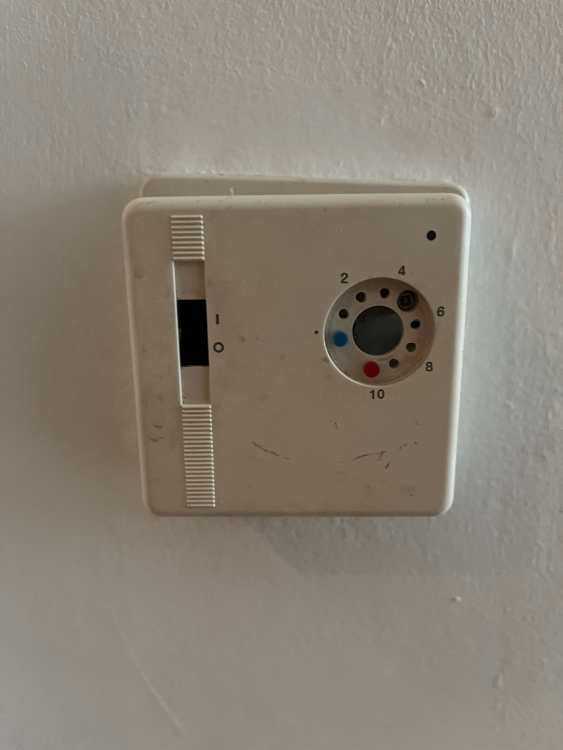
>>> thermostat Oh yeah, thought it was a timer, but the blue and red pips suggest temperature and it must have rotated the little 10K pot underneath. -
Anyone seen this old electric UFH controller before?
Alan Ambrose replied to Alan Ambrose's topic in Underfloor Heating
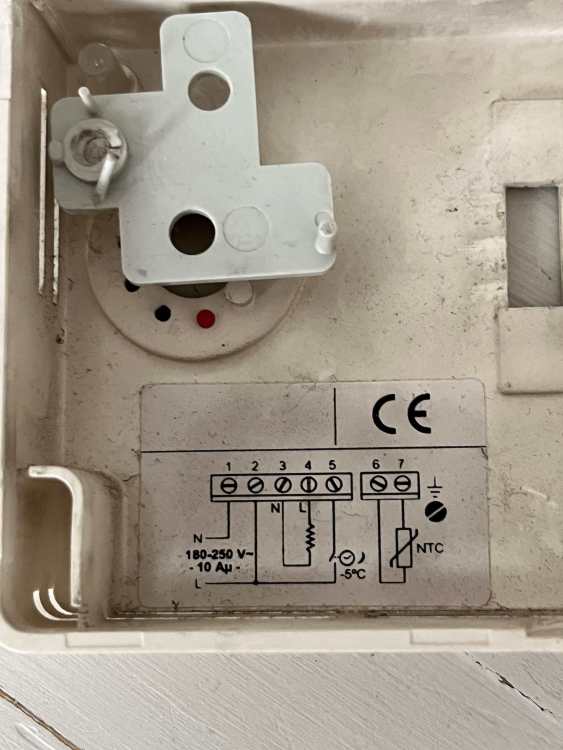
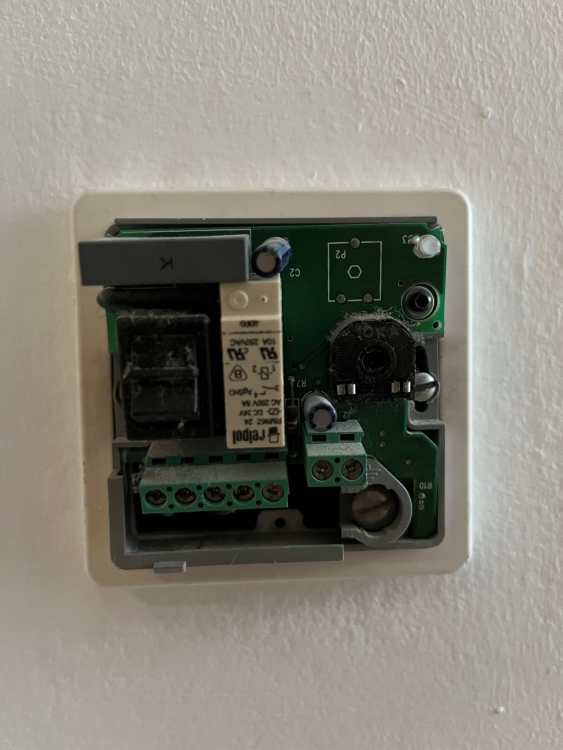
Yep, of course. BTW it does seem to work OK but the cover is a bit broken. Seems there an NTC connection available but not connected.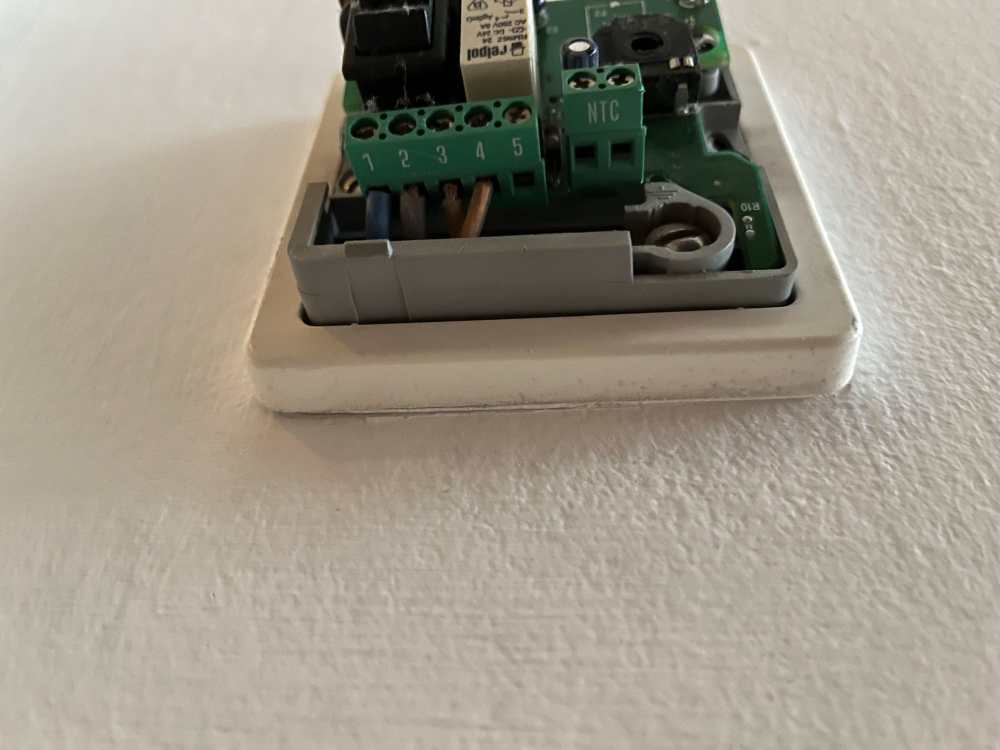
-
This needs replacing. Curiously is doesn't appear to use a thermistor for floor temperature sensing. Anyone seen that before - I haven't? The floor must be self-regulating temperature-wise?
-
LPAs playing around with 'validation' timescales?
Alan Ambrose replied to Alan Ambrose's topic in Planning Permission
>>> If you submitted an application through the Planning Portal and all required particulars were provided along with the correct fee then the council has to deem the validation date as the date they receive the application, not a date 1 or 2 weeks later when they have processed and registered the application. Is that an actual rule defined somewhere or a convention which might vary between LPAs? I just received this nonsense: Unfortunately your application is incomplete and cannot be registered as a valid planning application. To complete the application, please submit the following: 1) Please can you confirm you are happy with the change in description, from:- Change of dwelling design for xxxxxx and yyyyy- single storey design. Resubmission of zzzzz following Inspector's material approval of both the design and impact on the LB. This is a self build. to:- Construction of 1 no. single storey dwelling (revised design) There are some rules somewhere re application titles? On related subjects: Do LPAs generally receive all the docs from the Planning Portal and load them onto their own systems, or are they using a direct view onto the Portal's database? I see LPA's have similar but not identical web interfaces for applicants and local residents? Are they generally using one or two standard systems, have written them in-house, or or a view onto the Portal's database? And, do applicant's generally use the Portal's 'amend application' functionality or just send new docs to the LPA directly? BTW I see "TerraQuest Solutions Limited" run the Portal. It produced a £5.6m profit in its last accounts and is owned by "Mason Bidco Limited" which is owned by "MASON MIDCO LIMITED" that is owned by "Mason Holdco Limited" that is owned by "Mason Topco Limited" which has "0 active persons with significant control". These guys seem to regularly pop up all along the way: https://apsecapital.com/#team -
LPAs playing around with 'validation' timescales?
Alan Ambrose replied to Alan Ambrose's topic in Planning Permission
Well who knows. As I said, I guess small numbers of data points don't make a stat. My neighbour's v. straightforward and unopposed application took 53 weeks. Perhaps it's related to the case officer, situation (these are in a small hamlet) etc. Or just random. I guess, given the measuring stat's focus on 8 weeks, there's an LPA incentive to either get it done by then, or ... don't worry how long it takes, as they've missed the stat anyway. I guess there's a little additional incentive to get it done by (I think) 26 weeks, as that's when the refund kicks in. -
Remote DNO Kiosk, need cable to consumer unit indoors
Alan Ambrose replied to Post and beam's topic in Power Circuits
>>> More buying advice available if you want. Yes please. Do you have a go to manufacturer? It's not easy to tell which are good quality onlne. -
LPAs playing around with 'validation' timescales?
Alan Ambrose replied to Alan Ambrose's topic in Planning Permission
Yeah, I'm not a great fan of AI instead of human input. I think it's going to turn a lot of stuff (with some focused knowledge domain problems as an exception) into sometimes-hallucinating mush. >>> the council has to deem the validation date as the date they receive the application Thanks, I didn't know that. Is it possible the LPA raises some dumb validation queries e.g. 'there isn't a red line denoting the boundary' - 'here it is - see under the big red circle with the big red arrow pointing to it' (I've had that before) - and count from there? I'm suspicious as my LPA is in the bottom 20 nationwide i.e. a few points off 'special measures'. They might then have a strong incentive to manipulate their stats. I believe the inspectorate OTOH does mislead with their stats - 3 standard appeals I've tracked (2 mine, 1 my neighbour's) took 4 months before they reached 'validation'. If you read the small print, you'll see the inspectorate calculate their .gov stats from 'validation' until decision. Of course, 3 data points don't make a statistic - you would need an analysis of all or most of the inspectorate's data. -
LPAs playing around with 'validation' timescales?
Alan Ambrose replied to Alan Ambrose's topic in Planning Permission
Yes, but the question is how long the LPA leaves it in limbo, with the clock ‘not ticking’. -
Actually, you might check it out on hardwood yourself - thinking about it, I painted some oak dowels black and they’re flaking a bit. The softwood is good tho.
-
LPAs playing around with 'validation' timescales?
Alan Ambrose posted a topic in Planning Permission
I have direct experience of the planning inspectorate using very long 'validation' timescales e.g. 4 months. I suspect this is to manipulate the .gov stats. Is anybody having difficulties in the time for applications moving from the 'planning portal' to LPA systems? I have one at 1.5 weeks so far. -
Timber frame house (MMC), found mice in ceiling - advice needed
Alan Ambrose replied to Kuro507's topic in Timber Frame
I think you'll need a sum put aside by the vendor (or knocked off the price) for the two issues. Or delay until the vendor has fixed both. >>> Does anybody know how much water there could be between zero bar and 1 bar in a 4 bedroom central heating system? Water isn't compressible much: ... 4×10⁻⁵ per unit atmospheric pressure i.e. bar. So if your heating system has say 8 off 10l radiators, then that's 80 x 4 x 10^-5 x 1 ~= 3ml i.e. a small teaspoon worth. i.e. quite a small leak, say one that you might see dripping v slowly or detect slight wetness on a pipe. I might go around checking all the valves, pipes, bleed nipples and see whether any are at all damp. Of course, if the water is hot, it'll evaporate reasonably fast. If you like, you could get a plumber to pressure test the system in sections until they find the culprit. -
An old mate of mine designed radio & TV studios most of his working life. He said - 'there's no substitute for mass'. I'm thinking sand... I might also check out the sound booths that wind instrument players can practice in.
-
Bedec black barn paint. Like painting with yogurt. On softwood if you like (can come ready with basic stain/paint from factory) or hardwood if you want longer life (the wood, not you unfortunately). Then there's a bunch of grilled wood options - search the forum.
-
>>> I feel strongly about the Grenfell situation Yeah agree, Peter Apps's book is good btw. I'm not convinced that the CDM regs will stop Grenfell-style shenanigans though.
-
Read PD extension - measuring 'height'
Alan Ambrose replied to Alan Ambrose's topic in Planning Permission
@DevilDamo - so does that mean GL (a)? -
Yeah, agree with that.
-
Learning from our experience...
Alan Ambrose replied to Mulberry View's topic in General Self Build & DIY Discussion
Besides the window detailing, which are the other areas which are not resolved to your satisfaction? -
How to budget for development in London?
Alan Ambrose replied to sansserif's topic in Costing & Estimating
I don’t know what area or price range you’re looking in, but I’m finding (based on a small number of data points) crazy money slopping around in the capital, lazy agents and mediocre properties at high prices. There is a real sense that agents can get anything sold in a week. Buyers are often prepared to put down big cash quickly without knowing the most basic information about the property they’re buying. Not that you can’t make your economics work, but you’ll need to be both clever and careful.





