


Alan Ambrose
-
Posts
3392 -
Joined
-
Last visited
-
Days Won
15
Everything posted by Alan Ambrose
-
24v lighting circuit - good or bad idea?
Alan Ambrose replied to SBMS's topic in Networks, AV, Security & Automation
LEDs are current-driven devices (they’re diodes, of course, so ohm’s law doesn’t apply) - so as long as you have enough voltage greater than the forward voltage of the LED (string?), the voltage drop should be irrelevant. -
100m sounds more like a microwave link rather than wifi - I can’t imagine you would get the bandwidth you want with wifi. Maybe I’m wrong: https://www.broadbandbuyer.com/products/47399-ubiquiti-lbe-5ac-gen2-ptp-pnp/specifications/#content
-
Planning and appeals
Alan Ambrose replied to Gary Martin's topic in Lofts, Dormers & Loft Conversions
Similar, but I would maybe put in the NMA anyway to avoid the hassle of arguing with enforcement. The LPA know what’s going to happen if they refuse it. And congrats for standing your ground with them and winning. -
You may need some SUDS calcs. But I would poke around on your LPA’s portal and find a couple of applications with a similar condition and see how they discharged it. That’s a quick way to see what’s needed.
-
My better 1/2 resolved a problem with Wren recently. The quartz worktop suppliers nominated by Wren came up with a stupid layout with a cut right in the middle of one of the main surfaces - halfway between the hob and the sink FFS. Both the quartz guys and Wren argued vehemently that their solution was the only one that was possible. So she found a couple of other quartz companies that did an obviously sensible layout and she ordered from one of them. Only at that point, after she had proved that a cut in the middle of the worktop was unnecessary did Wren relent and credited her with the fees they had taken for the worktop. It probably helped that she was trained as a lawyer. Not their finest hour.
-
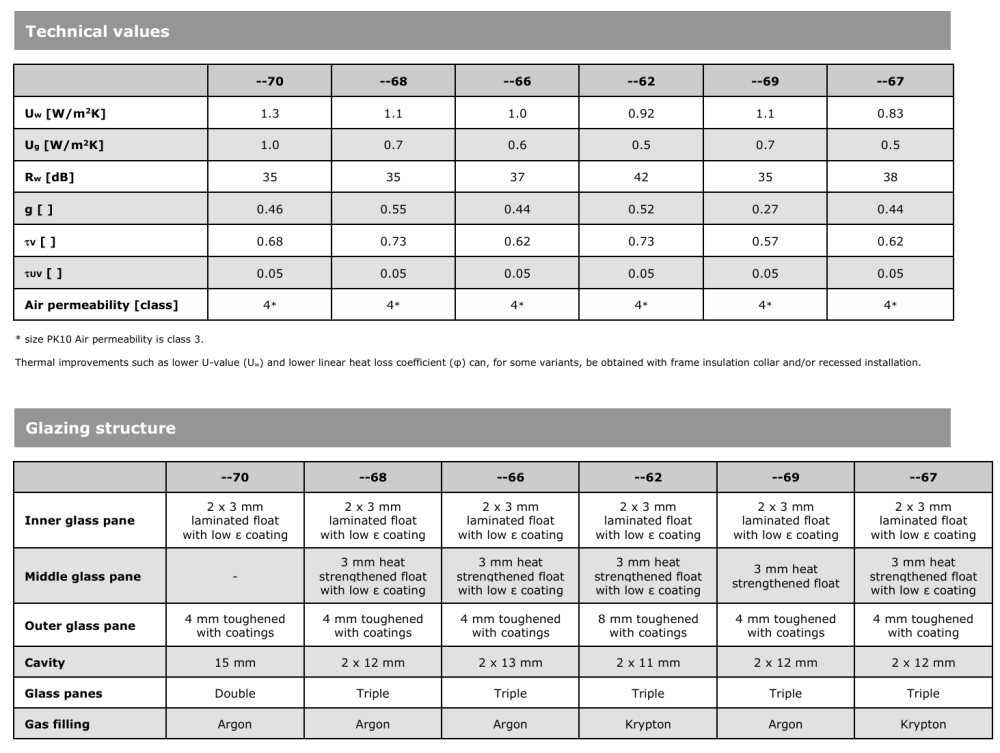
FYI I just found the g & U-value for Velux's various glazing options. It took me quite a while so I thought I would record it here: In short, the common triple-glazing option '66' is 0.6/.44, Slightly, better options are '62' & '67' at 0.5 and average g-values. '70' is the standard double glazed at U-value of 1.0. The 'heat protection' option '69' is an oddball with g-value (transmittance) of .27 but a not so great U-value of 0.7. This is from: Velux_GGU_Technical_Data_Sheet.pdf
-
Anyone have any thoughts / tips re extract & supply valve positions - particularly in a vaulted ceiling room? Is there an advantage / disadvantage in having the valves high up in the ceiling?
-
Is it possible to re-glaze Veluxes?
Alan Ambrose replied to Alan Ambrose's topic in Skylights & Roof Windows
>>> but it only resulted in a 0.1Uw decrease so probably isn’t worth the extra cost That's a very good point. I just did some quick variations in PHPP substituting different Velux glazing: '66' triple glazed over '70' double glazed gave a 1.5% reduction in annual heating requirement and a 0.4% reduction in solar gain (worth about £25 a year) ... but at a 44% (£724) capital cost increment. -
Nobody wants to touch my roof for solar and alternative location
Alan Ambrose replied to SimonD's topic in Photovoltaics (PV)
FYI ArtisanElectrics have a video where they put PV on the curved metal roof of their new office. Probably trapezoidal rather than standing seam. -
Suitable sun tunnels for a bathroom
Alan Ambrose replied to Smallholdertoo's topic in Skylights & Roof Windows
@Smallholdertoo I would be interested to hear how you got on with this - I'm looking for a similar thing. -
Is it time for another meet? You’re welcome at my plot although I’m a bit concerned that there’s nothing too interesting there. (There’s a slab, an oak frame, and we’ve just started roofing.) Failing that, a chinwag at a central-ish pub somewhere? Other suggestions?
-
Thanks Nick. I thought I would report back: I ended up ordering from Sheet Materials Supply and was pleasantly surprised when their marine plywood turned up. I was sure it would be Chinese, but it turned out to be Malaysian. AFAIK, Malaysia along with Gabon and a few other places in Africa produce the best of this kind of ply. So, I got a better deal than I expected.
-
I ask because I could do with one on-hand for the geometry, but triple-glazed seems to have a long lead time. I've seen that there are some double glaze replacement sealed units available, which sort of suggests this swap might be true.
-
PHPP is a 20-30 page spreadsheet. Pretty complicated but not indecipherable. The manual is pretty good and a good primer on relevant building physics. Highly suggest using PHPP if you’re not daunted by big spreadsheets. You may want to, or may have to (depending on your BCO) get it checked by a kosher PHPP ‘expert’. It will let you make tradeoffs on your design e.g. window schedule vs. overheating.
- 15 replies
-
- 2
-

-
- passivhaus
- technical
- (and 1 more)
-
Ah thanks - on metal roof a bit as described here: and
-
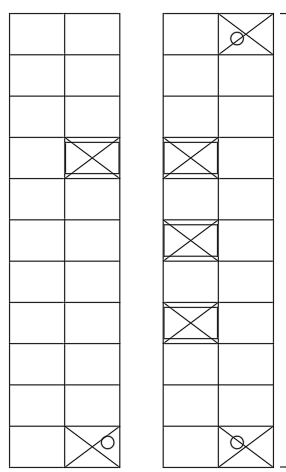
I'm monkeying around trying to line up some Velux MK-08s in a PV array - so the exact spacing is fairly important as the Veluxes will go in before the PV. The Renusol configurator defaults to a 24mm gap between PV panels. Does that sound about right?
-
A moan - the idiots delivered the wrong aggregate
Alan Ambrose replied to bmj1's topic in General Self Build & DIY Discussion
Fine -
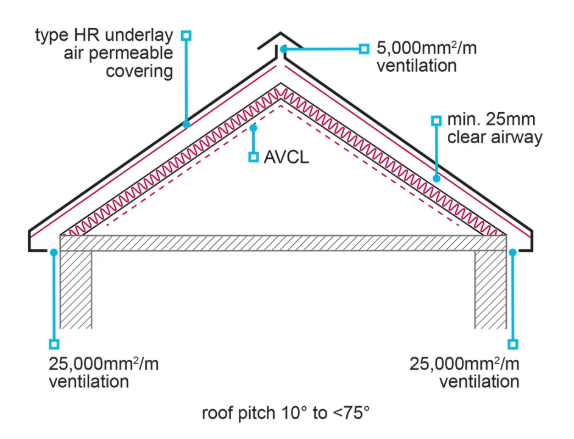
Thanks, but both BS 5250 and NHBC seem to just have prescriptions for the common stack-ups. Go, slightly off-piste...and you're on your own. And I was trying to understand the building physics rather than find a somewhat-relevant cookbook in the relevant standard. For instance NHBC says: NHBC: 7.2.15 Ventilation, vapour control and insulation - NHBC Standards 2025 NHBC Standards 2025 Where a Type LR underlay is fully supported on sarking sheets or boards which offer a high resistance to the passage of air or water vapour, such as plywood, OSB, chipboard, or tongue and grooved sarking boards, the Type LR underlay and sarking should be treated as a Type HR underlay, for roof ventilation purposes. ... and that's kind of what I've got.
-
A moan - the idiots delivered the wrong aggregate
Alan Ambrose replied to bmj1's topic in General Self Build & DIY Discussion
If it helps any we have had some MOT 3 with quite variable composition. Some was quite chunky, some had more fines than you would expect. I took it all and I think it'll work out OK in our application - which was a permeable driveway. I've seen no standing water since, so it must be draining. I'm suspecting that as it's a more unusual material that maybe it has more variable quality. -
Domestic Client's responsibilities (again)
Alan Ambrose replied to AndySat's topic in Project & Site Management
>>> Will your trades be prepared to be nominated as principal contractors? In practical terms, I have not found a mechanism to tell BC that I've swapped from one PC to another. -
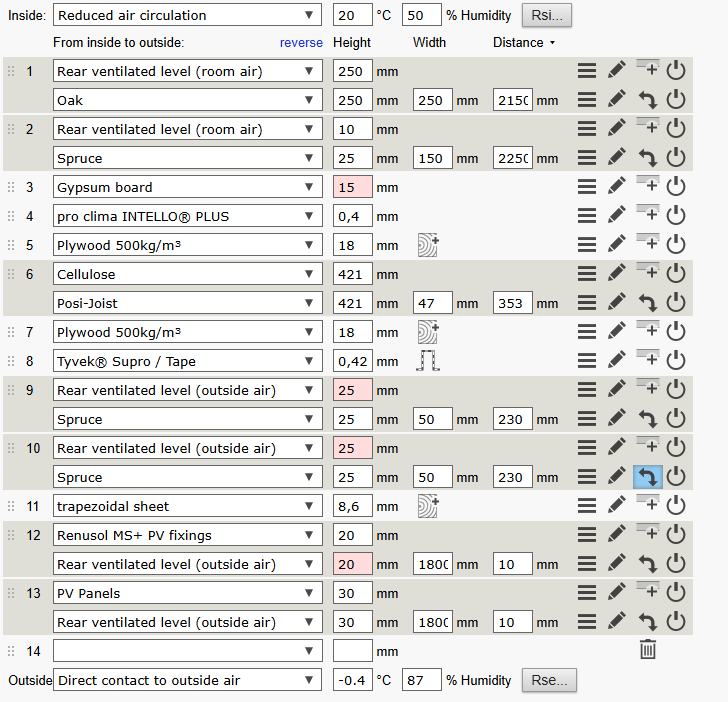
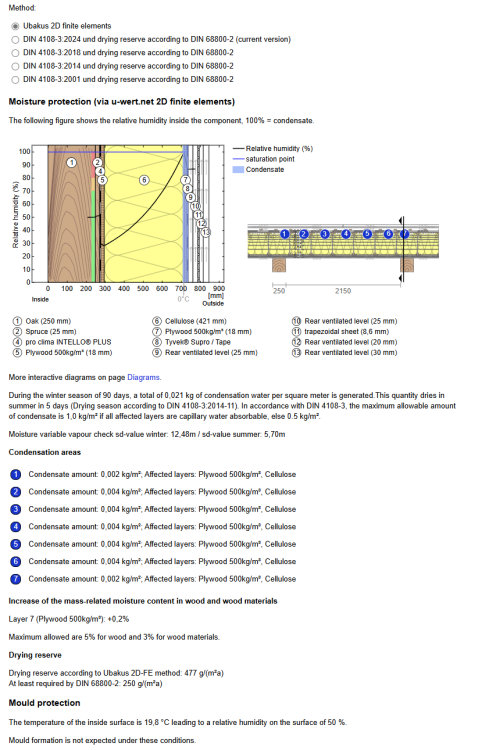
Anyone have any thoughts on this? Ubakhus seems to have found a moisture problem beneath the outer ply. Is this a real problem? Seems to me that whatever the most outside skin is, it would throw up this problem, no? Is the internal membrane doing anything useful given that it's backing some fairly air-impermeable ply? Is this the key sentence? During the winter season of 90 days, a total of 0,021 kg of condensation water per square meter is generated. This quantity dries in summer in 5 days (Drying season according to DIN 4108-3:2014-11). In accordance with DIN 4108-3, the maximum allowable amount of condensate is 1,0 kg/m² if all affected layers are capillary water absorbable, else 0.5 kg/m². That implies it's fine?
-
Architects have messed up. Next steps?
Alan Ambrose replied to flanagaj's topic in General Self Build & DIY Discussion
>>> get a surveyor to site to mark out the boundary according to land registry If you look at the land registry web site they say that the vast majority of the boundaries they have recorded are not definitive. Yes, they do provide a bit of a clue, but they can’t be relied on as an authoritative source. The whole area is a bit of a fudge at best. Possible to agree the boundary with your neighbour? That would be a good start. There is then a process for recording a definitive boundary with the land registry if you choose. I suspect the red lines on deeds are usually drawn in a few seconds by a junior lawyer without ever visiting the plot / looking at Google Earth / booking in a surveyor ~ and Google isn’t accurate anyway and subject to.optical distortion. -
Environment Agency Discharge License
Alan Ambrose replied to Robert K's topic in General Self Build & DIY Discussion
I have half a memory that the EA has an escalation procedure. You might call them and see whether they’ll do something promptly for you. Alternatively, if you can get an ‘expert’ to write something acceptable the BCO might accept that. Is there someone else using the same route? - I have a few neighbours who are, so it would hardly make sense to allow them but deny me. Once I got hold of a normal human at the EA, they were quite helpful and found the details of the drainage route they needed - I supplied the gist 400 metres or so and they figured it out to the final tidal destination. -
Environment Agency Discharge License
Alan Ambrose replied to Robert K's topic in General Self Build & DIY Discussion
We needed one as we were draining to an intermittent watercourse (if I remember rightly) - took a while as they ‘lost’ our first application. About 6 months - I’ve posted the exact time ere somewhere. -
Don’t know how true it is, but I was told recently that power float skills are less and less common. Some people will try it on though if they have too much business / don’t fancy the job / think you’re a bit gullible.


