


markharro
-
Posts
644 -
Joined
-
Last visited
Everything posted by markharro
-
Thanks for the advice. I am double sheeting so 2 x 12.5 - will 400mm centres by ok for that?
-
Hi I need to reduce a ceiling height a bit and intend to cross batten the exposed joists but my question is what is the normal width between battens - is 600mm ok?
-
Hoping @ProDave might be able to answer the above as its next to impossible to get hold of our own electrician at the moment. Will a 12 or 24V LED strip work on the same switch as a mains downlight? I have spoked to one LED strip supplier who advise against it saying (I think) that inrush current from driver might effect the downlight!? Not sure how or why or what they mean in practical terms. Another said ok to mix but only with standard on/off switch - you would not be able to use a dimmer!?
-
Geberit in wall WC frame - instal height?
markharro replied to markharro's topic in Bathrooms, Ensuites & Wetrooms
Thanks @Temp and @nod thats actually quite a difference between you both - 5.5 cm if I have it right. Are both of your measurements to the top of the toilet pan or the seat? -
Geberit in wall WC frame - instal height?
markharro posted a topic in Bathrooms, Ensuites & Wetrooms
1m above floor height is what they advise but we are quite tall as a family. 6'3 and 5'9 as a couple although our 10 yr old is still to catch up! My query is whether its worth adding some height to the instal so that the WC pan is higher than normal above the floor? If so, how many mm? -
Wetroom Tiled areas - plasterboard or backerboard?
markharro replied to Conor's topic in Bathrooms, Ensuites & Wetrooms
And suggestions for wall board in shower-rooms? -
Thanks for the advice. Turns out that the the lights we have are fire rated. Another connected issue though. Our electrician has wired one of our shower room switches to power a downlight and an LED strip. The LED will I think be 24V so will need a driver and the downlight is mains voltage. I called the manufacturer of the downlight and they recommended not to use it with the low voltage LED strip. So do I need a 24V downlight for these to work properly together? If so any links to a decent IP65 and fire rated 24V downlight?
-
Can anyone recommend? We will probably only fit 5-6 recessed downlights in the whole house but seem to recall building control had specified need to use these hoods if installing in insulation as will be as the GF/FF ceiling void will have 100mm acoustic insulation. Thanks.
-
Wetroom Tiled areas - plasterboard or backerboard?
markharro replied to Conor's topic in Bathrooms, Ensuites & Wetrooms
I have installed Hardie backer for our shower enclosure but for the rest of the room I won't need to use this but the question is what is normally used? Moisture resistant plasterboard? We indeed to lime plaster whatever we use if that is relevant and the board will extend to within about 3mm of the (concrete) floor as a shadow gap. Also do you need to use moisture resistant PB for the ceiling in a shower room? thanks. -
Vat On Electric Gates
markharro replied to nod's topic in Self Build VAT, Community Infrastructure Levy (CIL), S106 & Tax
Hi @nod I have bought these gates - https://www.fhbrundle.co.uk/products/54SGCK154__Cantilever_Gate_Frame_Kit_-_1.5m_High_x_4m_Wide_Opening although have yet to instal. These would save you a bit of £ I would be interested in where you sourced your motor kit and what I need to look out for in this as its my intention to but and then have electrician wire up but my knowledge of what to get is pretty scanty -
Our floor to ceiling void is about 300mm. Our warrant grant requires a minimum of 100mm >= 10kg/m2 insulation. I have some Rockwool 100mm RWA45. Will a single layer of this give us a decent enough result? My intuition was saying add more but from what you say @Iceverge that may be counter productive? If just using 100m should I try to place this in the centre of the void leaving 100mm free air above and below the insulation?
-
How to make PV invertor safe before re-routing a wire
markharro replied to markharro's topic in Electrics - Other
Thanks @ProDaveDave. Can you tell me how I test for dead? I have a multimeter but can't say I am too clued up on how you operate one! -
Acoustic insulation on 400mm centres joists
markharro replied to BadgerBadger's topic in Sound Insulation
I have a similar question. Our floor to ceiling void is about 300mm. Our warrant grant requires a minimum of 100mm >= 10kg/m2 insulation. I have some Rockwool 100mm RWA45. Will a single layer of this give us a decent enough result? Somehow my intuition is saying add more!? -
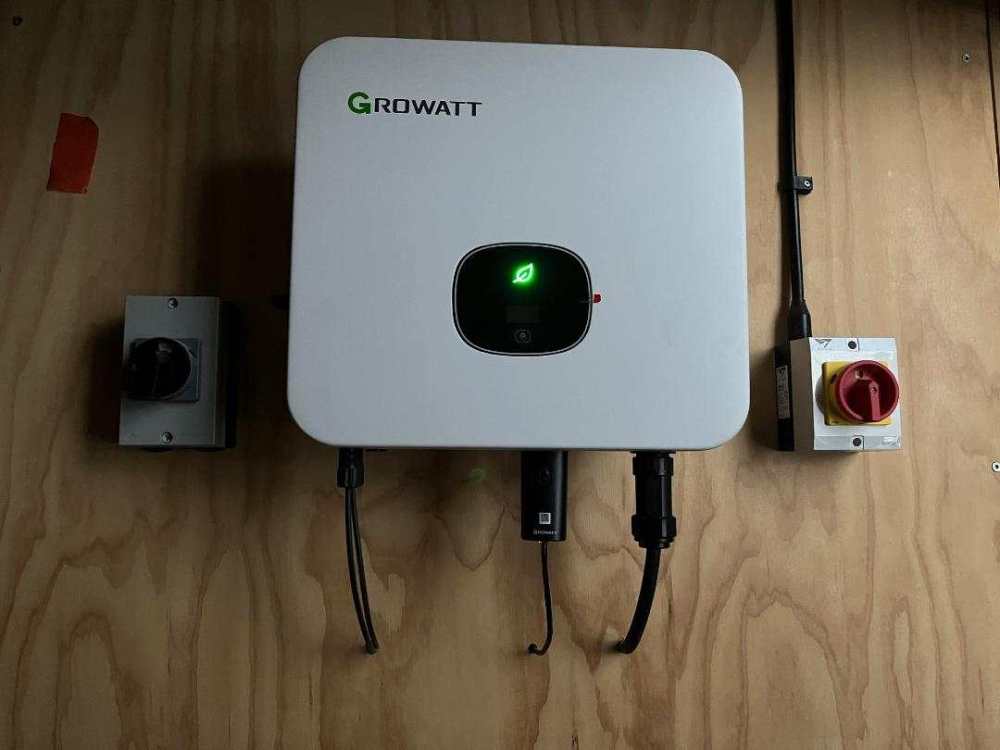
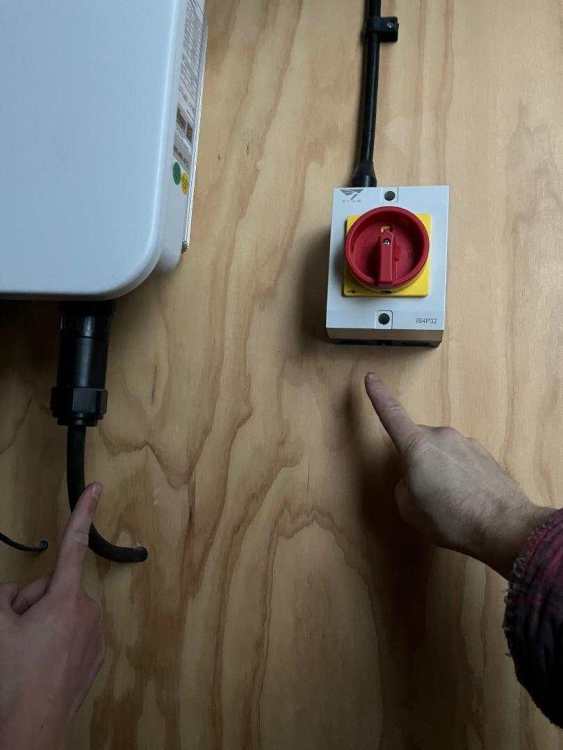
My issue is that I need to change the route of a wire into the red switch in the photos In the second photo I am pointing at the left to a cable out of the inverter that goes through the wall into the service void and then enters the back of the red switch from behind. The issue is that I need to re-route this cable out of the wall so that it enters the red switch from below as I show on the right. It should be a simple 5 minute job for me but I need to know how to isolate the PV so I don’t kill myself. On the photo to the left there is another black isolation switch. Do I just switch that off and also switch the red switch to off and is that all there is to it? Thanks PS I have asked the company who installed for us but they say they would need to send someone out to do this and they are not local
-
Hi @Trw144 can I ask how you laid the engineered flooring after you had the walls completed as I am trying to puzzle out the same thing now. . I understand the mechanics of fixing the wall board down to the correct height so that the floor then slides under and leaves the desired height of shadow gap. My query is how do you set the short board joins? The long lengths are fine as they are fully exposed other than the 10mm or so tucked under the shadow gap. But we will be using mixed lengths of 1.8 - 3m for a floor about 4m x 4m and so the boards need to be joined to get across the full 4m length? I think the standard way to do this is to use a pull bar and hammer but that means somehow getting the end of the bar under the far edge of the board which is under your plasterboard if you see what I mean? While this might be possible at one end what about the other length that you are butting on to? How does that stay in one place as you hammer the other piece? Would it not hammer in tight under your plasterboard on the other wall and mean you have no expansion gap at that side? Maybe use 2 pull bar left and right and two people hammering at the same time?
-
Hi @Trw144 can I ask how you laid the engineered flooring after you had the walls completed as I am trying to puzzle out the same thing now. . I understand the mechanics of fixing the wall board down to the correct height so that the floor then slides under and leaves the desired height of shadow gap. My query is how do you set the short board joins? The long lengths are fine as they are fully exposed other than the 10mm or so tucked under the shadow gap. But we will be using mixed lengths of 1.8 - 3m for a floor about 4m x 4m and so the boards need to be joined to get across the full 4m length? I think the standard way to do this is to use a pull bar and hammer but that means somehow getting the end of the bar under the far edge of the board which is under your plasterboard if you see what I mean? While this might be possible at one end what about the other length that you are butting on to? How does that stay in one place as you hammer the other piece? Would it not hammer in tight under your plasterboard on the other wall and mean you have no expansion gap at that side? Maybe use 2 pull bar left and right and two people hammering at the same time?
-
Hi @Trw144 can I ask how you laid the engineered flooring after you had the walls completed as I am trying to puzzle out the same thing now. . I understand the mechanics of fixing the wall board down to the correct height so that the floor then slides under and leaves the desired height of shadow gap. My query is how do you set the short board joins? The long lengths are fine as they are fully exposed other than the 10mm or so tucked under the shadow gap. But we will be using mixed lengths of 1.8 - 3m for a floor about 4m x 4m and so the boards need to be joined to get across the full 4m length? I think the standard way to do this is to use a pull bar and hammer but that means somehow getting the end of the bar under the far edge of the board which is under your plasterboard if you see what I mean? While this might be possible at one end what about the other length that you are butting on to? How does that stay in one place as you hammer the other piece? Would it not hammer in tight under your plasterboard on the other wall and mean you have no expansion gap at that side? Maybe use 2 pull bar left and right and two people hammering at the same time?
-
Shadow gap and engineered timber floor??
markharro replied to Sarah83's topic in General Self Build & DIY Discussion
I have the same question as @sarah83 for you @nod. I understand the mechanics of fixing the wall board down to the correct height so that the floor then slides under and leaves the desired height of shadow gap. My query is how do you set the short board joins? The long lengths are fine as they are fully exposed other than the 10mm or so tucked under the shadow gap. But we will be using mixed lengths of 1.8 - 3m for a floor about 4m x 4m and so the boards need to be joined to get across the full 4m length? I think the standard way to do this is to use a pull bar and hammer but that means somehow getting the end of the bar under the far edge of the board which is under your plasterboard if you see what I mean? While this might be possible at one end what about the other length that you are butting on to? How does that stay in one place as you hammer the other piece? Would it not hammer in tight under your plasterboard on the other wall and mean you have no expansion gap at that side? Maybe use 2 pull bar left and right and two people hammering at the same time? -
To refresh this topic when I was looking at the Grohe instal video for the shower set you will see from the attached screenshot that they show two orange fabric seals..... The larger one for the control valve is included in their kit but the smaller one for the hand shower pipe outlet is not. I got in touch with them to mention that it wasn't included in the kit pack and they said that it's not meant to be. They say it's not essential and if you want to use one you need to source it yourself. I would like to fit a seal like this but a quick look online has me struggling to source one. Can anyone provide a link for purchase of one of these fabric type seals with a rubberised circle in the middle to go over the outlet? Thanks.
.thumb.png.2002f628c97aa87172a04c9e36e5420c.png)
-
My other half is seemingly changing her mind about a shower niche after she was adamant she didn't want one!! Annoyingly the studs have backer board on with screw heads and joints sealed etc and in fact one board that part cover a possible niche location is now impossible to remove. I could easily multitool an opening having said all this but what is needed after that? Can I build out the internal frame needed through a window cut in the backer board? thanks
-
I agree but its mainly to satisfy the pernickety "boss". These Steinel ones look good. One question - this is to operate an external LED strip it wired between the mains cable and driver or between driver and LED?
-
LED strip causing MCB tripping! Reason?
markharro replied to markharro's topic in Consumer Units, RCDs, MCBOs
So this has got me thinking. If this new driver lasts a similar time to the one that failed how do you plan to be able to replace these things? I assume you normally fit them in the circuit behind plasterboard. Once hidden away and the wall finished and plastered and painted what do you do if/when the driver fails? should you design in some sort of access hatch? -
LED strip causing MCB tripping! Reason?
markharro replied to markharro's topic in Consumer Units, RCDs, MCBOs
In the end it turned out that the (brand new) driver was the issue. I got send a replacement and now all is well! -
Thanks v much. Be good to get some more input on this as well.
-
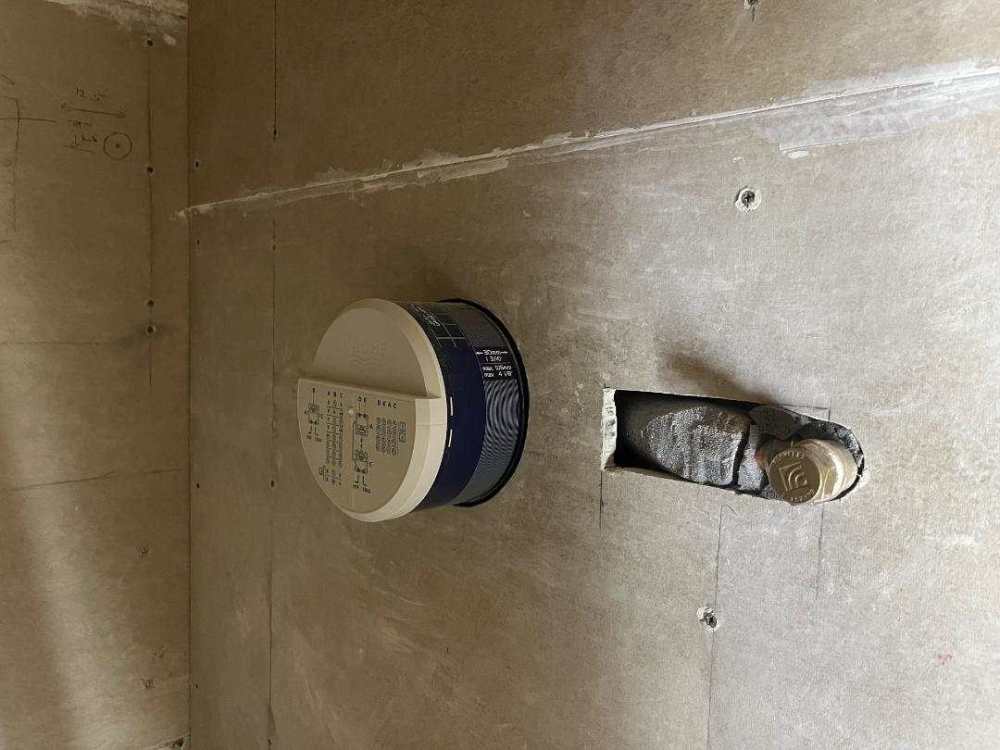
Almost finished the backer board and then will tape before using a tanking roll on product. Can I leave this hole "open" or does it needed sorted and if so how? The reason its there was to fit the cement backer board as the pipe that feeds the outlet to the right pushes out a bit. Thanks


.png.1cfde21479e150e791123af2001c0ea5.png)

