


Gus Potter
-
Posts
2389 -
Joined
-
Last visited
-
Days Won
34
Everything posted by Gus Potter
-
SE refuses to spec beam with underplate
Gus Potter replied to flanagaj's topic in RSJs, Lintels & Steelwork
It is. The reason behind it is that the building loses a lot of sideways stability. The steel work is also designed to stop the building falling over sideways. This is often the main challenge as an SE, not just to hold up the vertical loads but also to maintain sideways (horizontal stability). You also need to maintain your thermal breaks / mitigate thermal bridging etc. This makes the SE work harder as in the old days we just tied everything together! That all has to come together and then needs to be detailed (just as important), with the propping sequence thought through, so it's buildable by an average (hopefully) competent builder at a sensible cost. I deliberately put lots of detail on my drawings where I want to explain to the builder what is expected of them and thus by inference what they should include in their price. -
Glulam (inc. service class)
Gus Potter replied to MortarThePoint's topic in General Construction Issues
Good link. My own view is that the glue, if the right glue is going to out perform the timber. If you take a structural glue, like Cascamite, invented about 1940 it's well proven. It's relatively cheep and easy to use, just keep it out your hair, arms etc! You ain't going to get it of with a bit of Fairy liquid! Sometimes I want to glue stainless steel plates together, here the glue is a bit more specialised, maybe @Alan Ambrose may chip in. Buckland mention the end grain. The critical bit is to make sure the end of the cut timber is treated. But I can tell you that 99% of the time on site the joiners cut a bit of wood / trim Gluelam and don't treat the exposed ends. And then all the theory turns to manure! It's good though to see Buckland investigating this, it can only help inform. -
Always helpful Thus the rebar has to have adequate cover and be surrounded by well compacted concrete. This concrete is at the start of the next lift, well down the shutter. Very difficult to achieve. The only reason for continuous rebar between floors is if you have particular fire or disproportionate collapse requirements. Less onerous on the standard ICF build. In fact.. if you add rebar into the ends of Hollocore slabs and tie that into the external walls then you start to create a moment / partial stiffness connection. You then introduce an extra bending force into the walls, thus you need to design for that, it potentially causes problems with concrete core thickness. Disagree, a lot, not really applicable to self build when using ICF, you are mixing up platform and core lifting with ICF which is a different animal. If you give your Hollocore slabs full bearing on the ICF core (say 150mm) then this often satisfies the tying requirement on a low rise buildings, like self builds. My advice stands. Recognise that on your second ICF lift it's going to be hard (impossible actually) to get adequate concrete compaction at first floor level when you have to get the poker all the way down the base of core if there is more rebar congestion. Keep it simple, extend the Hollocore out to the external face of the core. Always check with you SE in case there are funny point loads or lateral bracing requirements. My advice is general, but intended to be practical in the first instance.
-
SE refuses to spec beam with underplate
Gus Potter replied to flanagaj's topic in RSJs, Lintels & Steelwork
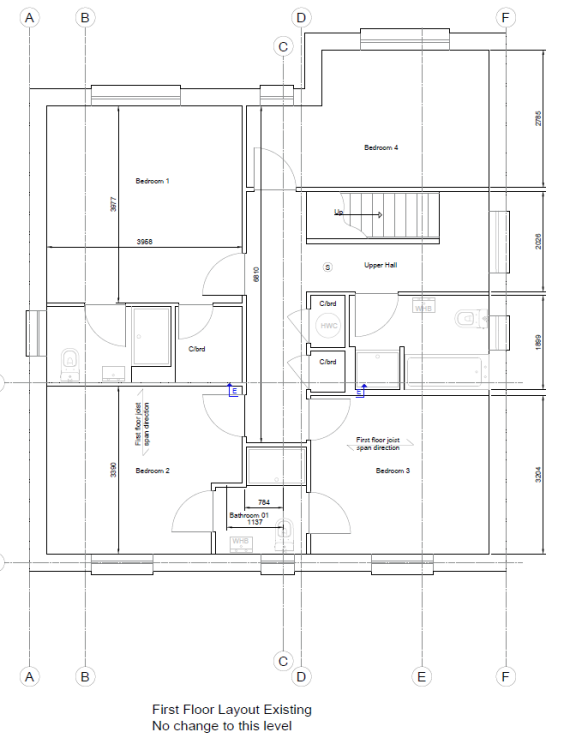
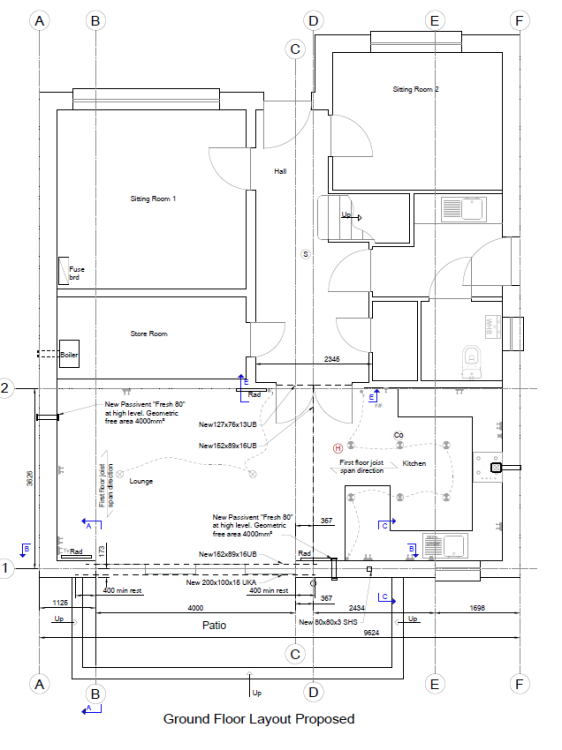
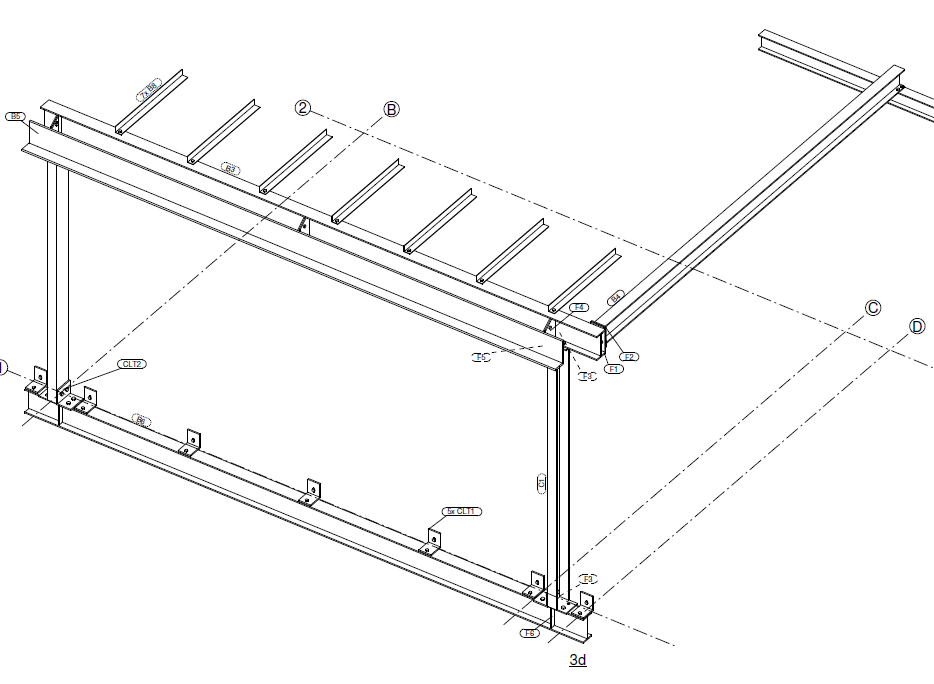
Good spot, thanks for looking at my stuff. There are three fin plates, one at each end and on in the middle marked F4. The end ones stop the angle rocking on the external leaf of masonry. The centre one halves the effective length of the steel angle. Over a 4.0m length the angle will fail, in torsion and buckling. The members marked 7 xB8 are the first floor joists that rest on the inner leaf beam. I've added more drawing to let you see what I've been up to! Remember thought these are screenshots of part of my drawings. While I'm happy to share some stuff I do I need to protect my intellectual property to some extent. It is after all my day job also. The stuff you see is only part of what is a much larger drawing set. This is big bug bear I have. Architect's nine times out of ten don't put a grid on there drawings at the concept design stage. Thus it makes it right from the get go hard for a Client to line stuff up. As I wear two hats.. I just can't see why they don't do this, it's bonkers or arrogance?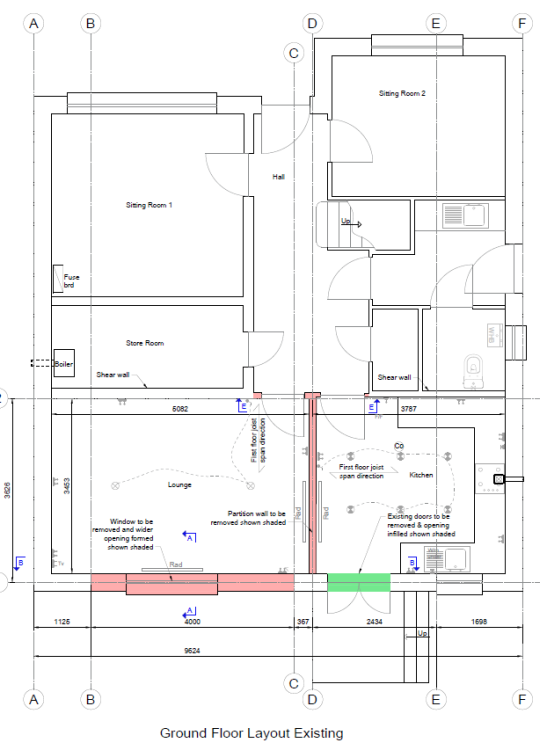
-
SE refuses to spec beam with underplate
Gus Potter replied to flanagaj's topic in RSJs, Lintels & Steelwork
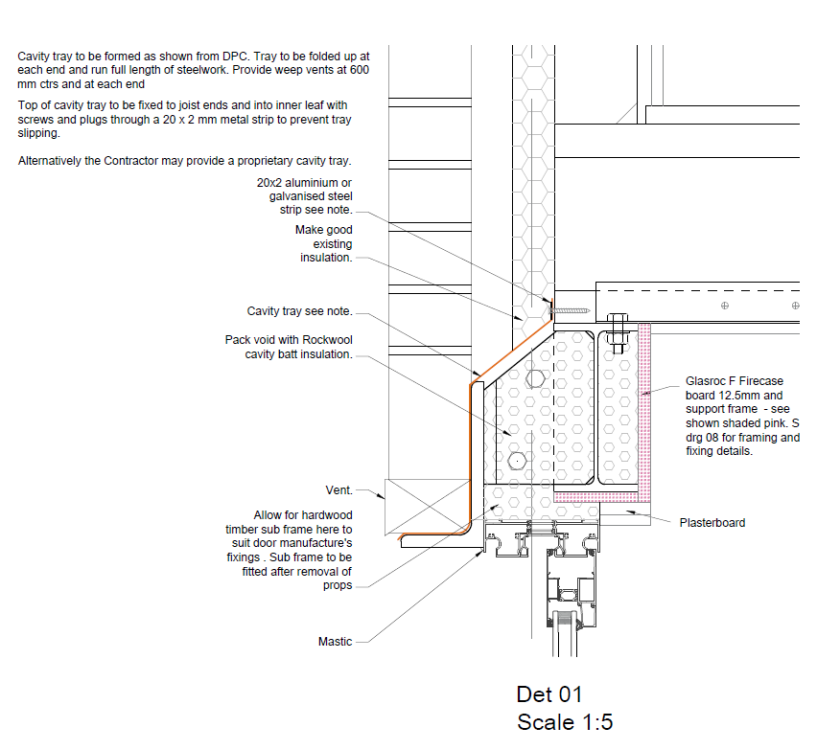
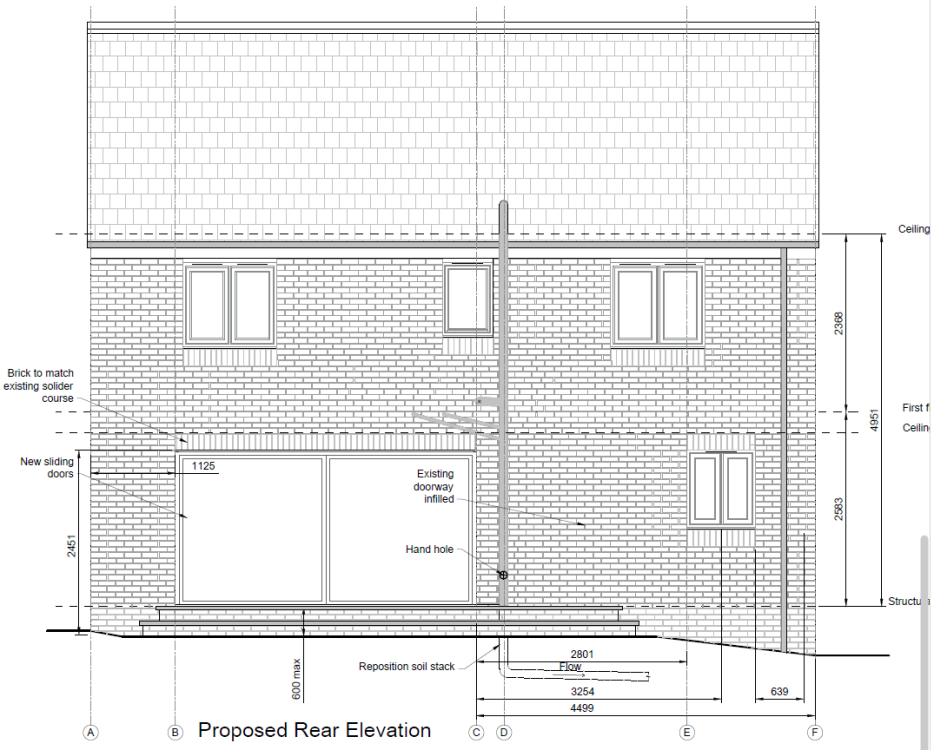
Your SE is trying to convey to you some very difficult / complex structural behaviour, in lay terms. To put this into context. Working from left to right. The first two diagrams show a Cee section. It takes about 3-5 years after graduating from uni to even get you head round this, to be able to design something buildable and cost effective. Your SE has made a pretty good go of the diagrams. Option 3 works, up to a point span wise, much depends on the span / size of the angle. Angle sections are prone to twisting. Your SE later may want to also restrain the angle in places to stop it twisting. Below is a cross section though something very similar to what you have. Buried within the insulation you'll see two bolt heads. below is a screen shot of the steel GA details. If you look closely you'll see a steel fin plate in the middle of the angle span. Here I'm shortening the effective length of the angle and stop is twisting over the doors below. The fin plate method is a small local thermal bridge, but an effective way of getting a relatively small steel angle to work. Yes there are still thermal bridges, but this is not a new build rather a retro fit into an older house. Below is the proposed rear elevation. The clear opening width is some 4.0m. The steels over the opening need to carry first floor and roof loads. I've only posted parts of some of the drawings, hope enough to give you flavour of some of the things we need to think about.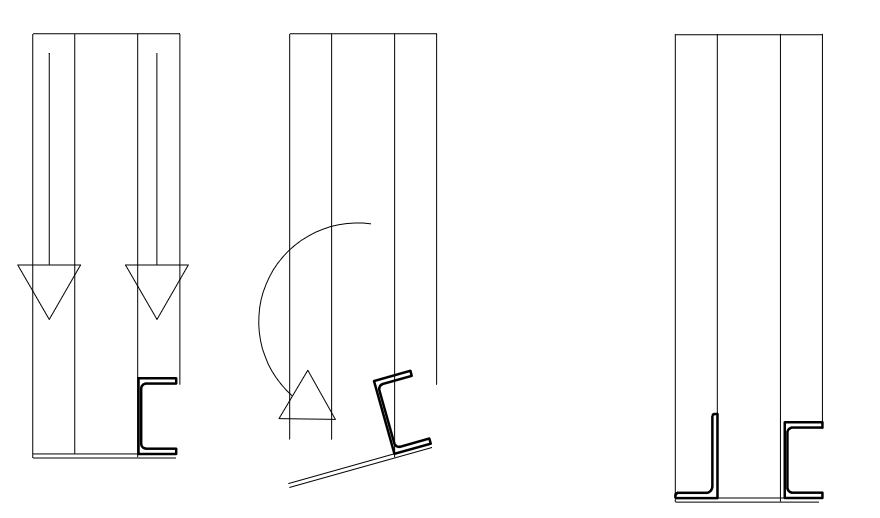
-
Mortar mix for pointing granite.
Gus Potter replied to sb1202's topic in Bricklaying, Blockwork & Mortar
As a suggestion for granite walls call: https://masonsmortar.co.uk/ The link to their website is above. This is a completely different animal. I'm assuming as it's in the centre of your house it is an internal wall? Try and post some drawings, maybe some photographs, often most helpful and describe what you are trying to do / why and your thoughts. -
Hope you are enjoying BH, we have lots of fun here. Remember there is no such thing as a stupid question! As an SE I often look at bearing lengths for say Hollo core slabs. Generally on masonry standard is 100mm, on concrete (ICF) min 75mm, I then deduce your SE is taking into account construction tolerance, hence the 80mm. That's a good sign! The bearing length is vitally important as the floor slabs often act as diaphragms that tie the house together. But now we need to look at your pour sequence. Normally we would cast the first lift up to underside of Hollo slab, set the slabs, then carry on. A standard ICF domestic core is 150mm of concrete, sometimes a bit more. Now if you have a 80mm rest on your Hollo core that technically leaves 150 - 80 = 70mm of concrete before the outside skin of insulation, and that bit is going to be very hard to compact properly as it's going to be at the bottom of the next shutter lift. Have you considered extending the Hollo core slab rest to the full thickness of the concrete core so it sits flush with the outside edge of the concrete core? Then you'll have much better tying and can foam up the Hollo cores to your hearts content as they will be easily accessible? If you really want air tightness you can seal off any gaps within the floor depth as the end of the Hollo slabs will be flush with the inside face of the outside insulating layer of ICF,, that's a tongue twister! I may have missed something here. You SE may have introduced some extra floor to floor tying rebar, hence the reason for the 80mm bearing? Can you post the details you have? To finish, good question and hope you enjoy BH, folk chipping in, but also remember that folk that come after you will learn from your posts and experience. For me, it's also my day job, I also learn from your innovation, so thanks.
-
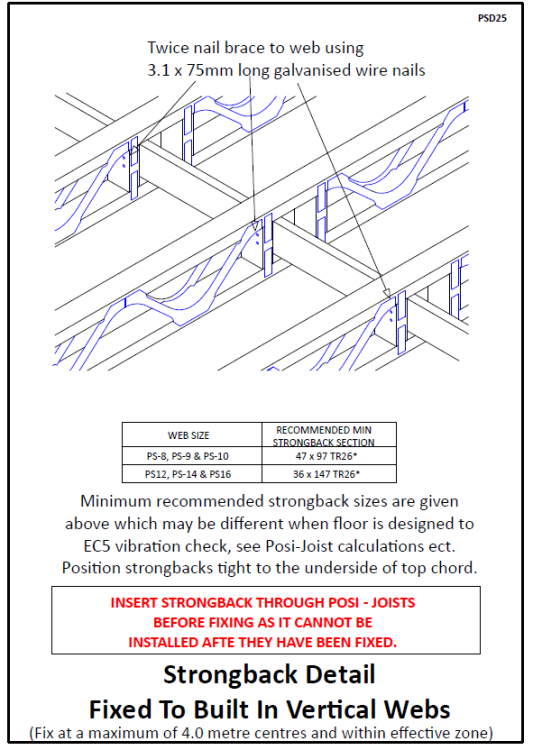
Very good question, looks like you are on the ball! Below is a typical Strongback detail: If you want to make a hole for a duct in these you'll likely have to add some plating detail or the like. It all looks quite doable..if your ducts are not too large. Can you dimension up your sketch / photo and mark on the hole and diameter you need to make? Plating with ply each side with glue is an easy option if your duct is not too large a diameter. There are plenty ways of getting around this, but we are looking for the simplest and cheapest option. I say glue as if you just use nails when you calculate the forces you often need lots of nails and the nail edge and end distance just takes loads of time to detail. The nails are just used to clamp ply until the glue cures.
-
Small wall at top of staircase
Gus Potter replied to crispy_wafer's topic in General Self Build & DIY Discussion
I can see where you are coming from. Avoid blockwork. This is so fraught with tying difficulty. It sounds like you are ok with a solid baluster wall, it's going to look ugly! You should be able to much more easily sort this using a timber solution. As an experiment put two studs up , one attached to the wall to the left of the top of the stair stringer. One in line with the nose of the last tread, line each side and glue ply to that, give it a wobble! Check your BC drawing in case a diligent (no9t pragmatic) BC officer pulls you up about future provision of a stair lift, if applicable to you. -
Glulam (inc. service class)
Gus Potter replied to MortarThePoint's topic in General Construction Issues
Hiya. You are getting there. At my end my main concern is that you don't introduce lateral forces into the existing house wall. These forces would be in order of priority: 1/ The loggia pulling the wall outwards, (inwards load is less of an issue but still needs a quick think about) especially as it is introduced mid floor. Your wall ties and masonry definitely won't be designed for this! Do this at your peril! 2/ Adding vertical load to the lintels over the openings below that they were not designed to accommodate. 3/ The loggia adding to the sideways sway forces in the plane of the external wall. These forces will be fairly small. But for due diligence always worth having a look at, just in case! I can see you are getting a handle on the terminology in terms of how we describe the different forces on a connection. I'm not going to do this for you, rather, let you get your own head around this first. Your starting point is to consider the roof like a big deep beam, very stiff in resisting downwards loads and any horizontal loads, which may arise from a bit of horizontal wind load on the roof. These will be small. Then think about all the other loads that could be applied to that, maybe the logs will rest against the columns? These will likely dominate. I know this from designing grain stores etc. Often we don't want to indulge in excessive calculation of say wind load when we can just cut straight to the chase and identify the dominant load case and design for that. Once you have identified the loads put them on a sketch. Next we turn to the member sizing. This is pretty straight forward, a little more complex if the logs are going to rest against the columns. Often I'll clarify with a Client that they are not going to later infill part of the walls, this changes the game as it can suddenly pick up much more wind load. ! In summary though, sizing the posts is pretty straight forward. The key bit is the connections. To make progress I suggest you split the forces into two different groups. The first group is the vertical and horizontal loads in each direction. That would be X, Y (Horizontal) and Z in the vertical direction. The next step is to ask yourself can I keep it stable using purely pinned connections. Just think about a single bolt as a representation of a pin, and see if that works for you. The connection between the base of the post and the straddle stone is nine times out of ten going to act like a pinned connection, thus in all likelihood your straddle stones need to be checked for what we call over turning. I'll not explain here, it's a lot to do with the passive soil resistance. I hate to say it but ask AI for an overview. In summary though, my own view is that if your loggia sinks bit or looks like it's going to fall down and gives warning of such then it would be fair to treat it as a structure of limited life span. So long as it does not compromise the structural integrity of the house, then we can be pragmatic and exercise engineering judgement. Once you investigate this a bit more then you'll be in a better position to decide what you want to do. The knee braces do work well, they are simple and cheep connections to make. With a bit of thought, if you laminate the timbers up yourself then it can be massively elegant. All you'll need is timbers off the shelf from the merchants, the right glue and some decent foundation pads at the corners with a couple of beefy fabricated steel shoes. -
Fire Safety Regs - Timber Cladding
Gus Potter replied to john0wingnut's topic in Building Regulations
To get your head around this we need to understand what we are trying to do. Objectives are in general terms: 1/ We want to prevent the spread of smoke and flames for long enough that folk can get out the house, or if disabled that the fire service can rescue them. Normally this is 30 minutes for a house like this. In no particular order. The onus is on the home owner to not set light to neighbouring properties, based on fire of London act 1667. The onus is also on the home owner to ensure that the structure of the house does not fall on the fire service and risk their lives. One great example here is below https://www.firescotland.gov.uk/news/remembering-the-cheapside-street-fire-65-years-on/ But roughly here is what happened The building's 60-foot-tall walls collapsed due to an explosion caused by the blaze that tore through the warehouse. @Great_scot_selfbuild until you get a grasp of these basics you ain't going to make progress. What this means in your case is that you not just need to protect the occupants but also the structure. Now until you understand how the structure works, what bits can go on fire, what bits you need to protect and what are sacrificial then any advice BC or other wise give you could be a complete pile of mince, you need to ask where does the buck stop! It usually rests with someone like myself, not BC! At the end of the day the law is likely to make you (me) responsible if you have an input into this design. Now I can see why you think, but the cladding could burn away, but if that is the case then you often need to detail the fire proofing for that case. Basically you need to stop fire and sparks getting up into the roof space or into window openings. You need to sit down and think this through. It's down to the detailing! Your builder is asking good thoughtful questions! -
Glulam (inc. service class)
Gus Potter replied to MortarThePoint's topic in General Construction Issues
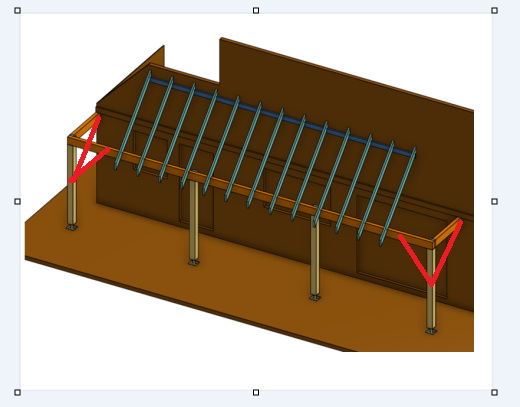
For these to work, there is a bit more to the equation. I can see how you are thinking about shear load transfer between the bottom of the post and the straddle stone, but what you show still acts as a pinned joint in terms of rotation between the bottom of the column and the top of the stone. . Unless the bending force is fully transferred by the dowel it's going to cause an over turning effect in the stone. A pin like this does not work. Also to resist this you need adequate soil lateral passive resistance, which I think you will struggle to achieve. And then we need to look at frost resistance ( the ground freezing and heaving) for example. It's up to you, if it heaves or moves then the risk is yours. Main thing is if it starts to fail that no one gets hurt and you don't damage the house. Technically you don't need ceiling ties if the roof is made stiff, like a big deep beam. This can be achieved by using say OSB / Ply / traditional timber sarking to the tops of the rafters. Lining the underside with ply makes it even stiffer. In the round we want to: 1/ Stop the front of the logia moving sideways parallel to the main house wall. We can do this by making the roof stiff and connecting it back to the main house wall so the main house wall resists the basic sideways shear, but also what we call complimentary shear. Here is quick diagram I copied from the internet. You can test this at home using a cardboard box with one side cut away. If you want to understand what's going on try it yourself for a bit of fun. Tape the box down to a table in different places and experiment, you can learn a huge amount about structural behaviour by just having a glass of wine and mucking about. 2/ The front of the logia moving away from the main house wall, perpendicular movement. The main thing here is to check the house can take these extra loads. Often you'll find that the external leaf, particularly masonry protests a lot if it is pulled outwards between the floor levels. I think the best thing, and most probably less hassle is to allow the house to carry half the vertical loads roof, they will be small as any snow, snow drift or snow falling off the main house roof will just slide of as the roof is steep. Normally we design for a roof access load, this get reduced when the roof is steep. Then look to see if it works along the front / sides Architecturally with a knee braces shown in red. The base of the columns would have some beefy 6.0mm thick or so fabricated brackets. The corner columns well attached to say 600 x 600 x 600 deep concrete pad foundations. I'll not explain here how / where the forces go in detail. But if you are thinking about laminating timbers up yourself it could be great fun to do and cost effective. The vaulting with no ceiling ties is attractive Architecturally to me. Try the cardboard box thing! if you can live with knee braces then it's a very efficient way of doing it. Let us know your thought on the braces. To add a bit. I like to design stuff using glue, but am always cautions that a builder may not follow my instructions. The previous drawing I posted is reasonably idiot proof as there are the nails as well. But I have some Client's, some are self builders who are really diligent. One in particular has built small boats so is experienced in gluing bits of timber together, they know to keep things clean and take care. If you're careful then you'll find that laminating up your own stuff, making joints is very satisfying. Glue works particularly well when in shear, we all know a good glued joint is often stronger than the wood itself.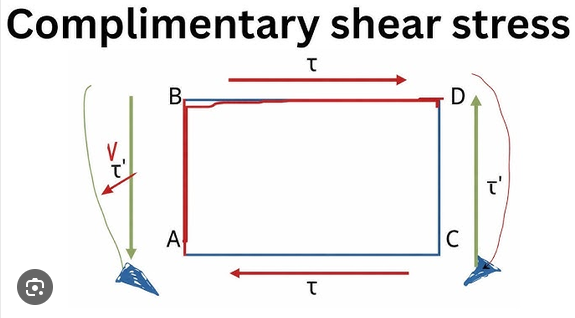
-
Glulam (inc. service class)
Gus Potter replied to MortarThePoint's topic in General Construction Issues
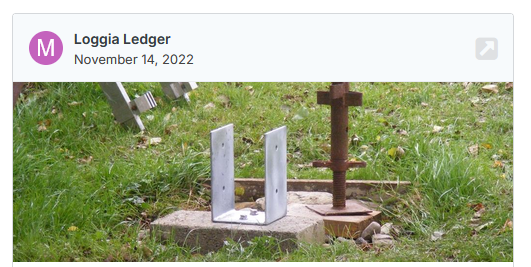
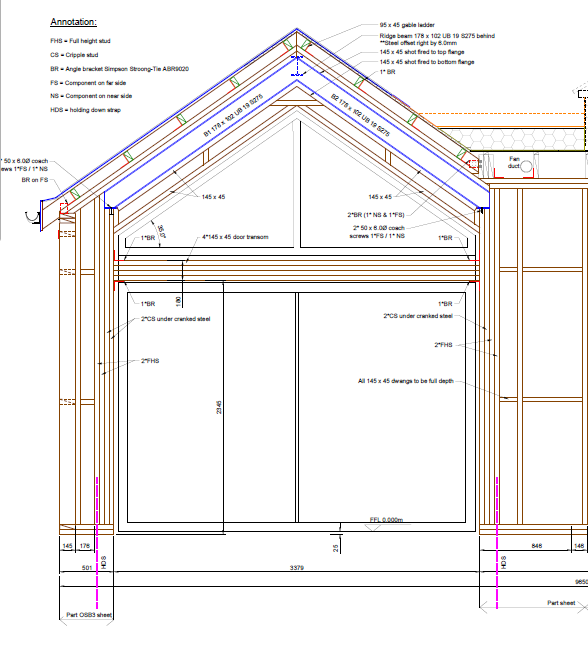
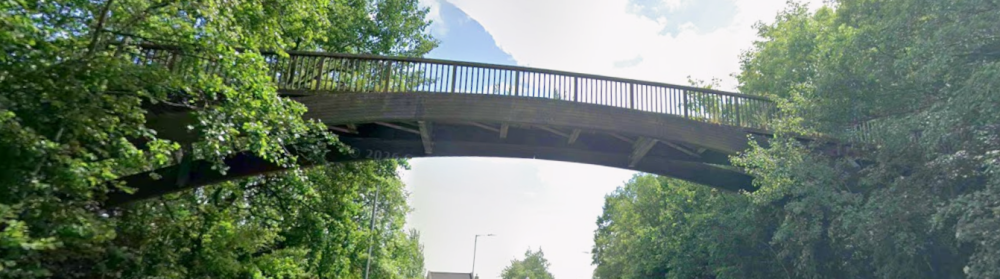
Hiya. The base brackets you show act as pins, they are just intended to carry vertical load only. They do have a minimal shear load capacity, but it is minimal. That (shear) is the load horizontal to the plane of the ground surface. The brackets you show are of minimal strength. To stop it moving sideways there are a number of different options. We can do a flat portal type of frame, often with knee braces. But this is going to introduce shear load into the brackets you show, they are not big enough and likely neither are the pads they rest on by the looks of things. The pads might be able to carry vertical load but not horizontal loading. Or you can fit a stiff floor and roof. These then act as a diaphragm and transfer the sideways loads back to the main house. But you have to check the main house can carry this extra load. To give you a better answer, with more explanation on how it works, need to see cross section drawings and a bit more of the house you are going to add load to if you use the diaphragm method. Ah like your idea. Quick story. When I was at uni one of my structures lecturers was into wood as a hobby. He used to buy tree trunks, cut them up into sizes in his garden, season the wood and make stuff. He did an extension with a curved vaulted ceiling in oak. To make it work he wanted to laminate the planks, turn them into a Glulam type beam We had remained in touch and once I started practising he asked me if I though I could prove this calculation wise. The answer is yes. I won't explain here but it's not too hard, if you know how to do it. This can be done DIY on a modest scale. In fact I'm deploying the same idea over a set of doors with a triangular glazed window above. I'm turning the individual 95 x 45 into a "Glulam" to carry the weight from the triangular glass above. But also I turn it into a solid timber so it better resists the wind load on the doors and glass. The cranked steels above carry the roof load. Here are the notes that go with the transom. For you you are going to needs lots of clamps. You can used tie bolts also, messy unless you want to leave them in place. The secret is to condition your timber and make sure all glue surfaces are clean, free from oils etc, roughen them a bit and don't rush the job. In other words cleanliness is next to godliness as is diligence. Here is a bridge near where I live. The photo, near where I live is not that good of a laminated bridge. There are bolts going down from the top to the bottom of the beam. These transfer the shear loads between the laminations. Glue is more efficient. Hope this help inspire you to give it a go!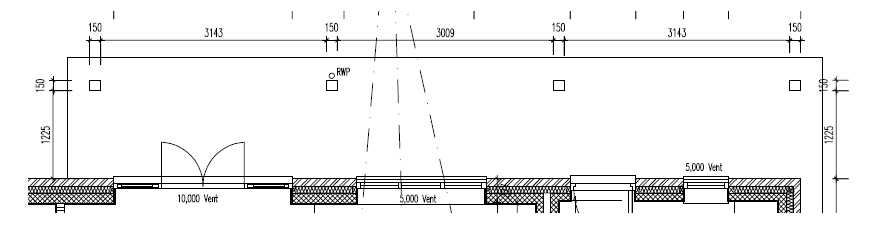

-
Glulam (inc. service class)
Gus Potter replied to MortarThePoint's topic in General Construction Issues
Is this a trick? Some say a loggia is part of the main structure or are you just being too smart. If it is part of the main structure then you also have to often transfer sideways sway resistance back in the main structure. Or have another way of resisting lateral sway. Post a dimensioned drawing and let us see what you are wanting to achieve. It looks to me like you are designing on the hoof, but don't actually understand what you are doing. Get a grip of this first and then think about your timber / Gluelam selection and the appropriate connections. Your connections are vitally important. But I suspect you have to date not given this some serious thought. Just ask yourself what is going to stop this swaying sideways. -
Ah, can you post an exact copy of the communication you received from BC? Then tell us a bit about the conversation you had with BC. I come across this often but you are not providing the worts and all back ground.
-
Fire Safety Regs - Timber Cladding
Gus Potter replied to john0wingnut's topic in Building Regulations
Fire protection in timber frames is very tricky. But I have to say that for a BCO to make a statement such as this is astounding, given that you have timber frame construction. To make such a statement is not in alignment with current design understanding and the law. I suspect that the person that made this statement is less experienced and has just made a mistake in the way they have written. Just say they have. The bottom line, if you look at the fine print, you’ll find that they have little or no liability. The real liability rests with either you or you designer. -
Hiya. You are absolutely right to raise this point, which is valid. I use my own name on BH, a quick search on the internet will show that I run a design business. I was attracted to join BH as I felt it was non commercial. Initially I never mentioned that I do this as a day job, but as time passed I felt I could not bring my knowledge and advice to bear effectively without actually saying I do this as a day job. In light of that I wrote to the moderators and asked for their advice. I definitely don't want to get banned from BH as I enjoy sharing what I know and helping folk. I see your valid comments were possibly prompted by my response to @LnP. I spent some time earlier today just chatting on the phone with him. Once piece of advice I gave him was that he should employ a local Engineer and provided reasons why he should do this. However, occasionally once in a while members chat with me they write to me formally and ask if I will undertake their design. This is arguably a breech of BH rules, which is why I asked for moderator advice. I'll leave it at that for now as the moderators may wish or not add to my response.
-
Yes it was a straight question. I was just asking as I design insulated rafts as part of my day job. Some of the stuff I do has a lot of my intellectual property built in. I'm happy to share some of my knowledge on BH, just don't want folk ripping it off whole sale for commercial advantage. As an offer if you want to have a chat on the phone then give me a call on 0771 308 1597, text me first so I know it's you, I'm also a bit deaf! We can chew the fat for a bit, happy to chat with you for up to an hour.. and you can pick my brains for free. If you want to take up my offer then send me some drawings and so on first. These of course will be kept confidential at my end. Great approach. I enjoy teaching and informing Clients. I find it a lot of fun actually. My starting point is to listen to you find out what you know and don't, then fill in the gaps in your knowledge and explain what often can be quite technical things in terms a lay person can understand. The objective is to give you enough information to allow you to make informed decisions. This sort of thing gives me a bit of a refreshing break, from drawing details / to structural calculations etc. once you have designed your first few hundred beams the novelty kind of wears off. You still have to concentrate though. In my day job I do this when pitching for business. If you inform a Client and explain the issues, how you might deal with them, highlight the things they may not have thought about, put forward other solutions, buildability cost and risk then it makes it hard for your competitors, you set the bench mark. If my competitors come in at lower fee rate, the Client is often now aware of what constitutes value for money. It works most of the time but some Clients are really stupid / just don't listen and go with the lowest price without valuing the service, ongoing support etc They will also then go with the lowest builders tender and end up nine times out of ten getting truly ripped off.
-
You have opened another can of worms here! At first glance the EA are saying to defer to the BS! The cost implications are potentially huge, the difference between a site being viable or not! This is a key point that contradict the English regs. I'll try and respond once had time to digest. Thanks David for joining the discussion.
-
Do you do this as a day job / business or are you a genuine self builder? The build light system shown is not compatible with a timber frame.
-
@David Cooke great post for spotting this. For the record @saveasteading CEng asked me for a second opinion on this as he had also spotted conflicts and wanted to sound me out. I can't take any credit for his astute discovery. @David Cooke both of us are interested in how we address this. I won't say any more just now as the credit has again to go to @saveasteading for spotting this anomaly. It's not just an anomaly, it can potentially lead to a significant increase in size of the drainage field. as you say David. . which is very expensive or if you don't have the space can be a major show stopper. I'll leave it at that for now and let @saveasteading to flesh this out for you when and if he has time.
-
Ground bearing slab curing
Gus Potter replied to flanagaj's topic in General Self Build & DIY Discussion
You have not read and taken time to read and understand what I have written. Go back and read what I have written. Then take what I say and check with your concrete suppliers, seek advice. You may doubt what I say, but it would be a very good idea to check to see if I'm wrong. We are trying to help you here. It's not my money, I and others are giving you this advice for free! I do this stuff as a day job! I do the SE design, I kind of know how to do this. I've even written the structural calculations that go into some of the software packages that are used by the biggest supplier of cold formed steel buildings in the UK for their floor slabs. At what point are you going to wake up and think that maybe myself and others kind of know what we are talking about? If I was to bet on this I think SCC (self levelling concrete) is not your way to go as you are a novice. To hedge you bets and as you are not listening to the advice you are getting, what about just getting a part load and do one small slab to see how you get on. This way you get to practice. But I bet you have not taken any time to read the rest of my post about concrete strength ect. Look if you want to do this then it's you money. If you want to cut corners then fine, but it's false economy and your risk. I suspect you don't even understand the risk element and the risk / potential cost balance and I'm absolutely sure you have no idea how anything you change may impact on structural safety.. you should especially if you have kids. -
It's gutting at times when you do a good job, no thanks, such is life.
-
How do you get into service that? We see it as now but once all the roof insulation goes in what then?
-
Open Faced Cladding - Batten SPEC?
Gus Potter replied to Duncan62's topic in General Construction Issues
Ah.. I appreciate your dilemma, this stuff is not common bedtime reading! To help best, can you post a drawing of the wall construction details, with notes. Don't give us a "half drawing" I'm not interested in drawing your teeth or being a detective, give us it worts and all. I assume your cladding is vertical? If not it's a different animal, but still can be designed. There is actually a huge amount to consider here, but fundamentally, once you understand how each element of the cladding build up works and interacts it's remarkably simple and you'll end up thinking.. that is so easy! if it's well explained to you.. which some of us will endeavour to do for you. If you post a DETAILED drawing of the whole wall make up then myself and others will be able to explain what is relevant to you, how it works (have a quick check you are not doing something daft in terms of the whole wall) , the timber service classes you require, fixings, suggest best options, things to avoid, where you can maybe source what you need at sensible cost and arm you with the questions that you need to ask a supplier.





