IanR
-
Posts
1857 -
Joined
-
Days Won
6
Everything posted by IanR
-
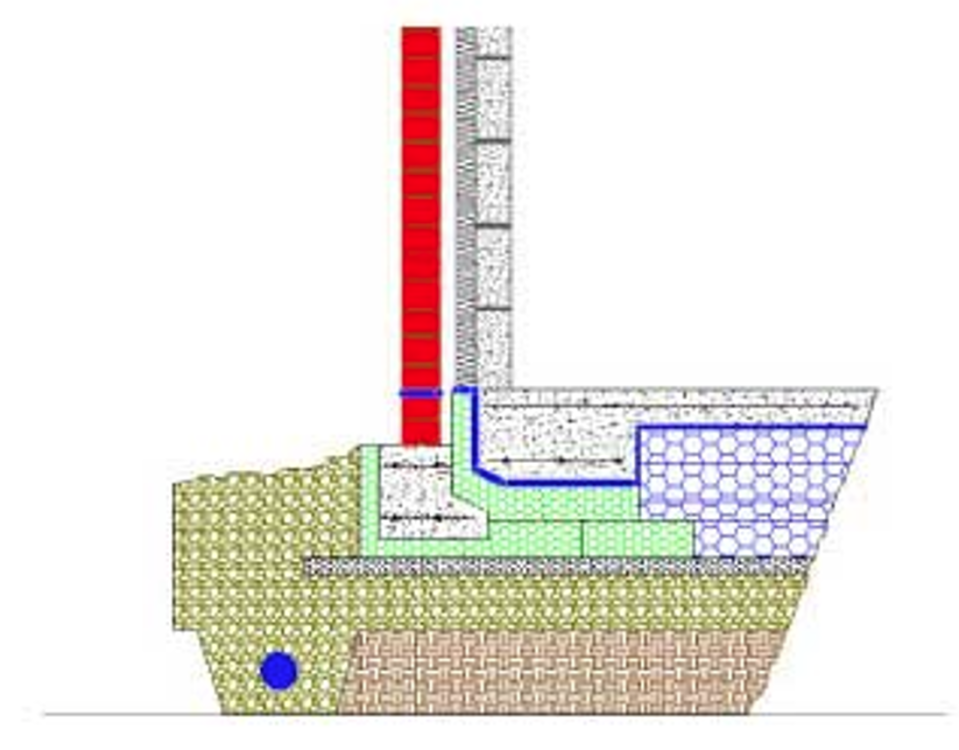
No, I'm referring to an Insulated Raft. And while there are many terms used for it, it's the one most often used here and by the Engineers that Engineer them. A "raft" as it supports the full weight of the building. ie. all walls including external and internal load bearing walls*** sit on and pass their loads through it to the ground beneath, rather than a floor slab that sits between the load bearing walls. Then we're not comparing like-for-like. If you only want Building Regs performance, then standard foundation details would be the way to go, although 100mm EPS isn't going to achieve it. To meet the same U Value as a typical Insulated Raft then 200mm PIR would be required over a floor slab. But that still won't match the raft for psi (Ψ) values, further mitigation would be required. Insulated Rafts become economical when wanting higher thermal performance from your building. As an example (not mine), publicly available from https://www.advancedfoundationtechnologylimited.co.uk/projects/paul-williams/ For close to Passivhaus performance, or PH performance when combined with a Larsen-truss wall structure. This requires only a 450mm dig depth, if that's sufficient to clear the organic matter. ***sometimes with an additional, unconnected or partially connected ring beam for an external skin for Passivhaus performance Ref. https://www.advancedfoundationtechnologylimited.co.uk/our-products/passive-building-foundations/


-
You do need to pick one side or the other as the airt tightness side, and detail your roof structure into it. But I do like an external air tight layer, there are many fewer penetrations and no need for service voids, unless putting plumbing in the external wall. I have my air tightness layer on the outside of the structure and it worked well for me, although mine is timber-framed.
-
I used local ground works (it's what took most of the cost out of the full bundled price), but they did have experience with warehouse rafts. ...and it thought I was being vary fair. Here's why: Tweaked again: 300mm eps = 200 pir as insulation. Similar cost. same dig as no screed Optimised insulated Raft needs just 1 layer of the A142 mesh. Raft has a shallower perimeter at walls than a strip foundation - less dig, less muck away Raft is poured in the weather. That's a risk. - Yep there's a risk, not sure how much more than collapsing trenches in the rain. Both should really adjust timing to suit weather. Is that regarding thermal bridging? - I think we may be saying the same thing. Extra insulating material to break the walls from the heat sink strip foundations. It can be mitigated to a reasonable extent, but at extra cost not required on an insulated raft. Rather than gut feeling, where's that extra cost coming from, have I missed some costs from the list? I'm assuming PM'ing is the at same cost for each, ie. DIY or local groundwork team. There's nothing tricky with an insulated raft, as long as they can read a drawing.
-
This is a good point. You may need to design your UFH around how you need to prop the ICF. Would need some robust oversight during the build phase. I was wondering when to bring this one up...
-
Definitely, at the very least you'll be better informed when discussing with your own SE. If you can, break Engineering and Supply away from installation. My experience was that when the bundle included the installation as well the premium went up even further.
-
An insulated raft doesn't need to cost more. Doing a high level A to B costing from strip foundation + floor slab to a raft: Both require 500mm soil cleared - neutral cost Raft doesn't require additional 1000mm x 600mm trench so saves on dig and muck away Sub-bases similar cost, raft probably a little more with perimeter drain (Ø100 perforated pipe) Both have 100mm thick concrete floor with mesh. Roughly same cost and labour except a Raft likely has a higher spec concrete so + £8 / tonne Strip foundation typically 1000mm x 600mm v. raft integral ring beam 300mm x 500mm - raft requires less concrete, so overall a saving on concrete Depending on edge detail the raft doesn't require the brick or block courses up to ground level Raft will typically require rebar in the ring beams, which strip foundations do not so there's additional labour and steel, but not a huge amount. Both require same DPM 300mm EPS100 is about 2/3rds the cost of 200mm PIR, but EPS300 is required under ring beam + formers for edge section. Price should be similar, but, access to edge formers may come at a premium. UFH for both would be the same. Raft requires no screed saving ~£35/m², but does require power-floating so + £250 labour + machine hire, but a saving overall for the raft. To compare like-for-like the strip foundation requires further work and cost to mitigate thermal bridging that for the the insulated raft is designed in. I'd love to spend the time doing the above properly, but a raft comes out cheaper when you consider parts & labour....but....an insulated raft requires more Engineering/Design than a strip foundation so an additional £2K to £4K - not having a screed easily covers that. The problem in the UK is that optimised insulated rafts tend to be wrapped up in and Engineering and Supply bundle, that carries a premium margin. If your own SE will Engineer an equivalent raft and you can access the required formers then it should be cost effective. Being armed with "what it should cost" when negotiating price with one of the specialist firms should also help bring the price down. When I costed mine, one of the better known companies wanted 2.5 times the cost I ended up negotiating with another top tier specialist. Agreed, wrapping the Engineering and Supply up tends towards a premium price, but most companies will negotiate. I'd hope your SE would be happy to work with a specialised raft company if that's what you chose to go with, without charging you twice for the foundation design. But, someone (you or your architect) needs to manage the interface between the two and as both may require the same surveys etc. for different reasons, avoid double-counts and perhaps you get this organised ensuring it provides the results both need.
-
I can talk of similar experience, 465m² raft without any expansion gaps. 100mm thick, single layer of light weight mesh and UFH pipes set within that 100mm depth (no screed), increasing to 300mm deep x 500mm wide integral ring beam around the periphery. Seamless resin floor finish across around 275m² and tiles elsewhere without a sign of any movement. Although with a thermal expansion coefficient of 0.00001/°C I'd not really expect it to move that much. I see a temp swing of 18°C to 22°C of the floor across the year which would equate to about a 1mm change across its 26.5m width.
-
Hi @lizzieuk1 and welcome. What are your building performance aspirations? - Building regs, better than building regs, Passivhaus'ish, PH Certified, PH+? If your SE is happy to Design an optimised Insulated Raft, and you can get hold of the required insulation, including formers, at reasonable pricing then it should be a cost effective solution, as long as your soil has the required bearing capacity. When comparing prices ensure you are comparing like for like, ie. same U Value, psi value, and have covered all costs up to finish floor level. A strip foundation with B&B floor is going to require mitigation on thermal bridging, and a screed, to get close to an insulated raft, so those costs need to be included. When you add up the costs of each, an insulated raft will be less dig, less concrete, likely cheaper insulation, no screed and thermal bridge free by design, but you will have to pay for Engineering and you may struggle to find ground workers that will install, although DIY is definitely possible. Unfortunately Insulated Rafts remain a niche product in the UK and it's often the case that Design and Insulation are rolled into a premium price, you need to shop around to get a reasonable price. Ask your SE to share details of the insulated rafts he's previously done, does it look similar to the rafts engineered by the "specialist" insulated raft companies? ie. Advanced Foundation Technology Ltd., Kore, Tanner etc. Or is it a standard raft with the insulation on the underside, ie. 250mm thickness and several layers of heavy duty mesh across the whole raft. If it's not "optimised", only putting the thickness where it's needed (periphery and under load bearing walls), then it's going to cost you more. Nothing about your site sounds too much of a problem, but for an insulated raft you will need a soil investigation including bearing capacity. I've assumed the hawthorn hedge has been "managed" and not left to grow free. They can have really deep roots if allowed to grow, but I don't think they spread that much.
-
That's exactly what I thought on the Northern settlement with the last property on the Northern side of the road. Boundary set to stop a sub-division of the plot. I have to disagree. The Boundaries are set by the Local Plan and aren't subjective, once set. While there maybe grounds for Appeal, that wouldn't be one of them.
-
Their reason for refusal indicates there is no mitigation to it being within Green Belt, and the plot therefore resides outside of the defined settlement boundaries. Check that's the case in the Local Plan and that the Core Strategies, CS1, CS5 and CS7 all indicate that development should not be allowed in this position. If the LPA are accurate with their reason for refusal, and there's been no boundary or policy change since, then don't waste anymore time on this plot.
-
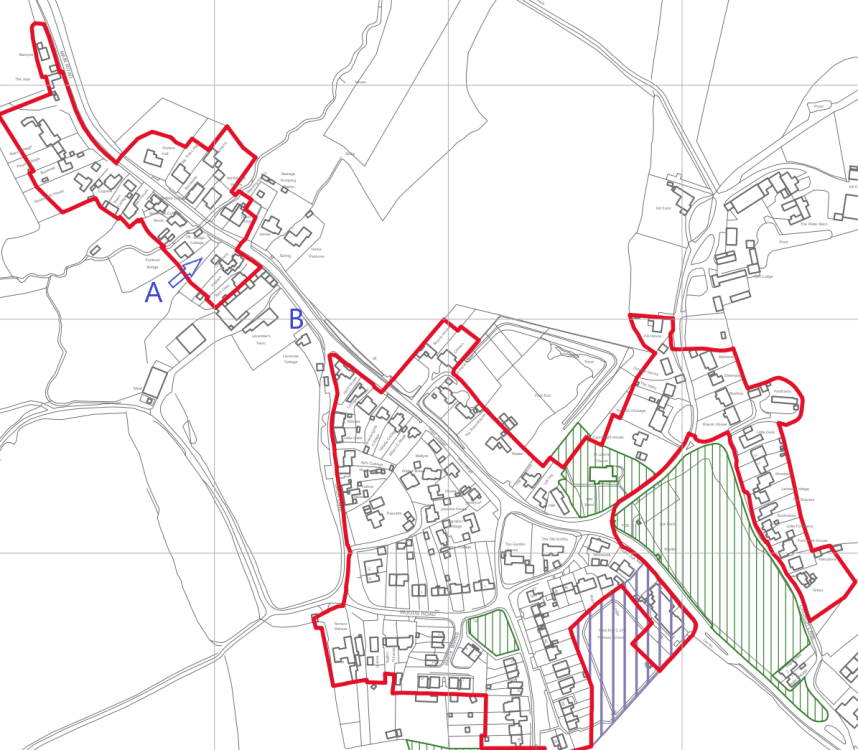
In this context, it's one and the same. The LPA's Local plan will have a set of maps included that define the "settlements" and their boundaries. In the rural context, the NPPF's "village" is within that boundary. As an example from my LPA, an infill at "A" may be considered, but "B" would not. Key:

-

Lawful Development and Previously Developed Land
IanR replied to TonyAtTheCroft's topic in Planning Permission
I did say the difference is subtle. I have assumed you obtained the CLEUD due to a continuing breach of planning law (for either 4 or 10 years, depending on circumstance). The CLEUD makes that breach "lawful" and immune from enforcement, while the breach continues. The minute the breach discontinues, the 4 or 10 year continuation is broken and the clock is re-set. Whatever the circumstances were, the required breach period is now 10 years due to a change in April 2024, so it would take another 10 years of breach before becoming immune from enforcement again. I've taken your statement "rebuild our dwelling", to mean you requested permission to knock-down/remove the existing (immune from enforcement) dwelling and build new. The removal of the existing building would constitute a ceasing of the breach, the existing CLEUD would therefore expire. I have assumed that what is now a dwelling was not previously an "approved" building with a different use, that you have converted to a dwellinghouse. There may be other options around a Change of Use. If in doubt, hire a planning consultant and allow them to go through the planning history on the site. -
Hi and welcome What's the reason(s) stated for refusal of the infill application? That would have been the only route to a planning approval, and it's been tried and refused, but can the reason for refusal be mitigated? Infill in greenbelt, within villages, is permitted within caveats, but not outside a settlement boundary. The NPPF covers this in basic terms, have a look at 154. e) & g) https://www.gov.uk/guidance/national-planning-policy-framework/13-protecting-green-belt-land The LPA's local plan may have local policies that build on the NPPF. The infill application should reference them both in the submission and the Officer's report. If the Infill application was well put together, the reason for refusal sound, and there's not been any changes to the local policies since, then it's not worth pursuing. If in doubt, find a local planning consultant that has had previous success with the LPA.
-
Lawful Development and Previously Developed Land
IanR replied to TonyAtTheCroft's topic in Planning Permission
There is a subtle difference. The development was not "made lawful" by the CLEUD, it just became immune from enforcement action. If at any time you cease the breach in planning, ie. you knock the house down, then the CLEUD expires. Rather than clutching at straws, they are correctly applying planning law. Have you tried for retrospective planning, since gaining the CLEUD. It would be pragmatic for the LPA to now approve a retrospective planning app. Although that doesn't mean they will. -
Stable block conversion - planning requirements query
IanR replied to Mike Wynn's topic in Barn Conversions
Don't they come under F1/F2 Uses? There's not a PD Class for Change of Use from F to anything other, so Planning would be required. Classes Q and R are specifically for Agricultural buildings -
Combining a GSHP with a scew-piled raft foundation
IanR replied to Dreadnaught's topic in Ground Source Heat Pumps (GSHP)
They have "Geothermal" in their title, how deep are those piles going? Surely typical piles for housing would require there to be ground water flowing beneath the building, within the depth of the piles, as there won't be any direct "solar gain" or geothermal heat transfer. There's not much info on the site linked, do they have any technical info available online? -
Stable block conversion - planning requirements query
IanR replied to Mike Wynn's topic in Barn Conversions
Correct. Class R Change of Use is not permitted if: So, under R.1(a)(i) the building needs to have been used solely for Agriculture, as part of an Agricultural Unit (viable farm business) on 03.07.2012, or last used if it was not in use on that date. You've used the term "Converting", so assuming the building is structurally capable of Conversion, then the performance requirements are lower than a new build, but there are still targets that need to be met. Some of what you list maybe covered by local policies that you need to research from your LPA, some are covered by Building Control and are National requirements. I'd suggest a local Planning Consultant to help you work out what applies. But, if the "derelict stable block" is not structurally capable of Conversion, then it becomes a New Build (knock down and build), for which there are less routes to a successful planning application, and New Build rules apply, as laid out by your local plan and Building Control. btw, Class R doesn't cover Change of Use to Residential, you'd need use Class Q, for which your equestrian stable block is also unlikely to meet. -
Type 1 won't stop water "percolating" beneath the raft, it will just drain more slowly and wash out the fines as it drains away. For an insulated raft the EPS would typically sit on a "no fines" pea shingle or granite chippings and there'd be a perimeter drain to aid water clearing. If you have a high water table, or it's temporarily high through surface water flooding then the water will breach the EPS, up to the DPM. Any EPS sitting in water is no longer acting as an insulator. The section I included in your other post shows this. Has your SE got experience of insulated rafts? There should be no issue contracting out the Engineering of the raft to a specialist and have your SE do the other details you've hired him for. Do you know that you can get the formers you need (or at least make it much easier) to create the ring beam detail with the specified insulation? It can be a bit of a closed shop where the insulation providers will only supply the "approved" formers for an Insulated raft that's been Engineered by a company they have a relationship with. Are you hoping to have a building warranty? Will your provider accept the raft design? And will Building Control accept it?
-
It is now mandatory that the land owner is notified if someone else submits an application for land they own and an Ownership Certificate should be submitted with the application, confirming the appropriate notice has been served. It's an offence to complete a "false or misleading" Certificate. Without an Ownership Certificate the application is invalid and should not be determined by the LPA https://www.gov.uk/guidance/making-an-application#Ownership-Certificate-and-Agricultural-Land-Declaration Object on the basis of the missing or false land ownership certificate.
-
That's right, no clips or straps, just nailed.
-
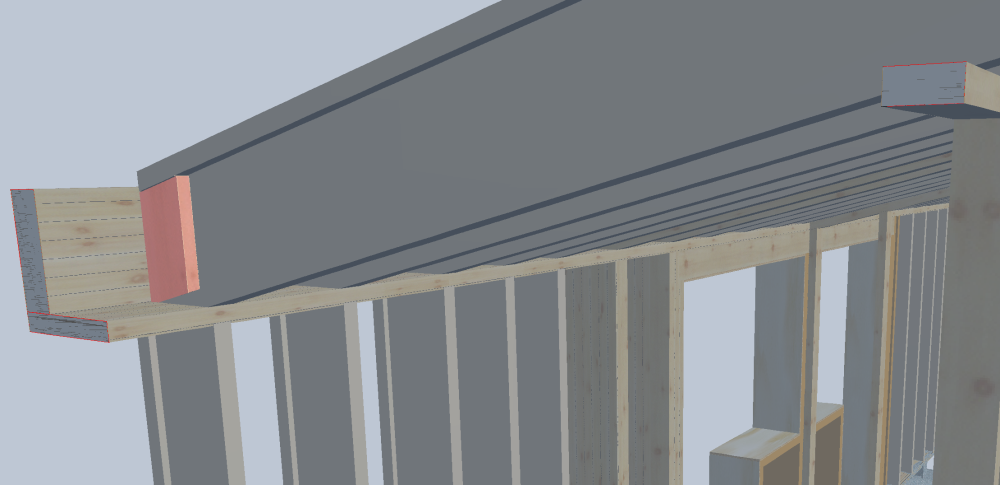
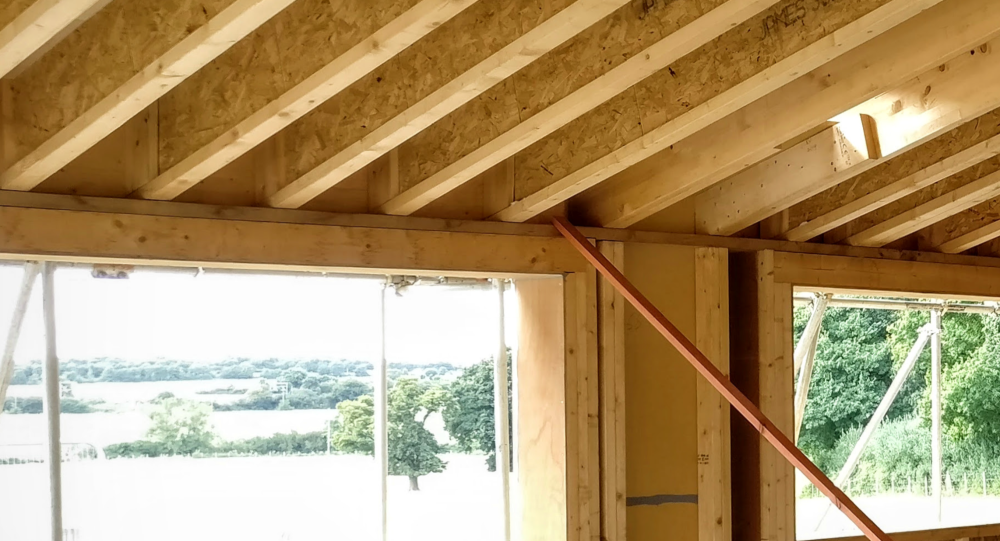
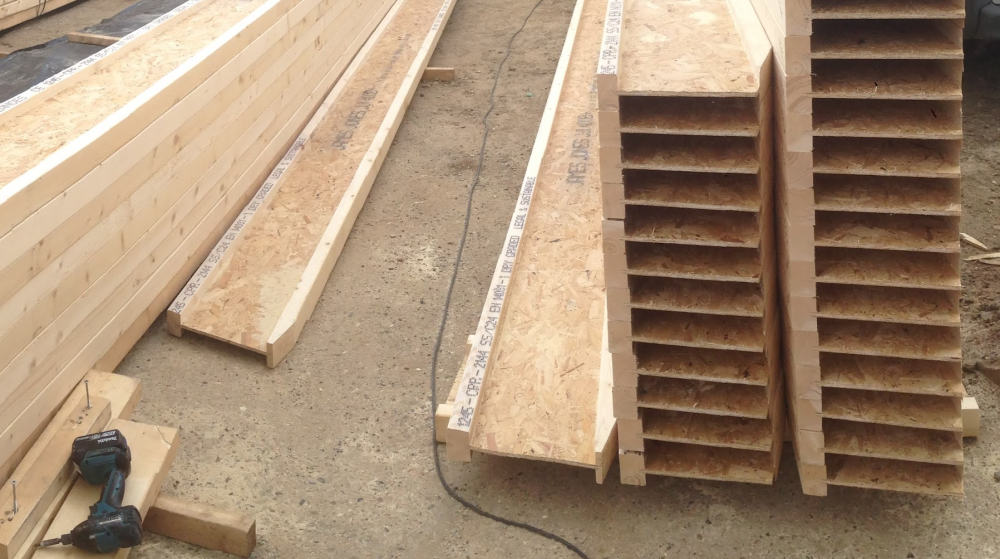
Mine was like this, but with packers between the flanges where the load is taken. Design: Cuts: Installed with packers:
-
My SE is recommending I do NOT embed the UFH in the insulated slab...
IanR replied to zzPaulzz's topic in Foundations
?? All available over the counter at my local plumbing outlet. Pretty standard size across the Continent. -
My SE is recommending I do NOT embed the UFH in the insulated slab...
IanR replied to zzPaulzz's topic in Foundations
The Thermotech pipe helped here, it's very robust and doesn't kink. It's Ø17 polyethylene which won't damage from the mesh being trodden on squeezing the pipe. -
My SE is recommending I do NOT embed the UFH in the insulated slab...
IanR replied to zzPaulzz's topic in Foundations
Insulated Rafts remain pretty niche in the UK, so you'll not find a standard way of incorporating UFH. They are however quite standard in Sweden, which is where Advanced Foundation Technology originate from. AFT Engineered and supplied my insulated raft including UFH from ThermoTech (Sweden) - Olof even dropped by to help install the UFH. The Swedes do their UFH a little differently to the UK but they take their plumbing very seriously. -
My SE is recommending I do NOT embed the UFH in the insulated slab...
IanR replied to zzPaulzz's topic in Foundations
Is this an early "conceptual" section, or the finished design? I'm surprised your FFL is not at least 150mm above the outside ground level. It's also an untypical sub-floor build up, there's no perimeter water management and a lack of insulation "overlap" where the raft steps from floor thickness to the beam thickness. What insulation and thickness is being proposed? My raft from AFT is doing similar to what yours is trying to do, but looks more like (but not identical to): Ref. https://www.advancedfoundationtechnologylimited.co.uk/our-products/passive-building-foundations/