

IanR
-
Posts
1841 -
Joined
-
Days Won
6
Everything posted by IanR
-
I got a Dewalt DCN692N as it uses the same batteries as the rest of my kit. If I was using one 5 days a week I'd probably go with a Paslode, but for < £300 and no gas to buy, the Dewalt does a very good job.
-

Class Q permitted development post May 24 changes.
IanR replied to Leroy's topic in Planning Permission
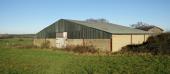
Hi Leroy, and welcome. At some point in the building's history it needs to have been part of an established Agricultural Unit. It sounds like it was as you describe it as an old cattle shed. It's the Agri Unit that has the PD, rather than the building itself. Is the Agri Unit still running (minus the 8 acres and old cattle shed)? If it is you'll need to know if any other buildings within the Unit have already been converted under Class Q, and that the Unit hasn't benefitted from Class A(a) or Class B(a) of Part 6 permitted development within the last 10 years. It sounds like any Agricultural Use of the building ceased some time ago. To qualify for Class Q a redundant building needs to have been last used for Agriculture (by an Agricultural business). I'd make sure it is cleared out and swept before sharing any info with the LPA, since if there is evidence of its last Use being non-Agricultural, your Class Q Application will go no further. Grass cutting is not an agricultural use, unless its bailed up and sold on or fed to your own stock animals as part of a wider business. With regards the building itself, it has to be structurally capable of conversion. Contradicting that are the allowable building works that permit replacement external walls and roof. It's a case of providing a minimum amount of information in the Prior Notice application. With regards to the new rules on the extension, there is no option to extend upwards, except the new 200mm you are permitted to add to the existing building envelope. The cobbled stones area you will have to test. These PD Classes are a straight legal interpretation of the legislation, there's no subjective nature to them as there is with a planning application. The legislation uses the term "hard surface", I don't believe there is a planning definition of "hard surface", so it's natural meaning would be used. If they wanted a concrete surface it would have been specified as such. I believe a cobble stone floor would meet the requirement of a "hard surface". It will be interesting to see how the LPA treat the Cobble Stone floor, the permitted building works do not include replacing floors (although some LPA's allow it), so would they expect you to build off the existing "hard surface", or as it's part of the extension, do they allow it to be all new. I suspect the latter. Regarding the AONB, sounds like you are outside. It is an "area", rather than a village, so it's quite possible for a village to be half in and half out. Edited to add: An area you should check is the Q1. Development is not permitted by Class Q if— ... clause (o) The extension is excluded from the assessment that the converted property would meet the space standard. I've not personally looked into that one previously. Legislation: -
The DJP form is correct if the Title is set up as a Joint Tenancy, but then legally you wouldn't have declared the 50:25:25 ownership. If they become aware, HMRC may also question the rent-free aspect of your father living in a property that he didn't wholly own. If the Title is set up as Tenants in Common, then a portion of the property remains in your Father's Estate and needs to be "Assented" to you and your brother. Unless there's something filed with the Title that states otherwise, the legal ownership would be 1/3:1/3:1/3 (not 50:25:25). Again HMRC may feel that your father living rent free in a portion of it that he didn't own could amount to a gift to you and your brother. Also, was the Deed of Variation made (of your mum's will) within 2 years of your mother's death? If not, that may also be considered a gift from your Father, and as it would have been within the 7 years of your Father's death may need to be included in your Father's IHT calculation. You probably shouldn't answer those questions on a forum, but you may want to take advice on your next steps...
-
For steel frame Agri buildings especially, the way the rules were set up meant that the existing steel portals would typically be visible externally on the walls, but have purlins on and a corrugated rain screen for the roof. Depending on how deep in plan the building is it may also have internal columns, which meant the converted building would have steel work external to the thermal envelope in the walls, but likely inside the thermal envelope for the roof and internal columns. With the Thermal conductance of steel that leads to a serious thermal bridge that needs to be mitigated. Allowing a 200mm "extension" beyond the existing envelope gives a chance of getting all the frame within the thermal envelope more cost effectively.
-
Agri permitted development response - prior approval is required
IanR replied to Galileo's topic in Planning Permission
Ah, no, Planning is devolved isn't it. The document I linked to is England only. -
Class Q legislation has been updated from 21.05.2024 Currently, only the Amendment has been published: https://www.legislation.gov.uk/uksi/2024/579/made So needs to be read in the context of the previous Order with its updates https://www.legislation.gov.uk/uksi/2015/596/schedule/2/part/3/crossheading/class-q-agricultural-buildings-to-dwellinghouses The main changes I see are that converted dwellinghouses are now limited to 150m² floor area each, where as previously you could convert 1 up to 456m² and another 4 up to 100m², although you can now convert up to 1000m² of floor area (previously 856m²). You can now however create up to 10 new properties when previously limited to 5. Interestingly, in some circumstances you can now add an up to a 4m, single story extension to the rear of the building, if there is already hard-standing in that area. You can also now extend beyond the existing building envelope by 200mm, removing one of the particularly onerous rules of the previous legislation.
-
Agri permitted development response - prior approval is required
IanR replied to Galileo's topic in Planning Permission
The Agri PD comes with a number of caveats, and the Prior Notice is required for you to set out why you believe you meet those requirements, saving a possible dispute later, after you have completed the development. Assuming you a over 5 ha (I don't think tracks are PD under 5 ha), then you need to look up the conditions required for Class A Permitted Development, A2. (2)(b)the formation or alteration of a private way. Ref. https://www.legislation.gov.uk/uksi/2015/596/schedule/2/part/6/crossheading/class-a-agricultural-development-on-units-of-5-hectares-or-more/made Condition (i) is: Hence for the need for the Prior Notice Application. It's typical to run through all the relevant "Development not permitted" clauses and state why these do not apply to your proposed development, and then go through all the conditions and ensure you will/can meet those. You'll need to add a Block Plan to identify teh site and the lands owned within the Agricultural Unit. If there's any doubt that the Agricultural Unit is a commercial business, You'll also need to provide proof of such. -
Assumed from OP
-
How did you take your Dad's name off the Title Deed? If the ratios were 50:25:25, then was there a Declaration of Trust filed with the Title at LR? I'm not an expert, but assume you would have need to do an Assent from your father to you and your brother, rather than a Transfer. An Assent needs the Grant (I believe). There's around a 6 month delay with LR at the moment for Assents and Transfers, have you received the completion documents from LR to show it has gone through? With regards sale, are you the Executor to your Father's Estate? If so then I believe the Executor can sell the property (to collect monies for HMRC and Beneficiaries), but I don't believe you can pay out to the beneficiaries until Grant is received. ie. keep the money in an Executors account.) This maybe more relaxed if HMRC have agreed, via IHT400, that no IHT is owed.
-
Use of land and it’s impact on future planning permission
IanR replied to Lewis88's topic in Planning Permission
To fit the government definition of "Brownfield" would mean that it is or was occupied by a permanent (non-Agricultural) structure and the curtilage of such. The definition states that it excludes buildings last used for Agriculture. So, it's all about the permanent structure that is or was on the land. As long as that structure is not used for Agriculture, it shouldn't stop the land being Brownfield. -
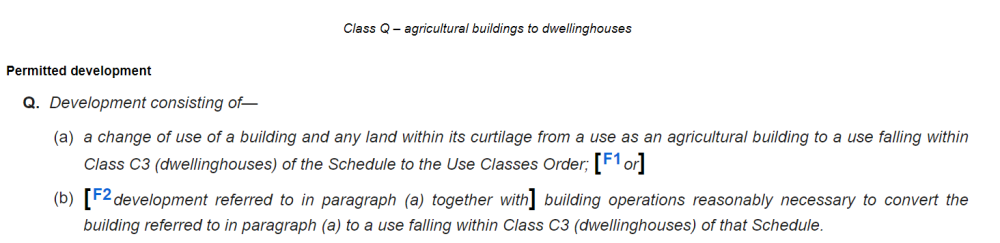
Ref. https://www.legislation.gov.uk/uksi/2015/596/schedule/2/part/3/crossheading/class-q-agricultural-buildings-to-dwellinghouses/2019-05-25



-
Have you looked at rooves in the different materials? Apart from the colours, can you see the difference in finish? are you particularly after one finish over another or does that not matter so much to you? Traditional Standing Seam is a made out of a ductile material (Zinc, Copper, or a modern version being Aluminium) where the material is delivered on a coil and formed on site. The ductile nature allows for upstands, flashings, verges etc. to all be hand created on site, in the same material, with relatively simple tools. More labour tends to be required for the instal. While the material arrives on a coil and has not been "processed" it can be the cheapest way of purchasing that material, however Copper and Zinc are expensive materials to purchase even in a coil format. Less ductile materials such as mild steel and stainless are preformed off-site, into "trays", and mild steel needs to be pre-coated for corrosion protection. That processing increases the cost a little, and likely the shipping costs increase as well, but mild-steel is the cheapest sheet material and the processing into trays brings it up to a similar price as the aluminium on a coil. The less ductile materials will require flashing kits for upstands, verges etc. If you are using a standard Velux roof light, there may be a specific flashing kits for that window, in the same material, but if there's not, or you are using less ubiquitous roof lights, then you'll likely need to introduce a different material for flashings as they not able to be formed on site out of the same material. Copper, Zinc and Stainless don't require pre-coating. Coper and Zinc will oxidise over time, changing their colour. While aluminium doesn't require coating for corrosion protection it is coated as the oxidation occurs in a streaky, blotchy manner. I went with Aluminium as I wanted the traditional standing seam look and pricewise it was cheaper than some mild steels, but more expensive than others. It was much cheaper than Zinc and I didn't entertain Copper.
-
Air tightness results are in…
IanR replied to Omnibuswoman's topic in Energy Efficient & Sustainable Design Concepts
Great result! You'll benefit from all that taping for years to come. -
Class Q PD stops you extending beyond the existing building envelope, so if the finished conversion has the roof finish in the same position as the original barn you won't be able to add Solar PV, that sits on top of the roof, as part of the Conversion as it will be outside the existing envelope. If you can fit it within the existing building envelope, by integrating it within the roof finish then it could be done within the Class Q Conversion, but you will need to resubmit the Class Q Prior Notice. The LPA may accept it as a non material amendment, but if they won't I personally wouldn't re-open the book on the Class Q. Once the Conversion is finished and the building is occupied, you would then have PD Rights to add PV, as long as you fit within the rules. "Green" PD Rights are the only ones that remain in place after a Class Q conversion, all other PD Rights are removed. If you don't fit within the PD rules for PV, there's nothing to stop you putting in a separate planning app for it, it's highly likely to be successful. You may want to consider putting in a Planning App for the full Change of Use Conversion, using the Class Q as a fall-back, as it could get you away from some of the Class Q restrictions, and you could then include PV from the start, but watch out for the 3 year time limit to complete the conversion, of the existing Class Q Approval.
-
Have you looked at all options of raft? Ie. Rafts with piling support.
-
Help designing our home network
IanR replied to MechanicalBuilder's topic in Networks, AV, Security & Automation
For all National FTTP ISPs (except Virgin, if you want to call them "national"), Openreach provide the infrastructure and the connection of a house to it. (Although arranged via your chosen ISP when you order a service) OR say they will fit a junction box for the fibre on an external wall, drill through and put the ONT the other side, where there needs to be a plug socket. Your Gateway (aka router) would likely be positioned there also. Currently OR are prepared to go the extra mile and if you have ducting in place, ideally the grey 50mm ducting OR issue for copper connections, OR will route the fibre inside the house and terminate at your preferred location, along with the ONT and your Gateway. My experience was OR did an awful lot for the standard connection fee. Ie. Pulled the fibre 130m through the existing ducting and got it to my Node 0, in the centre of the house. It did take them 5 visits though. If you're in line to benefit from alternate fibre networks, ie. Virgin, Community Fibre etc. then each have their own rules, but are generally similar. -
Scotland has banned Wood Burners in new homes and conversions
IanR replied to IanR's topic in Environmental Building Politics
The legislation just says "emissions", so I'd take that to include NOx, discounting Hydrogen combustion boilers as well. -
Scotland has banned Wood Burners in new homes and conversions
IanR replied to IanR's topic in Environmental Building Politics
I don't believe there was a consensus it wouldn't happen. It has to happen, just unfortunate "the industry" is burying its head. There's going to be a lot of poorly trained and inexperienced installers. -
Scotland has banned Wood Burners in new homes and conversions
IanR replied to IanR's topic in Environmental Building Politics
What has surprised me is the noise around the new legislation is only about Wood Burners, the parallel ban on fossil fuel boilers has been introduced without barely a mention. Not being in Scotland I've not used their Building Warrant system, but I assume any Building Warrants applied for after April 1st have to show a non-fossil fuel heating system and non wood, biomass etc. Are the Heat Pump installers of Scotland ready to support all the new builds? The ban (for new builds) in England and Wales is only a year away and it doesn't feel like the industry is yet ready. -
Guidance on how to word a legally binding document
IanR replied to LovelyLoz's topic in Party Wall & Property Legal Issues
Don't be rushed, put the onus on the builder to put the legal document in place at their cost, and to cover your legal costs. It can't be done in the timeframe of the current planning app so either suggest to them them to withdraw their application and resubmit when everything is agreed, or continue with your objection until the agreement is in place. -
... Along with all "locally polluting heat sources", from this month. While the following is behind a paywall, I believe you get 3 articles a month without paying. https://www.telegraph.co.uk/news/2024/04/09/snp-showing-contempt-for-rural-scotland-wood-burning-ban/ The crux is that space and water heating systems going forward must "not by means of a direct emission heating system" https://www.thenational.scot/news/24242447.wood-burning-stove-ban-scotland-key-rules-explained/
-
I believe what is meant is that they have Planning Approved for a Change of Use Conversion, rather than the initial Class Q PD.
-
Looks like a carbon copy of the barn I converted under Class Q, 7 years ago and live in now. At the time my LPA insisted the Class Q couldn't be used as a fallback for full planning and I was unwilling to be one of the first to challenge that view via Appeal. Full Planning is certainly the better option, to get away from the Class Q rules and restrictions, but still very happy with what I ended up with, it just could have cost a lot less. Shame they're not doing a blog somewhere, it would be nice to follow. Unfortunately the YT format doesn't work for me with this sort of project. The actual pour went pretty quick for me. 500 sqr m was in by 11:00 on the day we did it, so I'm not sure of the cost savings from doing it in smaller chunks, unless the couple really are planning to do it without any help.
-
The linked article is referring to the "crisis in the volumetric house-building sector", so I took the OP to refer to the common meaning of modular build, ie. Pre-built "modular" boxes, assembled on site. And you can build panellised kits in much smaller, grottier factories, or handle and store (waiting for delivery) more panellised house kits in the same space.
-
I see this as a specific issue with Modular house process. As a comparison to cassette/panel kits it incurs higher costs for larger warehouses to build large boxes (of air), higher shipping costs to transport those boxes of air and higher crainage costs to move those boxes from transport into position. I've never understood the benefit of the modular method.





