
JohnMo
-
Posts
12467 -
Joined
-
Last visited
-
Days Won
179
Everything posted by JohnMo
-
We generated a 3kWh today, far from self sustaining here. The joy of being north.
-

Do I need a HP specific cylinder?
JohnMo replied to Beelbeebub's topic in Air Source Heat Pumps (ASHP)
The way the heat pump operates doing DHW. You have a target flow temperature, let's say 50 degs for ease. If the cylinder is at 30 degs, the heat pump will sense a return temp of 30 degs, and add a dT to flow temp (approx 5 degs). Now as the cylinder heats the return temp increases as does the flow temp to keep the dT constant. This gives a good CoP as temp stays low as long as possible. Now the rub, if your heat transfer area is smaller than ideal, the coil doesn't extract as much energy as it should, so flow temp stays higher than it should. So the ASHP runs at an elevated temperature for a given cylinder temperature. The more flow and return diverge away from actual cylinder temperature, or more distortion you have between cylinder and return temp the worse the CoP. Worst case is you do not hit cylinder target temp in one hit, you could end up cycling the heat pump, but most will have a learning feature saying it don't succeed heating cylinder with ASHP, so I will just use the immersion instead. Best situation is a huge coil 3m² or larger or a plate heat exchanger. An add on phe and pump is the easiest way to do things, choose a bigger PHE get a better CoP. -
A bog standard gas heated house, with low standing electricity loads, it's never going to be viable for a battery. Not sure how you make the maths work. On the other hand, an all electric house, with stuff like a treatment plant, with a continuous compressor running, borehole pump, ASHP etc and PV. The argument becomes more compelling, way easier to justify. Really each case will have a different break even cost point. Mine was a no brainer and just part of a series of changes to bring utility bills down substantially. PV maximise, ASHP, battery to utilise generated PV, smart meter to get a decent electric tariff. Back in 2023 with gas and electric we were paying about £220 each month, now down to below half of that.
-
Making sand and cement render to look like lime render
JohnMo replied to Jonny's topic in Plastering & Rendering
I suppose it is likely render was originally put on an uneven substrate - rubble etc. so likely you will never get a flat finish. Leave the past behind - you are doing a new build embrace it -
But maybe run long enough that battery technology gets cheaper and allows more to be installed with out breaking the bank
-
Really depends on tariff and how many bites you have at charging. When charging your house, it will be using grid energy anyway - if no PV. So on cosy you can easily charge 3x a day and get 7 hrs off peak. Which is a lot of cheap energy even with a modest battery. Trouble with big water storage is modest PV it makes almost no difference to the water temperature, plus with no PV you always have to throw plenty of energy in to it to make useable flow temperatures. What are going to do with the hot water when you have it?
-
I suspect it will turn like Australia did, you now pay to export, not get paid - unless it's to the benefit of the grid, i.e when it's not windy or sunny.
-
I understood the V2G, the import/export is basically handed over the electricity supplier, they drag the energy from the car, when needed and put it back when there is a surplus. V2H, is making the car similar in concept to house battery.
-
I may be wrong but everything I have read seems there are different systems and have different results. Isn't V2G, basically car to grid, missing the house out all together. So ok for an export tariff, but not much else. Wouldn't you want V2H, so house could take advantage of car for self consumption via car battery. There is a bidirectional inverter in both V2G and V2H, but configuration very different.
-
PIR is about 12 to 14Te m² (120 to 140kPa) Thread here https://forum.buildhub.org.uk/topic/32633-curiosity-how-can-celotex-insulation-hold-the-weight-of-the-screed-floor-units-people/
-
Just been through similar This is what you have to do and then they will fit a 4G smart meter instead. You have to go through 3x smart meter appointments with octopus, no other suppliers attempts count. So first sounds like you have done, now book another attempt, it's likely to fail. Then straight away book a third attempt and state you need a 4G meter installed. This is then raised with DCC, they then approve. If the person you speak with doesn't understand the process, your installer will and may if you are lucky just install one anyway.
-
Not even sure where that comes from, humidity air in a wet room, yes, stale in a whole house ventilation system running 24/7? Stale air just doesn't occur. Seeing the layout with bedroom and ensuite doors next to one another the through flow scheme is not going to work anyway. Too much of a short cut for air travel. What I was proposing is no different from a Brink Multi flow system, or a Passivhaus Cascade system, promoted by them for retrofits. Or systems like FreshR or Blu Martin.
-
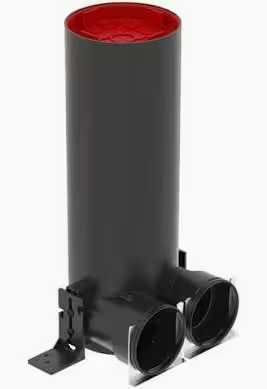
Use a double or triple duct plenum, then you can run as many ducts as you need to one terminal.
-
Just ring around all your local electrical factors, prices will vary depending on the person you talk to
-
Your trying way to hard One supply or extract to each room is normally all that's needed. 3 in a dining room is not required. 2x extract in utility? Why 3 in kitchen? Why MVHR does not move heat about, it's a ventilation system. The very max you can move is 10W per m² of floor area with a heater running at about 70 degs. I would concentrate on looking at your heating system and look to move to a low temperature system.
-
Multipipe Maxima FM 16-port manifold (..and 13, 14, & 15)
JohnMo replied to mikeysoft's topic in Underfloor Heating
He said he used Loopcad to design the UFH, if he did and built the house correctly the room by room calculation is done for you. But So only he knows what he has or hasn't done. I am bowing out now, he doing what he's doing, no matter if it's good bad or indifferent. Most likely end up with a thermostat in every room and boiler short cycling, like many thousands of installs. But gas/lpg is cheap... -
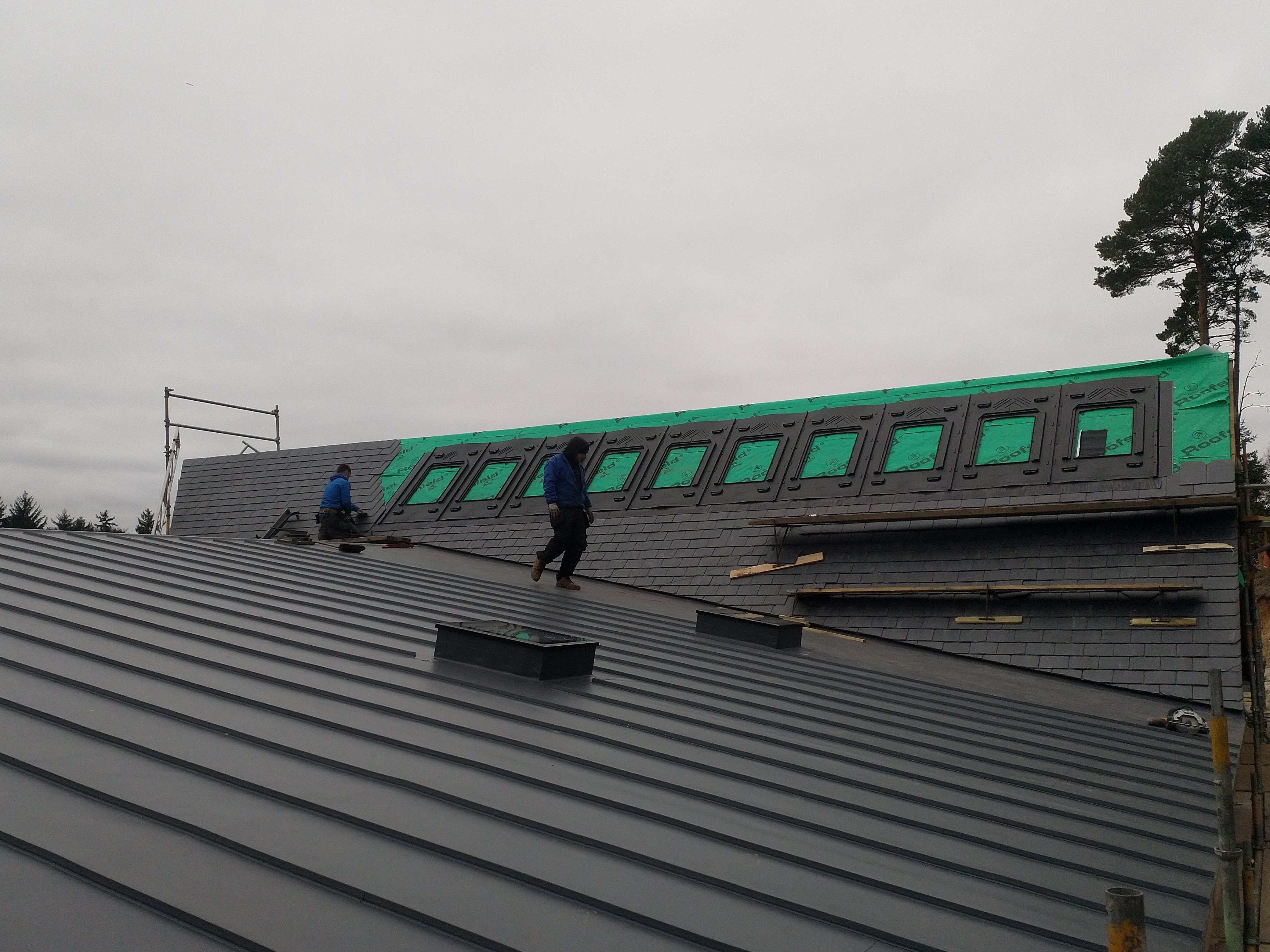
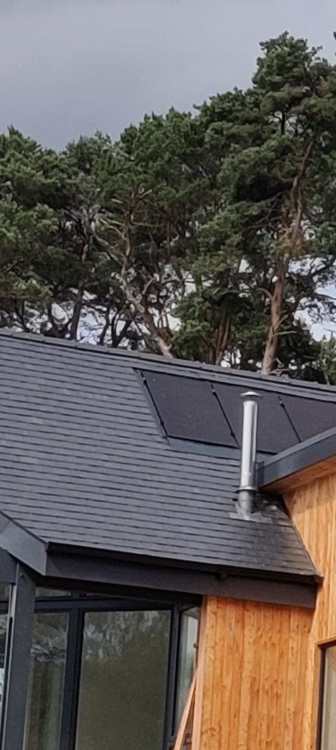
This mine I have two slate at the top then the dry ridge. Not that obvious from the photo but there is step change in height as the tile overlaps the gse panel.
-
Everyone may see what you are doing, even with frosted glass, if over looked. Put a dMEV fan in there while you are at. Something like a Greenwood CV2 or 3. Instead of the grill that there now.
-
Is the airflow to bedrooms and ensuite the same - if not you need an under cut Could be a waste of time. Why not just a big supply there instead. But then - No supply to bedrooms and obviously extract in the ensuites. It would need to sized to at least match all the ensuites and any bathroom upstairs. The bedrooms then get through flow on the way the extract points. You need door under cuts. It's a valid system and is called cascade ventilation. The issue with the extract in the hall is where does it gets it's flow from. You either over ventilation the bedrooms or from down stairs? MVHR is rubbish at moving heat around, flow rates are too low and air has a low heat capacity.
-
I would download the installer manual and look at the wind load guidance. Then hand it over to your structural engineer. Get proper advice as you are going to get huge wind loadings
-
Stud partitions sequence of build question.
JohnMo replied to Brian Ireland's topic in New House & Self Build Design
This is how I did mine on all walls that were not structural. I also have service voids on the walls so the first vertical stud was also 50mm from the external wall to maintain the gap. The gap filled with mineral wool to stop sound travel later. -
Multipipe Maxima FM 16-port manifold (..and 13, 14, & 15)
JohnMo replied to mikeysoft's topic in Underfloor Heating
Our ensuite sits at about 20 no more, -
Why not just get a kit, we did one with 70mm thick timber walls and installation inside. Basically slabbed a flat area and built from there. Summer house sits on slabs and is bolts bown to them. Added insulation to floor, roof and walls
-
Multipipe Maxima FM 16-port manifold (..and 13, 14, & 15)
JohnMo replied to mikeysoft's topic in Underfloor Heating
I would be just doing radiators, decent carpets kill UFH no matter what the spacing. Design a system just like you would for a heat pump. So oversized radiators, high gain cylinder - A system similar @marshian has, it would be cheaper to run, and install than anything you could do with your UFH, not what you want to hear, but... Run whole system as a single zone on either weather compensation or via an opentherm (if your boiler does that). @SimonD is the man to advise that. A quick review off downward heat losses U value about 0.2 Area 100m² UFH floor temp average 30 running WC. Radiator floor temp 20 Ground temp 6 degs Heat loss is U value x dT x area 0.2 x 14 x 100 -
They still defrost I have neither on my monobloc either No difference from a monobloc Yep you will knock 1 to 2 off SCoP easily. I changed our logic so the only circulation pump switched off when the compressor was off. The blue dots represents CoP for that day. No changes made other than pump logic. Guess when I changed the logic. Dread to think what second circulation pump and buffer effect would do.