
JohnMo
-
Posts
12468 -
Joined
-
Last visited
-
Days Won
179
Everything posted by JohnMo
-
Sure, if you come round I'll buy you a pint or two. It's only about 10 to 12 hour drive.
-

dMVHR or trickle vents
JohnMo replied to HughF's topic in Mechanical Ventilation with Heat Recovery (MVHR)
Is that £3k for trickle vents - why so expensive? If that's the case do what the builder says -
What I forgot to add, if you are using a buffer, plumb as a 2 port in the return or flow line, then you won't need a secondary pump.
-
I like playing, I can afford the beer
-
The immersion I referenced is AC connected for backup. It will run the PV array fully off grid.. You set you target temp for AC, independent of what the DC (PV) does or achieves. So completely fulfills what the OP asked for. PV hot water but also can be charged by E7 if required.
-
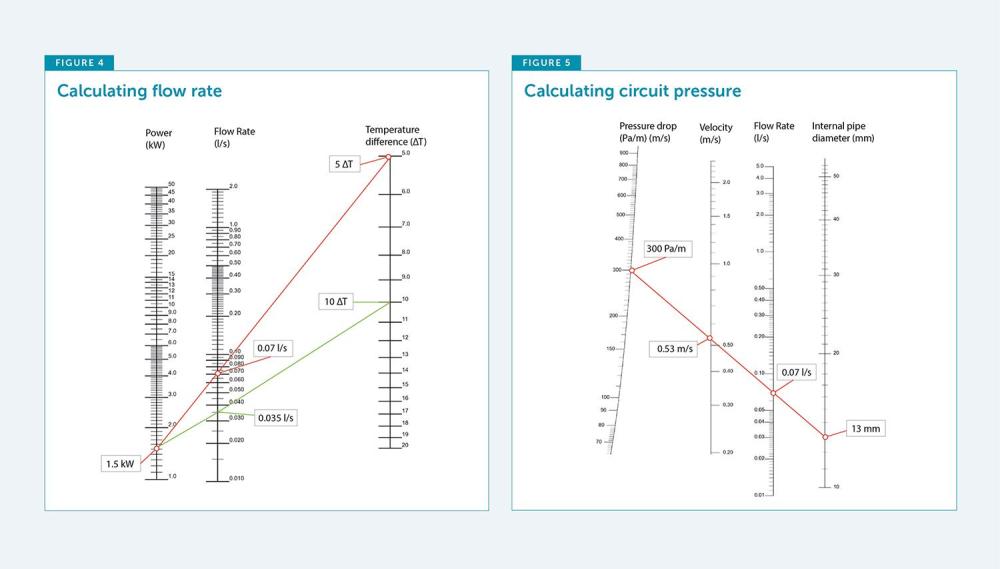
The temp in the spreadsheet will be the temperature your feet feel, not really much to do with flow temp. The flow temp is a product of upward, downwards and sideways flow. Look at the attached charts and have a play, even at 100mm centres you will be over 40 mean flow. (That assumes hard tile floor not carpets) You can design radiators for a lower flow and then way less downwards heat loss. If you really want to spend money on your heating - install radiators and post £5 per day to me that will make both of us happy. Yes 900W per hour at a cop of about 2.5, would be £2.50 per day just on downwards heat loss. Plus the difference between flow temp of 45 and 35 is a cop of 0.6, hence me asking for £5 a day. Put the insulation down, but not the pipes, put nice radiators designed for a DT 15, so max flow temp is closer to 35 instead of 45 plus.
.thumb.jpg.e6f5b10749b0a8b28a782f83356b9791.jpg)
-
ST only needs to operate just above OAT with radiator, as long as get back more energy than the pumps being used it's a bonus. Looking at my CoP chart flowing at 30 degrees the difference between -2 and +2 is a drop of 300W. The pumps will pull around 30W each, there are two.
-
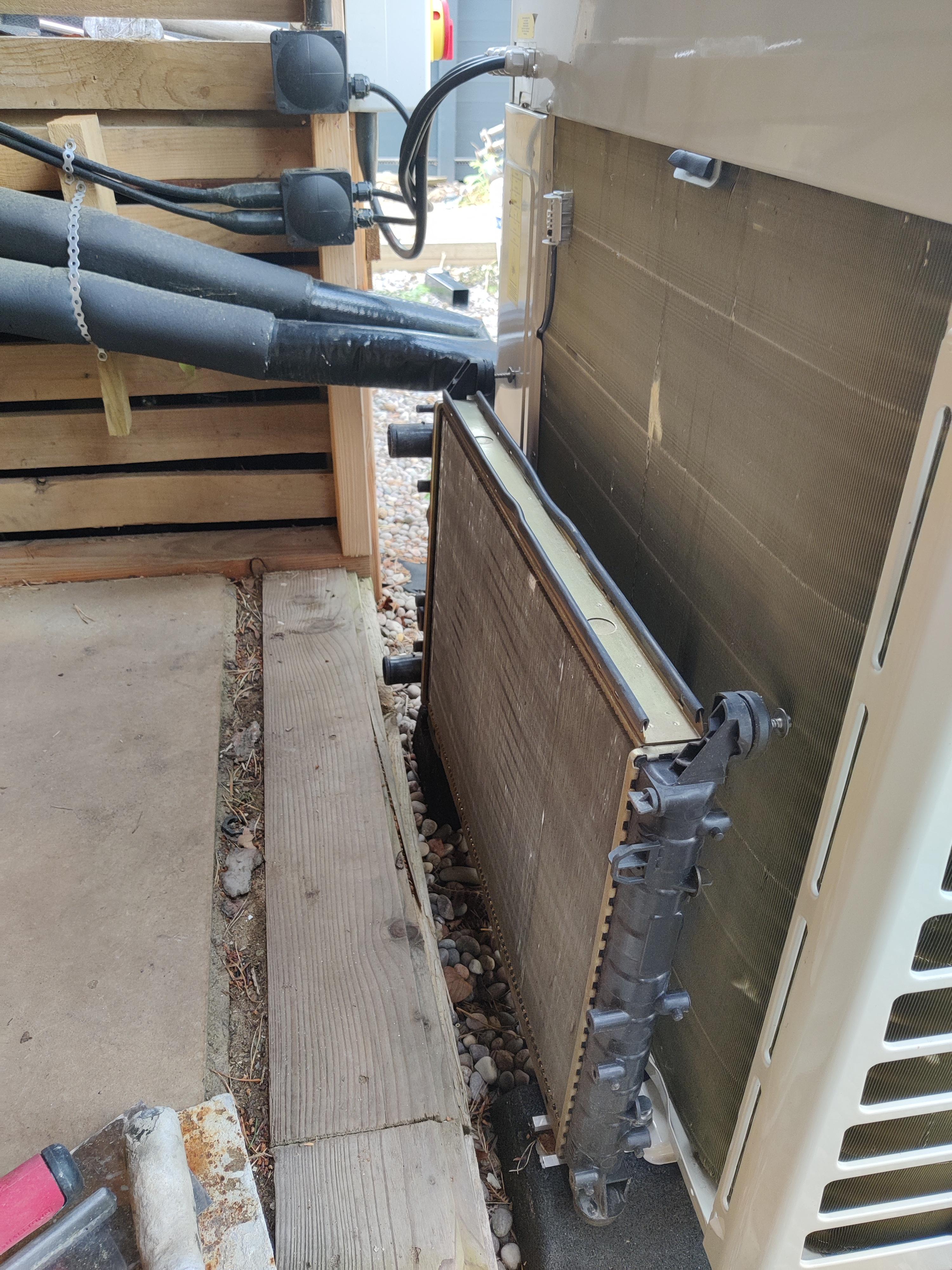
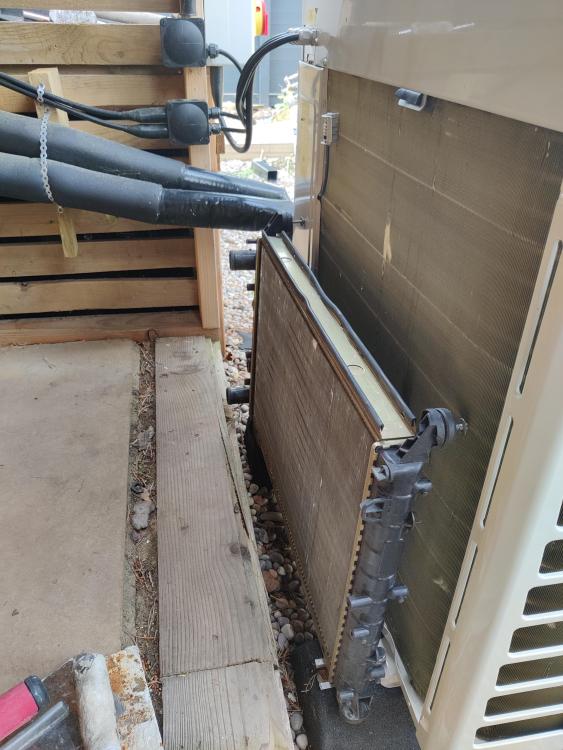
The drain back unit has an inbuilt PHE. Had another thought about indirectly increasing CoP through air pre heating. Basically flow ST water through car radiator say behind ASHP. Something like the attached. Even though only part covering the ASHP condenser air is being pulled through the radiator.
-
I have an ASHP all installed and working. Also have a solar thermal panel - not installed, with a full drain back system. My issue I can't install direct to cylinder without quite a bit of work, but have very easy access to a roof space and ASHP flow and return pipes. So was thinking of coupling direct into either the flow or return of the ASHP via close coupled tees. Then put some logic behind it. Think return pipe would be better? So I need to do Take solar thermal when cylinder heating and heating UFH, but not when cooling. Typical flow temp for UFH is around 30, so should get a decent yield from ST even in winter. I could even switch off in the summer. What do you think, is it feasible?
-
Never too young. Have plenty of when retired or semi retired to do stuff.
-
Nothing specific sorry
-
Or do what I said in the first post and it's off grid, so no-one cares
-
How big is your house?
-
You need to do a G98 notification to DNO. You will need a qualified electrician to sign off the certificate. All this us done after the event. As long as you not in a listed building or conservation area, it should be permitted development, so no BCO involvement I believe.
-
Was skipped
-
Why not just use the circulation pump within the ASHP, or doesn't it come with one? If you have a radiator or UFH heating loop without actuators do you need a bypass? Your flow rate is basically double mine - at 6kW, so sounds right. If you use an 8m pump, you have room to change speeds to get the flow rate you need, but heat pumps should have all you need and that should auto modulate to maintain delta T target.
-
Good point by @JamesPa, if you just want water heating, the grid tied inverter and diverter and a few panels may give you what you want.
-
My boost worked for the first week then did nothing, but the unit failed just like yours. Ended up with random lights flashing, but nothing else. Solic units have no active cooling and that could be the issue, they just fry themselves.
-
Full details of costs, all labour by myself, so not costed Panels 12x 285W, used £700 £40 fuel to collect panels Inverter £150 Posts and postcrete. £400 Unistrut, £300. 4 core cable and three core cable £300 Isolators AC and DC, generation meter, stickers and MC4 connectors, £99 M20 glands £2.50 M25 glands £30 Coach screws £9 M4 bolts and nuts £9 Square plate washer £13 M8 Allen bolt £18 Panel mounts £32 DC cable £70 MC4 connectors £7 So cost all in £2210, for a fully installed ground mount 3.4kW PV system. Array mounted 52m from inverter.
-
Electrical stuff would normally go in a hockey stick. They are sold by electrical wholesalers, come in a standard size. I have two one electrical the other data. Water in a flexible conduit. Mine was something like 110mm blue I think. Where you go through block work there is a lintel to support structurally. The opening closed off with pea gravel to allow movement.
-
The diverter is cheapest on eBay from their outlet store
-
Couple of isolation switches, one DC the other AC. Look on Facebook market place and gumtree. That's where I got all my panels and inverter from.
-
That's a big heat pump in a passivhaus. Even a very very big one.
-
I had a solic and it lasted less than 18 months. Just purchased a cool energy one instead, it can do two immersions sequentially and tells you what it is doing in figures (kW and kWh). Way better and was a similar price. It also has an in built timer so you can ask it to boost during cheap rate times if you want.
-
ASHP heating water outside of hours?
JohnMo replied to Andeh's topic in Air Source Heat Pumps (ASHP)
Does have a 3 port valve, would be worth checking part numbers to make sure it's actually a diverting valve not mid point valve.
.jpg.87d6d75adaec59a22c40fcf0ea8d2464.jpg)