


JohnMo
-
Posts
13292 -
Joined
-
Last visited
-
Days Won
200
Everything posted by JohnMo
-
 If doing a timber frame, look for cold bridging at the wooden sole plate and foundation also. Then design out.
 -
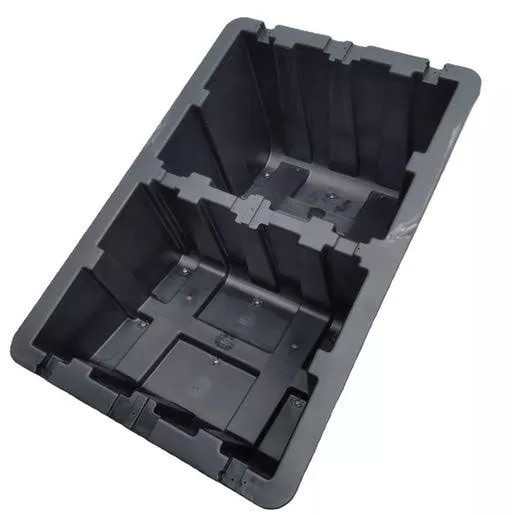
Ballast buckets, do a good job of spreading loads
-
FH Brindle, Made2Measure. Make sure if you have a drop the other side you get the correct structural specification. Also if in a high wind area, you also account for wind loads.
-
I would worry the centre of the plasterboard sagging with a 1m span.
-
I would strongly suspect the tight curve on the flexible hoses and the tube inside collapsing. The angle changes need to be taken up with solid elbows, the flexible is there to absorb vibration and noise transfer, not really to change direction.
-
I definitely wouldn't have the Flexi on a curve, they definitely aren't like hydraulic hoses, so more likely to collapse over time. Why do you have you flow set at If you are restricting flow to get that I would take that restriction away and allow pump to modulate (if it does). Even that is low, a 4kW should kick out 20+L/min, the bigger the heat pump the higher the flow rate.
-
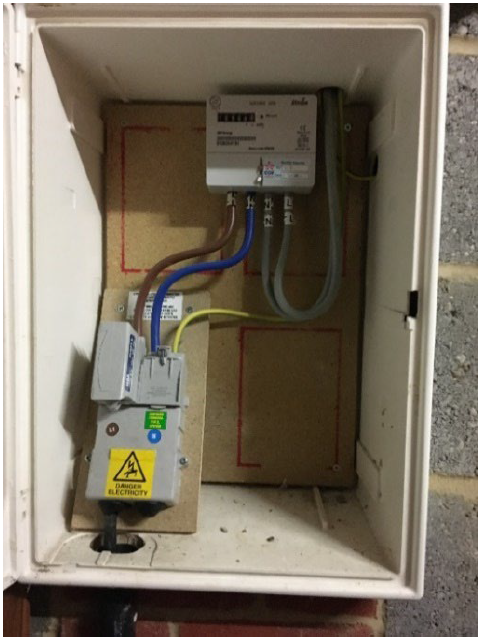
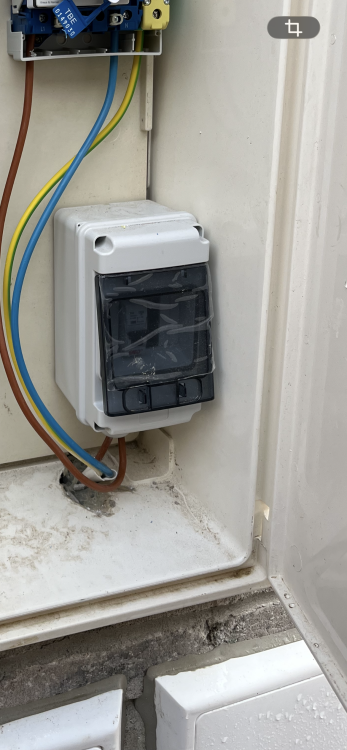
So back to my original question, why is this any different from a CU where you generally only have Twin and Earth cables enter, the other sheath is removed and the tails connector to the stuff within the CU. Both this and CU are basically a locked box?
-
The wires look the same to me, first image from the liked website, the other the OP. OP's not tidy and thrown in, but tails look the same - what is different, as I said simple terms would be good. So anyone following this can actually tell correct from wrong.
-
So, looking at the images there appears to wiring exactly the same as the OP, so whats the issue? What is non compliant?
-
Isn't it already in containment, it's in a big box. So what's the difference from a consumer unit, you open that box and you see single insulation wires. No idea of the answer, just a confused - simple terms learning lesson would be good
-
Seen a few vids with it wet/damp. Suppose to dry out over time https://youtu.be/v_OmMxSbOSw?is=NxKx-3p3KCIq62rJ
-
Sounds like an overthink it Sunday.
-
They also import the coal - not energy self sufficient. We don't have much coal as proven reserves, so you are saying the policy is build coal powered power stations that rely on imported coal. There is zero business case for that sort of project. Why would anyone spend there money on that. A power station that has been shutdown and not had preservation maintenance completed will be good for scrap only. All the rotating equipment (turbines generators, pumps, fans) will have bowed shafts, the bearings and seals will be no use. Think the l'm for coal lobby, live in a make believe world, that doesn't exist. I will bow out now.
-
I was thinking similar.
-
Your wasting your time and effort, they have possibly just swallowed all the miss information, from social media and now that is the only thing they believe. Coal, we have about 23 million tonnes of proven reserves in 2023, adding a generation efficiency of 40% that's about 70TW/h. UK uses 300+TW/h. So coal lovers get real, you would power the UK for a few months, then need imports. NOT SELF SUFFICIENT!
-
All the talk is about banning social media for under 16, just ban it all together. So much miss information told as a truth, and then the algorithm just points you at similar rubbish. People that don't have science background just lap it up. Sat next to guy on the train he was telling me that people are daft having solar especially in Scotland, I told him how much I had exported so far in March, he was was quite shocked. Also told him what I paid for it as a self install, he expected tens of thousands, not the couple I actually paid.
-
Wasn't really saying ditch, the inverter would be still compliant, you are just allowed to plug it into the ring main, and not bother with registration.
-
Over site prep after foundation masonry. Why?
JohnMo replied to flanagaj's topic in General Flooring
We did similar, two of us did it by spade with a barrow. Gets you fit is one way to look at it, kills you is the other. We had a 192m² to do. This is us near the end Have fun
-
But what sort of coal was that? There are different grades for different purposes. The mine closed in 2024 produced high-grade anthracite coal, which is primarily used for industrial purposes, such as manufacturing steel and water filtration - no use for power stations. The last coal powered power stations imported the coal - so no point having them for self sufficient reasons. The way this thread is going, we will be dragging back the steam trains, and steam cars. Back in the good old days, when everything was rosy, we had pea soupers due to all the sulphur we were burning via coal. We can always bring coal gas back while we are at. And send the kids up the chimney to clean them. Sorry this thread is going daft. Who the f*ck wants coal anything - even the Chinese are installing more renewables than coal, and what coal power stations are there, are only used 50% of the time.
-
Easy way - plug and play inverter is limited to 800W. Anything higher goes to CU and controlled by G98. You will still get people that install multiple systems, but difficult to control those. Unless you get the PV police, that's not happening, you can't get normal ones.
-
253V from a quick search
-
MVHR & wet room windows… any thoughts on fixed vs opening?
JohnMo replied to fatgus's topic in Windows & Glazing
Think about summer cooling also, opening windows allows cross flow ventilation. We mistakenly have two bedrooms without opening windows believing MVHR was the saviour for cooling blah blah. Get opening windows you can leave them shut or open if you want. Fixed are fixed closed always -
We've been saying that for ages. March was great for solar!
-
Thinking of installing a bore hole - what are the issues and costs.
JohnMo replied to MikeSharp01's topic in General Plumbing
All depends how deep you need to go and ground make up. We were almost pure sand down to 34m so there's a lot of steel liner instead of plastic. This has a knock on as the treatment needs to remove iron oxide. Our drilling company insisted we used a water dowser (man with a couple of sticks) to identify location and depth of borehole. All work perfectly. Our system is down hole pump, to 100L accumulator, backwash filter that also does iron oxide removal, 10 and 5 micron cartridge filters and a UV filter. It was all pretty easy stress free, water quality is great. Works just like main water. Saves £500 on my council tax bill (Scotland includes water and sewage on council tax bills) -
You don't apply for it, it just a notification, saying your house has a generator that do upto 3.6kW output. But really if all or most houses have some generation, you should almost flip the notification, to you don't have a generation connected to the grid. Or just scrap the needless bureaucracy. And it is paperwork for the sake of it, to keep the masses in their place


