


JohnMo
-
Posts
13308 -
Joined
-
Last visited
-
Days Won
200
Everything posted by JohnMo
-

Getting frustrated with heating suppliers.
JohnMo replied to MikeSharp01's topic in Other Heating Systems
It says to me the plumbing and heating engineer apprenticeship is p**s poor and pretty much always has been or they have been trained with skills and choose just to use rules of thumbs etc because it's easy. Understanding heat loss and boiler, radiator and pipe sizing, condensing theory should all be bread and butter skill sets. Just because heat pumps came on the scene shouldn't really have changed anything - it's just another heat source. -
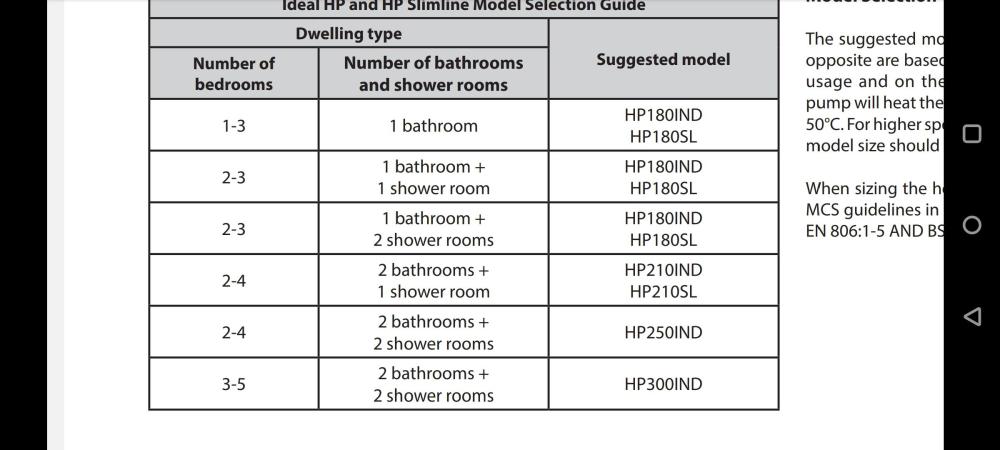
Yes the only difference is the coil size, it's way bigger, so you excellent heat transfer. You could flow at low temps heat to 48-50, get very little heat loss at the same time. If you are future proofing make sure you size for a typical heat pump i.e. how many litres it holds, will be bigger than a normal gas boiler cylinder.
-
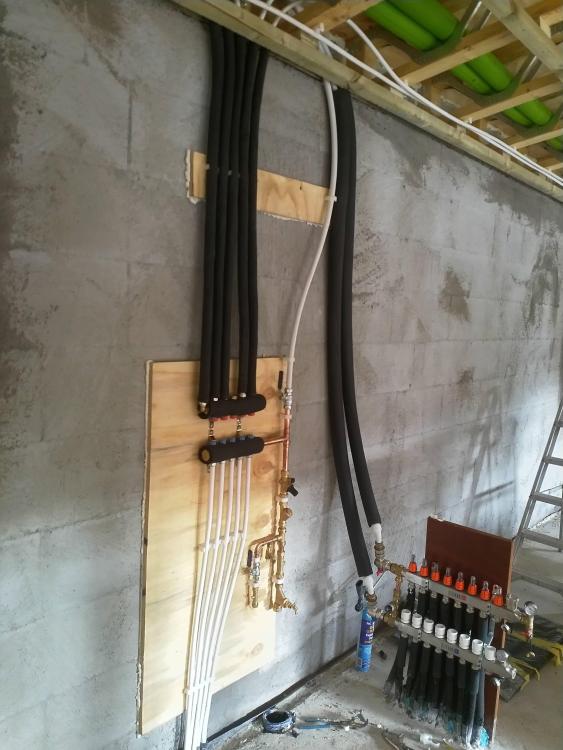
I did something similar to you, but slightly simpler. All plastic pipe (almost) Cold water entered house, tee one side to cold water manifold the other to the combi. Ran to combi in 22mm and then reduced down. Ran a single cold pipe into each wet room then branched inside the wet room in 15mm Hot water came from combi in 15mm to manifold and then one hot pipe to each wet room and then branched in the room as per cold. Each run from manifold in 15mm. Keeps number of pipe runs down, simpler, cheaper, same functionality. We are all UFH.
-
Bit of info on PDHW both articles are by Intergas, only because they came up first. https://theintergasshop.co.uk/content/189-why-hot-water-priority-pdhw-is-the-reason-s-and-y-plan-should-be-banned https://www.google.co.uk/url?sa=t&source=web&rct=j&opi=89978449&url=https://www.intergasheating.co.uk/app/uploads/2022/07/IG_The-Knowledge_PDF_Final.pdf&ved=2ahUKEwii-OjQleeEAxUBgP0HHaqLC6AQFnoECCUQAQ&usg=AOvVaw0y-sovRdn1eVMgk6F1mGQ7
-
No problem at all, most likely a small boiler would do it. But do the heat loss calculation, if you don't know where to start post another question on a new thread, post as much information as you can, house plan, wall, roof and floor make up/insulation levels etc. Also any idea on airtightness etc. Also how do you ventilate?
-
Let's start from scratch First you need to understand your heat loss this will determine boiler size. Chucking the biggest boiler you can find is foil hardy will lead to rubbish performance due to likely short cycling. An unvented cylinder will give way better performance from DHW than a Combi. You can make them perform well, but most plumbers have zero idea. Boiler control Say a big fan NO to S or Y plan, you need priority hot water on demand and weather compensation for the heating. Ideally you will have an electronic mixer on the UFH so that is also controlled by the boiler. Cylinder use a heat pump cylinder with a 3m2 coil. Size the radiators for dT 25 The above will give a very efficient system and lowest gas usage.
-
DIY MVHR Design Sanity Checking
JohnMo replied to BadgerBadger's topic in Mechanical Ventilation with Heat Recovery (MVHR)
That's a rubbish design. My Triton units uses Automatic Frost Protection During very cold weather, Automatic Frost Protection will detect temperatures that could form ice inside the unit. Automatic Frost Protection will reduce the supply ventilation rate to prevent ice build up within the heat cell. Automatic Frost Protection reduces the flow rate of cold air, thus allowing the warmer stale air to raise the temperature within the heat cell to such a level that prevents the formation of ice. As internal temperatures rise Automatic Frost Protection will increase the supply ventilation flow rate back to the commissioned settings. -
UFH and Carpets. Tog ratings, specialist underlay and other nonsense?
JohnMo replied to peekay's topic in Underfloor Heating
The supplier said the underlay was, but wife wanted decent wool carpet, so not the best for performance. But not a fan of UFH in bedrooms really, now we have it. Our last house was built in 1830 and we never switched the heating on on the bedroom ever. -
DIY MVHR Design Sanity Checking
JohnMo replied to BadgerBadger's topic in Mechanical Ventilation with Heat Recovery (MVHR)
I live in NE Scotland, we have days at a time at -9 without a preheater (never bothered to install and zero issue. Enthalpy exchangers - we don't have them either - our lowest house humidity hit 37% and we average just over 40% in the heating season. Not sure you really need them. -
Getting frustrated with heating suppliers.
JohnMo replied to MikeSharp01's topic in Other Heating Systems
Couple of things jump out, floor area Degree days, is huge, they are treating the degrees like a 'normal house' If it's MCS, they will always ignore MVHR and apply Thier own room air change rates - the system doesn't account for any other than the normal. -
UFH and Carpets. Tog ratings, specialist underlay and other nonsense?
JohnMo replied to peekay's topic in Underfloor Heating
We have a single storey with carpet and UFH in the bedrooms, but it's not very effective doing low flow temps. But ok if you like cooler bedrooms. Thing is though with a well insulated house open the bedroom doors for 30 mins and they are the same temperature is the same of the house. Many on here just don't have any heating in bedrooms when upstairs. Lounge carpet not a fan with UFH. I thought the same with the summer house (very well insulated) but that never got warm when it was cold outside. Fan coil and I can have temperature I want. -
Immersion diverter - can these confuse the app "usage" data?
JohnMo replied to MrTWales's topic in Photovoltaics (PV)
Yes, has an inbuilt timer, I did just that a few weeks ago as a trial. -
Immersion diverter - can these confuse the app "usage" data?
JohnMo replied to MrTWales's topic in Photovoltaics (PV)
The Runhu diverter is the same as mine, from Cool Energy. Works well. https://eco-outlet.co.uk/products/cool-energy-solar-power-diverter -
For the DIY'er the best thing since sliced bread. Tectite Classic can be taken apart and remade several times without issue (slight cost increase), sprint one use only. I like that once made up the joint can be rotated. I've used loads , had one leak due to the copper not being inserted square and it didn't push home correctly.
-
Make sure you locate it below the top of the cylinder so the hot pipe comes out of top of the cylinder and then downwards as soon as possible for at least 150mm. This will form a heat trap and stop a circular flow of heat within the pipe, which slowly make the cylinder cooler.
-
Loctite string is favourite at the moment.
-
I did this most days on our build, had loads of rain. I found the quickest and easiest was actually a dust pan, scoop and throw over the stub wall. Or into a big bucket.
-
I did a single hot run of plastic from plant room (UVC) to utility room where cold manifold is (very central location), located both manifolds there, then plastic to each wet room. Wetrooms are a mix of plastic and copper. Cold pipe was in conduit under the floor insulation cast into the concrete slab. Hot is in the roof insulation.
-
I did a manifold and then one supply of hot and cold to each wet room in 15mm, then branched once in the wet room.
-
Not sure if this an option open to you, but our cold water feed came into the house in a 100mm duct, up through the foundation. I used the same duct to take the outside tap pipe through, the sealed it off.
-
I have messed with WC on UFH for 2 years, the truth is you really don't need it. A good mixer valve like an IVAR is all you need. Have WC for the rads. I have a standalone ESBE mixer and controller they are good, but stupid expensive. Mine is there for a specific reason, not normally needed. Then as suggested above normally closed 2 port valve for the cylinder and normal open for the heating system, when there is a call for DHW heating the 2P valve opens and the others shut. Boiler to high output. Not sure you need to do anything else. Anymore looks to be for zero gain. Normally open 2P should just be an actuator change.
-
Just started a self-build in Dorset. Exciting times!
JohnMo replied to NailBiter's topic in Introduce Yourself
DHW, I tried various way to be smart, but found letting it sort its self out, worked best. My heating regime is simple Heat house and summer house first. This uses E7 and battery and solar if available, DHW is allowed to heat between 12.30pm and midnight via the ASHP. On a dull day heating DHW tends to be by ASHP, bright day like yesterday all DHW was heated by solar diverter. Solar diverter to DHW only when the battery is charged from solar. This just picks up export via a CT clamp once battery charged. -
Just started a self-build in Dorset. Exciting times!
JohnMo replied to NailBiter's topic in Introduce Yourself
With my 6kW, I just batch charge the floor, I run my ASHP flat out, can run 7 hrs straight no issues. Have a target flow temp of 35, knowing it never get above 33 before the thermostat switches it off. Not the best CoP, good enough, on cheap rate, so still cheaper than gas. Various ways to get around size issues. -
Don't waste your money, the switching threshold (hysterisis) is 0.5 at best, 3 Deg at worst - just get a Computherm Q20RF or Q7RF from Amazon for £60 or less the Q20RF is nicer to use. No zone valves or actuators on the manifold, if you have radiators, get an IVAR low temp mixer valve with pump, and drive the pump on and off with the thermostat. Just shows they don't know much.
-
Works no problem, I even have 300mm pipe spacing, 100mm concrete and again no issue. But they are a bit of a learning curve. Few things I found through experimenting, you need to be aware of. Changing floor temperature and house is quite a long process (many hours), so a normal thermostat is just rubbish and you get big under and over swings. You really need to use a 0.1 Deg hysterisis thermostat. You cannot use room compensation as the algorithms cannot cope with the long reaction times. Don't bother trying to do temperature setbacks, they generally don't work the way you expect. You cannot switch the heating on at work and hope to have a warm house when you get home (unless you do when you arrive at work). There is zero point zoning, run as a single zone. Two options of how to operate, charge the floor and use like a storage heater, or continuously feed the floor at a low temperature. I have done both and they work equally well. 5 degs difference in flow temp is the difference in the two methods. I am on E7 with ASHP, battery and charge the floor at 33 degs (overnight), for between 7 and 12 hrs depending on outside temp, automated with a timer thermostat. Generally it takes another 12 to 18 hrs to cool enough for the heating to come back on again. The wife was quite shocked the other week when it was near freezing outside (6pm) and I told the heating actually went off at about 10am and was not coming back on until after midnight. You can't do that with 50mm screed.




