
JohnMo
-
Posts
12470 -
Joined
-
Last visited
-
Days Won
179
Everything posted by JohnMo
-
You have dT 25 radiators, that means the difference between room temp and radiator temp, flow and and return dT would be in the region of 20. It's not
-
A better heat geek video on how to do your UFH connections https://www.google.co.uk/url?sa=t&source=web&rct=j&opi=89978449&url=https://m.youtube.com/watch%3Fv%3DK_OWE2dJht0&ved=2ahUKEwj57Zj31OGEAxWqQUEAHROIC2cQwqsBegQIDhAG&usg=AOvVaw3Kv9nfBIKtwsPqVzMirE55
-

DIY MVHR Design Sanity Checking
JohnMo replied to BadgerBadger's topic in Mechanical Ventilation with Heat Recovery (MVHR)
Only thing I would say is once signed off you are likely to reduce flow rates. Because building regs rates tend to be a bit excessive. Even with our rates reduced by 30% we are still dropping to mid 30s relative humidity when it's cold which is getting a bit low. I would be tempted to go with the smaller unit. -
Certainly doable, throttling not really, but the heat pump will modulate to reduce output. Depending on ASHP size and heating duty and system volume a buffer/volumiser is going to be required. A possible solution would be a fan coil these run on a just about fixed 35 degs water temperature. So easy to set up, we have one in our summer house (used 365 days a year) and UFH in the house, all run from a single ASHP. It was a bit of a learning curve setting up, but works well now.
-
I got mine from eBay. It's a matter of doing your due diligence. Find the manual on line and as much technical data as you can. Do other manufacturers rebadge the unit (do a Google image search) you are looking at. Mine was from the original manufacturer, but was also rebadged by Viessmann. You may not get a warranty. If you building to a half decent spec of house you should only need a small unit. Many retailers online are very competitive on pricing.
-
Just started a self-build in Dorset. Exciting times!
JohnMo replied to NailBiter's topic in Introduce Yourself
I worked with a guy that used to use Wikipedia as a reference tool, for marine engineering project He started quoting something he found on there in a large meeting, unfortunately the information was duff and he was nearly sacked. Internet is awash with rubbish information, you need to do your due diligence to verify stuff. -
Just started a self-build in Dorset. Exciting times!
JohnMo replied to NailBiter's topic in Introduce Yourself
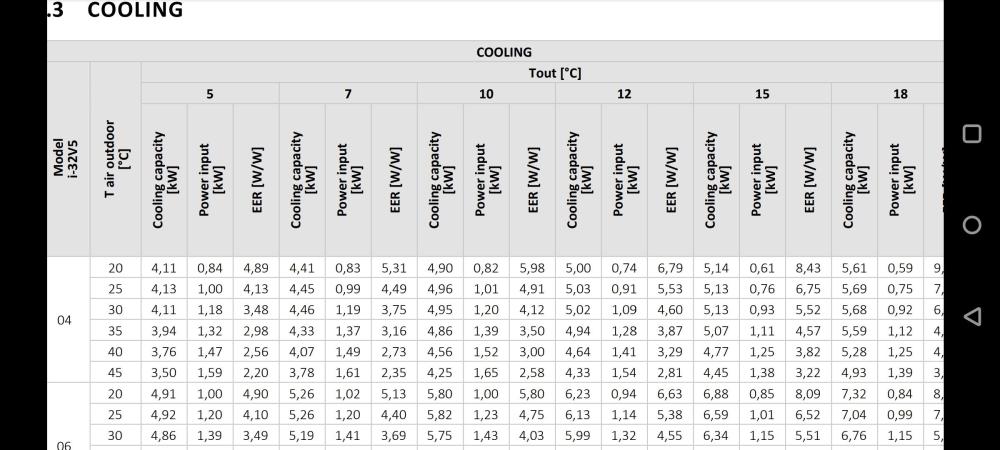
I don't bum pluck numbers, CoP numbers for different flow temps and outside temps. With this I will bow out and let you dream on.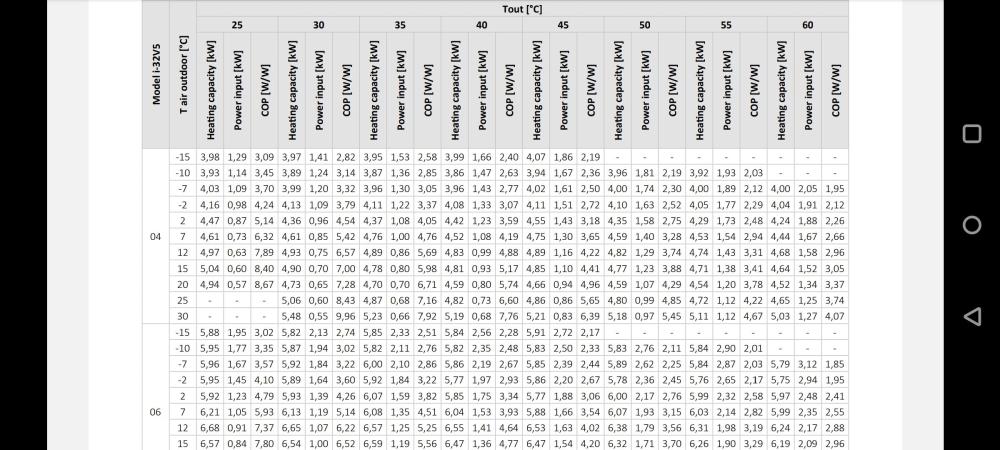
-
Just started a self-build in Dorset. Exciting times!
JohnMo replied to NailBiter's topic in Introduce Yourself
Wish it was true. It would be nice, my 57 tonnes of concrete floor and about 65 tonnes in the walls would beg to differ. -
So confused - what are you doing now and trying to do. What has the heat pump got to do with your boiler?
-
And what benefits are the changes making? If you are flowing a high temp into UFH most of the flow going through the pump is recycling with some hot water being introduced. They provide a hydraulic null point in the system and hydraulic separation so pumps do not see each other. For UFH the mixer does that already, so adding a cct to an already working system adds no value.
-
Just started a self-build in Dorset. Exciting times!
JohnMo replied to NailBiter's topic in Introduce Yourself
Not sure where that snippet came from. An ASHP uses a fan to make high winds local to the heat exchanger to ensure good heat transfer. General wind make no difference to frosting of the coil. -
Just started a self-build in Dorset. Exciting times!
JohnMo replied to NailBiter's topic in Introduce Yourself
Unless you want to cool also, then efficiency drops. So working the argument through Biggest difference between the OP and the reference property, is the reference property only did DHW for around 1 hour per day. OP will be heating, cooling and DHW, so a different use case. So let's assume the sun exposed, heavily build stone area that's designed to trap the sun's heat, ASHP installed close to a south facing wall to get max perceived gains. Heating by ASHP running with an internal thermostat. Typical nice winters day, cold overnight, zero degs, bright morning, sun out and air temp increases to 7 degs, then by 5pm temp starts to drop quite fast. Overnight the stone area reduces to match ambient air temp of zero, ASHP gets no negative or positive effects from this. Morning air temperature start to rise, stone area remains at close to zero for a prolonged period as sun not high enough in the sky to have any heating effect. ASHP in an area below air temp, negative impact on CoP. Late morning to late afternoon, sun out and heating stone, sun also on house windows warming house, heating clicks off. DHW clicks on and heat pump starts at 2pm. Localised area could warm air flow to ASHP by say 5 degs (if you are lucky), giving a 0.3 CoP benefit. Heating benefit zero as heat pump is off. Early to late evening, temperature outside drop back, some residual heat in stone, but the benefits are marginal, CoP gains for a short period but would guess almost nil. Cooling case case almost the opposite, sun out you need cooling, ASHP is hot sun trap, EER (CoP when cooling), takes a hit. When flowing 12 degs changing air temp from 20 to 25 has a 1.2 negative impact on EER. Another negative is weather compensation becomes screwed up, if the temperature probe becomes exposed to artificial low or high temperatures. -
Assume the UVC is via a diverter valve and it will only have when a call for heat. So DHW or heating never both together. Your LPM flow rates sound very low especially for the UVC and your UFH. If you need 10kW into the floor with dT of 7 the flow is 20l/min. So then you only need to look at rads and UFH. The issue is likely you will have two distinct flow temps for your heating, UFH and radiators. So you need a mixer on the UFH, so you also need a pump on the UFH. Why? All depends how you plump as long as the return to the boiler always exists there is zero issue. Just follow the attached. CCT WORCESTER BOSCH.pdf
-
Depending on what's installed now, adding fins or extra panels keeps the radiator size but increases output as if the radiator is bigger. The lower the return temperature to the boiler the better efficiency you get. Also see https://www.heatgeek.com/does-my-pipework-need-upgrading-for-a-heat-pump-with-cheat-sheet/
-
Although heat pumps modulate, that isn't the only means they match output to heat required, they also cycle. Your cycles really need to be a minimum on time of around 10 minutes. So for example if your heat pump modulates to 6kW, you need an engaged volume of water of around 100L. This can via limiting zones (no small zones) or via a volumiser.
-
Just started a self-build in Dorset. Exciting times!
JohnMo replied to NailBiter's topic in Introduce Yourself
A bit a write up here https://www.linkedin.com/pulse/does-heat-pump-work-better-its-sunshine-graham-hendra -
Just started a self-build in Dorset. Exciting times!
JohnMo replied to NailBiter's topic in Introduce Yourself
It certainly would be heated, the air used to provide the heat passes through a heat exchanger not the casing. Either way take or leave anything said here or anywhere else. You going have so much excess solar not sure if will make a difference what the CoP is anyway. I've only around 7kW in the north of Scotland and my battery was full and cylinder heated by immersion to 70 degs by 3pm on a sunny day in March, you could be doing that most days of the year. -
Just started a self-build in Dorset. Exciting times!
JohnMo replied to NailBiter's topic in Introduce Yourself
On a public forum no. You can take what I say or ignore it. Just look at the theory of how a heat pump works. Basics are - refrigerant is at a much lower temp than the surrounding air. Air is forced through a heat exchanger by a fan. Inside the heat exchanger is refrigerant, it absorbs the airs heat (hot moves to cold). The warmer the air the more energy it allows to be transferred the refrigerant, so better the CoP. The sun being out doesn't change the localised air temperature (in open space), heat pumps will move many 100s of m3 of air each hour, so it makes zero difference if the heat pump is located in the sun or not - air will be moved from everywhere. -
Just started a self-build in Dorset. Exciting times!
JohnMo replied to NailBiter's topic in Introduce Yourself
The only bit I would take away from that is doing DHW heating when the day is at its warmest. -
Depends if the person saying 100mm is ok, is the one that has to pay the bill, for the additional downwards heat loss. I would treat be boiler in the same way you would a heat pump. Design the radiators for a max flow temp of 35 to 40 deg, they will be big and never feel hot, but you basically run them continuously on weather compensation, house is always warm. Also if you are installing a cylinder, get a heat pump one installed with a 3m2 coil. X plan will allow two different flow temps to be used, both set to get the best form the system. Some reading material https://www.intergasheating.co.uk/homeowner/2022/07/13/the-knowledge/
-
Just started a self-build in Dorset. Exciting times!
JohnMo replied to NailBiter's topic in Introduce Yourself
Hope you get all your ducks aligned before committing, would not be very good if the DNO imposes a limit of 16A on exports, because the local grid cannot handle anything more than that.. -
Just started a self-build in Dorset. Exciting times!
JohnMo replied to NailBiter's topic in Introduce Yourself
That is still massive -
Just started a self-build in Dorset. Exciting times!
JohnMo replied to NailBiter's topic in Introduce Yourself
Wikipedia, is a site any tom dick or Harriot can upload too. Nothing scientist about that site. If I wanted to upload and say the world is flat and made of chocolate I could. 5 ACH is pretty rubbish, especially if wanting MVHR. ASHP in sun is a daft idea, an ASHP doesn't use radiated heat, it takes air temperature so make no difference if located in sun or shade for efficiency. Being in the sun messes with the temperature probes, so not the best idea. Not done the heat loss calculations obviously, as there is almost zero cold bridging with durisol blocks. -
With 100mm insulation stick with radiators, but oversize for low flow temperature. You really need 150mm (ground bearing) insulation under UFH to make viable from a downward heat loss perspective, block and beam makes matters worse with downwards heat loss. Assuming you have a gas boiler get that changed to run X plan if you can, one temp for hot water and the other weather compensation for heating.
-
About 40 to 50mm thick, weight no idea per m2