
JohnMo
-
Posts
12470 -
Joined
-
Last visited
-
Days Won
179
Everything posted by JohnMo
-

Block and beam for timber frame aiming for passivhaus
JohnMo replied to Barny's topic in Timber Frame
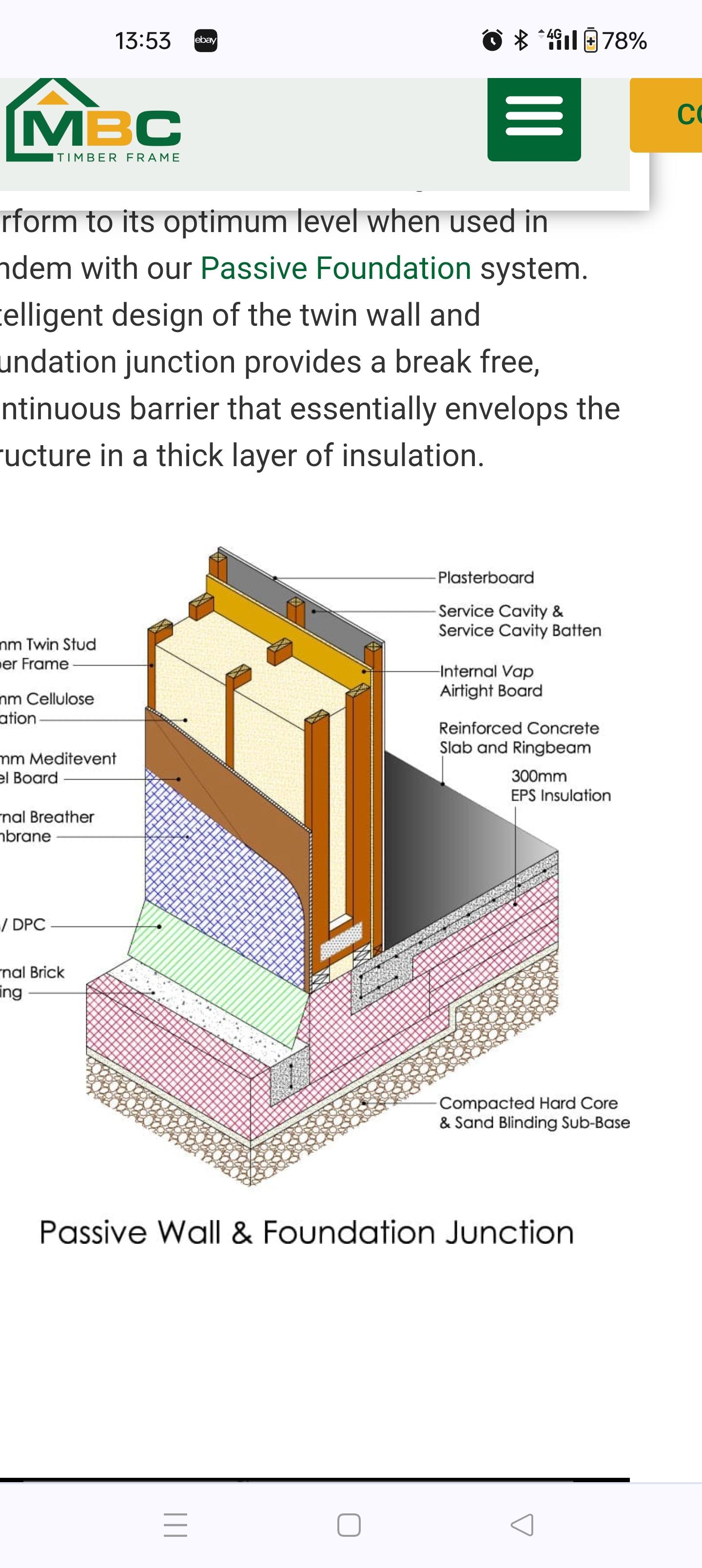
It is here is one supplier and installer, plenty of people on here seem to have used them. There are are others also, but I will leave you to investigate. You wanted to know how to use block and beam with passivhaus, have provided your starter for ten. Foundation details and wall system.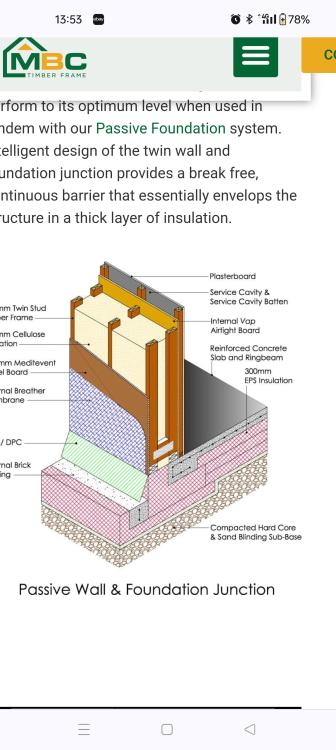
-
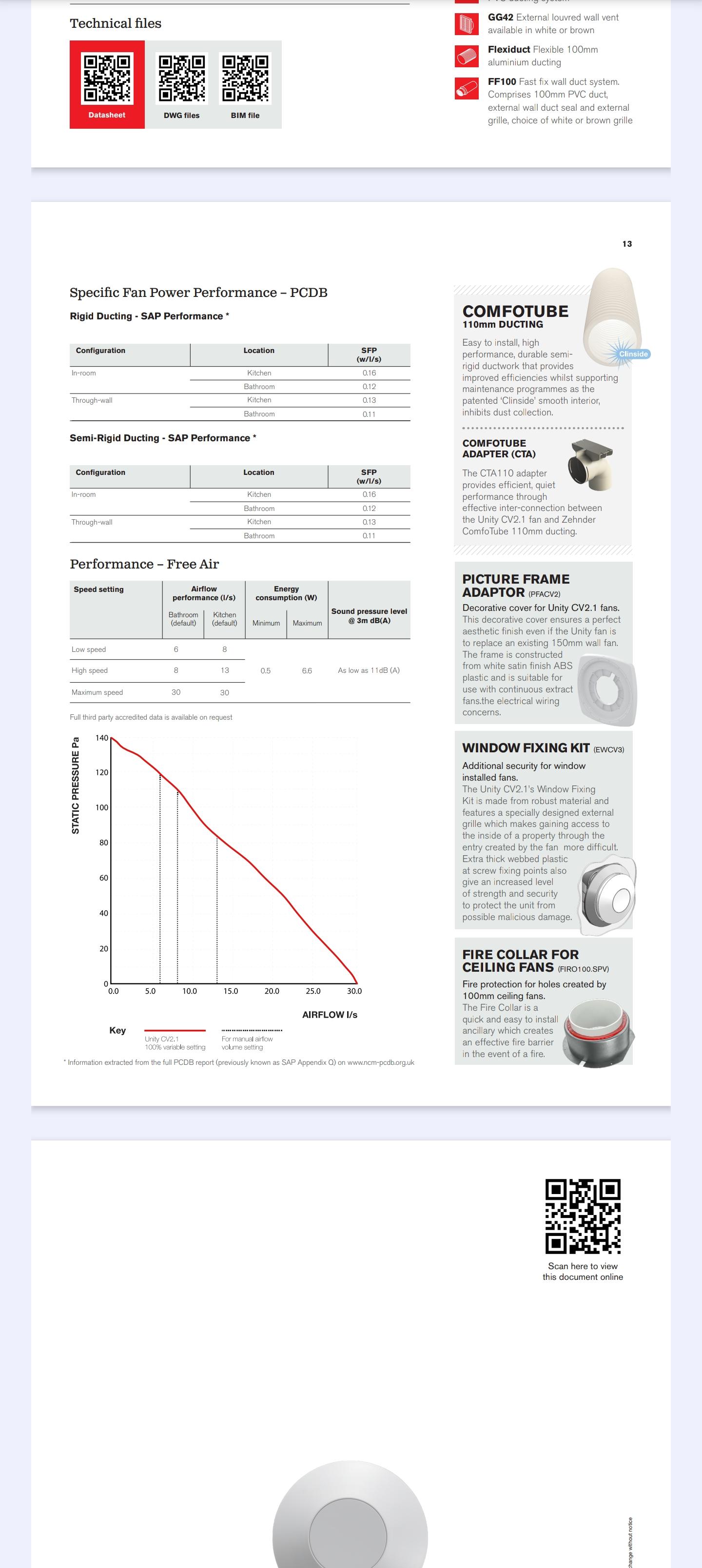
Rather than guess, work out pressure drops and compare to fan curves. Smaller duct equals fan having to do more work, more noise, and no warranty from the sounds of it. 125mm sounds small for anything bigger than a small flat. Anywhere else to route to?
-
Block and beam for timber frame aiming for passivhaus
JohnMo replied to Barny's topic in Timber Frame
Not sure why it wouldn't, pretty standard arrangement. Do a stick build? Have a read up on Larson strut! Behind the load bearing frame and the airtight membrane would be stuck to it. -
Fabric and ventilation heat loss calculator
JohnMo replied to Jeremy Harris's topic in Heat Insulation
Difficulty getting PH loss may be down to form factor. The closer you get to a cube the better the form factor. A good form factor needs less insulation to achieve a good heat loss figure. Our house is long and thin single storey, all ceilings are vaulted, we have a poor form factor and would stand no chance being PH, with all U values well below 0.1. But generally our heat loss is good.- 204 replies
-
- 1
-

-
- heat loss
- ventilation
- (and 4 more)
-
Fabric and ventilation heat loss calculator
JohnMo replied to Jeremy Harris's topic in Heat Insulation
Yep heat input into the house. Not the net gain via a heat pump etc. the spreadsheet does over read the actual input required a little, as no account is taken from human inputs or other equipment in the house or solar gains etc. -
Fabric and ventilation heat loss calculator
JohnMo replied to Jeremy Harris's topic in Heat Insulation
No, remember air test is completed at 50Pa, this is like a gale force wind in all directions, which isn't possible in reality. -
Fabric and ventilation heat loss calculator
JohnMo replied to Jeremy Harris's topic in Heat Insulation
It's not your airtightness figure, it's your ventilation flow. Hence asking for it's efficiency. -
I would want it tucked out the way, say in a small junction box. It may be safe, but just looks wrong.
-
Fabric and ventilation heat loss calculator
JohnMo replied to Jeremy Harris's topic in Heat Insulation
ACH is well high. Reduce to something realistic, your MVHR will be set to 0.3 to 0.5 they are better figures. -10 OAT, short event, what is the design temperature for your area? 85m2 glazing in your living room - check your figures, 2m high and 40+m wide? Big front door also 4m tall and 2m wide. -
I would worry about leaks with the details above. You really need an upstand, then the roof light. Then you take the roof covering up the upstand. We formed our upstands from Compacfoam, not the cheapest, but cold bridge free, super quick to install so very low labour charge.
-
Block and beam for timber frame aiming for passivhaus
JohnMo replied to Barny's topic in Timber Frame
Could quite easily work. The Durisol block takes all the structural loads on the inside of the block. A timber frame with a structural wall inside and Larson strut on outside to carry insulation. So this type of construction above for the block and beam as detailed above and timber frame as below.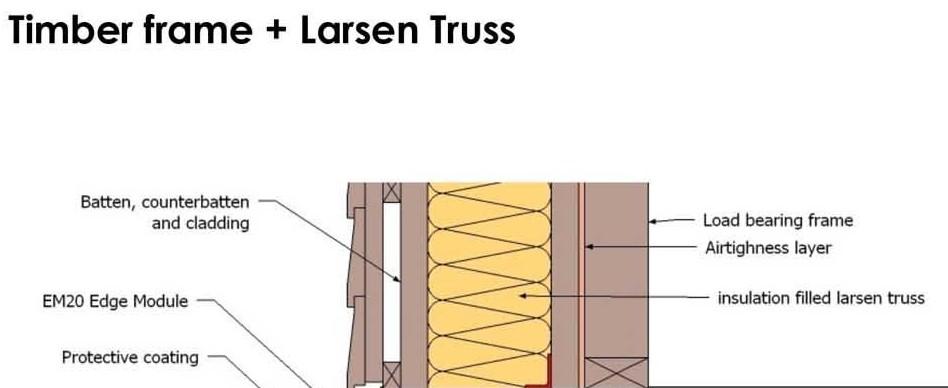
-
SIP wall thickness vs u value
JohnMo replied to Bournbrook 's topic in Structural Insulated Panels (SIPs)
@cheekmonkey All good info above. -
Need heating and hot water control suggestion
JohnMo replied to markc's topic in Boilers & Hot Water Tanks
First loft insulation looks poor, improve that first. Lag all pipes to and from cylinder, doesn't look to be inside heated envelope, so insulation should ideally be 25mm thick. Interim immersion timer, just look on Screwfix or similar, plenty available. But you have an oil boiler why do you need to run the immersion? If your looking to change to ASHP, just get something basic to do programming. -
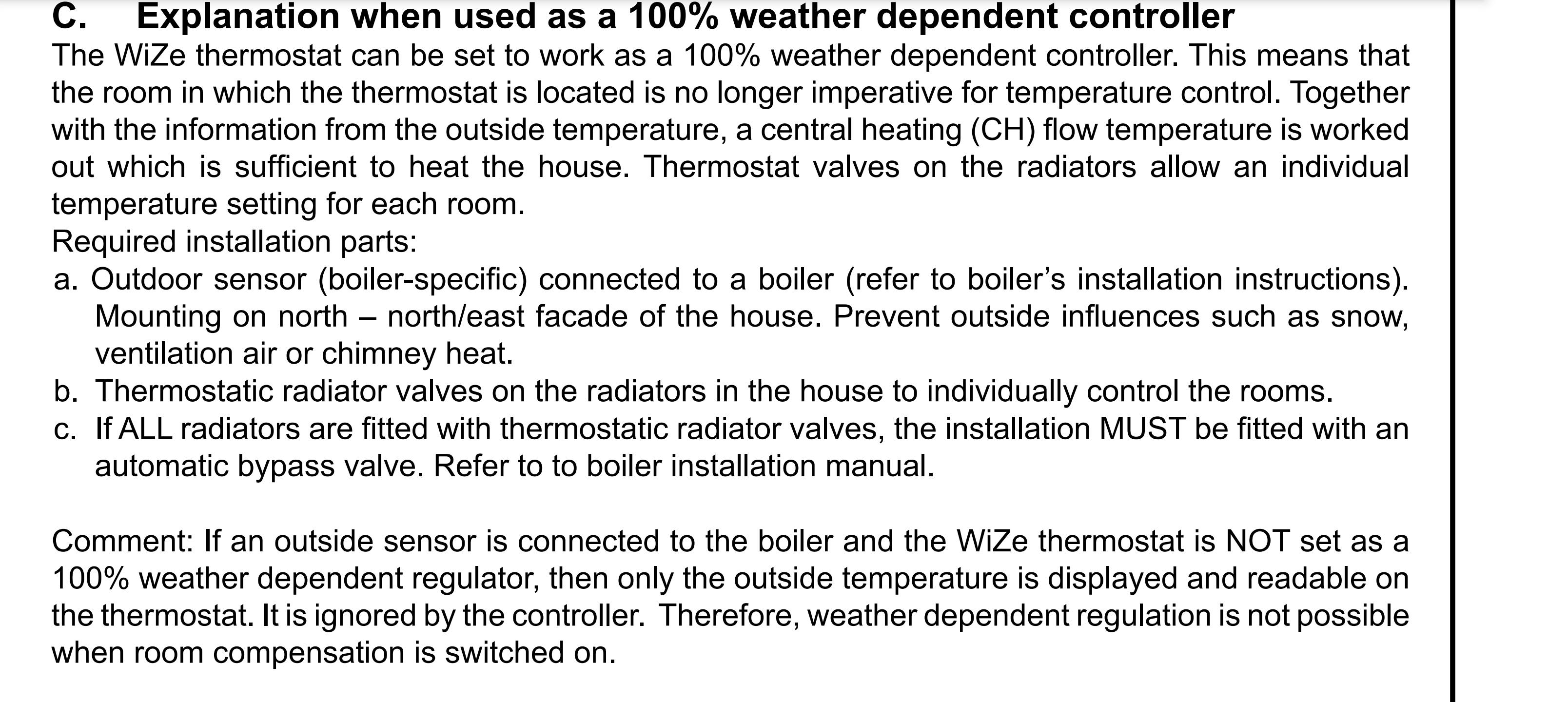
If your bouncing of the thermostat your WC curve is set too high. Believe your have a mitsubishi ASHP, there is a setting to take room temperature compensation, to change the flue temperature automatically. You should set your curve to get the coldest room up to temp, the use the thermostatic valves to modulate flow to radiators in the warmer rooms. With WC the thermostat is really a secondary control not the prime controller.
-
Block and beam for timber frame aiming for passivhaus
JohnMo replied to Barny's topic in Timber Frame
See my post above, block and beam drawing thermal bridge free - by durisol (carbonplan drawing) giving all the details. -
You may actually be better heating the whole house and not leaving rooms cold. They will just be sucking heat from the rest of the house, requiring other room to have more heat added to compensate, require a higher flow temp to compensate and lower the CoP. We have a summer house connected to our heating system and it gets used in the mornings throughout the year, I was using a setback temperature (afternoon and night), but ended up using more energy as the heat pump ran flat out trying to heat up after the setback period. Ended setting at the same temperature all the time electric consumption dropped. The less complicated it is, usually the better it is.
-
This is what my boiler manual said about weather compensation and how to set up the house and it's heating system. Note: system is operated as a single zone, the thermostat valves should modulate individual room radiators instead of switching on/off as a zone valve would do. So the heat pump just sees a small change in return temperature and then modulates it's output as required.
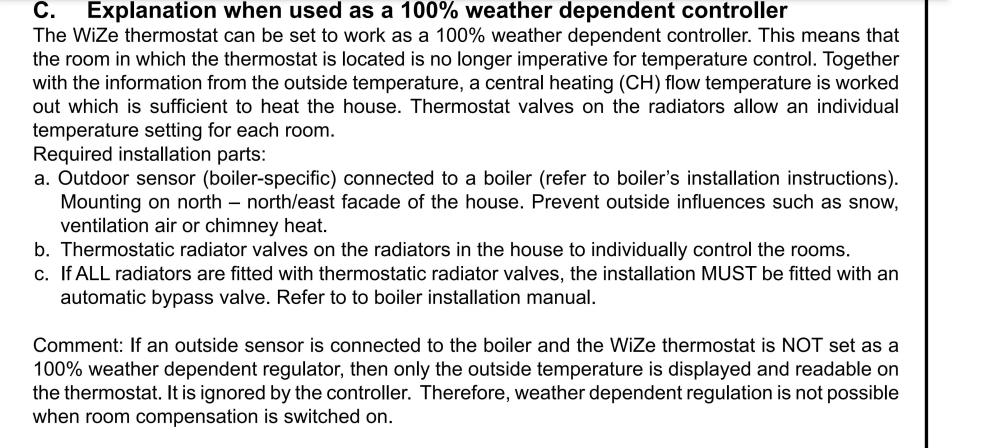
-
No to move warm air from your warm rooms to the cold ones isn't that what you asked? But as @SimonD says
-
Sorry your question was about moving heat from one area of the house to another not your ventilation system. @SteamyTea talked about heat pipes, I proposed an inter room fan, which could be ramped up to help even out temperature. The two types of fan I provided are just fans and nothing really to do with there intended duty. Just being used to move air around the house - not a ventilation strategy, not MVHR or anything else.
-
Brink one does. But the alternative I offered - the Greenwood one, is almost silent in operation and cheap to buy. I paid about £40 for one on eBay.
-
Similar systems have been about for about decade. They start to cost a small fortune by the time you have everything covered.
-
Read the whole thing including the downloads. It's not MVHR it's part of a cascade MVHR setup. It just an inter room fan? Not MVHR
-
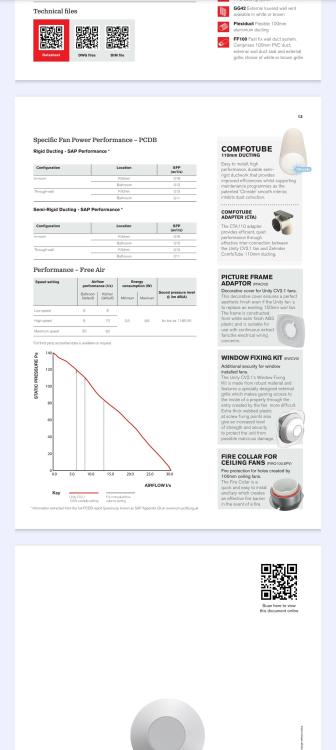
Is this really practical on a house scale? I know that's how you can move high temperature in a computer or with solar thermal tubes. But are they practical on a couple degrees difference in room temperature. Would an inter room fan work better? Something like this will do 70m3/h - but very pricey. https://www.ventilationland.co.uk/en_GB/p/brink-indoor-mixfan-co2-controlled--up-to-70-mh/17927/ An alternative could be a greenwood CV2GIP, or similar control boost via a couple of temp sensors and switch logic.
-
We had one for a number of years, we bought ours in 2014 for the same reasons. We had a Flymo robot mower, was good for the first 3-4 years and then things started to go wrong and after a couple of repairs, the battery gave in and a couple of other things at the same time, it got to the point we chucked it, as repair was way to expensive to justify. But was really good when it was working, hopefully reliability has improved. They can cope with rough terrain quite well. Two primary versions a guide wire embedded in lawn and ones that map the area or know where not to go, they are more expensive but possibly better.
-
This is true for all work in all situations PV, cars, other stuff. Like all things you need to do the due diligence. Couldn't agree more, speaking to other trades people is good, they know each other they have worked with them. That's how I found nearly all my trades when building, they come with people that don't advertise, because they are good and fully booked, but they lead to others, that are good.