


JohnMo
-
Posts
13302 -
Joined
-
Last visited
-
Days Won
200
Everything posted by JohnMo
-
Nor me, I just flick the light switch, as required. Seems to be plenty of used control4 stuff on eBay. Not sure if that's a good or bad sign.
-
 My floor area is twice yours I have 7 loops of UFH pipe on a manifold. A heat pump outside and not much else. In house is silent as there is nothing going on in the house. The other bits are a diverter valve and a single thermostat. Everything in the floor and manifold cost about £800, thermostat cost £60. IR UFH kits seem to be about £500 for 20m², so our house would be about £5k, instead of £860. Admittedly you need another heat source to drive a wet system. But even without a grant a Panasonic heat pump is about £2.5k. So not far off half the price.
 -
Not sure if what I wrote wasn't clear or misread. The distance isn't a concern. By balance I mean how well matched the flow rate between in flow and extract.
-
How much! Didn't realise they were that stupid expensive. 210L direct cylinder £500 and charge with heat for 10 years free on E7, or about 6 years on standard rate, for the same price as it cost just to buy the Mixergy unit. Why would you bother. Could do the maths on payback, but would longer than the heat pump would last.
-
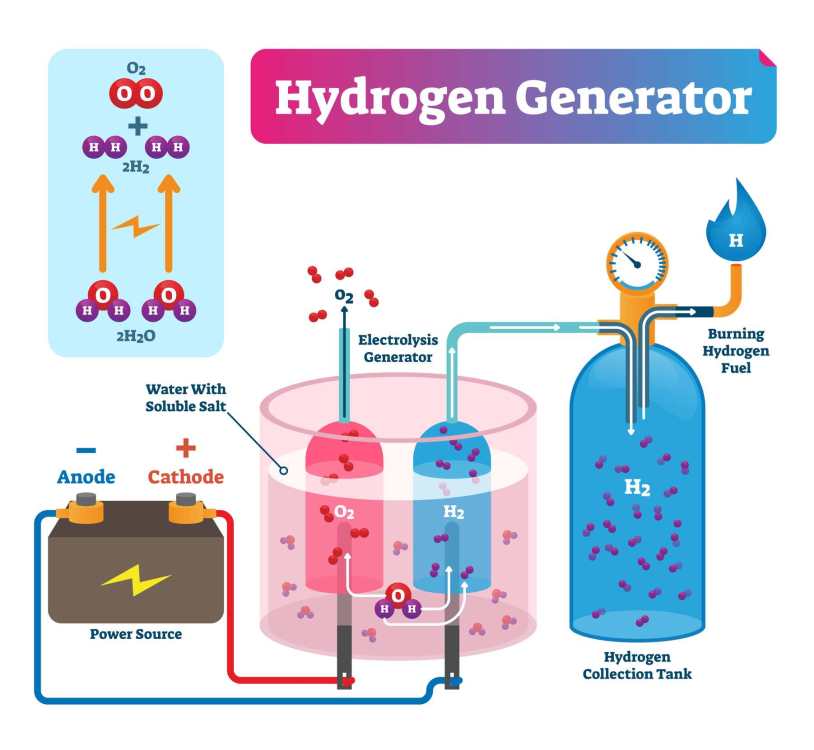
Sorry, misread. CoP 0.7 for hydrogen, is much better than switching off generating wind turbines and having to pay the operator as if he is actually producing. Sound like a win, win. You get hydrogen, the wind turbines keep spinning, the bill payers for electric, don't have to pay for not producing electric.
-
Dimplex Edel, Mixergy to name two
-
And the one on Australia a huge solar and wind farm, 100s of miles square.
-
Why the selection of that value. If your getting a grant to add ASHP that would take over control of boiler. Your on off zones in every room would really be deleted and flow temps optimised. So then your in the 90-95% plus club. Or you use the same tech as been used offshore for about 40 years, hypochlorite generation. It uses raw seawater, hydrogen is made in the early stages of the process, the later stages are not needed so product stream and waste stream just remixed and dumped back in the sea - it's seawater less a bit of hydrogen. Waste product of the normal process is hydrogen, normally dumped to atmosphere via an overboard vent pipe. Collect.
-
But not a lot more difficult Most the major wind generation is offshore, so surrounded with water.
-
The Daikin controller has a setting for CO2 and I think the Panasonic one does also. MCS could easily come with a rule on that. Plus the immersion gets whatever the current profile of the grid is at that time, so can't really be optimised. Not even sure your neighbours install would comply with current MCS rules, they don't allow your heat pump to be smaller than the 99.6% use case. Easy, we pay wind farms to shut down production already. So the cost wouldn't be high. Instead of switching wind turbine power off, you provide a dump and generate hydrogen from the excess electric dumped.
-
So would just about every hydrid install. The boiler works be switched via the heat pump. Just about every heat pump has hybrid mode built in. Having an immersion heating your CH system, based on current 2024 CO2 grid emissions, is no better or worse than a gas boiler. In fact if you include the real output of Drax and other green wash, you are possibly better generating heat locally via the boiler. Hydrogen is coming anyway, there is so much wasted potential with wind, which could be utilised instead of turning the blades away from the wind, to keep bigger plant online, leave them powered and generate hydrogen.
-
Why would any sensible person bother. Seems a lot of cable to switch on your lights on. What do you do when the the equipment is obsolete, and breaks down in a few years time? At least a shelly can be pulled out of the system and revert to normal lights.
-
It's an unvented cylinder heated by an integrated heat pump. Avoid enameled cylinders as you have to manage can anode (the one you linked. Get one in stainless. Plenty about. Make your self aware of reheat times as these can be quite long.
-
Are you also making improvements in your airtightness. You will be introducing warmer air as you have heat recovery. How close the supply air temperature is to extract, depends more on how well the system is balanced, as much as anything. However if you have a leaky house all you are doing is adding to the ventilation loads, so be careful. PIV as you say dumps a lot of cold air into the house. If your house is leaky, I would Remove PIV system. Then either install dMEV or MEV system but ones that run in an on-demand basis. So they monitor humidity levels and ramp down to minimum throughput when not needed and ramp up only when needed. For these systems to be effective you need trickle vents in dry room, none in wet rooms. The trickle vents should be self modulating (react to humidity). A MEV system will have a central unit and extract points in wet rooms, dMEV system a fan in each wet room.
-
That would indicate you are getting up to 23.5 degs. Looks like you trim the the curve down little. I would change the 35 deg to 34 Deg on your WC curve.
-
We have a long thin house and from UVC to shower is about 15m. It's run to an intermediate manifold about 7.5m each way (UVC - manifold - shower) running the shower tonight with HWC pump off (for 12 hrs) it took just over the time to take my clothes off to be hot. 15mm pipe everywhere. Sorry you have had way too much time thinking. Simplify, one hot manifold, one cold, you only need one feed to each room then branch from there. Keep 22mm well away from hot water supplies other you will get bored waiting for hot water. We have HWC it goes to the furthest room and through the manifold back to the cylinder. Run it on timer and thermostat.
-
Not on your list, building control will want calibration certificate for the instrument you used to set flow rates. Should be N/A as it's for system 1 and 2 only. Are you certified to self certify? This is worrying bit, if you don't know the answer to this how was the system designed. Or even if it has been designed. Offices are just dry rooms. Supply and extract need to be equal. Boost is equal in capacity for supply and extract. Setting about 20% above normal flow rates is fine.
-
Does seem a lot of work, for something you will never look at again, until it leaks. And if it's not perfect will just annoy, until 1 month after and you realise you haven't looked at it.
-
So a log style building. Be aware of the contraction, you must not have battens etc joined across multiple logs without a sliding joint. Failure to that leads to the logs being split, and or big gaps forming. https://forum.buildhub.org.uk/topic/31017-summer-house-insulation/
-
That's exactly what I was about to say.
-
Main difference is stiffness, but that is so it doesn't slump after installation. Most acoustic insulation is in walls. The thermal insulation for lofts is really soft and would slump over time.
-
Methods for setting up & using site datums?
JohnMo replied to Alan Ambrose's topic in General Construction Issues
We once bought a house where the builder messed up and the garage was 1m longer than it should have been👍 -
Methods for setting up & using site datums?
JohnMo replied to Alan Ambrose's topic in General Construction Issues
Hard point that wouldn't wash off could be found if soil covered it I suppose. Accuracy is relative. Who cares if your a few millimetres off position, as long all relative measurements are true to each other. You can always throw a tape measure over to check, like I did. -
Methods for setting up & using site datums?
JohnMo replied to Alan Ambrose's topic in General Construction Issues
A man came round, with a thing connected to satellites, marked it all out. He also said how how above datum we were. Same day trenches were dug. Once tranches filled, he came back and hammered pins into concrete at every corner of the building outline. Easy quick accurate. -
ComfoPost For Zenhder Q250
JohnMo replied to Nic's topic in Mechanical Ventilation with Heat Recovery (MVHR)
In simple terms the heat exchanger is just like you car radiator, so tubes with thin aluminium plates. A fan sucks or blows air from the room over the heat exchanger. Water is supplied which above (heating) or below (cooling) room temp and it heats/cools the air and the room. A variable speed fan results in variable capacity for a fixed flow temp of water. For a given output way smaller than a normal radiator.



