


JohnMo
-
Posts
13299 -
Joined
-
Last visited
-
Days Won
200
Everything posted by JohnMo
-
These are much easier, use multi drill bits, through the wood sole plate and carry on through the screed, everything stays aligned perfectly, drop plug in place and just hammer in place. Unscrew if you need to. https://www.screwfix.com/p/easyfix-nylon-hammer-fixings-8mm-x-120mm-10-pack/19157?tc=TA5&gad_source=1&gclid=CjwKCAiAzPy8BhBoEiwAbnM9O8PjSRZDZU-ltLFwyTVeMzEXZsXobLQs9-BlGsCqgey_2u3J-TayVBoCcjQQAvD_BwE&gclsrc=aw.ds
-
 A cascade system for reference h can be done with any ventilation unit https://www.brinkclimatesystems.nl/solutions/ventilation/multi-air-supply-system
 -
Are you sure? If house volume is 130m² x 2.5 (for ventilation purposes) multiply by 0.3 ACH is total 97m³/h. Or am I missing something? I would really investigate cascade systems for retrofit MVHR. This limits the ducts required hugely. But if you are not nearly airtight MVHR is just waste of time, you actually increase ventilation heat losses. Look into demand controlled dMEV or MEV systems.
-
I would stay with a system boiler, but run unvented - you will have way better performance from DHW. Get a good system boiler, that comes out the box equipped to run priority demand hot water, Atag, Intergas etc. Read this article https://theintergasshop.co.uk/content/189-why-hot-water-priority-pdhw-is-the-reason-s-and-y-plan-should-be-banned Get heat pump cylinder - NOT one sold for a gas boiler, you get a big coil for really quick reheat times. Then run the central heating on weather compensation or Opentherm, room compensation from a single thermostat ideally one from the same manufacturer as the boiler. Video to watch also https://youtu.be/_UQlGryL3JA?si=uRfZQWWvM6UMAhrE Then sit back, knowing the boiler is running efficiently as it can do and is saving you around 30% in gas consumption.
-
Hager
-
BUS Grant requirements (conflicting info)
JohnMo replied to Rudski's topic in Air Source Heat Pumps (ASHP)
Bit of a write up here on the Viessmann and Vaillant defrosting https://community.openenergymonitor.org/t/viessmann-defrost/27441/4 -
We have them in all bedrooms, BUT only used once as they seem to make slight buzzing noise when something was plugged in, which bugged the life out of me, so stop using them.
-
BUS Grant requirements (conflicting info)
JohnMo replied to Rudski's topic in Air Source Heat Pumps (ASHP)
They are silent on AFVs but say no to glycol and also state water shall be to VDI 2035. Couple of things with VDI 2035, it is pretty pure water, so maybe less in the water to initiate gelling or solidification of the water. I have had drink outside since Christmas (water, beer, wine) We've been down to -10 with our any breakages or freeze up. It's near the house so maybe not so cold, but still pretty cold. Plenty of good marketing going on, to convince everyone to add glycol or AFVs. 10 out 10 for thinking differently with defrost -
I would get a full power flush before you start and assess. Do you have system boiler now? Or is another combi?
-
Powder coated RSJ’s for retaining wall
JohnMo replied to Dan1983's topic in Landscaping, Decking & Patios
You really need to look at the compatibility of oak with metals, especially when wet. Oak can be pretty acidic and will eat carbon steel and low grade stainless, in a dry space you can get away with hot dip galvanized, but in a wet environment the steel work could fail well before the wood does. We did a sleeper retainer wall on our last house, and used vertical sleepers to attach the horizontal one too. 10 years later they all looked as good as new. Our current retaining wall was a little different and a lot bigger - no screws used or metal framing. They are concreted in place.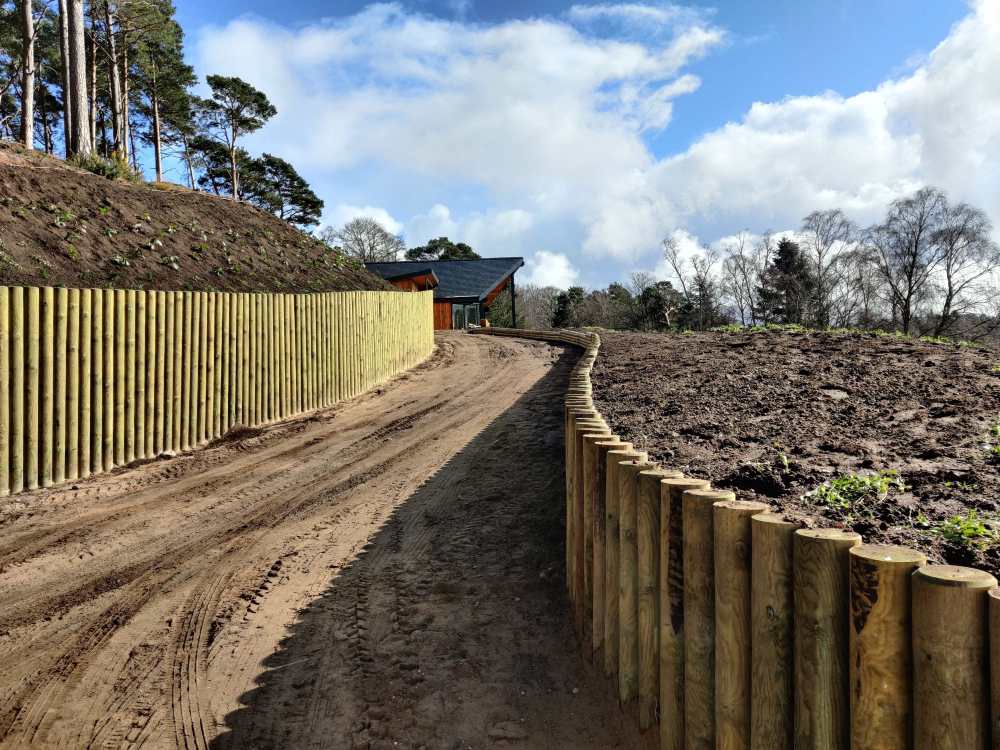
-
Powder coated RSJ’s for retaining wall
JohnMo replied to Dan1983's topic in Landscaping, Decking & Patios
Why do you need steel, at all? -
Powder coated RSJ’s for retaining wall
JohnMo replied to Dan1983's topic in Landscaping, Decking & Patios
Had plenty of stuff powder coated in the past, great for car wheels, but not had much luck with other things. Hot dip galvanised will last a life time. Your other issue will be the words retaining wall - meaning it's structural. Unfortunately defects in steel cannot be seen when powder coated. Any defects in the coating created a galvanic corrosion cell and the base material disappears very quickly. All hidden by a thin plastic layer. Either that or just plain hot dip galvanized. If it's on show and you want a colour, etch prime and top coat, after galvanising. -
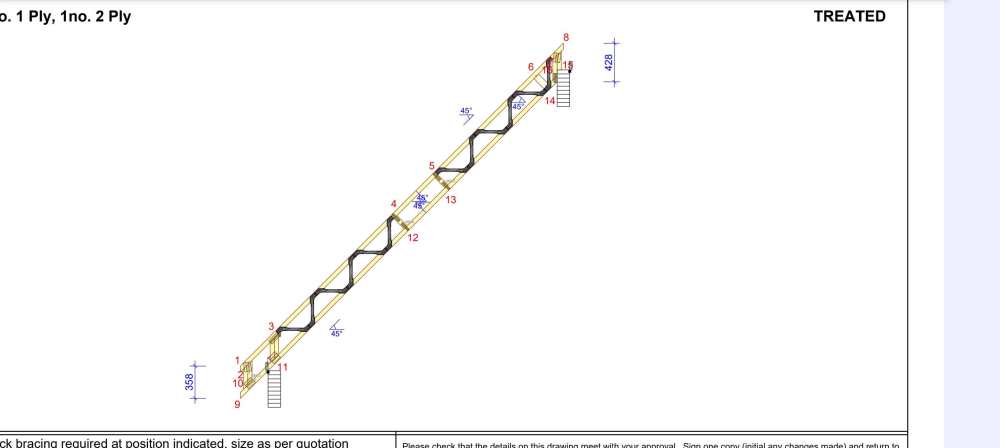
I did posi joists, similar detail to I joists, but no bell mouths, way simpler
-
Are we targeting ASHP's at the wrong market?
JohnMo replied to ProDave's topic in Air Source Heat Pumps (ASHP)
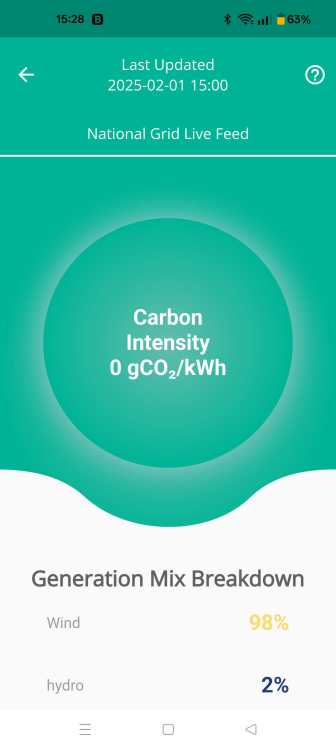
Burning natural gas produces around 0.185 kilograms of CO2 per kWh. So emissions per kWh changes depending on flow temperature and therefore efficiency. Scotland currently UK Grid over the last 12 months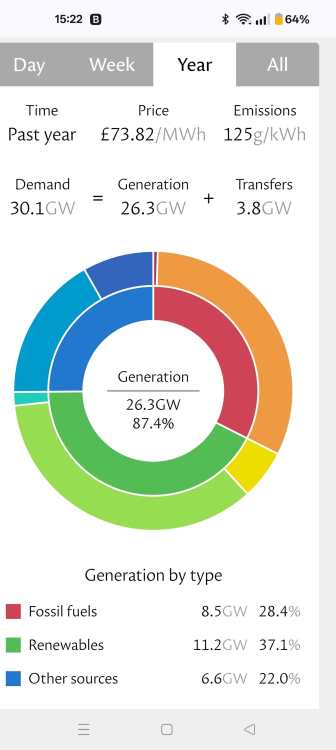
-
Are we targeting ASHP's at the wrong market?
JohnMo replied to ProDave's topic in Air Source Heat Pumps (ASHP)
Our government (past, present and future) are committed to a 4 to 5 year job application, so unlikely to happen. Short term planning wins the day, no-one cares about long term (or those in power, to change things anyway). No upsetting industry, or the voter likely to occur anytime soon. They can't even get energy pricing sorted, so don't hold your breath about bigger stuff happening. -
You may have to educate us on breezeway. A quick Google search shows a software company?
-
Joinery question. how best to make stick-build frameworks.
JohnMo replied to saveasteading's topic in Timber Frame
I just bought longer timber (4.8 and 5.4) cut to suit. Found very little waste by the time you make noggins etc. -
I just approached the joiner (carpenters make furniture), they did all the other leg work, I just made sure it was done and reviewed everything so I was also happy.
-
Your drawings state by specialist contractor. So are only indicative. My roof worked like this Approach company to build roof, they used specialist roofing fabricators, specialist company design and provide drawings Contractor approved or modified as appropriate. Full drawing and calculation package sent to structural engineer for approval. Again any modification made to enable structural approval. This aspect becomes part of the overall structural certification. Same will be true for you pozi joists.
-
If you used a different tariff would the saving be better?
-
There area few variables there. Mean flow temp sets the energy being input into the floor. As below Simple heat output graph for floor heating, you will have extend some of the number scales downwards. Just draw across from mean flow temp to pipe spacing to get W/m². Room temp is just an output of kW input, kW consumed and how long you apply the energy for. But a heat pump is unlikely to run 24/7 even if you wanted it to. It will manage its self and cycle when energy demands is lower that energy output. With a floor heating system you don't need a buffer. Parts needed are manifold, pipe clips for pipe, eurocones for pipe to manifold coupling and a couple of isolation valves. You don't need mixers or pumps, do all direct from the heat pump. You don't need actuators you don't need a buffer. I spent less than £1k on UFH parts for a 192m² floor. Running a single zone system, you get whatever room temps you want. By adjusting flow rates and how much pipe you bury in the floor. Set weather compensation up you don't need a thermostat, running a time of use tariff just use a 0.1 Deg thermostat to stop and start the heating, the 0.1 will limit under and over swings on temperature.

-
2-3. Bleeding air out the rads will lower the pressure slightly, so you needed add water which you have. When you first run the system micro air bubbles come out of suspension - which is all pretty normal. The condenser gets cold this time of year and will often freeze up and defrost, so getting wet is normal. But if getting a pathway wet, then the flow/drips should have be diverted to a soak away by the installer.
-
Expectations around MVHR
JohnMo replied to IanofEpping's topic in Mechanical Ventilation with Heat Recovery (MVHR)
You should have been given a commissioning certificate, this should show the room by room flow rates - if they haven't handed over ask for it now. When commissioning was taking place, did the person go around the supply and extract terminals (room by room) to set flow rates, they should have used a certified flow meter - if they didn't the unit wasn't commissioned correctly. Test for you to do - In the bathrooms, utility and kitchen, tear off a 2 square strip of toilet roll and place it over the extract terminal - it should stay in place. If it doesn't and falls off the flow rate is just too low.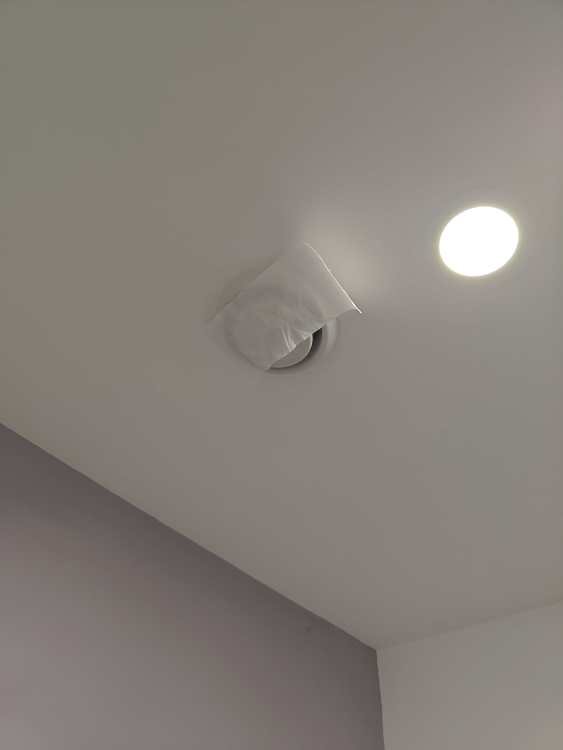
-
2 general reasons for fire doors, to stop fire spread and provide safe means or route of escape. Adding an additional floor level (loft conversion), brings in a whole load of extra rules. Not sure removing doors will help, either speak to your architect or building control.
-
My advice - review design about a 100 times, whiles it's all on paper or in a computer. Go to the beach draw it in the sand walk around inside, does it flow etc. Tweek design as required. Ask questions while you are doing so. Think about construction method, insulation for walls, roof, floor, air tightness, ventilation and heating, ask questions as needed. Build a plan of action, know in your head how you will build. Have exactly where you want sockets, switches and lights planned. Once fully clarified and you have committed to design, don't look at sites like this again, until you have finished. Just build as per design you are committed to. Be prepared for for a 101 questions you never expected from trades. If you do come sites like this mid way through build - and ask questions, you get 300 different answers, go down rabbit holes, make costly changes, waste endless time going round in circles. That would be my advice and is pretty much what I did. Building is a compromise they are never perfect for everyone, you may want something, your partner may hate it, you do something different that you can both live with. At the start of the whole process, write down your goals and always refer back I to them, check you aren't going on a costly diversion. Fine if you are so long as you know why. The really important bits and they cannot be changed later easily Insulation, building it airtight, ventilation. All cost very little during the build and will save you money every day after you finish.






