


JohnMo
-
Posts
13296 -
Joined
-
Last visited
-
Days Won
200
Everything posted by JohnMo
-
Rye Oil Ceder Oil /deck oil, will stop colour change of wood, easy to apply. If you want a colour Jotun Demidekk (not cheap but lasts well) Just taken some old engine oil to the recycling centre - not the nicest smell, reminded me of an old VW Beetle I bought, it was 25 years old and had been wash under and inside every cavity with old engine oil, many times. It stank but zero rust any where. Not sure I would use on wood.
-
Would hope he has finished by now a year after posting - but who knows
-
Mine is similar, started at 1m, but was dragging to much sand in so was lifted to 1.5m. We are only 34m down. Some people in Aberdeenshire have run dry this summer, but suspect they will be shallow ground water or hill run off capture.
-
So what will do if you hit 60m level, just fret but continue to use, you have no other options. So be blind to it and don't fret, is my view of these things. Happy to go with it, in ignorance. If a deep well runs dry we are all stuffed.
-
At least that is some good testing to show where Vaillant get the name plate data from, which has always been unclear. So a general in the round assumption for heat pumps - not just Vaillant. ASHP are tested to European standards. Europe (not UK) is less coastal than the UK, so has a lower humidity in winter than the UK. As a result, the ASHP has less need to complete defrosts. To compensate for the difference in humidity levels at or close to design point, an ASHP designed to be installed in the UK, should be over sized by 20% (above datasheet) at design point conditions, to allow a clear margin for defrosting. This is especially important in coastal and near coastal locations.
-
What is your source for said information? So we can use that instead, and what do we use for other manufacturers data?
-
Get it serviced once a year. First couple of years we needed to replace the 10 and 5 micron every 3 months, it's now done once a year. Had water analysis done in the first couple of years, now don't bother. Why bother with pressure analysis, you get that every time you open the tap? Your fine filters are in clear filter housings are they white or mucky? Your pressure will change on a continuous basis as the accumulator pressure switch is activated based on a hysterisis. Generally don't overthink it.
-

Gravity driven plate heat exchanger for DHW
JohnMo replied to Dillsue's topic in Air Source Heat Pumps (ASHP)
And an Essex flange -
Gravity driven plate heat exchanger for DHW
JohnMo replied to Dillsue's topic in Air Source Heat Pumps (ASHP)
Would be good, but one chance to get it correct, then hello new cylinder -
All depends on location and wind loading, size of glass panel and height of drop. Really need structural engineer to specify design requirements and go from there. Article here to read https://www.iqglassuk.com/technical-advice/regulations-and-best-practice-for-glass-balustrades/s88644/
-
Gravity driven plate heat exchanger for DHW
JohnMo replied to Dillsue's topic in Air Source Heat Pumps (ASHP)
Here are some proper layouts and flow diagrams - they feed into the secondary return port not the DHW out port. http://heatweb.com/literature/Amazon_HXIN.pdf -
Gravity driven plate heat exchanger for DHW
JohnMo replied to Dillsue's topic in Air Source Heat Pumps (ASHP)
If you are pulling from the bottom and injecting higher up, you will be pumping up hill. Depending on pipe runs there may be a thermosyphon formed as hot water cools, this will travel downhill, so you will need check valve downstream of pump. -
Gravity driven plate heat exchanger for DHW
JohnMo replied to Dillsue's topic in Air Source Heat Pumps (ASHP)
Discussion on plate loaded cylinder here https://community.openenergymonitor.org/t/anyone-else-with-a-monitored-heat-pump-and-a-mixergy-cylinder/23825/69?page=2 It shows a mixergy cylinder layout, it draws cold water from bottom of cylinder and deposits hot back at bottom of cylinder also. So I assume the hot water at top cylinder isn't disturbed. -
Gravity driven plate heat exchanger for DHW
JohnMo replied to Dillsue's topic in Air Source Heat Pumps (ASHP)
Look on eBay, they can be way cheaper. -
Mitsubishi Ecodan/FTC5 and Heatmiser UH8 UFH control
JohnMo replied to cb1965's topic in Air Source Heat Pumps (ASHP)
An expansion vessel only has one pipe connection. Generally a volumiser will have only 2 connections and will be only on the return or flow piping. A buffer could be 2, 3 or 4 connections, but will have flow and return piping connected to it. -
Mitsubishi Ecodan/FTC5 and Heatmiser UH8 UFH control
JohnMo replied to cb1965's topic in Air Source Heat Pumps (ASHP)
A Y type looks like this A ball valve strainer looks like this This what removed and replaced with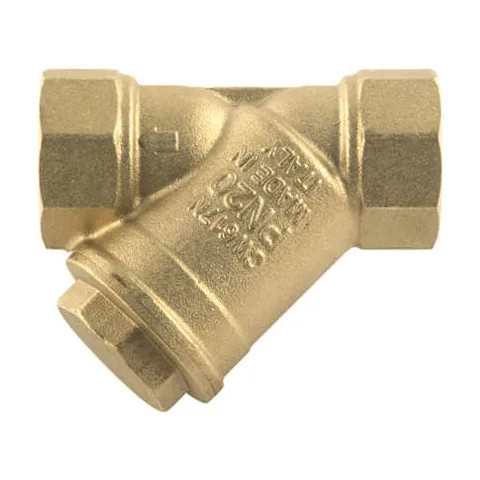
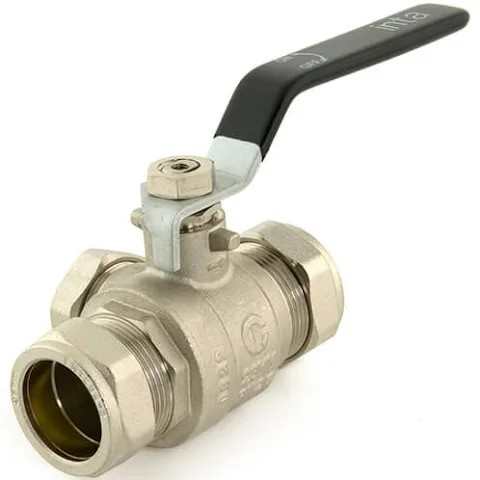
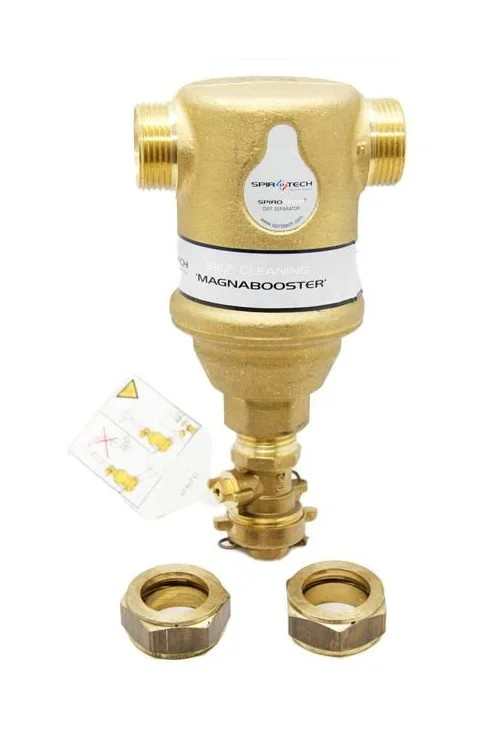
-
Nothing like out of context quotes, to make a point - that discussion was about room compensation and UFH, you said it was needed and I stated I tried it and it didn't work - so not relevant to this discussion. In that case, boiler at min flow temp kicked out over 9kW, I only need around 3kW at max demand, so no surprise it didn't work.
-
Unless it's an Atag (and others) then it runs just like a heat pump, like it or not. Up to about 40, has a dT 4 or 5, dT progressively widens but not be much. Doing DHW with ASHP cylinder and flow temp cap of 60 degs, would slowly ramp up flow temp over about 15 to 20 mins, exactly the same as heat pump and settle at a 4 to 5 Deg dT. At the end of the cycle dT would start to drop when it hit 60 degs, going down to about 3. Both were done with zero cycling. Built for the UK market, and simple S and Y plan you have 20dT and that's about it. Modern boiler built really for Europe (Atag Viessmann etc), W and X plan and weather compensation, you get a boiler that runs just like a heat pump.
-
Pre-cast concrete staircase
JohnMo replied to flanagaj's topic in General Self Build & DIY Discussion
Think I would install before the external walls so you can get a crane in with ease. Concrete floors, concrete stairs, will it start to look like a carpark or industrial building? -
It grey here also, but I am currently importing 5.7kW of free electric - thanks Octopus, charging battery and doing DHW next. Currently at 240V, 1 hour ago 247V, but does swing up to 250-251V, especially if exporting.
-
Got a bill today - mid July to today.
-
50mm pipe spacings in problem rooms - any bad effects?
JohnMo replied to James of the North's topic in Underfloor Heating
No idea what you are trying to ask? You seem to ask one thing then if you get answer you don't want you go on a tangent. You only do tight transit through room if you are running multiple zones, otherwise you would use the pipes spaced where possible to utilise the heat before getting to the end destination. Make the pipe work for its cost. Only room I have transition pipes in the utility, because manifold is there. Hallway, main bathroom are all heated by using pipes going somewhere else, suitably spaced to match heat required. Original ask was can I do 50mm spacing because you cannot achieve heat output any other way. Now you are talking transition through rooms? If you answer the simple questions asked, you may get some sensible answers, until then I will watch but not answer anything further. -
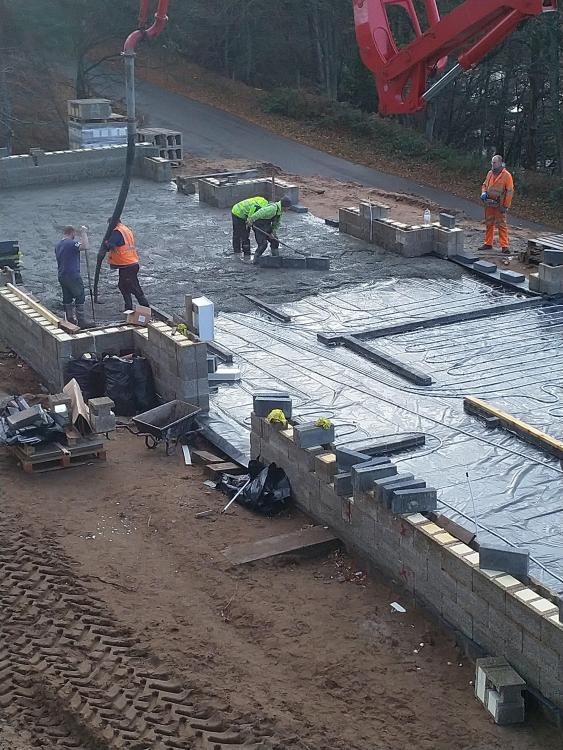
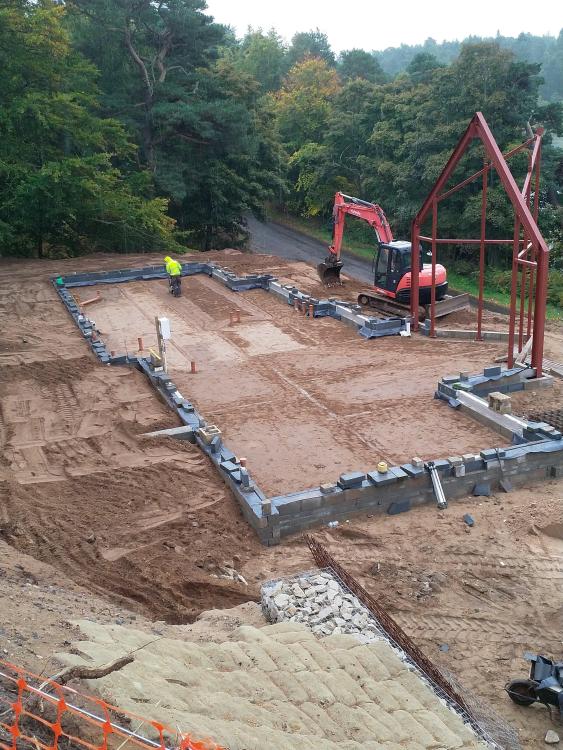
I did a white external meter box on a post. Positioned it exactly where it would end up in the house. As wall was built it was moved about slightly. Once water tight box was cut away from meter and positioned correctly. If you need power to caravan, run armoured cable between meter and caravan.
-
Could of told you a couple of weeks ago, but deleted loads of stuff off the phone, and the Mitsubishi tech manual was one of them.
-
Suspect a cold day would be about 50% higher than the average. So if your 200m² (add your own area) that's about 50kWh to cover all consumption on the coldest day on cheap rate - let's assume Cosy tariff for now. 50kWh a day is around 2kWh per hour. Cosy gives 8 hrs of cheap rate, so that's 16kWh (2x8) and needs battery for 34kWh. 34kWh/3 needs just over 11kWh battery to cover all electrical demand on cheap rate on the coldest day, if charged three times. The shortest cheap tariff period is 2 hrs, so you would need a 6kW inverter to comfortably to charge. Just add your building size.




