


MortarThePoint
-
Posts
2294 -
Joined
-
Last visited
Everything posted by MortarThePoint
-
I have mixed feelings about Banggood. They have some good stuff at cheap prices but goodness me they have some woeful stuff too. I spend too long looking at their emails as well.
-
I suspect it's called a One Hand Saw because that's how many you have left after using it
-
Convinced I would end up swapping too if I didn't have shoes What about Gully surrounds
-
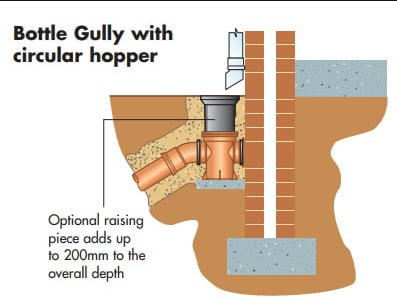
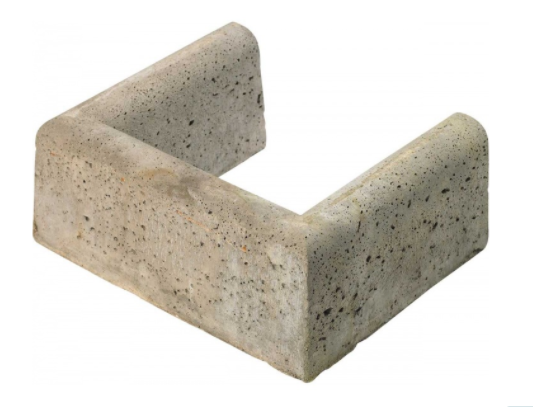
I know opinions vary, but I am keen to use shoes at the bottom of the downpipes because I actually like the look as well as the functional benefits they offer (interesting link). I therefore expect we'll be using inline bottle gullies with a grating under each downpipe shoe. Below is a diagram of the setup. That leaves me with some questions: I presume the rectangular ones are for when you also have a tap above the gully, or an outlet from a kitchen sink for example? Concrete gully surrounds seem like a problem waiting to happen as if the gully blocks the surround will fill up and expose the wall to standing water. They can add to the look and would stop leaves etc being blown onto the gully's grate. What am I missing here? Can you get 4 sided gully surrounds?
-
Trusses against brick wall
MortarThePoint replied to MortarThePoint's topic in Roofing, Tiling & Slating
I spoke to Simpson StrongTie and they said the masonry application is still possible, but they found it raised more questions than it was worth and they preferred it to involve an Engineer. For example worries that people may bolt them into a bed rather than mid block/brick. -
Trusses against brick wall
MortarThePoint replied to MortarThePoint's topic in Roofing, Tiling & Slating
Interestingly, the SAE hangers are not listed on the "Timber to Masonry Hangers" page of the Simpson StrongTie website. The SAE page and datasheet and don't mention masonry except for one picture. The datasheet was updated on 10 March 2021! -
Trusses against brick wall
MortarThePoint replied to MortarThePoint's topic in Roofing, Tiling & Slating
Yes I saw that type when looking just now and that doesn't have any tabs that tuck in. I like the sound of the hybrid approach you described as that seems like the best of both worlds. The SWL (probably 2.2kN aka 220kg) isn't particularly good which is a shame [datasheet]. The tuck in type have about 3x the SWL [their datasheet].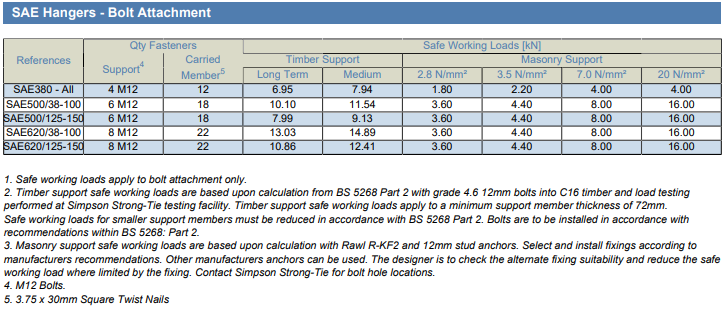
-
Trusses against brick wall
MortarThePoint replied to MortarThePoint's topic in Roofing, Tiling & Slating
That sounds good. Do you know of any brands that make that type to help me find them? They sound like they are designed to avoid the need for mortar or resin with the tab that tucks into the brickwork. -
Trusses against brick wall
MortarThePoint replied to MortarThePoint's topic in Roofing, Tiling & Slating
Drilling holes and using Rawlbolts feels like an easier process. -
Trusses against brick wall
MortarThePoint replied to MortarThePoint's topic in Roofing, Tiling & Slating
Yes, I'd have to cut out some bed and then mortar the hanger in which doesn't sound much fun -
Trusses against brick wall
MortarThePoint replied to MortarThePoint's topic in Roofing, Tiling & Slating
That's prior to loading, they can be built in during construction. The wall extends a storey higher. -
Trusses against brick wall
MortarThePoint replied to MortarThePoint's topic in Roofing, Tiling & Slating
This is what I mean by a ledger board: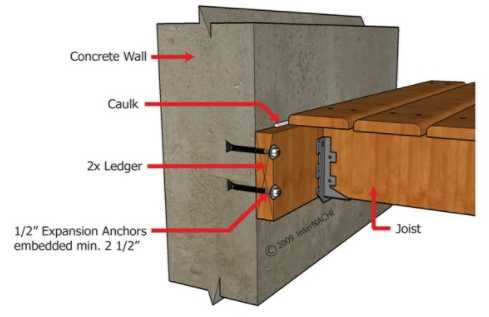
-
We have a lower level roof (half flat half pitched) that the designer has used JHI masonry hangers to attach to the wall at one end (circled below). The wall is already built and I was wondering if people thought cutting a masonry joist hanger in to an existing wall is harder than using a ledger board and timber joist hangers?
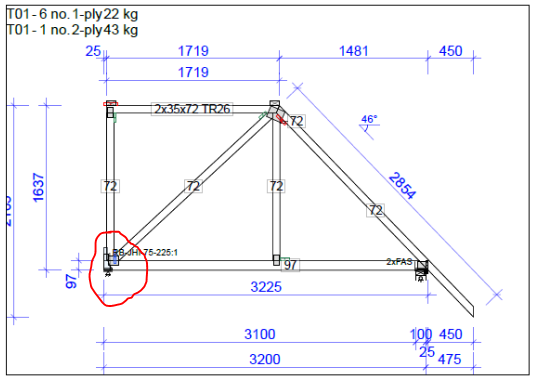
-
I do like this product. What spacing did you use for the downpipe clips? With an offset bend did your downpipe become: 112 bend pipe 112 bend clip pipe + clip half way down socket pipe + clip half way down shoe
-
Hot water: Part L requires insulation. If the water is 38C warmer than ambient then a 22mm pipe losses heat at 53W/m [link]. The heat capacity of water is 4.2KJ/KgC. The volume is 0.38l/m giving 0.38kg/m. That will therefore cool at a rate of 53J/sm / (4200 J/KgC * 0.38kg/m) = 0.033C/s or 2C/min. The temperature difference half life will be something like LN(2) / (0.033/38) = 800s about 13minutes. Table 5 of https://assets.publishing.service.gov.uk/government/uploads/system/uploads/attachment_data/file/697525/DBSCG_secure.pdf Table 6.1.1 of http://www.timsa.org.uk/TIMSAHVACGuidance.pdf Insulated to achieve the 9W/m figure would slow the heat loss to about 0.33C/min. The temperature difference half life will be 13*53/9 = 77minutes of 1.25hours. I wonder if that's worth it for the family bathroom where chances are all activity happens in a flurry and then nothing for many hours. Probably makes sense for a downstairs loo where the usage is more constant with the tap going about once an hour or more (depends who's cooking). Cold water: Is this a building regulations requirement or guided by good practice?
-
Am I imagining it or did I read somewhere that hot and cold water pipes should be insulated even within the building's insulated envelope? I hope I did ?
-
Cool. I follow now, 7kW peak charge current but many kWh capacity. Still now worries charging overnight.
-
Nice quick charge then. What's your EV then, at Twizy?
-
I know I'll have to talk them out of it though ?
-
I got 30 panels for £11 each for just the panels. You can easily find clips for around a pound and I knew someone with an old pallet of feet that I paid £50 for. They charged £100 for delivery as it was a fair way. Tip on collecting as I have done it as well. I hired a luton van and they shifted in transit causing the door to jam. That was fun sort in the dark at 10pm.
-
Just wondering what sort of charge time is that going to make for?
-
The Architect's specified 3:1:12 mortar for the chimney above eave level. So that's 3 parts white cement, 1 part hydraulic lime and 12 parts sharp sand. For the rest of the exterior walls we have used a lime mortar (so no cement) and we'll therefore be transitioning, so fingers crossed the changeover won't be too noticeable. Any tips welcome on that. One question I have is around admixtures (aka feb). Brickies love the feb, but I presume that's not a good idea with a 3:1:12 mix as the lime should be the plasticiser or is it fine to add feb?
-
Butt jointing the wall plate
MortarThePoint replied to MortarThePoint's topic in Roofing, Tiling & Slating
I had cause to do this again this week and I quite enjoy it now. The way I do it is below for anyone who is interested. In steps 1 and 2, I clamp another piece of 4x2 along side to provide more surface for the circular saw to ride on and stay square. In step 3, I clamp a speed square on to the timber and follow that, it's actually 30mm away from the cut as that is the gap between my saw's blade and edge of its base. Step 4 is just some easy clean up with a chisel. My circular saw's blade isn't quite deep enough to cut half way in steps 1 and 2 hence the way it is shown. Important to remember to adjust the blade between steps 2 and 3.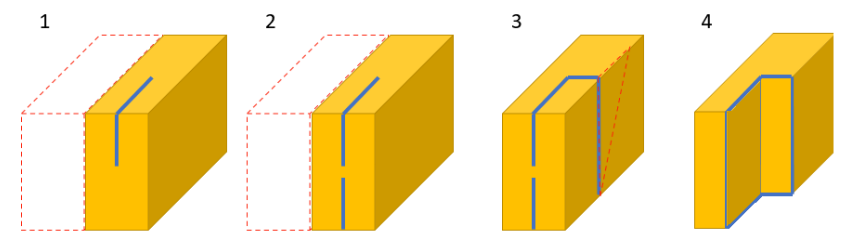
-
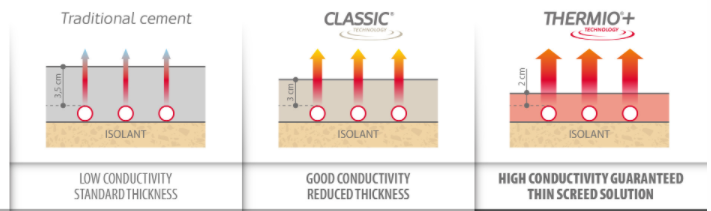
I'm looking at a total liquid screed thickness of 40mm, but there is no insulation between that and 50mm of concrete so I expect that is OK. Would you still be nervous?
-
Painting timber windows for new build
MortarThePoint replied to MortarThePoint's topic in Windows & Glazing
Thanks Craig, can you recommend any suppliers?


