


Thorfun
-
Posts
4892 -
Joined
-
Last visited
-
Days Won
36
Everything posted by Thorfun
-
just briefly read up on this and it doesn't seem that PIR was at fault and I presume your statement comes from the fact that Celotex and Kingspan knew about the issues with the PE and so should be avoided as they obviously have no morales at all.? in that case, other PIR manufacturers are available, right?
-
New build with basement Essex/London boarder
Thorfun replied to Hyside's topic in Introduce Yourself
I got a quote from them and they were very expensive. the most expensive of the 4 quotes I received by far. I'm sure they'd do a great job but at that price I couldn't justify it. -
exactly, it keeps things flexible if we have those quotes upfront and we can decide how far to go with it. tempted to leave it at first fix stage though but we will see. maybe I'll win the lottery.
-
as yet undecided. thinking about just running some pipes just in case as the cost should be minimal if I can do it myself. then if we find we need heating it can be plumbed in. the same with the first floor. I'd rather lay it and not need it than not lay it and need it! but the basement will be the last thing we fit out and that may not occur for a few years until we can get the funds to do so. during that time we can see how we get on with the temperature down there. our plans are very fluid at the moment!
-
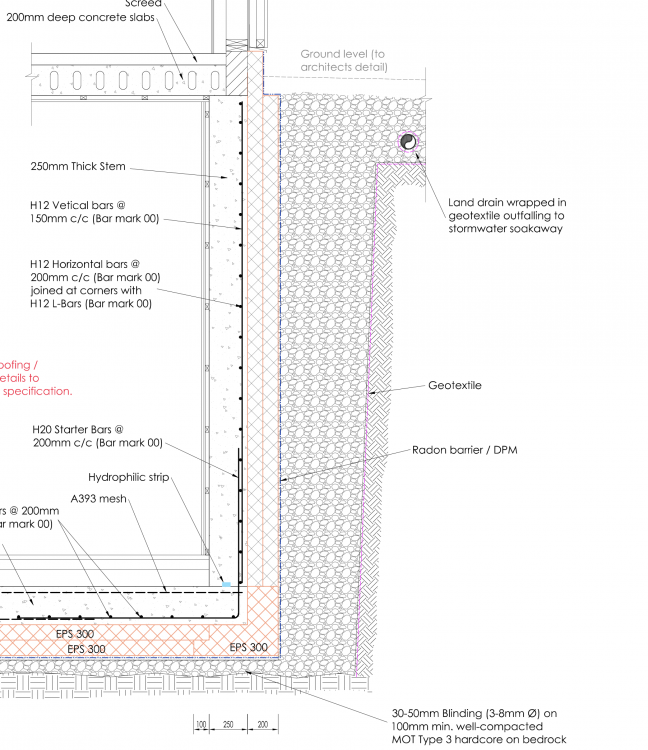
thanks for the great advice as usual @Bitpipe. our SE is TSD and they've designed the insulated slab using the Kore system. I'm not sure what the loads are but at some places they're so high that we've got to add Foamglas instead of the EPS to deal with those loads. As such I trust that they've done their calculations correct when specifying the EPS300. I'm not sure why the land drain is specified so high I just assumed it should be but you make a valid case and I will question this one and ask why it's not at the base of the slab level. I wonder if it's due to the basement having to tie in with the 'arms' of our building and so the land drain is dealing with the water from those insulated slabs as well? I will ask the question though thanks.
-
our SE plans show stone backfill... looks expensive but we really don't want it to settle so will bite the bullet and pay what it takes.
-
Cold water manifold, how big is toooo big
Thorfun replied to Russell griffiths's topic in General Plumbing
I have another question about using manifolds. does using them preclude the need for a hot return circuit or can you use an HRC with a manifold setup? and if the later, is it recommended to use the HRC with the manifold setup or not? -
New build with basement Essex/London boarder
Thorfun replied to Hyside's topic in Introduce Yourself
yeah I know. was just being facetious. sorry. it is definitely a possible consideration once I've weighed everything up. -
New build with basement Essex/London boarder
Thorfun replied to Hyside's topic in Introduce Yourself
errr....didn't you just say.... ? -
New build with basement Essex/London boarder
Thorfun replied to Hyside's topic in Introduce Yourself
I have considered it to be fair. buy myself a 12-ton digger and figure it all out as I go along. but then I'd end up building the house for myself as the wife would probably leave me coz the house will never get finished. -
New build with basement Essex/London boarder
Thorfun replied to Hyside's topic in Introduce Yourself
for me the ICF quotes were stupid money (had 2 from Nudura installers) for the basement. I'll be getting quotes from ground workers doing in-situ RC to compare and if those come in at the same price as the ICF then I'll be knocking the basement on the head as we wouldn't be able to afford it. I'm hoping the in-situ will be cheaper as I'd really love the basement! only time will tell.... -
Floor Plans and 3D Planning and Interior Design Tool
Thorfun replied to Mania's topic in New House & Self Build Design
thanks for the link. may I take this opportunity to big up the Dialux Evo software for lighting design. https://www.dialux.com/en-GB/ it's free and very easy to use. I've had lots of fun designing our lights. when I've had issues their support is willing to help via the forum.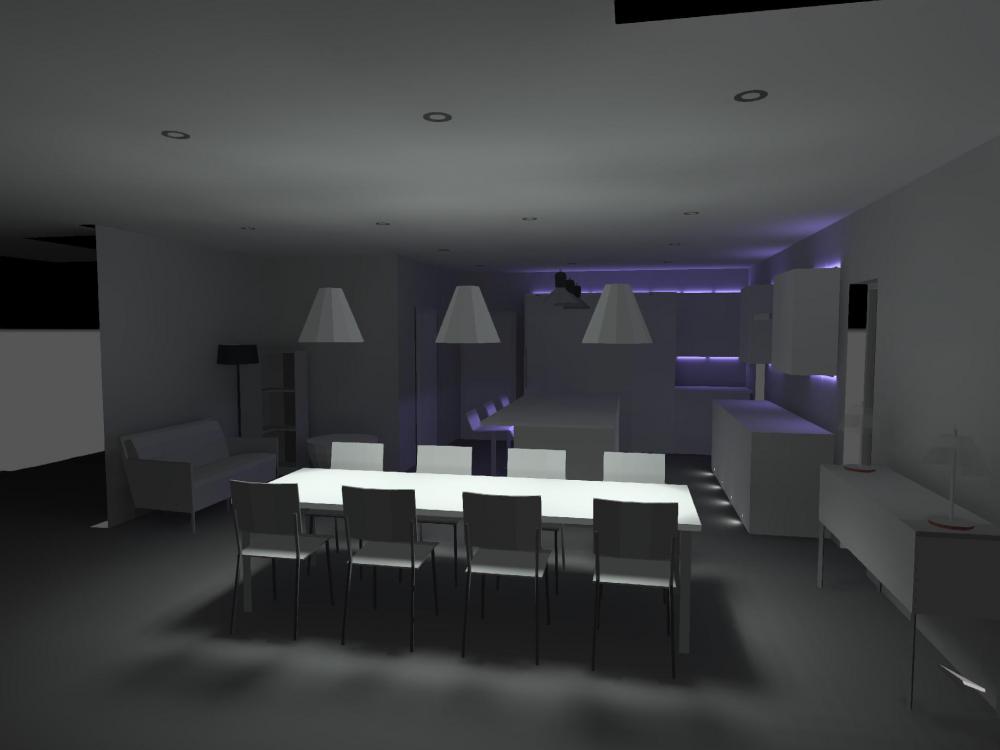
-
New build with basement Essex/London boarder
Thorfun replied to Hyside's topic in Introduce Yourself
can't answer that sorry. your best bet is to speak to some SEs and see what they say. good luck! -
Self build in Sussex - complete newbies
Thorfun replied to Helen Vowls's topic in Introduce Yourself
welcome. I was where you were about 10 months ago. we had a quote from Scandia as well as many other TF companies and Scandia without a doubt were the most expensive company ever! even for just the TF they were nearly double anyone else. I know they're local but do look further afield (although there are also TF companies local that aren't as expensive) as well. if you want a package company to get you to watertight then possibly consider MBC. many on here have used them and we have good friends that have used them who are also in West Sussex. They did the foundations, TF and windows/doors and I can guarantee you it's a lot less than Scandia will charge you. We've gone for Flight Timber based in Essex as they were local-ish to West Sussex and we were impressed with the quality of work when we visited another site they were building. it was a good price as well! the only reasons we didn't go for MBC is that we're having a basement and so they wouldn't do the foundations and also, as we needed to cut costs by adding the insulation ourselves, their TF without insulation was substantially more than Flight Timber. here's my blog post detailing our decisions on TF and other things. I wish you the best of luck and get lots of TF quotes! -
New build with basement Essex/London boarder
Thorfun replied to Hyside's topic in Introduce Yourself
this just seems wrong to me! the SE needs to calculate the load on the walls of the basement etc to make sure it can take the load of the house and hold back the earth around it. so it really should be the structural engineer who designs the basement. I understand getting a waterproofing expert as per BS 8102:2009 involved to design the waterproofing but it really should be the SE who designs the basement. when I sent my plans to SEs for quotes the basement was on it and I made sure that the basement design was included in their remit of work and costs. I'm really surprised by the response of yours. but that's just my opinion and hopefully someone who knows what they're talking about will be along soon. -
New build with basement Essex/London boarder
Thorfun replied to Hyside's topic in Introduce Yourself
my ground investigation report gave advice for the foundations and basement construction which I then passed on to the structural engineer and he has designed it all. just waiting for the few final pieces to be put in place before I get those final drawings. -
New build with basement Essex/London boarder
Thorfun replied to Hyside's topic in Introduce Yourself
start typing an @ symbol and then it will filter after that as you start to type names. @Hyside -
more prog rock than heavy metal ....I'll get my coat....
-
EPC/SAP unfinished new build
Thorfun replied to Pocster's topic in General Self Build & DIY Discussion
this is the stupidly crazy idiotic thing about RHI. get paid more for building a less efficient house! who the **** thought that was a good idea. surely any sane person would reward those building efficient houses. but when has logic ever played a part in government decisions. ?♂️ in that thread it seemed to state that domestic RHI had been extended to 2022. so maybe there's not the rush you think @pocster? ask your MCS installer to clarify. -
Any good build-related books?
Thorfun replied to Mulberry View's topic in General Self Build & DIY Discussion
thanks. I've read Brinkley's HBB a few times and also Tim Pullen's Sustainable building bible for the green side. both were really good and I found them very useful. I've just been wondering if it would be worth getting another perspective on some more of the technical side of things but, tbh, this forum is giving me most of what I need now. -
do you just have the one form of waterproofing?
-
yep. SE is involved in this part of the process as are the civil engineers (trying to get the civil engineers, waterproofing experts, structural engineers and architects to coordinate is a challenge in itself but what doesn't kill you makes you stronger, right?). And they've had the GI report but as Gus pointed out just because there was no water found at that time doesn't mean there won't be at a wetter period of the year. we're not on free draining soil so there's a high chance of water pressure building up. don't worry I am very cynical and will not just blindly accept one companies solution which is why I am approaching this with an open mind and so the plans might change. once I've got the SE and CE plans sorted out I can get quotes from GW and then those discussions can be had.
-
this is a very valid point and definitely something I'll be taking up with the ground workers and whichever warranty company we decide to use (assuming we do but that's a whole other topic!). both the ground workers I've spoken to so far have said not to bother with waterproof concrete as standard concrete is pretty darn waterproof already. so with the Type C waterproofing it's possible that I wouldn't need it if it's not a warranty requirement. the other option is to use Type A and Type C if Type A is a lot cheaper than waterproof concrete. ultimately it wouldn't matter if the external tanking leaked as I'd have the internal membrane to fall back on. these are all decisions I will need to make a little further down the line. for now I think I'm happy with the internal membrane solution that's been designed. I never asked that question. they just said that it was rubbish and they had to get someone else in to rectify it. so I'm going to hazard a guess that they didn't! I will ask the question at some point I'm sure.
-
Any good build-related books?
Thorfun replied to Mulberry View's topic in General Self Build & DIY Discussion
what was that David Snell book like? and can you give us your top 5 (or top X) of those books? -
you make a very good point here in that I am a lay person and don't know how to fully interpret the GI which is why I pay professionals to do the stuff I can't and sometimes I pay professionals to do stuff I can do just because I don't have the time or couldn't do it without looking like a cowboy. for the basement I am very happy to leave it in the hands of an expert. BS 8102:2009 mentions requiring a waterproofing expert to be involved (which the architects did) and I've also read that Type C is the most reliable form of waterproofing. I also think the quote I received for installing the internal membrane is very reasonable and a fair price to pay for professional work and a 10 year guarantee! as such, I really don't have a problem going down this route but I do have an open mind if the ground works company state another way and will guarantee it. I have asked the waterproofing company if they're seen the GI or just did a desktop survey. I'm sure I'll get a response next week as they've been very approachable and open so far. The problem with our GI is that it was done in July when we were having the massive dry spell and great weather! so it's very possible that over the winter period we will have groundwater. so, again, I would be happy with going a little over the top with the waterproofing for piece of mind rather than spend more money on another GI in the winter, especially as we hope to break ground in a month or two. thank you for the explanation about a perched water table it's not something I knew and hadn't Googled it yet! I can provide more information if required on my GI. just let me know what you want to know.




