Onoff
-
Posts
21029 -
Joined
-
Last visited
-
Days Won
206
Everything posted by Onoff
-
Just for you! Reckon it's alright as is:
-
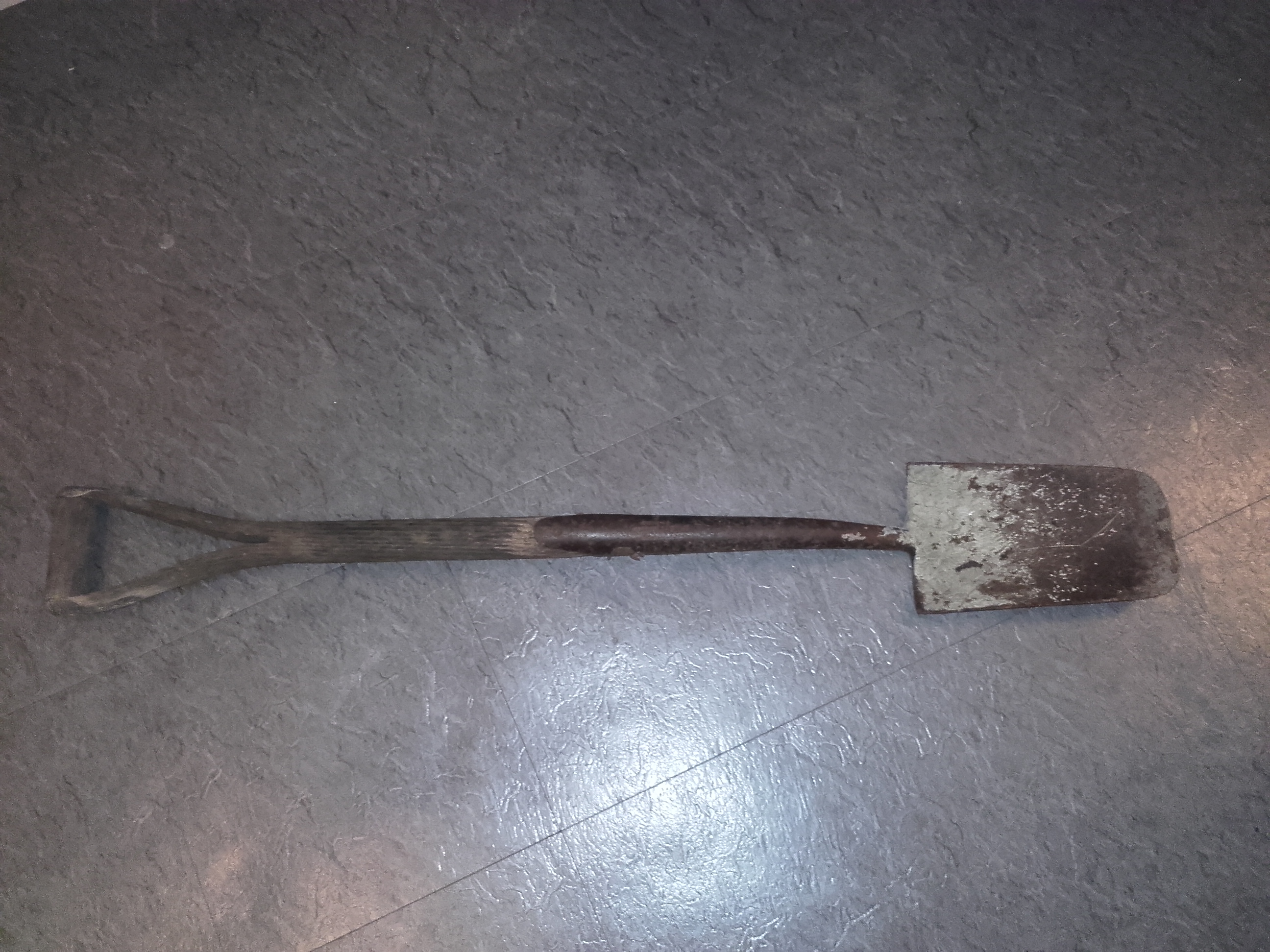
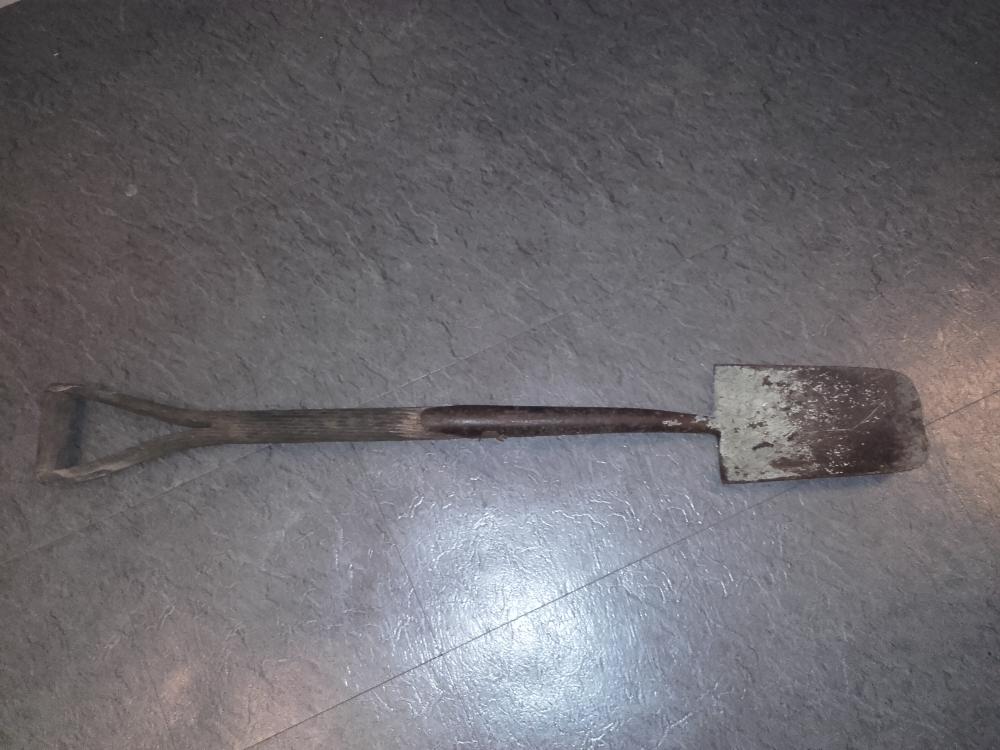
Little update...I found what I think is a trenching shovel in the back of the tumbledown greenhouse here!
-
For its better corrosion resistance not mechanical strength!
-
Existing iron main so trenched down to that depth which is nom 750mm. Gone with a metre of 22mm pipe insulation over the MDPE duct taped to close the split. Shoved up the 63mm duct: Getting it in will be fun! Found this galvanised thin gauze that I reckon I can roll into a nom 65mm dia cylinder to go round the duct where it comes up into the suspended floor: Would have preferred st/st.....
-
Water board bloke just said to take photos of the trench.....
-
Reading a bit more today and it seems I SHOULD have used a 100mm duct! Too much grief so this 65mm one is going in.
-
Cheap on here: http://www.toolandfix.com/gardening-and-outdoor/garden-hand-tools/spades-shovels-and-forks/trench-shovels.html
-
Looking to buy one just to tidy the bottom of a trench. Less than £20 on eBay for a Spear & Jackson / Draper. There's Bulldog ones on there too. BUT.....I have old "big" shovels and a 9" grinder. Surely just a case of mark two lines with a Sharpie and chop a big one down with a slitting disc. Heat the edges up with the oxy torch and bend up a bit?
-
Just think how much you've saved on GYM membership though!
-
Thought it best to bring the 25mm MDPE up through the suspended floor in an insulated duct (as I believe you're supposed to). So after a bit of pi$$ing about making an extension for a core cutter I drilled through the footings. I had to drill a bit more than the 250mm shown as there's some sort of brick detail at the foot of the wall.This is roughly the section I have: I have some 63mm OD ducting which has an internal diameter of approx 50mm. Gives me nom 1/2" all round to add a bit of insulation: So I now need to: 1) Insulate the MDPE 2) Protect the duct in the floor space 3) Get it in! Thinking maybe normal, grey pipe lagging.....22mm? Maybe some thin stainless mesh / gauze rolled to fit round the duct for protection? Any better ideas? Cheers
-
 I'm aware of the name. Figured go Karcher for future spares.
 -
This is sounding like the lances on the same cheapo ones I have from B@Q circa £30 each and bought on a whim when they've had them as specials. Going to buy a Karcher now. I reckon this lance is the same as the one I've got that's split: http://m.ebay.co.uk/itm/PRESSURE-WASHER-LANCE-FIT-CHALLENGE-XTREME-DIRT-DEVIL-HIGH-QUALITY-SPRAYER-/322240278492?nav=SEARCH
-
Wife DOESN'T like it!
-
Well it worked a treat: In fact it's been a day of invention. The reason for the latest Starrett adapter was to get a 65mm core cutter in to try and open up a 32mm hole down through the footings. This so I can get an insulated sleeve through. Had to split the core cutter and put a home made extension in. Then drilled and tapped a piece of 32mm bar to go on the end and stick down the existing 32mm hole: About 400mm down so far.....gave up for tonight.
-
I've tried twice on mine with a 2 part, Araldite like epoxy glue.....FAIL. Not on an easy bit either. Right in between plastic reinforcing bits. Built in obsolescence I reckon.
-
Well if money were no object this is the one I would buy. Looks the dog's danglies IMO. Low profile, fits in the two holes etc: http://www.fountaindirect.co.uk/vado-summit-2-hole-bath-filler.html?gclid=CKrL2eXYls8CFfMK0wodkVwANw
-
Say you have a 16mm hole but you wanted really to put a 20mm hole in or you drilled a 20mm hole and wanted a 25mm. Yes, I know cone cutters / step drills etc but they go blunt. Starrett have the "OOPS" allowing holesaws of two DIFFERENT arbor sizes to be used but no good for the smaller sizes: But for using two of the smaller sized arbor cutters together........I think I'll call mine the "FOOKIT". First, get yourself a 1/2" UNF 20tpi x 2 1/2" long bolt and cut the head off, file neatly and de-burr: Then screw on a couple of Starretts: Job done. The one in the picture needed a 13mm chuck you could turn it down to 10mm. I did the above one in 2014. I keep one in my tool bag for electrical work. I call it the "FOOKIT". Then today, needs must and all that, the FOOKIT+: Take one 5/8"-18 UNF bolt. Black would have been better but they gave me BZP and plain nuts: Stick 3 nuts on and bung it in the lathe. Roughly turn down the head end to 10mm dia x 25mm long. Drill and pin the nut onto the shaft (you could of course weld it on): Screw on a big "Starrett": Screw on the small Starrett: Pack between the two with M16 washers if you want the smaller one to project more: Best go and use it for the job I need it for now!
-
Slab cooling/heating - to do or not...
Onoff replied to MarkH's topic in Energy Efficient & Sustainable Design Concepts
You can get a special tool to do it: -
Lighting circuit - is there a better alternative - starfish circuit?
Onoff replied to readiescards's topic in Power Circuits
POE is Power Over Ethernet. DALI is a standard that a lot of makers adhere to = Digital Address Lighting Interface. Simtronic, Thorn, Clipsal are a couple to conjure with. Where I work uses Simtronics and has a dedicated pc. Benefits are energy savings on a massive scale as you can schedule when lights come on / go off and take care remotely of all the offices where people have gone home but left the lights on. Some places even use the office lighting as a pseudo night time "billboard" treating each area as a giant pixel. You could even switch whole floors in a skyscraper to create a Knightrider effect. At "our" end of things.....dunno.....turn the kids lights off once they're asleep via your smart phone without having to get up! Once you've verified via CCTV they are indeed akip! Put lights on for somebody to come home to if you're out. Its endless really. -
How long then can you leave green plasterboard outside, stacked against a wall but well covered with tarps whilst at the same time well ventilated? Also on battens to keep it off the deck. A bloke I know bought his last month but hasn't yet got it on the walls.....
-
Physical size of the cable can give you a hint as to what it is, tbh it probably will be what you think: https://www.google.co.uk/url?sa=t&source=web&rct=j&url=http://www.cablesbritain.com/pdf/powergen/booklet/6242y.pdf&ved=0ahUKEwihloPQ6JHPAhVsL8AKHX0YA2cQFgguMAA&usg=AFQjCNEjiv056x6g4wlzJAImbkd34RXx_A BUT it's not guaranteed, plenty of diy lighting installs all done in 2.5mm etc from the boot fair!
-
The original, untouched, downstairs rads are then in at the top and out at the bottom. All have swept tees in and out. Looking around a couple of rads have been added / moved previously but these have unswept compression tees and go in AND out at the bottom. My daughter added one radiator to the downstairs, single pipe system when we lined and insulated the old coal shed (pantry, boot/tack room?). It actually works OK even though I...I mean SHE, went in and out at the bottom and used non swept tees. First rad on the system too btw. This is the only heat in the room. Later it will have UFH. The only bugbear is that the original floor was about 6" down from the main house level. I just made a 4"x2" frame and laid it on wax paper direct on the original concrete. Later I'll ditch the fluffy stuff, put 75mm of PIR in there and a UFH pipe circuit.
-
So is there an option to temporarily connect the UFH & towel rail to this same TMV, itself on the single pipe? The UFH pipes go nowhere at the mo though they will cross this stairs room to a manifold on the wall eventually from where UFH will feed to all rooms. Wonder if the wife would go for a TS under the stairs (where the manifold will go).....its pretty central a point in the house. I could bring pipes for the towel rail along the dwarf wall as above, behind the bath, then round the corner to the right of the trannie. From there could go under the yet to be excavated floor. No airing cupboad btw!
-
All original features I'll have you know! The hall is WAY down the list.