
Onoff
-
Posts
21159 -
Joined
-
Last visited
-
Days Won
206
Everything posted by Onoff
-
I reckon I could cut a curved sole plate out of say 8x2s. Butted together would form a perfect curve. Would just need to put the jigsaw on a string from a centre point.
-
Good stuff! You're so NOT sad!

-
Love the literal translations of Afrikaans: "The man's a box!" Think what else you put something into! "The man's wire a puller!" A euphemism! And my all time favourite, very sexist, lecherous comment muttered at attractive girls by the Boer labourers I used to work with, "Kom gryp my ore!"
-
Afrikaans is pretty good!
-
Gearing up, floor protected. Support angle just doesn't clear the rad pipe on the right
-

New directory from Passivehouse Plus magazine
Onoff replied to Square Feet's topic in Environmental Products
Just read that. So many combinations, raft, double ring beam etc. Fascinating. Rather taken by the Armagh Passive House. -
Joking aside you could probably clean a good few bricks up and sell as reclaimed / salvage.
- 35 replies
-
- 1
-

-
- demolition
- bungalow
- (and 3 more)
-
Not much longer hopefully...
-
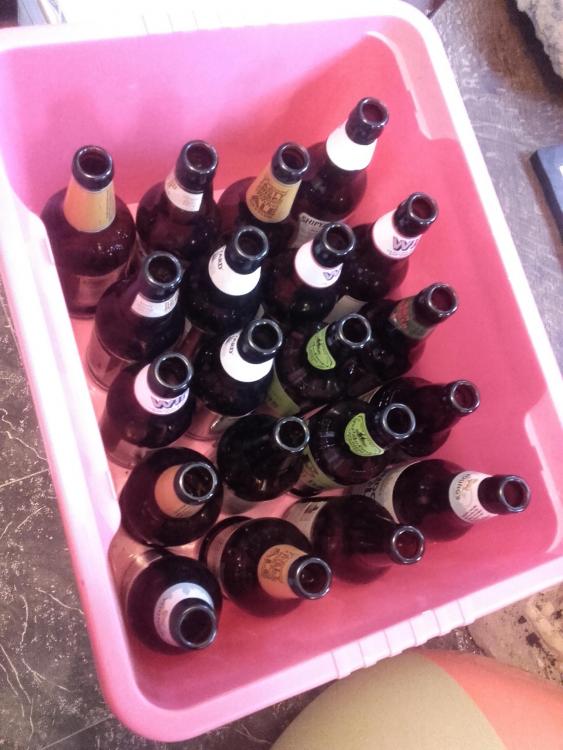
I always finish...my beer. Only another 20 to go and I can make the cider kit!
-
A thought... The shower valve is centred on a grout line. As shown on the model: I've NOT put Aqua Seal tape over it in any way. It'll have the 7 to 5 o'clock bead of EBT with the bottom open. I guess I'll be reliant on the grout? Why can't I stick a bit of tape over it now and if it does need servicing then I just have to remove the tiles / cut the tape?
-
You man up, get a club hammer and spend days breaking them up into manageable pieces!
- 35 replies
-
- 1
-
-
- demolition
- bungalow
- (and 3 more)
-
This sort of thing? Found at random and seem expensive but "lazy susan" seems the search word to include also "wedge shaped containers". https://m.ebay.co.uk/itm/mDesign-Lazy-Susan-Storage-Bin-with-Handle-for-Kitchen-Cabinets-Pantry-1-8-of/153011607377?ul_ref=http://rover.ebay.com/rover/1/710-53481-19255-0/1?
-
Should have gone the back roads past the old nut house at Stone and got on at the last exit! Even that can be a pig, I hate the crossing. Still, avoidance means less money spent at Costco!
-
Don't know where you are but I'm paying £11 a bag inc the dreaded. I'm collecting though.
-
Is it the locals that put you off?
-
As SWMBO pointed out to me!
-
Didn't realise SWMBO had a twin!
-
Still putting off the tiling! About to protect the floor in preparation for wall tiling if the stack of Correx up the garden will clean up with hose down & scrub up. This'll be laid down and stuck to itself a couple of inches away from the wall but not stuck to the floor tiles themselves. Possibly before I do that though I have this spray: Anyone used it or similar? Question is apply this now or after the wall is done? Just concerned that when I wash down the walls after grouting some of the white grout residue from the wall will mess up the grey floor grout if I don't.
-
Aluminium would corrode far too quick I reckon and SWMBO would quickly rub off any anodising! Might stand a chance with 316 st/st.
-
Post up when you've done it!
-
Brushes on the wm pretty easy. What's wrong with the dw?
-
I meant 'cos it's Pegler. Full bore just a bonus.
-
Fit a decent Pegler one. Looks tight in there but something like this. It's full bore too: https://www.screwfix.com/p/pegler-tee-ball-valve-red-15mm/29086
-
The 16A are the same price as the 6A anyway.
-
@lizzie has them in her wall that look the business: They have sort of a smoked finish I believe...too soon?