Onoff
-
Posts
21060 -
Joined
-
Last visited
-
Days Won
206
Everything posted by Onoff
-
Would an anti syphon trap(s) help?
-
Looks wrong to me. I'd have expected the lead to go into a slot.
-

Help with kitchen renovation/ 1st house.
Onoff replied to zoothorn's topic in Bathrooms, Ensuites & Wetrooms
Have another look. -
Help with kitchen renovation/ 1st house.
Onoff replied to zoothorn's topic in Bathrooms, Ensuites & Wetrooms
Disagree. Filled corners might look alright now but won't take a knock. -
Help with kitchen renovation/ 1st house.
Onoff replied to zoothorn's topic in Bathrooms, Ensuites & Wetrooms
This is pretty minimal in terms of size: https://www.screwfix.com/p/internal-drywall-bead-2mm-x-2-5m-5-pack/17010? One thing I'm not sure of is how far back the tapered edge face is from the main face of the pb. Plastic is best in this situation as it won't rust of course! -
Help with kitchen renovation/ 1st house.
Onoff replied to zoothorn's topic in Bathrooms, Ensuites & Wetrooms
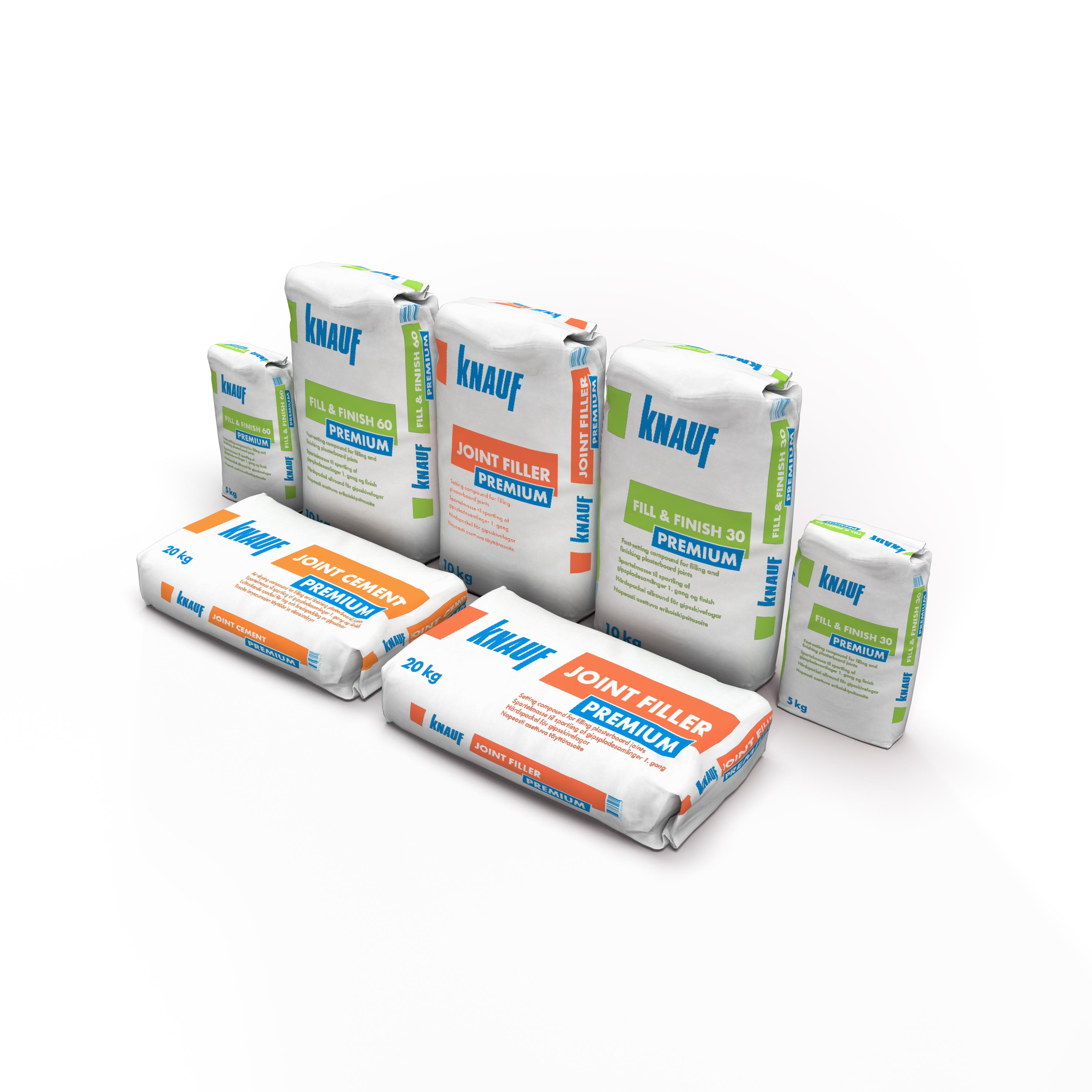
Not sure what the Knauf stuff is you have but probably ok. One of these? I'd be using Gyproc Easi-fill as recommended to me on this forum. You can get it with different numbers after it e.g Easi-fill 20 with a working time of 20 minutes. Easi-fill 60 = 60 minutes. Pitt you're not nearer as I've 3/4 of a bag left here. The Knauf will likely be just as good. Run your hands over all the screws and if they're not set them just under flush with your special pb bit in the cordless drill. Watch out for screws that have gone in on the piss. Fill each black screw with a smear of filler. Use whatever, an old credit card can be good for this. On the flat face wall where two tapered edges meet, tape the join and fill with the wide joint "spatula". The better you do it the less sanding and mess you'll make. As to the external corners, good luck with this as I don't know how you'll get it looking good without corner beads mentioned many times before! Just found this guide which says it all...with pictures! https://www.bhg.com/home-improvement/walls/how-to-install-corner-beads/ It does not matter whether you have two square edges meeting at the corner, two tapers or one of each! When done sand. Not trying to spend your money but these are brilliant, again if you were nearer etc. The vacuum attachment makes it pretty much dust free: https://www.toolstation.com/shop/p86220? It takes special open weave sanding "mesh" sheets and the dust gets sucked through as its created. Just brilliant. Aldi/Lidl or the diy sheds will do a version that takes standard sandpaper but it'll be a lot dustier! For example: https://www.screwfix.com/p/aluminium-hand-sander-84-x-240mm/12688? Paint with a high opacity paint for new plaster like this: https://www.ebay.co.uk/itm/Leyland-5L-Matt-Super-Leytex-High-Opacity-Ideal-For-New-Plaster-White/112546918401? Again recommended to me on here. Mist coat first (or splash out on plasterboard sealer £££). This Leytex stuff has excellent coverage and allows you to see any imperfections and fill & make perfect. This might be alright on a budget: https://www.screwfix.com/p/no-nonsense-trade-bare-plaster-paint-brilliant-white-10ltr/51004 Top coat paint of your choice. Something for kitchens I'd suggest.
-
30 mile round trip...I should say so!
-
I think my TileTracker type attempt with the angle iron was a failure overall! It leaves big snots of adhesive: In getting them off I've damaged the tanking. & in some cases the Aqua Panel itself. Of course I'll re-tank it but be left wondering about that line!
-
Help with kitchen renovation/ 1st house.
Onoff replied to zoothorn's topic in Bathrooms, Ensuites & Wetrooms
Leave em up! Can't you tell we're all impressed? -
Misaligned tiles, just below the stack, I can see it now you've mentioned it. At the end of the gutter, where it stops the fan light opening is the back bedroom. Some water damage coming in around the chimney as it's stained down the stack in the loft.
-
You wouldn't fit my bathroom in this place!
-
Help with kitchen renovation/ 1st house.
Onoff replied to zoothorn's topic in Bathrooms, Ensuites & Wetrooms
Leave the amp pics up. Everyone will love them. Better still start a new thread here to show your handiwork: https://forum.buildhub.org.uk/forum/52-non-building-related-off-topic/ -
That smaller waste halfway along the wall is from the bath. Will check that too.
-
Evening, Need some thoughts on this long term damp problem. Terraced house circa 1860. Slate damp course originally. Later "lean to" added on but this has a proper, modern dpc. Gut feel is it's to do with the gutter above and water is filtering down inside through the solid brick wall? Ventilation maybe? Paint is peeling and blistering etc but it's so high up the wall as well as low down. First off the gutters need clearing and the downpipe properly directing to the hopper. The wc is also overflowing but that's an easy fix and I don't think anything to do with the main damp.
-
Help with kitchen renovation/ 1st house.
Onoff replied to zoothorn's topic in Bathrooms, Ensuites & Wetrooms
Well it was torturous at times but you got there in the end and then some. Looks great. Glad that idiot's idea ref getting the tiles on in one hit worked out! If you find yourself hating the external corners of the tiling you could trim in upvc angle; white, woodgrain etc.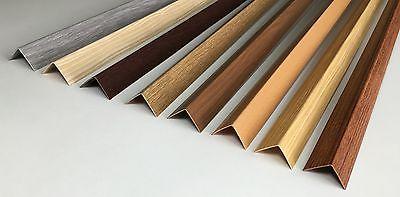
-
2nd hand yep. One Nick pointed me at on eBay I think way back. Unused old stock as in it's never had water running through it.
-
Thanks but I'm not getting it! That white pipe (flow direction is out of the door) comes off the first rad in the system en route to feed the second rad. Pretty damn warm it is too. Now covered with carpet tiles it's level with the floor underneath and people joke that I've already got the UFH going that strip of floor gets so hot! Surely too hot to provide flow AND return? Looking back on the old photos and I've just had a thought. Flow on this rad is 100% right to left in the picture below: Only knowing what I know now doesn't this mean it's pumping the wrong way for max efficiency as in hot should come in at the bottom, radiate it's heat and exit, spent at the top?
-
The "how to" of this was lost with the demise of eBuild along with a lot of @Nickfromwales input sadly so I'm starting from scratch here. Regular readers will know that the big bathroom refurb is downstairs of the bungalow. I've currently an unconnected UFH loop within the 100mm concrete slab with 150mm pir + 25mm eps underneath. The "tails" of this loop come out under the slab edge and are left deliberately overlength. There's provision for a slab sensor in the lone bit of Pex-Al-Pex shown below: The downstairs CH system is an old 3/4" nominal bore system than ran around the perimeter walls. When I redid the bathroom I took out the pipework in the bathroom and "bypassed" it down the centre of the room adjacent to the bathroom. I'm this photo then the white 22mm pipe just under the floor slab is the "bypass". New bathroom is to the right, under the stairs to the left: Another view taken a bit further back. The plan is to dig this floor up and build back up with probably 150mm pir underneath. The downstairs UFH manifold will be bolted to the wall under the stairs. At this moment in time is there a "simple" way I can break into this 22mm pipe and feed the UFH loop to the right without running that loop at the high temperature the downstairs rads run at? Presumably I need some sort of "blending" mechanism? The hot for blending comes from this 22mm pipe but where does the "cold" for blending come from? I do have this bought back when this was first being discussed on eBuild:
-
The grout to be used is white. I think though at the wall / floor junction any imperfection in that joint will stand out like a sore thumb. I like the idea tbh of no joint there at all... I'm planning too to wet cut these bottom tiles as I think it'll make for a sharper, cleaner edge (if not straighter) than scoring and snapping.
-
Ref the "credit card" thickness gap between wall tile & floor: Was thinking maybe a couple of 1mm packs on the floor first before I mark the tile. That'd be 2mm as 1mm seems too thin. The blues shown here are 3mm...the same as the tile spacers...so why not stick with 3mm?
-
I believe the SA80 concept originated in 1946 from the EM1 Thorpe rifle. 1940's: I think the EM2 was very nearly bought by the Americans as it outperformed the Garrand in tests! My brother who was in the Army starting out with the SLR, Stirling etc and progressing to the SA80 always reckoned for the average squaddie we should have ditched the SA80 and bought AK47s!

-
Would "it" have worked without that one specific component and her honed skill and dexterity in fitting it? Years ago as an apprentice there were mutiple companies vying for the same business. Movement between companies was rare, job security was good but if you left people would often take a particular skill (or design even) to the rival. Our top of the range system existed in the form of carefully stored drawings and velographs. An order would come in to the design office and we (me mainly) would wet print the drawings and deliver them to the factory. The in house joke was that you could give the drawings to another company and though they could make the kit it wouldn't work properly. This was completely true. Looking back then and departments were run and guarded like little kingdoms. Sales, Design, Works, Maintenance, Testing, Commissioning etc. Tbh the companies structured like that "worked". A lot of R&D was done on site. Something didn't work on site and an old hand from the factory would be brought to site by the Commissioning team bypassing the Design Office who were seen as "suits". It was quite often that the commissioning engineer had come from the shop floor anyway so had old allegiances. The required "mod", whether it be machining, heat treatment etc would be carried out on the shop floor when an order came down but never made it back to the Design Office to go onto the drawings. In effect the DO would issue flawed drawings everytime. Because of in house rivalries the shop floor wouldn't even divulge some of the mods. Gave a few lads terrific job security! "Young Jack" became "Old Jack" and was the only one who knew how to do such and such. Good times!
-
Passion, drive, talent and enthusiasm.....I USED to have them.....before the bastards ground me down.....
-
Time for the sign to go up?

-
If there was anyone going to blow their own trumpet... Scored highly for flexibility too no doubt...