Onoff
-
Posts
21157 -
Joined
-
Last visited
-
Days Won
206
Everything posted by Onoff
-
1mm per day?
-
On the back of my ill fated attempt to purchase a cheapo 3D printer from Cogkart SWMBO informs me that my eldest would like one for himself. This'll be a 21st birthday/Xmas present (21st & 25th Dec respectively). So, what to buy? Looking for an out of the box, turn key solution. Thinking up to £300. How about this Aldi one? https://www.aldi.co.uk/balco-3d-printer/p/086887240233900 Any suggestions gratefully received! Cheers
-
? but it was finished & quickly!
-
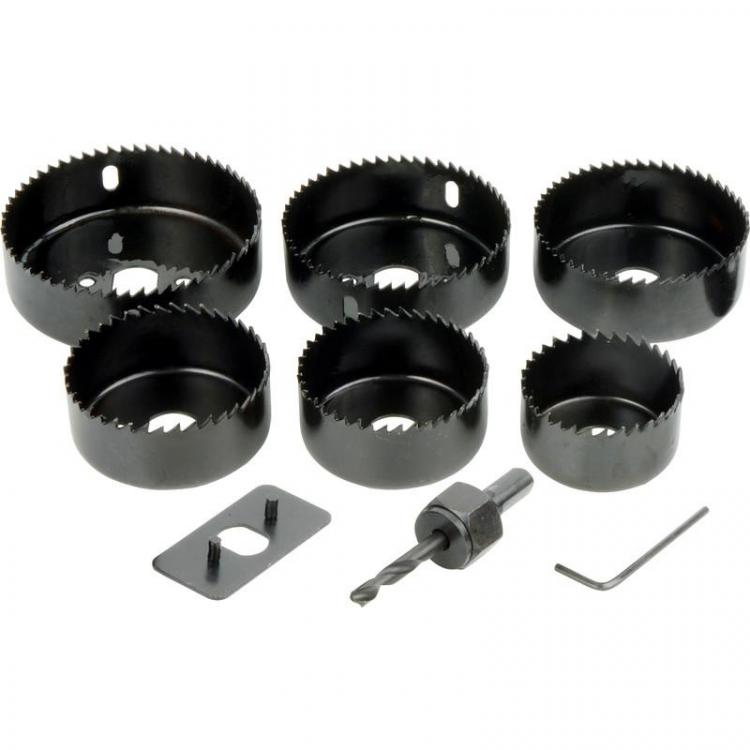
I switch between proper "Starretts" and the cheapo generic type like this: For bfo holes I had success with one of these AS LONG as you screw a bit of ply on first to stop the centre drill wandering:
-
I drilled / cut all my ceiling holes before I plastered. Certainly slows things up imo. Had to be v.careful the plaster didn't thicken up around the hole edges and "slump" out. Somehow I got away with it.
-
I did make the unfortunate mistake of using a length of brown underground soil pipe where I should have used black / grey solvent weld. It's still pvc but feels more "rubbery" and less "brittle". I was also mating it to a different make of fitting. To boot it was female uphill, male downhill. The joint to me felt a bit loose. I cleaned the surfaces, roughed them up and used pvc gap filling cement that seemed to take. A smear of CT1 for good measure.
-
Took me a minute to get that. Then wished I hadn't...
-
Oddly the Afrikaans for wanker is in fact draadtrekker. Literally means one who pulls wire. Go figure.
-
I set 47mm studs off the wall with a minimum 5mm gap on plastic shims. Fixed the studs at 5 points with concrete screws. Foam gunned behind the battens. PIR in between the studs. (I had/have v.little idea of what I'm doing btw ? ).
-
There's Hep2O here I put in doing some mods (like upstairs CH) when we bought the place 20 years ago. Never had an issue.
-
Leg dropped by 25mm 'ish... All my dodgy welding now covered in cold galv paint! New type of rod (Filarc 56s) used for vertical welding is my excuse! ? It took my not inconsiderable weight hanging off it so that must say something!
-
Echoes of the car park in Crayford?
-
It won't pump grease? You know it's full of grease but the handle's all floppy and offers no resistance when you pump? You need to bleed the gun: Whilst pumping stick a small screwdriver in to depress the little ball bearing on the lid. This to let the air out. If that doesn't work: 1) Undo the top of the grease gun by 2,3,4 turns until it's nearly coming off. 2) Pump the handle until grease comes out where the top joins the body. 3) Whilst grease is pi$$ing out keep the pressure on and screw the lid on. Grease should now come out of the end coupler where it's supposed to. Save the grease that comes out of the lid in a jam jar etc Send pics of gym bunnies please!
-
One you "wouldn't want to meet in an alley...dark or otherwise" is a phrase I've heard before! Can't help that I'm a looker! ?
-
I can assure you its correct as my parents and other neighbours were awoken by the emergency services. The flood happened when people were in bed. My parents stayed dry but the next door neigbour had the manhole on his lawn lift and the lawn covered with sewage. The road is on a slope with the majority of houses semi detached. Each pair is in effect built on it's own terrace, the next pair are lower as you go down the road. Theres a 2' drop between my parents and their neighbour and so it goes on. At the bottom of the road there's a pair of semis of different design and one detached. These are the ones that generally get really badly hit. Mad in some ways as it's one of the highest spots in Kent!
-
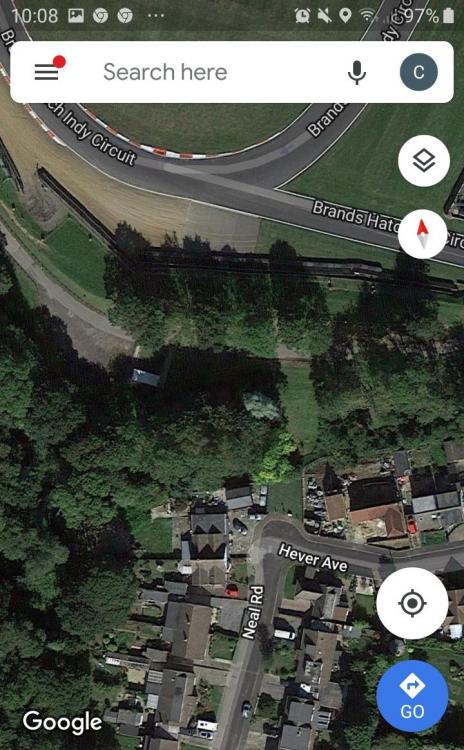
The road I grew up in flooded a while back, well at least the bottom end with a few houses inundated. As I understand a few had had cavity wall insulation of some type and it's soaked up the water leading to long term damp issues. https://www.google.com/amp/s/www.kentonline.co.uk/dartford/news/amp/woman-and-dog-trapped-in-waist-height-flooding-206362/ The bottom of the road ends at a fence then just the other side is a huge earth bank forming part of Brands Hatch racing circuit. As a kid when it flooded years ago we took an inflatable raft over the fence and dinghied over to where a circuit Landrover was submerged and we stood on it's roof. Got a right rollicking when we got back home as of course all the sewers had overflowed too. One of the flooded neighbours (we were a tad higher luckily) actually drove his speedboat around where Neal Road meets Hever Avenue.
-
Just a small point but what you refer to as your plan is in fact a section. A plan is normally looking down on the site. A set of plans may contain a plan view, elevations and sections. Unless your "plan" and has been conveyed to the builder electronically then you're going to have a hard time going after him. As in proving what you get isn't what you agreed. It is fixable if you stop what is happening by informing him electronically of your concerns, reiterating his mistake on the depth and what you want to happen to rectify it i.e for him to rectify, by adding a lower section or building the land back up to raise everything at his cost.
-
1) Is the top of the new roof as high as it can go under the over hanging old roof? 2) Is it possible to move the first floor joists up in their entirety thus increasing the downstairs headroom and reducing the upstairs step down into the new room? 3) Could it be the case they've erected the upstairs walls first but downstairs by mistake? Without us seeing drawings we're constantly second guessing?
-
It will be a damn sight harder to raise the completed 2 storey thing. If you were to raise the lower section now, when the top floor and roof trusses go on would it all fit under the existing roof? Perhaps you should stop any further work until this lower room height issue is resolved. 2m or less finished floor to ceiling height is impractical to my mind. From reading you have these people turning up as and when they want and "things" happen, often not to your understanding or satisfaction. Unless you have some formal means of communication like email with the main man to pose questions, raise issues and record the process this farce will continue. Continually saying he doesn't work like that is just going to make people here, including me switch off.
-
Why can the whole structure not just be raised by 350mm or whatever?
-
No. There's accepted norms like externally the black stuff is 150mm above a path / patio. Even that can be less if things like French drains are used. FFL can be higher or lower than the DPM. 99.9% of the time this is shown on a section drawing with all the materials to be used and agreed on by all parties before work starts.
-
I can understand your frustrations but it's a bit tricky sometimes to understand without photos. Most of us would be holding tapes up etc and snapping away. For instance when talking about how my two gate posts were at different heights a couple of pics conveyed the issue to anyone looking:
-
You said "typically". Thinner screed systems are doable but I'm guessing more expensive than ordinary sand and cement. Found at random: https://gbr.sika.com/content/united_kingdom/flooring/en/products-and-systems/floor-screeds/industrial-screeds/rapid-set-screed.html
-
I would guess 65-70mm for a sand cement screed. Level with, above, below. Depends on the detail. The FFL can be lower than the DPM if it steps down.
-
Lopped off the L section just now. Dropped on some bricks, lowered by roughly 25mm. Retained to the post for now by the long M16 stud. Welding tomorrow if the weather holds. Should bring the top red brick up near level with the underside of the post which is what I'm aiming for.