
Radian
-
Posts
2586 -
Joined
-
Last visited
-
Days Won
15
Everything posted by Radian
-
Too easily dissipated by intervening structures e.g. people! The wireless power transfer I built (in the video above) uses purely magnetic coupling at around 1mHz so goes right through most stuff that's likely to get in the way.
-
Wires? Pah! Wireless power.mp4
-

Should I return this immersion heater?
Radian replied to Radian's topic in Electrics - Kitchen & Bathroom
Last resort. Mailed the manufacturer a photo to see what they think of their product. Expect they'll say it's fine and point out their 1-year warranty. Which will probably be just short of how long it takes for the repeated heating/cooling to work out all the flux that's currently plugging the gap. -
"2020-2029 Fridges, freezers and washing machines become smaller" How is that supposed to help? More trips to the supermarket and more washing loads won't save anything. Utter rubbish. Just like making kettles lower power to save energy.
-
Should I return this immersion heater?
Radian replied to Radian's topic in Electrics - Kitchen & Bathroom
Piss poor QC but you're probably right. Too late to return it anyway as TS have a 30-day returns policy. -
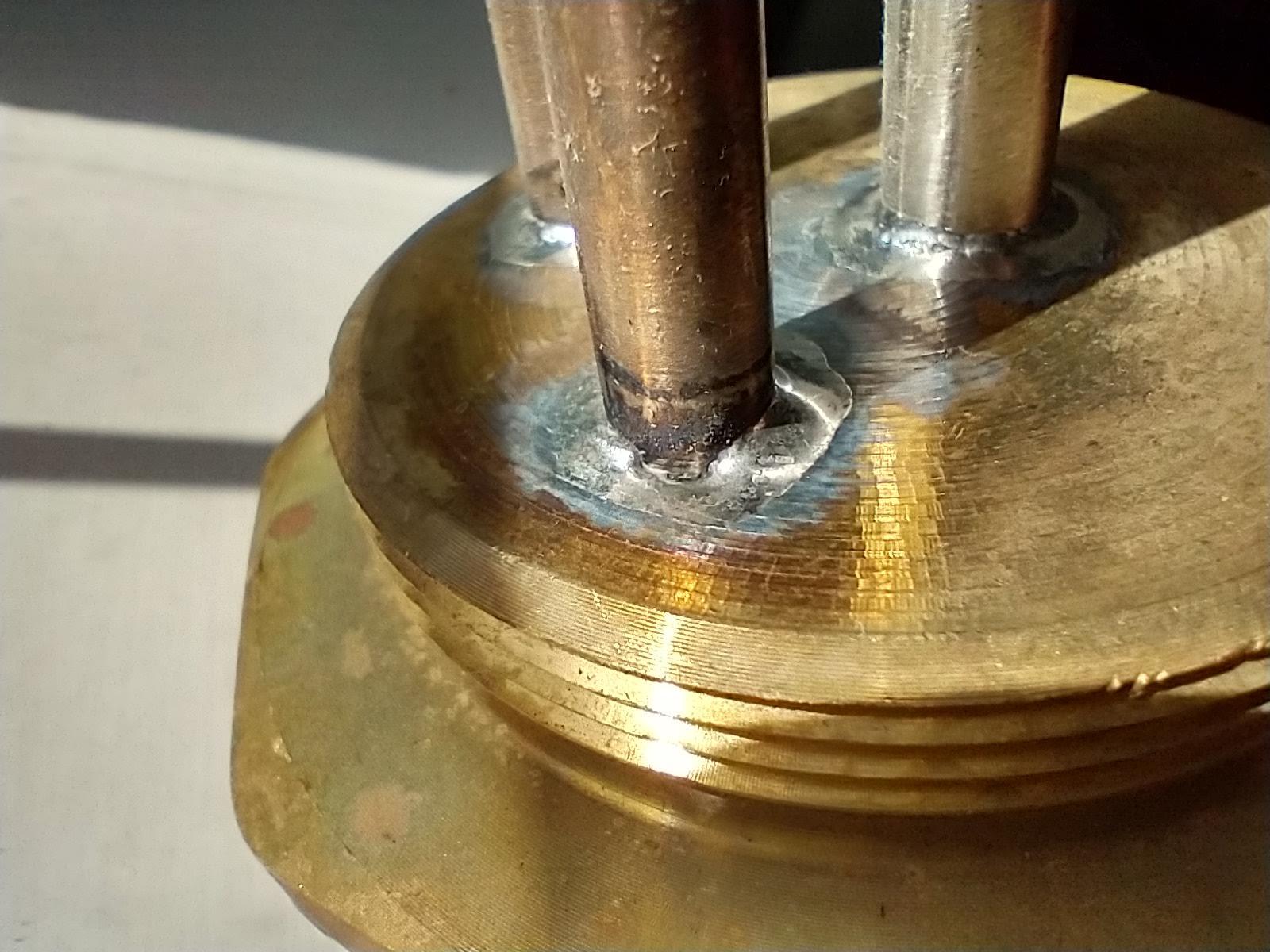
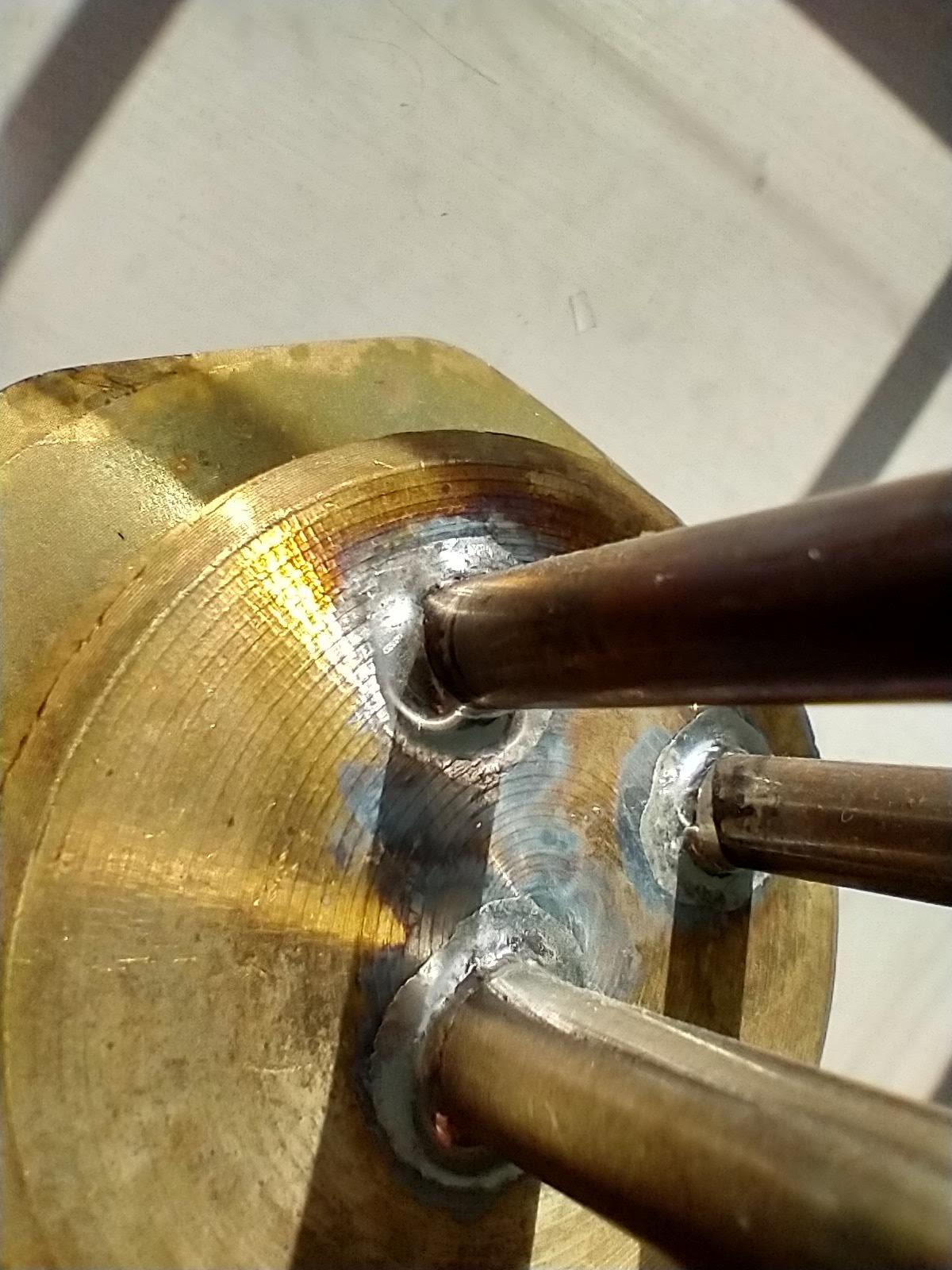
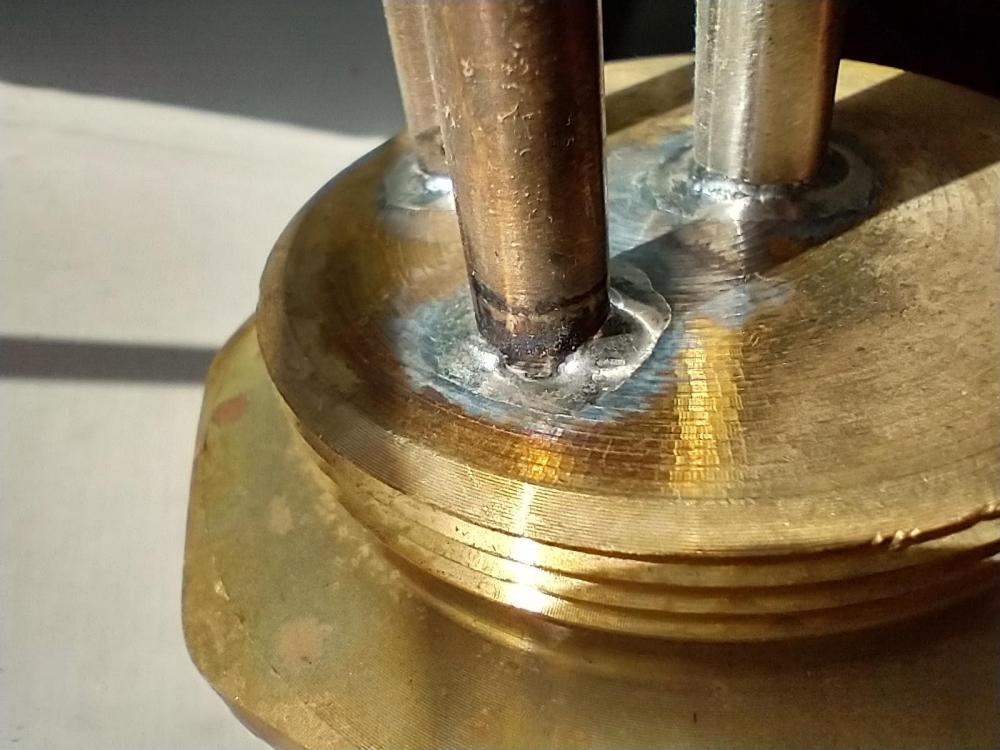
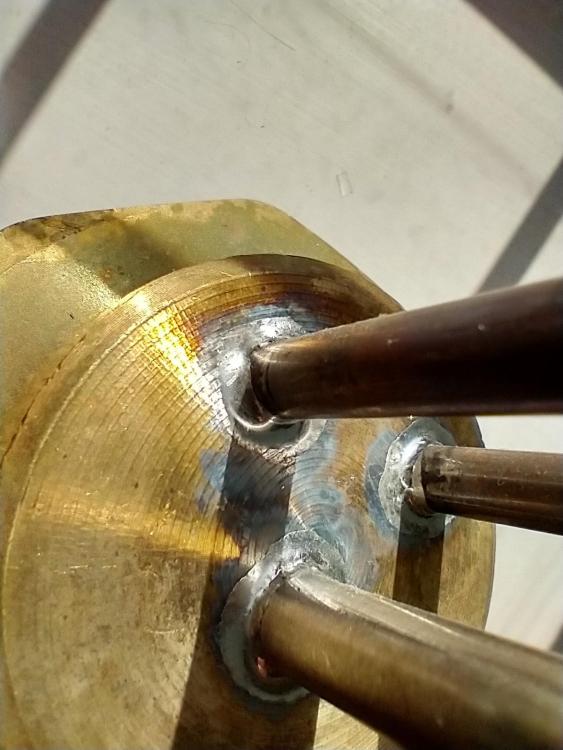
Bought it to replace one last year but hadn't gotten around to fitting it until today. Then when I look closely it seems to have a poor soldered joint: I can see that the solder hasn't properly wetted the end of the tube and this seems to have left a minute gap between the end of the tube and the brass body. The manufacturer may have tested and passed it but I'm worried that this might leak after repeated heating cycles. Now debating whether or not to return it.
-
Anticipating solar gain / overheating in a new extension
Radian replied to Brix's topic in House Extensions & Conservatories
Yes, there are plenty of days like that! But surely what counts is the long-term energy performance, whether it be measured in terms of annual Carbon or energy costs? Granted that the added amenity of having an extra feeling of space, light and (hopefully) pleasant views counts for little in terms of Carbon savings (although any replacement for natural light comes at a cost) but it seems to me that many people are ready to describing a space as 'over glazed' without doing a full and proper analysis. This apparent "negative bias" is what puzzles me. -
Anticipating solar gain / overheating in a new extension
Radian replied to Brix's topic in House Extensions & Conservatories
A bit of both really. It's built as an extension on the back of the house and retains the original DG French Windows so we can close it off thermally - but it has a dedicated UFH zone that's fed from the gas boiler . I'm aware that this needs frost protection if we were to close it off but that's not how it's used. Your windows are much better than mine! But thanks for posting your PHPP figures. Do they not confirm my contention that "excess glazing" can be a benefit if managed correctly? -
If you go to all the trouble, a minimum of 150mm would be advisable. However, while the ceilings may be a long way up, what about the door heads? To raise the floor level almost certainly means raising the door lintels and this is a bit more involved for supporting walls. An alternative method that works very well is to lift the floorboards and suspend insulation between the joists (a membrane can be draped over the joists to serve as a 'hammock' for the insulation).
-
Anticipating solar gain / overheating in a new extension
Radian replied to Brix's topic in House Extensions & Conservatories
No, it's the only fan I had to hand. I think some credit is due (a tiny amount) for sticking a brushless DC motor and Li-ion battery in a small hand-held vacuum cleaner. But nothing else they make is quite as inspired. -
Mini split instead of a heat pump?
Radian replied to anonymous's topic in Air Source Heat Pumps (ASHP)
Yes, I felt it might be worth considering sharing the work between the two types of heating. A2A is incredibly responsive and efficient but doesn't provide for your DHW needs. -
Mini split instead of a heat pump?
Radian replied to anonymous's topic in Air Source Heat Pumps (ASHP)
A2A work best in open-plan houses. The best solution might be a combination of both a small ASHP and A2A Possibly finding away to re-pipe a few radiators in the smaller rooms? -
Anticipating solar gain / overheating in a new extension
Radian replied to Brix's topic in House Extensions & Conservatories
I stood our Dyson AM03 fan (450mm diameter although it only has a piddly little fan in the base driving the air multiplier) in the doorway between garden room and kitchen on the hottest day last Summer and it did disappointingly little to balance things out. I got a feeling something like a 1m diameter industrial fan would be needed to make an impact. What I'm working on right now is independent control for the UFH and radiator circulating pumps to see if I can spread the heat from the floor (which is the biggest surface are bathed in sunlight) into the house for a tiny lift in the shoulder months on days like today. It'll probably be a flop but I only need to add one relay to override the CH pump and a couple of lines of code to try it out. In terms of similar surface area and orientation, I estimate that the 20kWh from our solar PV (today) translates into anything up to 80kWh hitting our garden room SE elevation. Between 4% to 8% of that bounces off each of the two panes but given the 50kWh of gas that went into raising the rest of the house by 2oC and the 4oC temperature rise at the garden room end, I can readily believe that over 50kWh might have been gained from direct Solar radiation. -
Anticipating solar gain / overheating in a new extension
Radian replied to Brix's topic in House Extensions & Conservatories
I've run all the numbers like that on our garden room as well, although the glazed are is only 30m2 and you're right - it does look pretty terrifying. But the one thing missing from your calculation is the annual heat gain available. When this is taken into account, the added amenity of having large areas of glazing (if the plot suits it) can make it very much worth it IMO. While it's easy to do the heat loss calculation, in practice it seems a lot more difficult to work out the overall figure when offsetting by the gains. Empirically, taken over the full year, I can't even say it's obvious that a nett loss is involved (although it probably is). The potential for overheating seems considerably greater, but if the orientation and other things that can be done to manage the issue are in place, I don't think the option to use large amounts of glazing should be automatically discounted. Just as overhangs and Brise Soleil can play a part in keeping the space cool in Summer, so thermal blinds or curtains can reduce losses in the winter. Both are desirable for optical reasons as well. -
Anticipating solar gain / overheating in a new extension
Radian replied to Brix's topic in House Extensions & Conservatories
I wish I had put in some trunking and ports to shift air from the top of our 'glass box' garden room into the rest of the house. Today it warmed the connecting kitchen and hallway from 17oC to 21oC just through natural convection although it was you who pointed out how feeble the SHC of air is. However, with 4 to 5 hours of constant solar input today, it would have easily saved the 40kWh that the boiler used to bring the rest of the house from 17oC to 19oC. If you are fitting solar PV to the build (and you really should if you haven't already) then the A2A mini split already suggested is a no-brainer. The coincidence of powerful Sun and plenty of free electricity is a match made in heaven. For 1kW of electricity you can readily get 4-5kW of guilt-free cooling in the summmer and similar for instant heating in the winter. -
How to deal with house overheating/sun in face when dining?
Radian replied to rh2205's topic in Windows & Glazing
Reflective window foil? -
Why are the bricks white on some parts?
Radian replied to Lal's topic in Bricklaying, Blockwork & Mortar
It can mean that water is present there. It looks like the gutter might be overflowing at the end (in the corner). Just under the soffit should be dryer than the rest of the wall but that bit looks like it's getting wetter: If it's not the fault of the gutter, it might be the flashing or possibly the vertical expansion gap. I'd be investigating it if it were mine.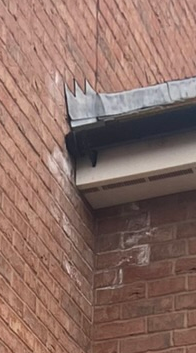
-
Another annoying error: cut, hide ignore?
Radian replied to ToughButterCup's topic in Electrics - Kitchen & Bathroom
Seeing as none of these replies have quoted or tagged @ToughButterCup I bet they've not been seen yet 😮 Keeps happening to me anyway. -
Raised Patio & Building Control/Safety
Radian replied to Jimbo37's topic in Landscaping, Decking & Patios
I can't recall where I read it but I gathered that the thinking behind the 3m rule was that people coming out of a building would have an expectation of there being no unsafe drops in the near vicinity. It's a consequence of there being prescriptive safety regulations for the inside of buildings. That's the paradox of safety regulations. A human behaviour called risk compensation means that sometimes the safest feature might be one that's clearly dangerous. Like having a big sharp spike coming out the middle of your steering wheel might make you drive more safely than having an air bag there.- 18 replies
-
- 1
-

-
- raised patio
- external steps
- (and 1 more)
-
I've gone from being amused to unreasonably angry about these things now. Just watched some getting craned up to the roofs of some nearby new-builds. I can't think of any other anachronism other than faux leaded windows that have such a potential to introduce unnecessary points of failure in a building. Having said that, I do have faux leaded windows. The only good thing about them is that we never get bird strikes on them - unlike the big sliders on the new extensions. A Pidgeon flew straight into the door I was sat next to at the dining table and it nearly frightened the life out of both of us. I think the Pidgeon recovered before I did.
-
You can get a composite geotextile which doesn't take up much space but creates a vertical drain at the sides. Often used in basements but also good for planters or retaining walls. .
-
Trying to google GD + SIP is returning too much noise. Any other clues to help me find which episode it was?
-
I've occasionally wondered why construction companies don't use Maslow style CNCs on building sites. Easily fit in a Transit Van and being able to knock out repeatable shapes from 2.4x1.2 OSB or Ply panels has to be a time saver for things like soffits or door/window casings etc. I'm very tempted to construct one but wouldn't have much use for it these days.
-
I was thinking Icynene, but yes, while the head is in position - why not? Services shouldn't be in the cavity anyway.
-
They've certainly scaled this up from when I first saw it being done. But 2nd fix looks like a nightmare. No square edges for architraves or skirtings. Or am I too firmly stuck in 'the old ways' 🙄